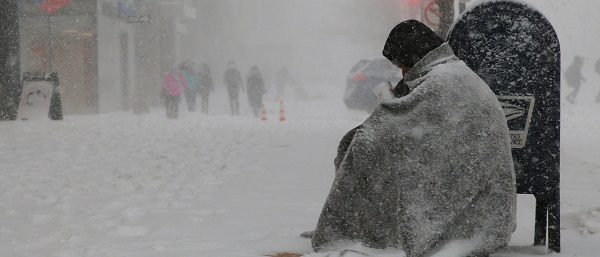
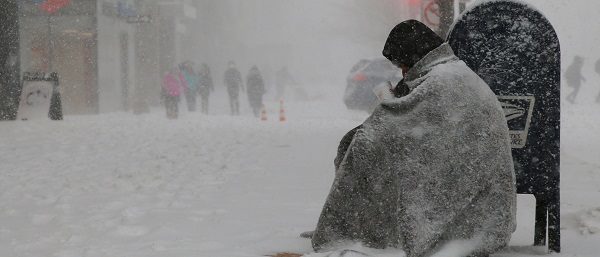
© REUTERS/Brian SnyderA homeless man asks for money outside a donut shop during white-out, blizzard-like conditions in a winter nor'easter snow storm in Boston, Massachusetts, U.S. February 9, 2017.
Research purports to bolster theories that man-made warming is leading to colder U.S. and European winters, but buried in the paper is an admission undercutting its findings.
The
study, published in a
Nature Communications January 2018 issue, claimed historical data showed an East Coast cold snap is two to four times more likely when the Arctic is abnormally warmer than when the pole is colder. It's not a widely accepted theory among climate scientists, but the study's made the rounds in the
media, touted as more evidence man-made warming is making U.S. winters colder.
The study "basically" confirmed "the story I've been telling for a couple of years now," the study's co-author, Rutgers University scientist Jennifer Francis, said. "This is no coincidence" and that "it's becoming very difficult to believe they are unrelated," Francis, who's regularly cited in the media during intense cold snaps, added.












Comment: Further reading: Yale's Two Climate Bombs Point to Impending Ice Age