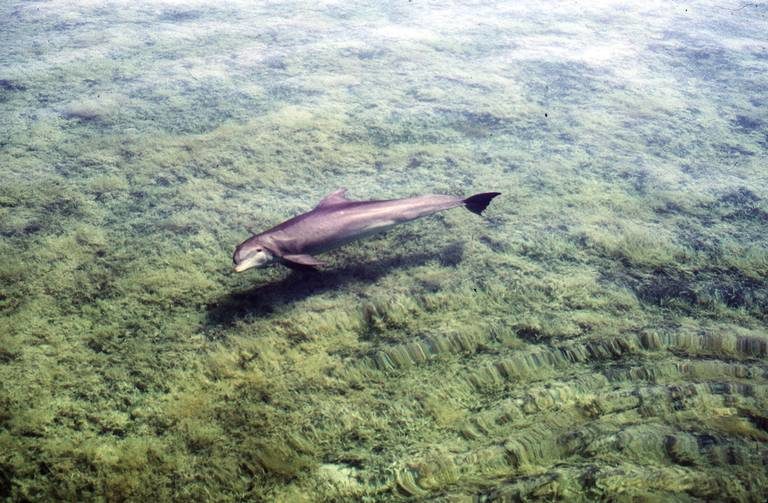
© Miami Herald archivesToxins produced by blue-green algae have been found in dolphins that turned up dead in Florida waters after a 2018 red tide that coincided with a blue green algae bloom.
Toxins produced by blue-green algae that have increasingly polluted Florida waters have been found in dead dolphins that also showed signs of Alzheimer's-like brain disease, according to a new study led by University of Miami researchers.
The study, published Wednesday in the peer-reviewed journal
PLOS One, is the first to show detectable levels of the toxin, commonly called BMAA, in dolphin brains that also displayed degenerative damage similar to Alzheimer's, Lou Gehrig's disease and Parkinson's in humans.
While more work needs to be done to determine whether the toxins cause the disease, the study concludes that dolphins and their complex brains could provide a key sentinel for the potential threat from toxic algae blooms to humans."Not to be too political, but it goes to show the health of marine animals and water quality," said David Davis, lead author and a University of Miami Miller School of Medicine neuropathologist. "Everything's directly related."
The findings add to a growing body of research that focuses on the health threat from harmful algae blooms, which climate scientists warn could worsen as the planet warms. South Florida is
particularly vulnerable, with miles of coast, a lake that is a third of the size of Rhode Island, rivers and estuaries, and an agricultural industry and swelling population that continue to feed blooms with pollution from fertilizer and sewage.













Comment: See also: