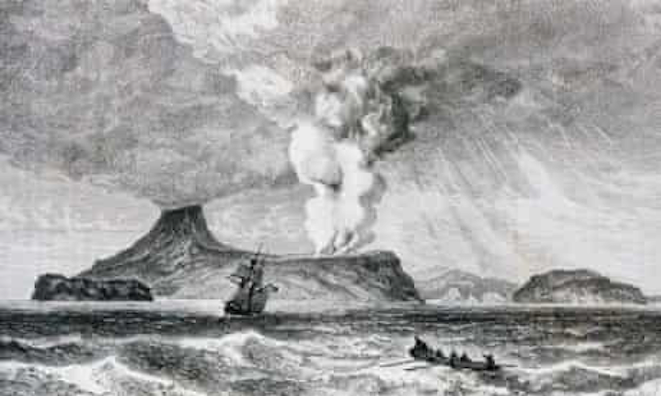
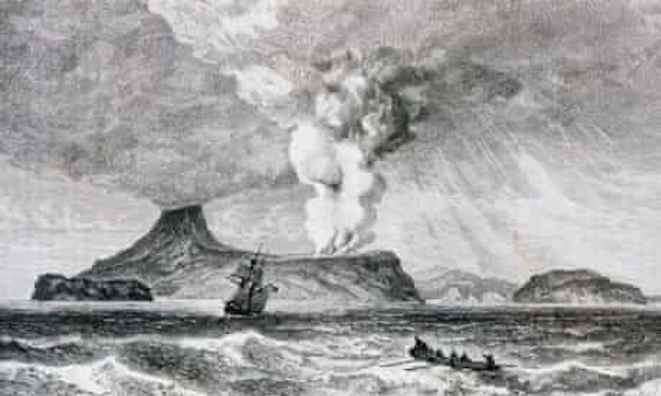
© Dea Picture Library/De Agostini/Getty ImagesEruption of Perbuatan volcano on Krakatoa Island, 26 August 1883.
In May 1883, the captain aboard the German ship
Elizabeth observed ash spewing above Krakatoa, an island in the Sunda Strait between Java and Sumatra in Indonesia. In the following weeks, other vessels reported hearing thunder and seeing incandescent clouds. Locals would also report earthquakes as small volcanic eruptions rumbled across the island.
Little did they know that these were the early signs of what would become one of the biggest volcanic eruptions in recorded history. Krakatoa erupted on Sunday August 26th 1883, sending volcanic dust as high as 24km (15miles) into the atmosphere. The following day on August 27th, two enormous explosions were heard as far away as Australia, with the final eruption destroying two-thirds of the island and triggering a powerful tsunami that wiped away entire settlements and was felt all the way across the Indian Ocean in South Africa. It's estimated that
36,000 people died in this natural disaster.
The eruption also had a marked impact on the global climate, sending a very large amount of sulfur dioxide (SO
2) into the stratosphere, which led to a global increase in sulfuric acid concentration. This in turn increased cloud coverage that dimmed sunlight, sending global temperatures down by at least 0.4
°C the following year. As submarine telegraph cables were already in use, news about the eruption was relayed rapidly across the globe, hitting the newspapers in New York, London and Paris by August 28th.








Comment: Update: Middle East Monitor reports on 22nd June: