A 7.5-magnitude earthquake has rattled large swaths of southern and central Mexico, according to the country's national seismological service.
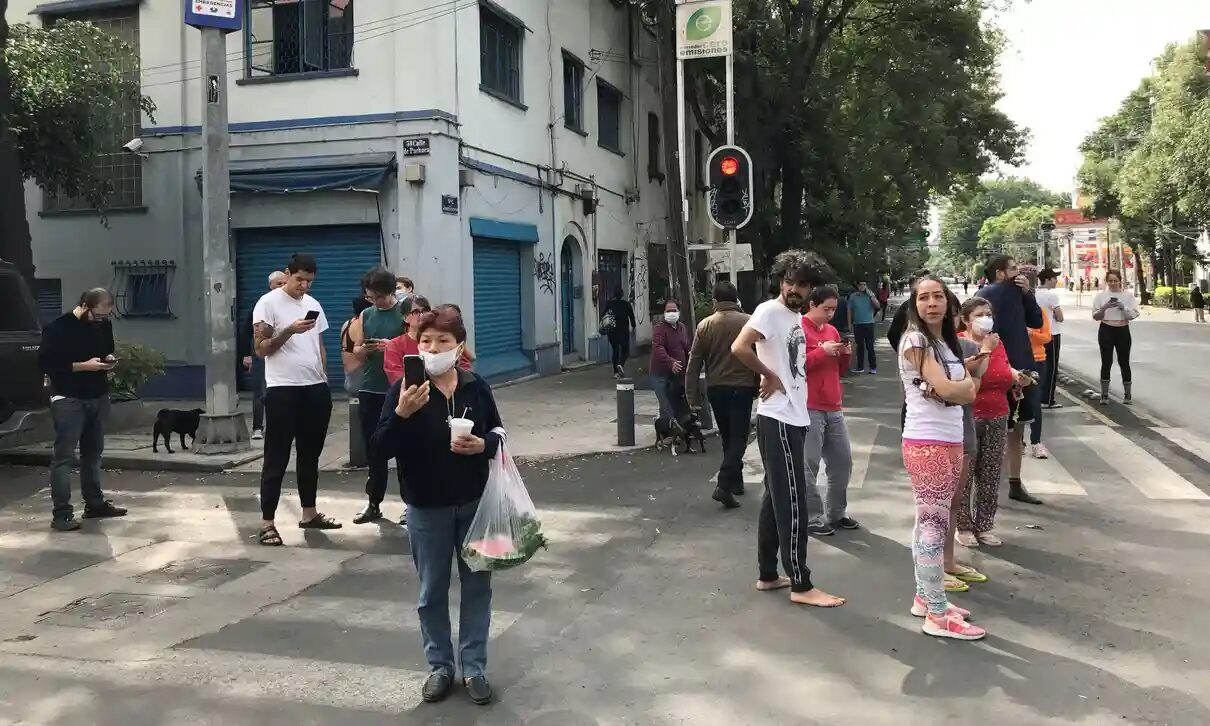
The quake struck the southern state of Oaxaca at 10.29am local time ( 1429 BST) on Tuesday but was felt more than 400 miles away in the capital, Mexico City, where buildings shook and panicked residents fled on to the streets.
Mexican newspapers said there were no immediate reports of damage in the capital. Claudia Sheinbaum, the city's mayor, tweeted: "So far no major incidents [reported]."
The situation near the quake's epicentre in Crucecita, Oaxaca, was not immediately clear.
A 7.5-magnitude earthquake has rattled large swaths of southern and central Mexico, killing at least five people.
President Andrés Manuel López Obrador said one person was killed in a building collapse in Huatulco, Oaxaca, while state governor Alejandro Murat said a second person was killed in an apparent house collapse in the mountain village of San Juan Ozolotepec and a third died in circumstances he did not explain.
Federal civil defence authorities reported two more deaths: a worker at the state-run oil company, Pemex, fell to his death from a refinery structure, and a man died in the Oaxaca village of San Agustin Amatengo when a wall fell on him.
Pemex also said the quake caused a fire at its refinery in the Pacific coast city of Salina Cruz, relatively near the epicenter. It said one worker was injured but the flames were quickly extinguished. Churches, bridges and highways also suffered damage during the quake.
López Obrador said there had been more than 140 aftershocks, most of them small.
Mexico's national seismological service said the quake struck the southern state of Oaxaca at 10.29am local time (1429 BST) on Tuesday but was felt more than 400 miles away in the capital, Mexico City, where buildings shook and panicked residents fled on to the streets.
"It really moved," said Francisco Aceves, the owner of an import-export firm in Mexico City who was on the 22nd floor of an office block when the quake struck.
Mexican newspapers said there were no immediate reports of damage in the capital, where memories of a 2017 earthquake that felled buildings and killed more than 300 people are still fresh.
"So far no major damage has been reported - just the collapse of a few walls and building fronts," Claudia Sheinbaum, the city's mayor, said in a video from Mexico City's emergency response centre.
Richard Hanson, a 44-year-old American who runs an NGO in Oaxaca's state capital called Tejiendo Alianzas, said: "It started really slow ... and then very quickly it notched up very fast."
"Our fan was moving around a lot, you could hear the noise of the walls and the earth moving, things stared falling off the shelves in the kitchen and crashing and breaking on the ground."
Outside Hanson said "people were running out of buildings, screaming and getting on the ground ... Some people were just running to any open space."
Photographs from the state capital showed rubble strewn streets and the partially collapsed facade of one historic building.
The earthquake's epicentre was just east of Huatulco, one of Mexico's top tourist destinations, where beaches had only just reopened last week after closing because of the Covid-19 pandemic.
Reuters said Tuesday's quake set off a tsunami warning for a radius of 1,000km (621 miles) on the Pacific coasts of Mexico and Central America, including Mexico, Guatemala, El Salvador and Honduras.
Murat told Milenio Televisión the quake had triggered landslides, cut off road links between some towns and damaged some buildings, including one hospital that had been treating Covid-19 patients. Murat said the sick were being moved elsewhere. But no major buildings in the state capital appeared to have been severely damaged.
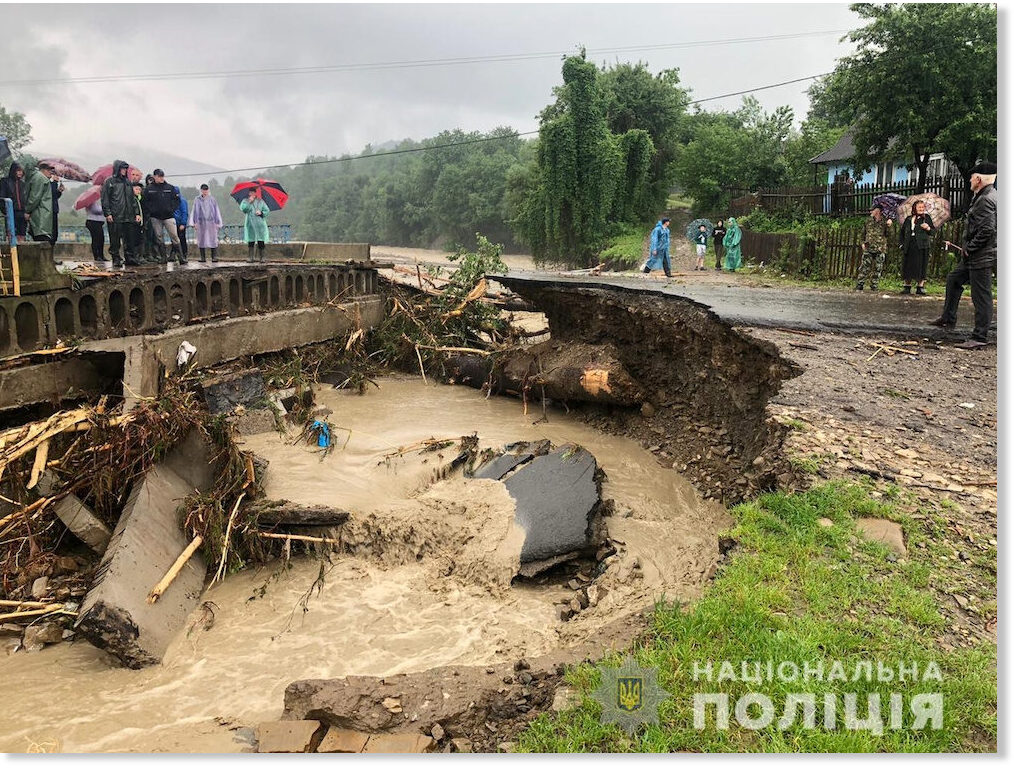
Overflowing rivers have caused severe damage in parts of western Ukraine after heavy rain over the last few days.
According to a statement from the country's Interior Ministry, flooding has affected the western regions (oblasts) of Ivano-Frankivsk, Chernivtsi, Zakarpattia and Lviv after heavy rainfall 22 to 23 June. Three people have died in flooding in Verkhovyna district, Ivano-Frankivsk oblast, where roads have been blocked and areas cut off.
Emergency services are carrying out rescue and relief operations in affected areas. Overflowing rivers have destroyed bridges and roads. Power lines have been damaged, as have hundreds of homes.
State Emergency Service of Ukraine (SES) reported on 24 June that a total of 165 settlements in 15 districts have been affected in Ivano-Frankivsk. SES have rescued or evacuated over 350 people and pumped flood water from thousands of damaged homes.
Massive swarms of locusts have devastated large swathes of Africa, Asia, and the Middle East since January, threatening food supplies for millions.
This year, Kenya had its worst infestation in 70 years, and India, Ethiopia, and Somalia had the worst infestations they've had in 25 years.
The reason for the outbreaks, according to The New York Times, is climate change, which has caused warmer weather and more rain — ideal conditions for locusts to thrive.
Alongs with the weather, poor monitoring due to armed conflicts — especially in war-torn Yemen, where the current outbreak began — and a lack of resources caused by the coronavirus pandemic, has led to locusts swelling in numbers that haven't been reported in decades.
Without more intervention, locusts could cause millions of people in 23 countries to go hungry by December, according to NBC News.
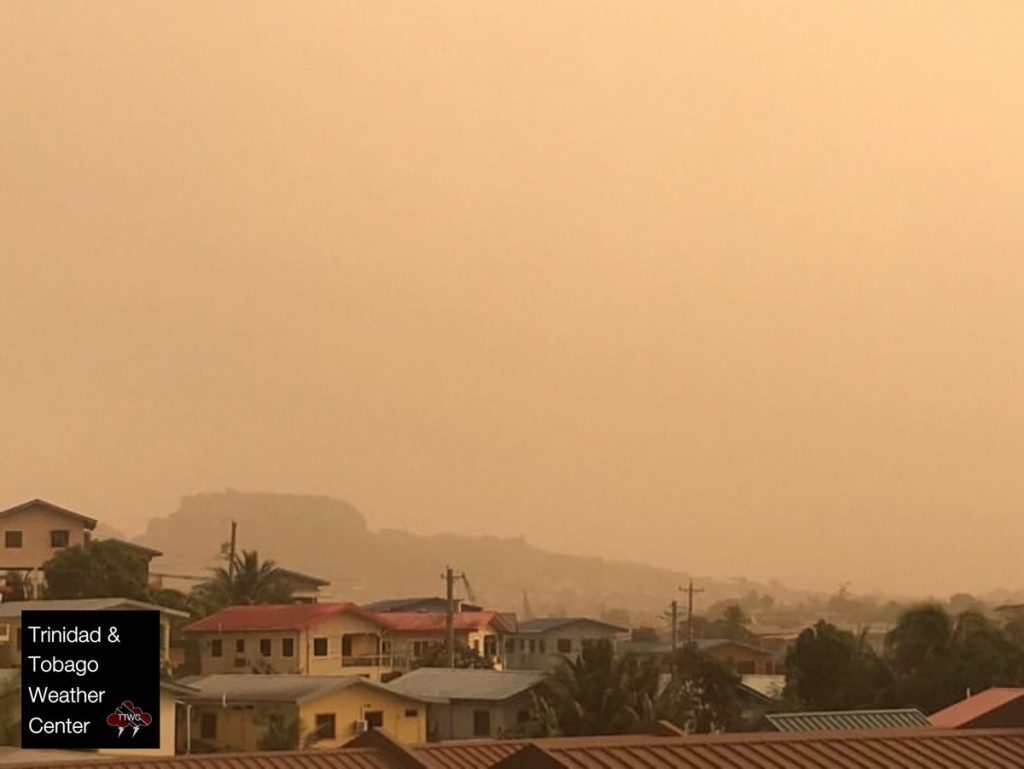
A vast cloud of Sahara dust is blanketing the Caribbean as it heads to the U.S. with a size and concentration that experts say hasn´t been seen in half a century.
Air quality across most of the region fell to record "hazardous" levels and experts who nicknamed the event the "Godzilla dust cloud" warned people to stay indoors and use air filters if they have one.
"This is the most significant event in the past 50 years," said Pablo Méndez Lázaro, an environmental health specialist with the University of Puerto Rico. "Conditions are dangerous in many Caribbean islands."
Many health specialists were concerned about those battling respiratory symptoms tied to COVID-19. Lázaro, who is working with NASA to develop an alert system for the arrival of Sahara dust, said the concentration was so high in recent days that it could even have adverse effects on healthy people.
A strong and shallow earthquake registered by the USGS as M6.0 hit near the coast of northern Iceland at 19:07 UTC on June 21, 2020. The agency is reporting a depth of 10 km (6.2 miles). EMSC is reporting M5.7 at a depth of 12 km (7.4 miles). The quake is a part of an ongoing intense earthquake swarm, with more than 2 000 earthquakes since June 19.
The epicenter was located 50.8 km (31.6 miles) NNE of Siglufjörður (population 1 190) and 101.4 km (63 miles) N of Akureyri (population 17693).
There are about 13 000 people living within 100 km (62 miles).
35 000 people are estimated to have felt light shaking.
Flash floods strike Singapore after intense downpour
Flash floods were reported in many areas of Singapore after heavy showers early today.
In a Facebook post, water agency PUB said the floods were reported at Jurong Town Hall Road, the junction of Bedok North Avenue 4 and Upper Changi Road, as well as New Upper Changi Road.
Opera Estate, an area with low-lying service roads within private residential estates, was also affected.
According to PUB, the first flash flood was reported at 8.30am and the agency's quick response team was immediately deployed to all sites. Flash floods at all locations had subsided by 9.20am and the cause of the flooding is under investigation.
A 17-year-old girl, simply identified as Ayisat was on Monday, reportedly swept away by strong flood at Alapafuja axis of the Surulere Low-Cost Housing Estate area of Lagos State following persistent rainfall.
The Lagos State Emergency Management Agency (LASEMA), on Tuesday, said a 17-year-old girl, identified as Ayisat, drowned in a flood after Monday's downpour at Alapafuja Close, Surulere
Nosa Okunbor, the spokesperson of the agency, said a search and rescue operation for the teenager is ongoing and her body is yet to be found.
"Upon arrival at the scene of incident, it was discovered that the canal along Alapafuja close linking Bank Olemoh was submerged as a result of flooding and a teenage girl named Ayisat was swept away by the flood around 12:30p.m (Monday).
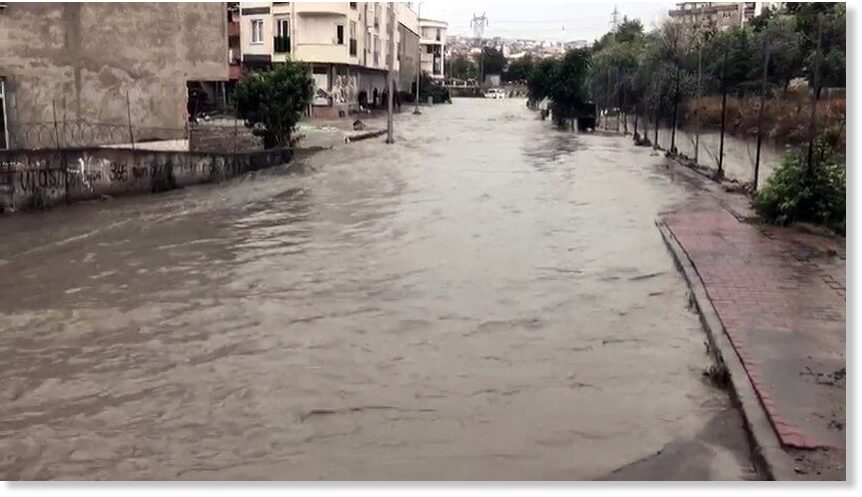
Istanbul has been besieged by foul weather, with large parts of the city flooded, others lashed by ferocious winds or towering waves, sporadic hail storms forcing residents to take cover, and to top it all off, a fearsome tornado.
Despite warnings from Turkey's General Directorate of Meteorology, the roughly 16 million residents of Istanbul could not have imagined the onslaught of bad weather that awaited them Tuesday.
A rare tornado formed off the city's western districts, captured in all its terrifying glory by residents already fleeing the torrential rain and violent hail storms.
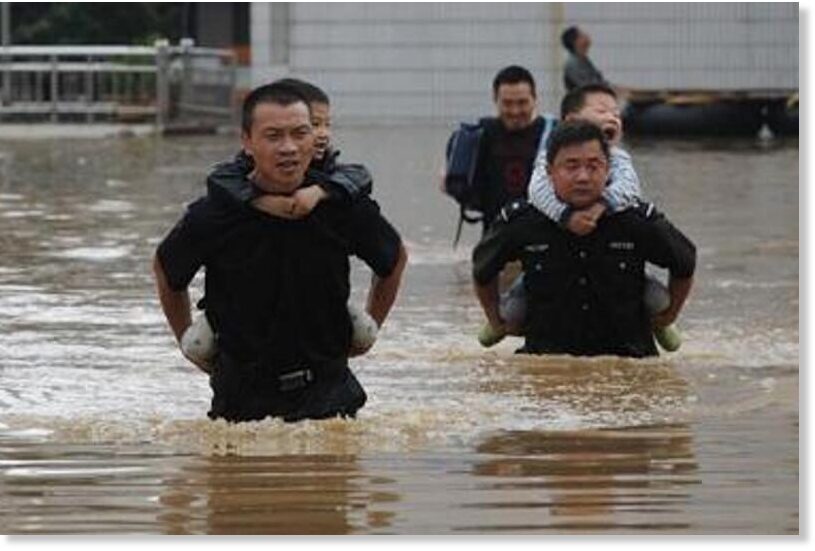
Further heavy rain and flooding has struck in Guizhou Province, China.
Xinhua news agency reports at least 3 people have died and 10,000 have been displaced after flooding in the mountainous area of Tongzi County on 22 June.
Around 10 houses were destroyed and over 1,000 houses damaged, along with 715 hectares of crops. Power supply and telecommunications were interrupted.
"The purpose of GLADIO was to attack civilians, the people - women, children, innocent people, unknown people, far removed from any political game. The reason was quite simple: to force the public to turn to the State and demand greater security. Under a strategy of tension, you 'destabilize in order to stabilize', to create tension within society and promote conservative, reactionary social and political tendencies."
~ Italian neo-fascist whose prosecution led to the discovery of NATO's 'Gladio' networks across Western Europe
- Vincenzo Vinciguerra
”
Recent Comments
Israel might be able to infiltrate and subvert the US government, but it cannot salvage its waning support amongst the American people, who are...
Comment: The US Tsunami Warning Center has issued a warning for the potential threat of tsunami waves for the Pacific coasts of Mexico, Guatemala, Honduras and El Salvador.
Footage and more details from Twitter:
UPDATE:The Guardian on June 24 reports: