Secret HistoryS


Archaeology

In Ice Age Indonesia, people were making jewelry and art

ice age jewelry
© Griffith University
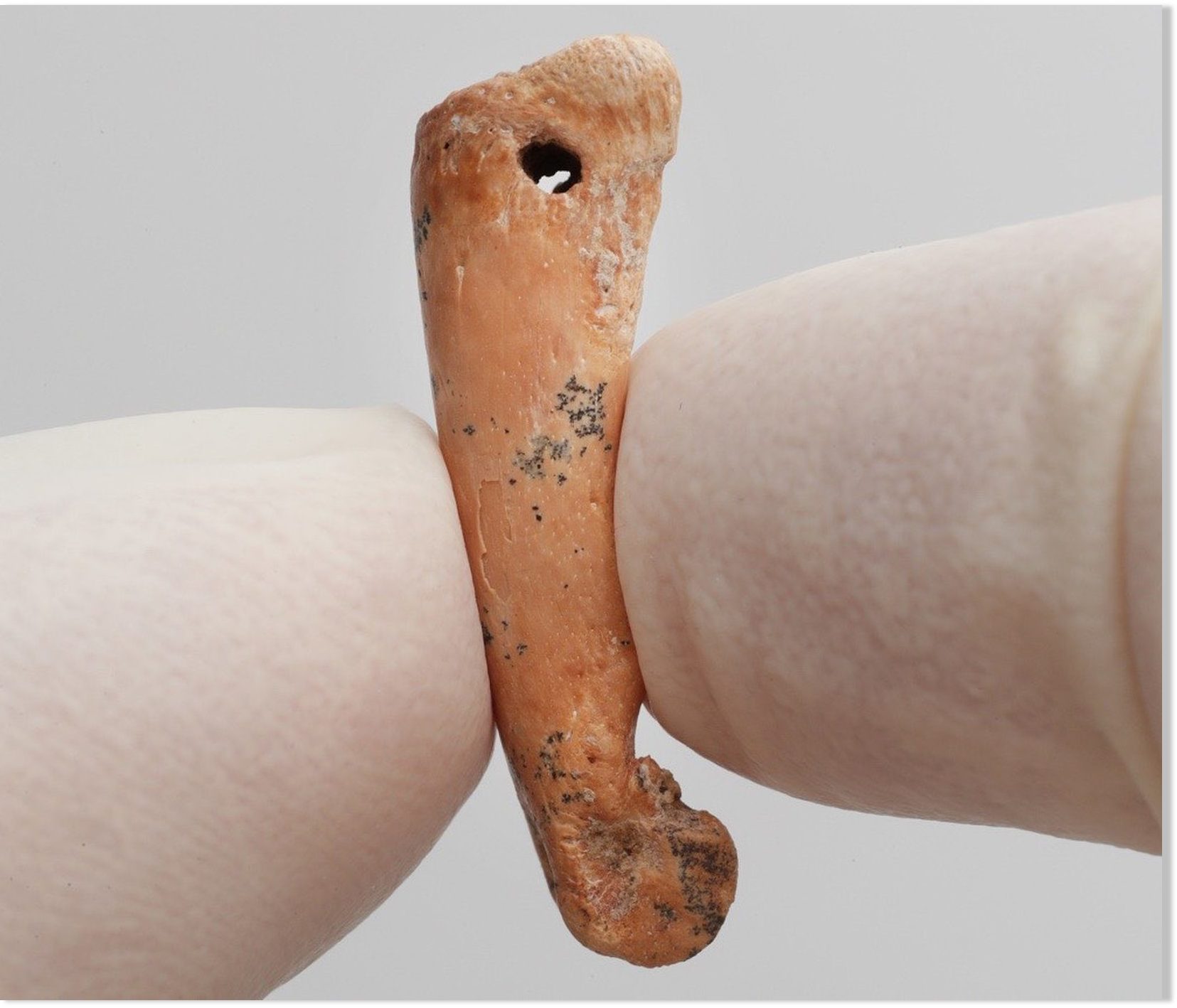
Dated to between 26,000 to 22,000 years ago, this artifact, made from the bone of a bear cuscus, was likely worn as a pendant on the Indonesian island of Sulawesi where it was found.
Art and jewelry dating back to the last ice age have been unearthed in a cave in Indonesia —a discovery that suggests the people who lived there at that time were more culturally advanced than some experts previously thought.

The artifacts, which include pendants and beads made from the bones of "pig-deer" and monkey-like marsupials, date back at least 22,000 years, researchers report in a new study.

Archaeologists discovered the artifacts in Wallacea, a 1,000-mile-wide (1,600 kilometers) zone of mainly Indonesian islands separating Southeast Asia from Australia, and the items are now shedding light on the colonization of this area and nearby Australia. Previous research found that modern humans reached Wallacea by about 47,000 years ago.

Star of David

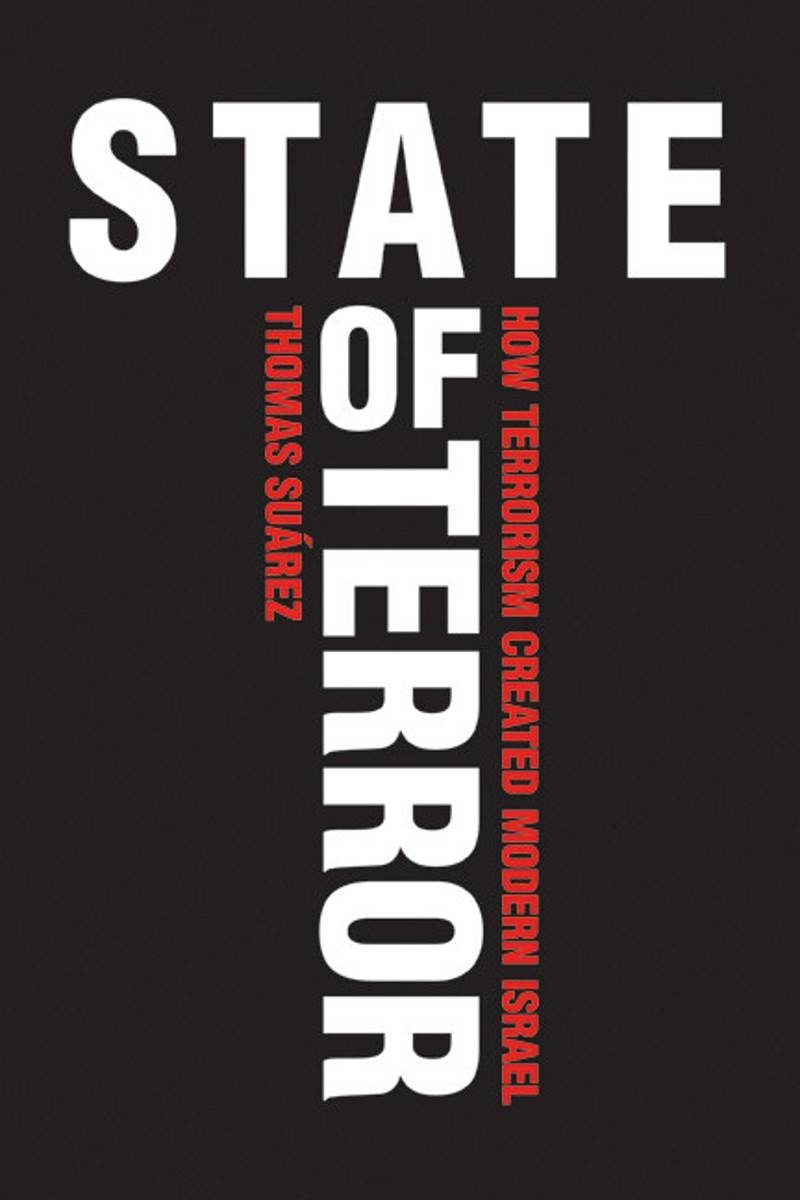
Book review: State of Terror: How Terrorism Created Modern Israel

book cover state of teror
© Thomas Suárez
Ron Such reviews Thomas Suárez's history of Zionist terror in the conquest of Palestine.

Israel's propaganda playbook attempts to reframe the Palestinian liberation struggle as a question of terror, not territory. Thanks to a dutiful media, this effort to portray Palestinians as terrorists has had significant traction among some demographics.

But how did terrorism originate in Palestine and what was its outcome, both historically and today?

Thomas Suárez sheds much new light on those questions in State of Terror: How Terrorism Created Modern Israel. He does this largely by mining previously neglected declassified documents from the British National Archives, covering the period of the British Mandate for Palestine (1920-1948).

Suárez's principal thesis is that Zionist terrorism "ultimately dictated the course of events during the Mandate, and it is Israeli state terrorism that continues to dictate events today."

The author cautions that while he unequivocally condemns Palestinian terrorism against civilians, he recognizes that some were driven to extreme measures due to an asymmetry in power and in reaction to attempts to subjugate the Palestinian people and expropriate their resources, land and labor.

Camcorder

Sentinelese tribe: Rare footage of one of the world's last un-contacted indigenous people

Sentelise tribe
© Via YouTube/LoveBite Productions
Rare footage of one of the world's last uncontacted tribes has emerged, showing its members on the beaches of North Sentinel island in the Bay of Bengal.

The footage is part of a documentary by LoveBite Productions on the Sentinelese tribe. The narrator states that the people and their ancestors are thought to have inhabited the island for nearly 60,000 years.

"Working on this project, reading about them, watching all these videos, brought tears to my eyes," the narrator says.

The Sentinelese are known to throw arrows at low flying aircraft such as helicopters and reject all attempts at communication. After the 2004 Tsunami, a photo was captured of one of the tribesmen taking aim at an emergency helicopter with an arrow. It was taken as proof the tribe had survived the disaster.

Little is known about the tribe which could reportedly have as little as 50 and as many as 500 members. The Sentinelese tribe and the tribes on the more remote parts of the Andaman and Nicobar islands are hunter-gatherer people who are semi-nomadic and who have rejected attempts for them to be integrated into other societies, according to Survival International.


Eiffel Tower

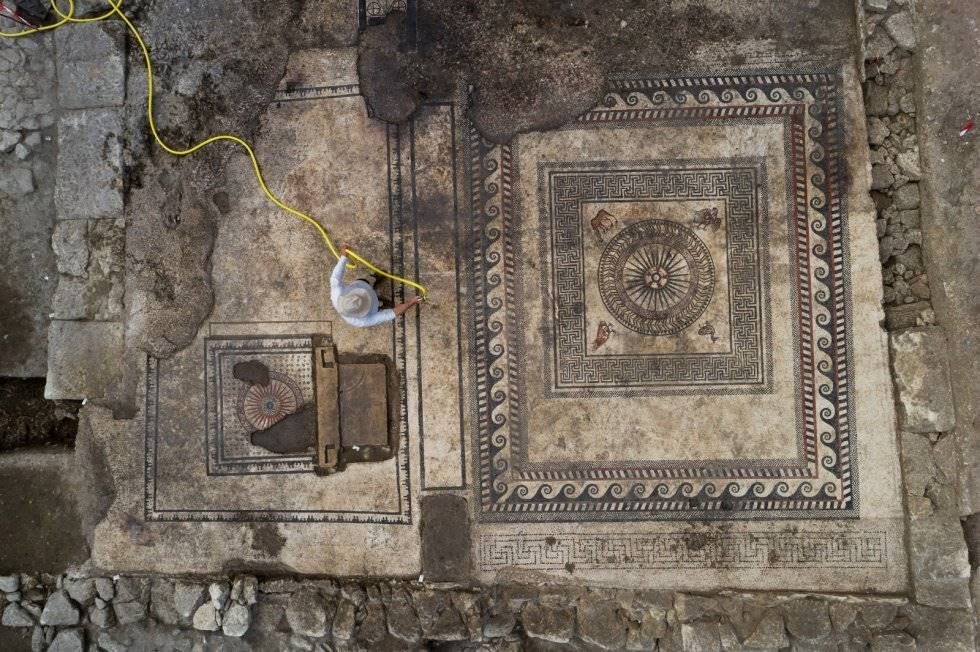
Elaborate mosaics shed light on enigmatic past of ancient Roman city in France

roman mosaic france
© Denis Gliksman-InrapThe mosaic was found in a large building
Stunning mosaics shed light on enigmatic past of Roman city in southern France

Until now, the city of Ucetia was only known by name and by a few isolated mosaic fragments.

Archaeologists have unearthed part of an ancient Roman city in southern France, known as Ucetia. To date, the settlement had only be known by name, and this is the first time that some of its impressive features have come to light.

The excavations began in October 2016 at the request of the French state, after local authorities bought land near the modern-day city of Uzes (near Nimes) to build a boarding school and a canteen. A team led by Philippe Cayn from the French National Institute for Preventive Archaeological Research (INRAP) excavated the 4,000m sq site, to make sure construction works wouldn't destroy any major artefacts. In the process, the researchers shed a light on the mysterious past of the Roman city of Ucetia.

Question

JFK journal's stunning admission: 'No complete evidence' Hitler's body was ever found

JFK Hitler
© The Free Thought Project
If you aren't convinced, you're in good company — recently revealed documents from a personal journal make candid skepticism from a man who could arguably be termed the Führer's polar opposite — President John F. Kennedy.

While questioning the official narrative pertaining to one of the most opprobrious tyrants in history might not be a comfortable matter, the theory has gained wide traction from a number of reputable sources and analyses in recent years — but, apparently, the beloved former president harbored qualms about the April 30, 1945 deaths.

"Hitler's Reich Chancellery was a shell," Kennedy penned in 1945, several years before ascending to the White House.
"The walls were chipped and scarred by bullets, showing the terrific fight that took place at the time of its fall. Hitler's air-raid shelter was about 120 feet down into the ground — well furnished but completely devastated. The room where Hitler was supposed to have met his death showed scorched walls and traces of fire. There is no complete evidence, however, that the body that was found was Hitler's body. The Russians doubt that he is dead."
That Kennedy and Hitler share in common entire tomes positing theories on their lives and the manner of their deaths makes the former president's skepticism on the latter's dubious demise an especially fitting observation.

Archaeology

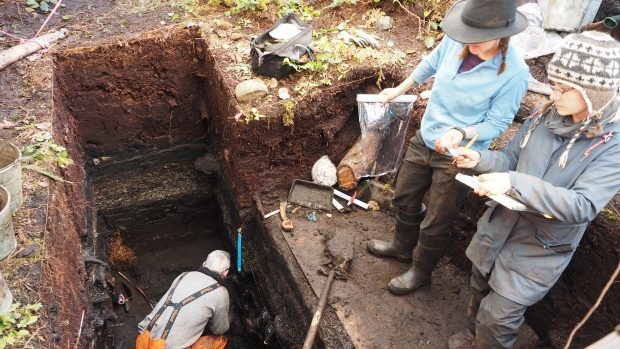
Archeological find affirms Heiltsuk Nation's oral history

Settlement on B.C.'s Central Coast dated back to 14,000 years

archeology team
© Joanne McSporranMembers of the archeology team, from left to right, John Maxwell, Alisha Gauvreau, and Seonaid Duffield work on excavating the site.
An ancient archeological find on Triquet Island on B.C.'s Central Coast is adding credence to the oral histories of the Heiltsuk Nation.

"Heiltsuk oral history talks of a strip of land in that area where the excavation took place. It was a place that never froze during the ice age and it was a place where our ancestors flocked to for survival," said William Housty, a member of Heiltsuk Nation.

Map

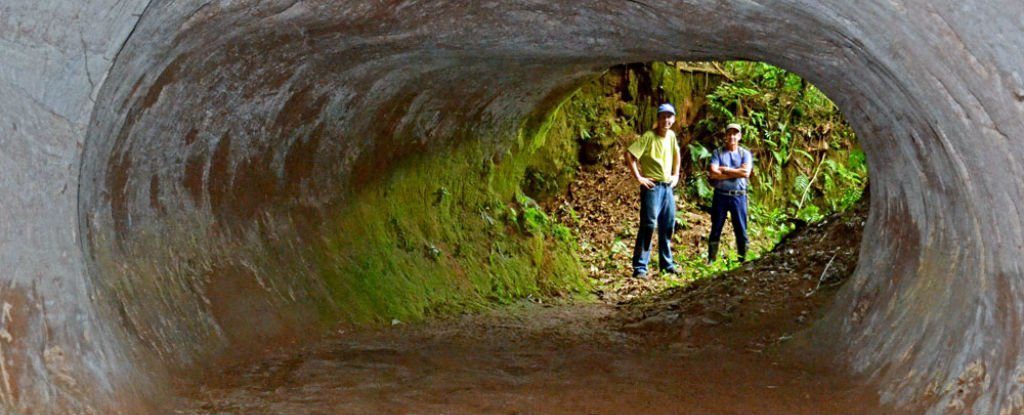
Ancient Mega-Sloths dug massive tunnels in South America

underground tunnel
© Heinrich Frank
Researchers have found several colossal burrows in South America that are so huge and neatly constructed, you'd be forgiven for thinking humans dug them as a passageway through the forest.

Turns out, they're far more ancient than they look, estimated to be at least 8,000 to 10,000 years old, and no known geologic process can explain them. But then there's the massive claw marks that line the walls and ceilings - it's now thought that an extinct species of giant ground sloth is behind at least some of these so-called palaeoburrows.

"I didn't know there was such a thing as palaeoburrows," lead researcher behind the latest study, Heinrich Frank from the Federal University of Rio Grande do Sul in Brazil, told Andrew Jenner at Discover.

"I'm a geologist, a professor, and I'd never even heard of them."

Archaeology

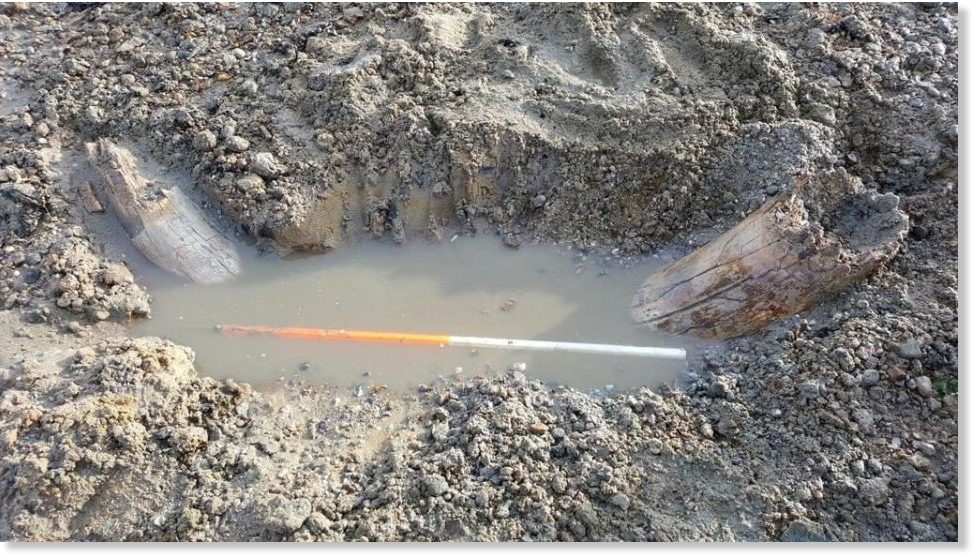
Mammoth tusk which could date back 14,000 years found washed up on British beach

mammoth tusk
This 6 foot long mammoth tusk found off the coast of West Mersea, Essex could easily be mistaken for a piece of driftwood
Scientists have urged Brits to get digging around our coastline after discovering a massive mammoth tusk which could date back 14,000 years, was found on a beach.

Britain's last known woolly mammoths died after they fell into holes left by melting ice blocks. It's not clear how old the tusk is, but the last mammoths are believed to have walked Britain 14,000 years ago.

The incredible find was made by volunteers with Coastal and Intertidal Zone Archaeological Network (Citizan) on Thursday morning off Mersea Island.

Project officer Stephanie Ostrich said: "We came across it by chance. It is incredibly fragile and quite a rare find." Dog-walkers and beachgoers have been urged to keep an eye out for unusual pieces of wood that could turn out to be invaluable artefacts.

Document

'Wish you well against Jewish invaders': Himmler's letter to Palestinian Arab leader discovered

German Fuhrer Adolf Hitler and Grand Mufti of Jerusalem Mohammad Amin Al-Husseini meet in Berlin, 30 November 1941
© HO / AFP German Fuhrer Adolf Hitler and Grand Mufti of Jerusalem Mohammad Amin Al-Husseini meet in Berlin, 30 November 1941.
An old telegram uncovered by the National Library of Israel shows a letter from Nazi SS chief Heinrich Himmler to Palestinian Grand Mufti Amin al-Husseini, voicing his support for "freedom-seeking Arabs" against "world Jewry."

The telegram, dating back to autumn 1943, appears to show how in their hatred for Jews, Nazis in Europe have been seeking to support Palestinians against the "Jewish invaders."

"To Grand Mufti Amin al-Husseini," the letter read. "From the outset, the National Socialist [Nazi] movement of Greater Germany has been a standard-bearer in the battle against world Jewry. For this reason, it is closely following the battle of freedom-seeking Arabs, particularly in Palestine, against the Jewish invaders.

The shared recognition of the enemy and the joint fight against it are creating the strong base [uniting] Germany and freedom-seeking Arabs around the world. In this spirit, I am pleased to wish you, on the anniversary of the wretched Balfour Declaration, warm wishes on your continued fight until the great victory."

Sherlock

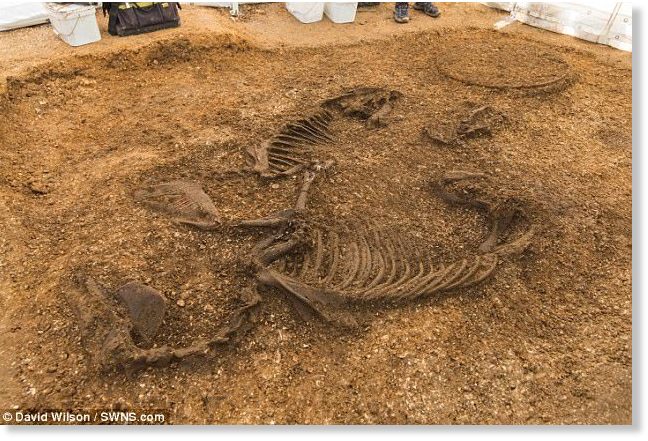
'Highly unusual' 2,500-year-old chariot and two horse skeletons unearthed at a Yorkshire building site

chariot
An Iron Age chariot and two horse skeletons have been unearthed.
An Iron Age chariot and two horse skeletons have been unearthed at a Yorkshire building site. The 2,500-year-old remains have been dubbed by experts as 'highly unusual'. The find is the first of its kind in the last 200 years and one of only 26 ever excavated in the UK.

It has been described as a find of 'international significance'. The peculiar remains were found at a new housing development in Pocklington, East Yorkshire, which has forced planners to hold off on their builds. Archaeologists working on the site say that the remains may link to a strange human burial ritual.