Secret HistoryS


Archaeology

Tiller the Hun? Farmers in Roman Empire converted to Hun lifestyle -- and vice versa

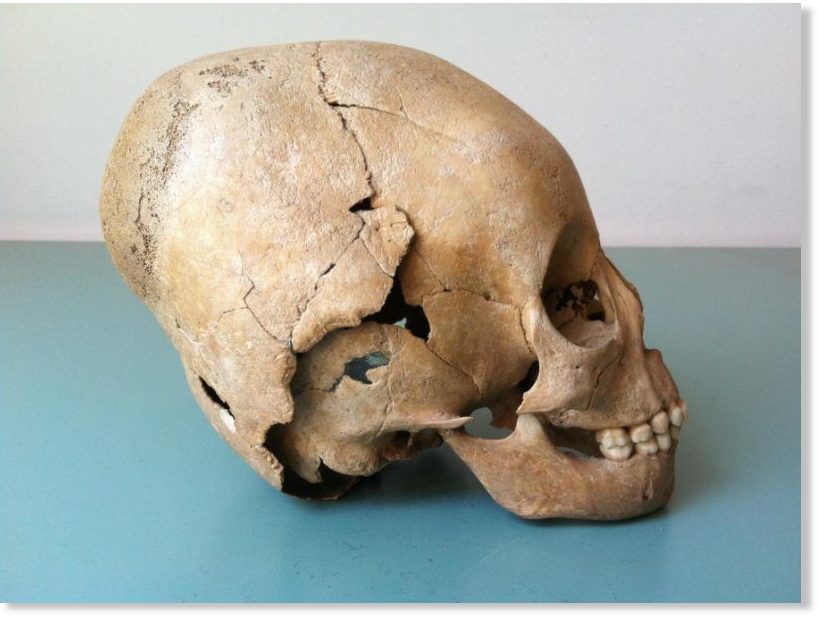
Hun skull
© Susanne HakenbeckExample of a modified skull, a practice assumed to be Hunnic that may have been appropriated by local farmers
Marauding hordes of barbarian Huns, under their ferocious leader Attila, are often credited with triggering the fall of one of history's greatest empires: Rome.

Historians believe Hunnic incursions into Roman provinces bordering the Danube during the 5th century AD opened the floodgates for nomadic tribes to encroach on the empire. This caused a destabilisation that contributed to collapse of Roman power in the West.

According to Roman accounts, the Huns brought only terror and destruction. However, research from the University of Cambridge on gravesite remains in the Roman frontier region of Pannonia (now Hungary) has revealed for the first time how ordinary people may have dealt with the arrival of the Huns.

Pharoah

King Tut's Grandmom? Huge Alabaster Statue Unearthed Along Nile

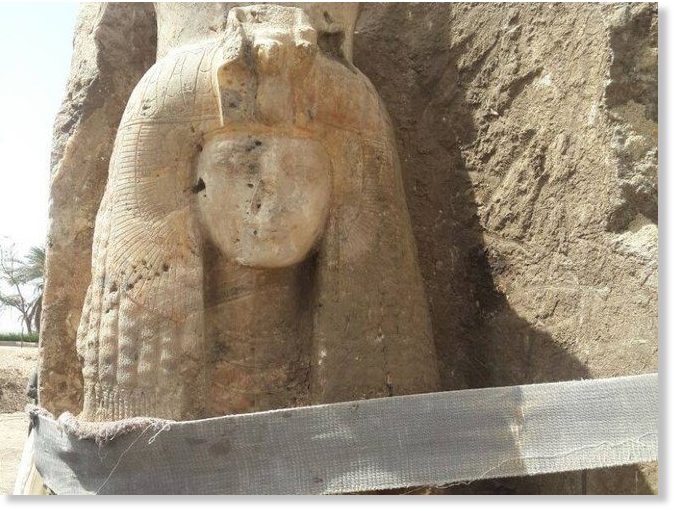
Queen Tiye statue
© Egypt Ministry of AntiquitiesA statue that may depict Queen Tiye, the grandmother of King Tut, has been unearthed near Luxor.
A "unique" carved alabaster statue that may represent King Tut's grandmother ― Queen Tiye ― has been unearthed on the west bank of Luxor along the Nile River, archaeologists with Egypt's Ministry of Antiquities announced yesterday (March 23).

The statue, which looks to be life-size in images released by the ministry, was found accidentally when workers lifted the lower part of the colossal statue of King Amenhotep III, the ninth ruler of ancient Egypt's 18th Dynasty, who lived from about 1390 to 1352 B.C. The statue, dating back around 3,400 years, was situated next to the king's right leg, according to the mission leader, Hourig Sourouzian.

Queen Tiye, who died around 1340 B.C., was the wife of King Amenhotep III and the paternal grandmother of King Tut; as the identity of the boy king's mother is a source of debate among scholars, his maternal grandmother is not known for certain.

Archaeology

6,000yo Ancient Rock Carvings Depicting Masked People Discovered in Egypt

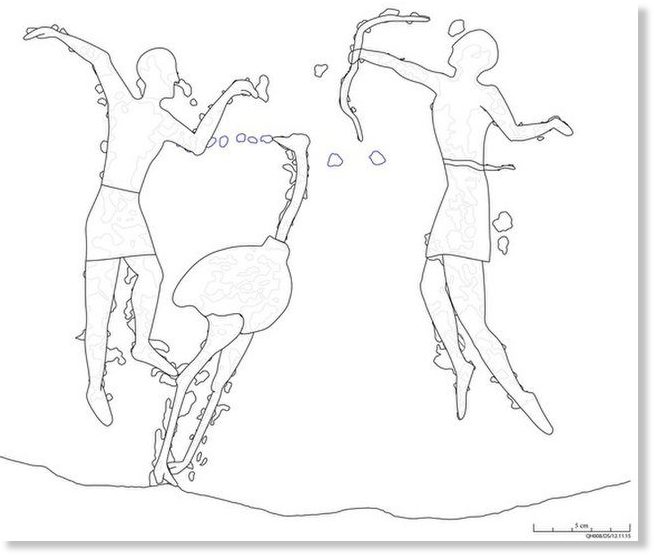
rock carvings egypt
© David Sabel
A drawing showing the Neolithic rock carving from Qubbet el-Hawa in greater clarity. Mask use was previously unknown from this era of pre-dynastic ancient Egypt.
Before King Tut, Hatshepsut or Ramesses I — in fact, before there were any pharaohs at all — someone pecked an image of a hunter and a dancer wearing an ostrich mask into a rock on a hill along the Nile River.

The image, discovered recently by archaeologists, provides a tantalizing glimpse of Egypt's Neolithic period, or Stone Age. It likely dates back to the latter half of the fourth millennium B.C., said Ludwig Morenz, an Egyptologist at the University of Bonn in Germany. The depiction of a masked dancer in this era is particularly fascinating, Morenz told Live Science.

"[In] ancient Egyptian culture, we know many, many masks, but they are basically all masks for the dead," Morenz said. "And here we have a mask culture which predates pharaonic culture."

Eye 2

David Rockefeller's dark legacy in Brazil

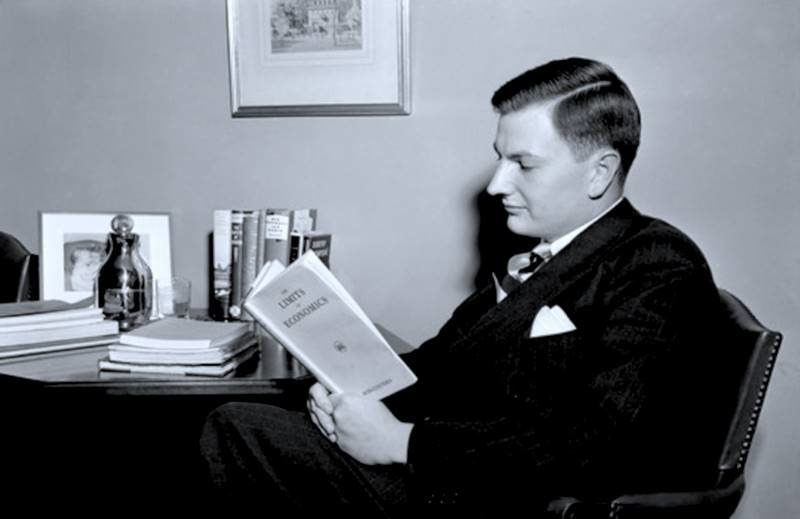
young David Rockefeller
David Rockefeller
On March 20, David Rockefeller died at the age of 101. As the obituaries for one of the world's richest men gush over his philanthropy, it needs to be pointed out that he was a major player in several Latin American coups, supported extremely corrupt military dictatorships, post-dictatorship neoliberal policies that greatly exacerbated income stratification and poverty and that his dark legacy will continue to influence the region long after his death.

The Rockefellers' arrival in Brazil

The Rockefeller Foundation first arrived in Brazil during World War I and was embedded within the so-called "public health movement" amongst Brazilian elites. At that time, Brazilian eugenics was synonymous with public health and emphasized "hygienization", expressed in the maxim "to sanitize is to eugenize". With Rockefeller assistance, the creation of the Eugenic Society of São Paulo in 1918 represented the institutionalization of eugenics in Brazil. Amongst elites, eugenics was associated with evolution, progress and civilization, even treated by some as a 'new religion'. In "War against the weak" Edwin Black explains that the purpose of the Rockefeller Foundation was to finance programs aimed at "the extermination of those considered degenerate". In Brazil this meant the poor, the ignorant, those of mixed race and African descent.

In her thesis on David's older brother Nelson Rockefeller, historian Elisabeth Cobbs argues that U.S. Foreign policy in Brazil was not only realised by official relations between governments and diplomats, but also by the private sector, including philanthropic organisations. Nelson had been a regular visitor to Brazil since the 1930s, and in 1941 was named by President Roosevelt as coordinator of the Office of Interamerican Affairs (CIAA), which ran intelligence and propaganda operations against the Axis Powers in Latin America.

Document

The bitter truth of the My Lai Massacre

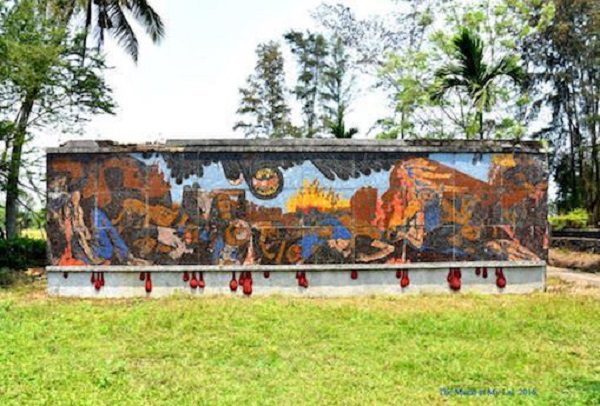
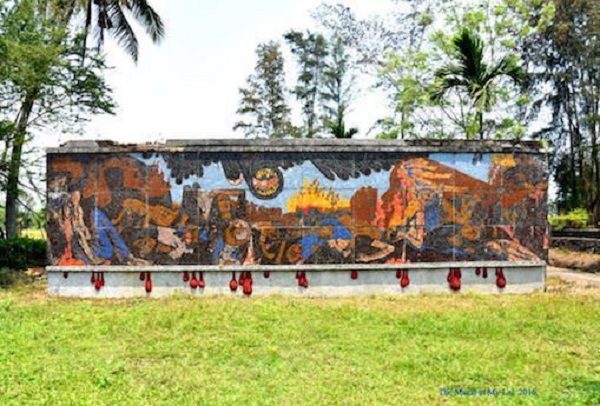
My Lai mural
My Lai mural.
March 16, 2017, was the 49th anniversary of the My Lai Massacre, located in Quang Ngai Province, Vietnam. It was Saturday morning, March 16, 1968, when approximately 115 U.S. Army soldiers of the Americal Division's Charlie Company, 1st Battalion, 20th Infantry, landed in helicopters just outside the village of My Lai 4. Over the course of the next four hours, these American soldiers, and their Military High Command, who were flying overhead in helicopters observing the massacre, took part in a horror show far beyond the human imagination. They took the term, "War Crimes," and added a butcher shop to the equation of morbid extermination. In essence, they became a U.S. version of the final solution. They committed an act of barbarity that would redefine the war in Vietnam. It would take years to decipher what happened that day, as denial is the elixir that protects us from experiencing national shame. It is these two words, "National Shame," that continues to hide the truth of what really happened in Southeast Asia.

This is what the U.S. Military did on that day on March 16, 1968. I use the word "We," because our taxes paid for the massacre, and our ignorance about the war wrote the check. Among the dead were a hundred and eighty-two women, seventeen of them pregnant. A hundred and seventy-three children were executed, including fifty-six infants. Sixty older men were also murdered. The museum at My Lai includes the accounting of another important fact: there was another village located about a mile away from My Lai 4, called My Khe 4, that U.S. soldiers from Bravo Company on the same day, also committed atrocities. So, 407 were murdered at My Lai 4, and 97 were murdered at My Khe 4, for a total of 504 Vietnamese civilians. It also must be noted, that there were twenty rapes committed, not to include attempted rapes. I have chosen not to go into detail about how those executions were committed, or the torture and extreme suffering that was committed by American soldiers under Pentagon command. This butcher shop mentality would be extremely difficult to read and comprehend by most people. I will say this, and it is a quote from Larry Colburn, who was a door gunner on Hugh Thompson's helicopter that landed on the ground during the massacre, and attempted to stop the killing. These are Larry Colburn's words: " The only thing the U.S. soldiers did not do was cook them and eat them."

Comment: More on this atrocity:


Gold Coins

Chinese river discovery: 10K pieces of 300yo gold and silver treasure

Chinese river discovery
© Global Look Press via ZUMA Press
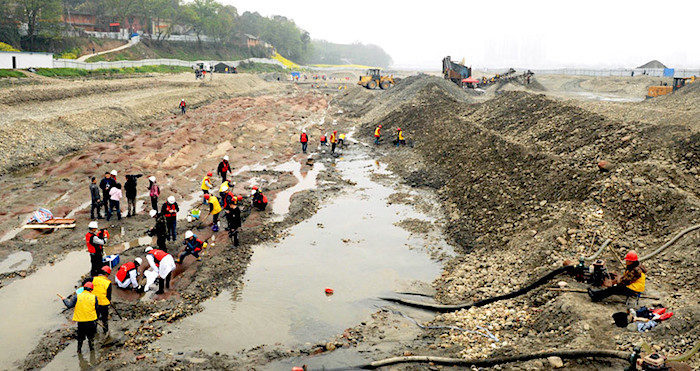
Over 10,000 items from a gold and silver treasure dating back to the Ming Dynasty 300 years ago have been discovered at the bottom of a river in China. The monumental trove, which had been sitting at the bottom of a river in southwest China's Sichuan Province for over 300 years, was unearthed by archaeologists.

A large number of gold, silver, and bronze coins were among some of the items recovered at the junction of the Minjiang and Jinjiang rivers about 50 kilometers (31 miles) south of Chengdu, the archeologists said on Monday.

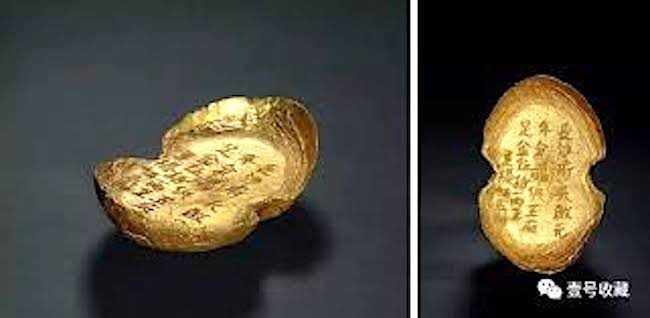
two chinese gold things
© 360doc.com
Pieces of jewelry, utensils, and iron weapons, including swords, knives and spears, were also found, the director of the Sichuan Provincial Cultural Relics and Archeology Research Institute said. Many items, having been restored to immaculate condition, still feature impeccably embossed patterns and characters.

The discovery establishes the river as the site of a historic battle fought in 1649 between uprising peasant leader Zhang Xianzhong and Ming Dynasty soldiers, in which about 1,000 boats loaded with money and jewels sunk.

Eye 1

'Winston Churchill is no better than Adolf Hitler,' states Indian politician Dr Shashi Tharoor

Dr Tharoor, a former Under-Secretary General of the UN, says the blame for the Bengal Famine rests with Churchill
© Rohit Jain ParasDr Tharoor, a former Under-Secretary General of the UN, says the blame for the Bengal Famine rests with Churchill
'Churchill has as much blood on his hands as Hitler does,' says author

An Indian politician has said Winston Churchill is no better than Adolf Hitler and the two leaders have equivalent amounts of "blood" on their hands.

Dr Shashi Tharoor, whose new book Inglorious Empire chronicles the atrocities of the British Empire, said the former British Prime Minister should be remembered alongside the most prominent dictators of the twentieth century.

Dr Tharoor, a former Under-Secretary General of the UN, said the blame for the Bengal Famine rested with Churchill. In 1943, up to four million Bengalis starved to death when Churchill diverted food to British soldiers and countries such as Greece while a deadly famine swept through Bengal.

"This is the man who the British insist on hailing as some apostle of freedom and democracy," the author said of Churchill at a launch of his book. "When to my mind he is really one of the more evil rulers of the 20th century only fit to stand in company of the likes of Hitler, Mao and Stalin".

Info

The stone kingdom of Great Zimbabwe

Great Zimbabwe_1
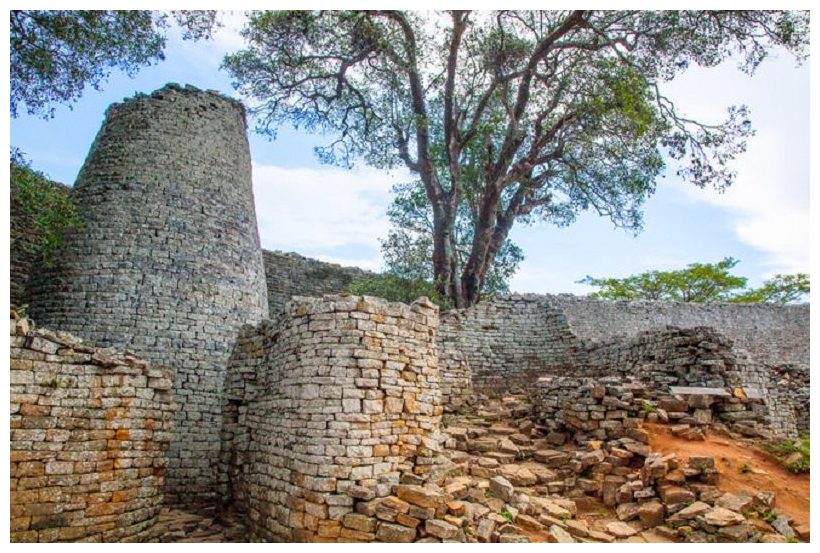
© Lynn Y/ShutterstockThe ancestors of the Shona people built Great Zimbabwe, which flourished between the 11th and 15th centuries A.D.
Great Zimbabwe was a 720-hectare (1,779 acres) city that flourished between roughly the 10th and 15th centuries A.D.

"Zimbabwe" is a Shona name that, while the translation varies, can mean houses of stone. The ruins contain numerous stone enclosures with soaring walls as tall as 11 meters (36 feet). They were made without the use of mortar.

Much of Great Zimbabwe is unexcavated and what the different enclosures were used for is a source of debate among archaeologists. The earliest written records for the city date to the 16th century, a time after it was largely abandoned.

Today, Great Zimbabwe is a UNESCO World Heritage Site and is considered a sort of national symbol for the modern-day country of Zimbabwe. The nation adopted the name Zimbabwe in 1980, using the name that the Shona had long before given to the city. Also the flag of Zimbabwe shows a bird sitting on a pedestal, which is a representation of a type of artifact found at Great Zimbabwe.

Despite the importance of Great Zimbabwe, much of it is unexcavated. "If we combine areas dug by antiquarians with those by professional archaeologists, it becomes clear that the excavated area at Great Zimbabwe is less than 2 percent," wrote a team of scientists who are remapping the city in a paper published in 2016 in the Journal of Archaeological Method and Theory.

The remapping team found that the site encompassed about 720 hectares (1,779 acres) of land and that "its size at any given point in time was considerably smaller than the 720 ha, making up the site today," they wrote in the journal article. They explained that different parts of the city were inhabited at different times and the earliest evidence for habitation dates to around A.D. 900.

Comet 2

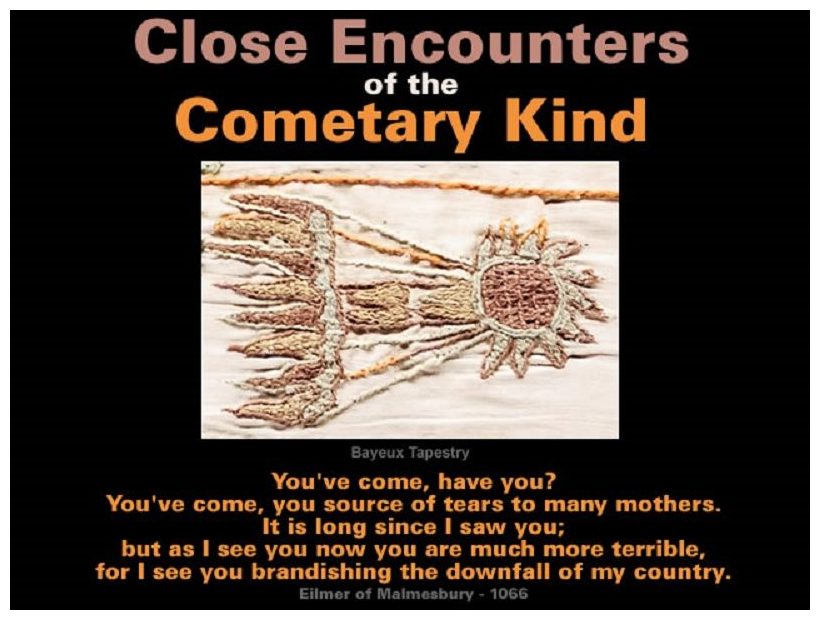
Comet Halley - Close encounters of the cometary kind

Halley's Comet
© Malaga Bay
Researchers trawling through the dusty corners of the Academic Archives primarily have to rely upon serendipity to provide them with break-through information.

However, when serendipity strikes the results can be startling.

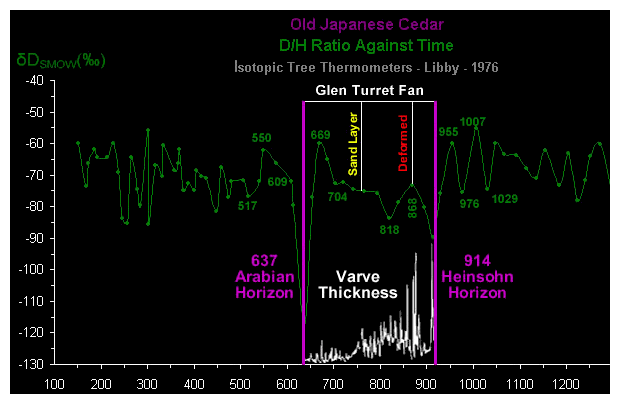
Such was the case a few weeks ago when the Glen Turret Fan chronology neatly slid into place between the Arabian Horizon and the Heinsohn Horizon in the Old Japanese Cedar Tree chronology.
The Glen Turret Fan in upper Glen Roy contains 276 annual sedimentary layers that are coincidentally close to the 277 years between the Arabian Horizon of 637 CE and the Heinsohn Horizon of 914 CE i.e. the Heinsohn Sandwich.
...
The unexplained arrival of the Sand Bed in the Glen Turret Fan [upper Glen Roy] in 759 CE coincidentally echoes:

a) the unexplained Smothering of Samarra in sand
b) the unexplained Covering of Cologne in sand
c) the unexplained Clear Black Horizons in sand across Southern England and Scotland
d) the unexplained Sandy Sludge Layers in the Greenland Ice Cores...

See: The Fold Up Beds of Glen Roy
Old Japanese Cedar Tree chronology
© Malaga Bay
And then serendipity struck again in form of Comet Halley.

Comet Halley has several remarkable aspects.

Bad Guys

'A government all of its own': Truman was right about the CIA

Harry Truman
Say what you will about President Harry Truman, but at least he didn't leave the White House a suspiciously rich man. He also actually went home, to Independence Missouri, and moved into a modest house he didn't own. It was the same house belonging to his wife's family where he had lived with Bess (and his mother-in-law!) decades earlier.

Flat broke, and unwilling to accept corporate board positions or commercial endorsements, Truman sought a much-needed loan from a local Missouri bank. For several years his sole income was a $113 monthly Army pension, and only the sale of a parcel of land he inherited with his siblings prevented him from nearly "being on relief," as Truman allegedly stated. In the 1950s, perhaps almost entirely to alleviate Truman's embarrassing financial situation, Congress authorized a $25,000 yearly pension for ex-presidents Truman and the much-wealthier Herbert Hoover.

Contrast this with the luxe post-presidential life of the Reagans in Bel Air, or the still-unfolding saga of the Obama's jet-setting life between Kalorama, Palm Springs, and Oahu!

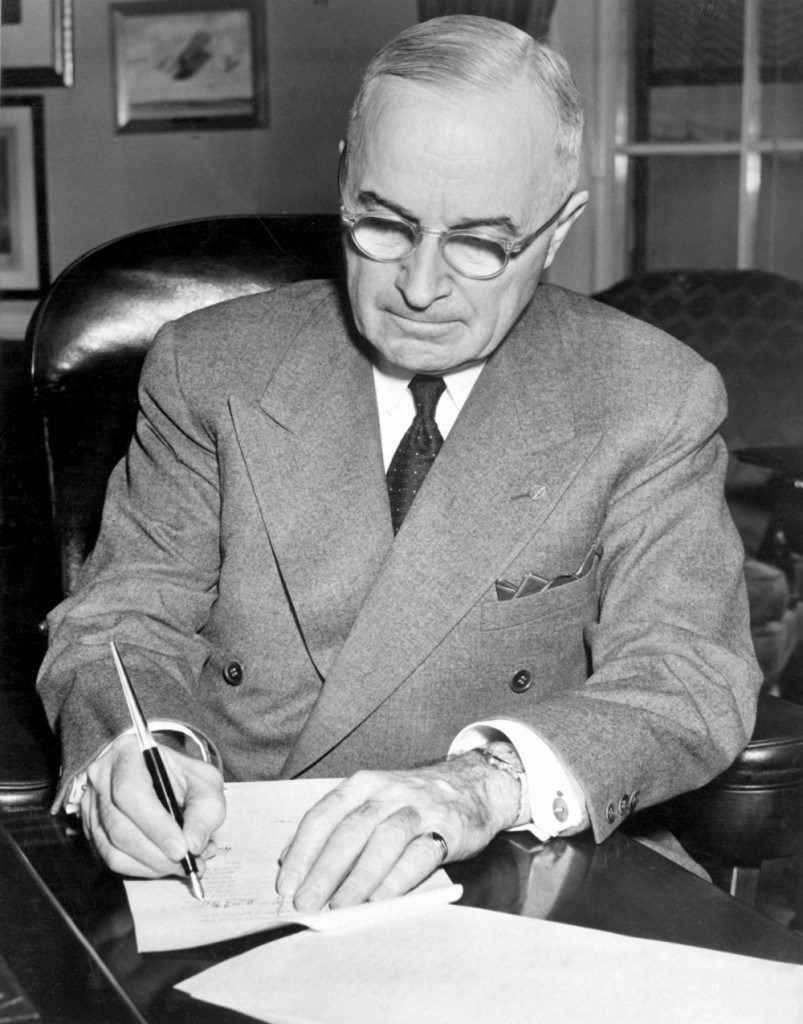
But even if Truman's homespun honesty and common man persona sometime wore thin, he deserves enormous credit for the startling admission that he regretted creating the CIA. Speaking to a biographer in the 1960s, less than 20 years after signing the National Security Act of 1947, Truman expressed a sense of foreboding about what the agency had become, and would become:
Merle Miller: Mr. President, I know that you were responsible as President for setting up the CIA. How do you feel about it now?

Truman: I think it was a mistake. And if I'd know what was going to happen, I never would have done it.