Secret HistoryS


Footprints

Creating an alternate reality with a psyops 'bureaucracy': How the U.S. swamped the world

Disinformation
© Krypt3ia
Newly declassified documents from the Reagan presidential library help explain how the U.S. government developed its sophisticated psychological operations capabilities that - over the past three decades - have created an alternative reality both for people in targeted countries and for American citizens, a structure that expanded U.S. influence abroad and quieted dissent at home.

The documents reveal the formation of a psyops bureaucracy under the direction of Walter Raymond Jr., a senior CIA covert operations specialist who was assigned to President Reagan's National Security Council staff to enhance the importance of propaganda and psyops in undermining U.S. adversaries around the world and ensuring sufficient public support for foreign policies inside the United States.

Raymond, who has been compared to a character from a John LeCarré novel slipping easily into the woodwork, spent his years inside Reagan's White House as a shadowy puppet master who tried his best to avoid public attention or - it seems - even having his picture taken. From the tens of thousands of photographs from meetings at Reagan's White House, I found only a couple showing Raymond - and he is seated in groups, partially concealed by other officials.

But Raymond appears to have grasped his true importance. In his NSC files, I found a doodle of an organizational chart that had Raymond at the top holding what looks like the crossed handles used by puppeteers to control the puppets below them. Although it's impossible to know exactly what the doodler had in mind, the drawing fits the reality of Raymond as the behind-the-curtains operative who was controlling the various inter-agency task forces that were responsible for implementing various propaganda and psyops strategies.

Info

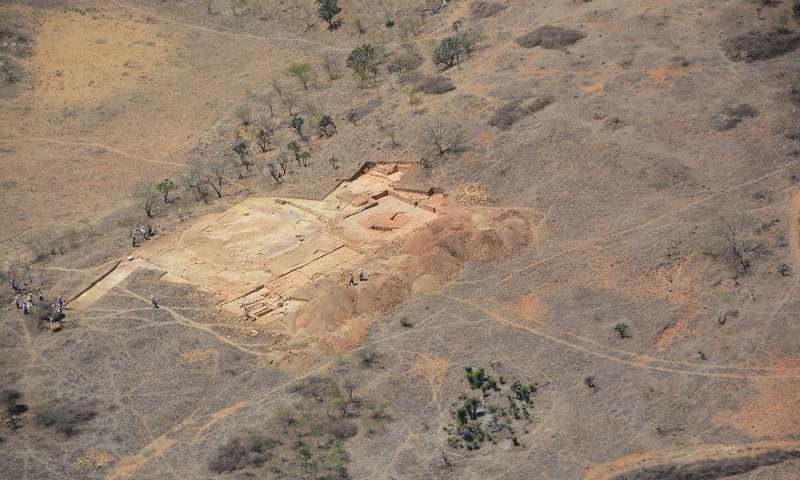
Ancient palace complex unearthed in Oaxaca Valley, Mexico

El Palenque royal palace
© Elsa M. Redmond and Charles SpencerEl Palenque royal palace
A pair of archaeologists with the American Museum of Natural History has unearthed a palatial compound in El Palenque's plaza in the Oaxaca Valley in Mexico. In their paper published in Proceedings of the National Academy of Sciences, Elsa Redmond and Charles Spencer describe their work, what they have uncovered and how their findings fit with the emergence of organized states in Mesoamerica.

The Oaxaca Valley near the southern tip of Mexico has been offering up clues of past civilizations for several decades—a team has been working at the El Palenque site in particular since 1993. In this new effort, the researchers focused on a dig on the north end of the plaza—the site of what the researchers believe was the home and business center for the ruler of an ancient empire.

The palace has been dated to approximately 2,100 to 2,300 years ago, a time before the Aztecs. Most in the field believe that the civilization that existed in Oaxaca was among the earliest states to come into existence in Mesoamerica. Redmond and Spencer suggest that their findings at the palace site back up that theory.

The palace, the pair report, was well preserved and covered approximately 2,790 square meters and had not only living quarters for the ruler and his family, but business offices, a staircase, a dining area and a place to perform sacrifices.

Comment: See also: Oldest temple in Mexican valley hints at possible human sacrifice


Family

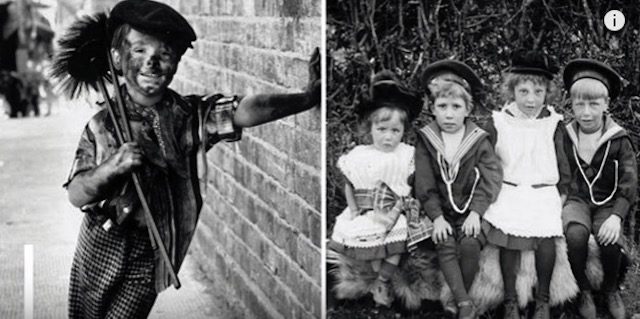
Something to remember: The differences between Rich and Poor in the Victorian era

Differences between Rich and Poor in Victorian times
© Via YouTube/Luth Luther
The quality of life during the Victorian times depended on whether you were rich or poor.

Wealthy Victorians enjoyed a good and easy life. Poor Victorians had a rough and hard life, often ending up in the workhouse or early death.


Archaeology

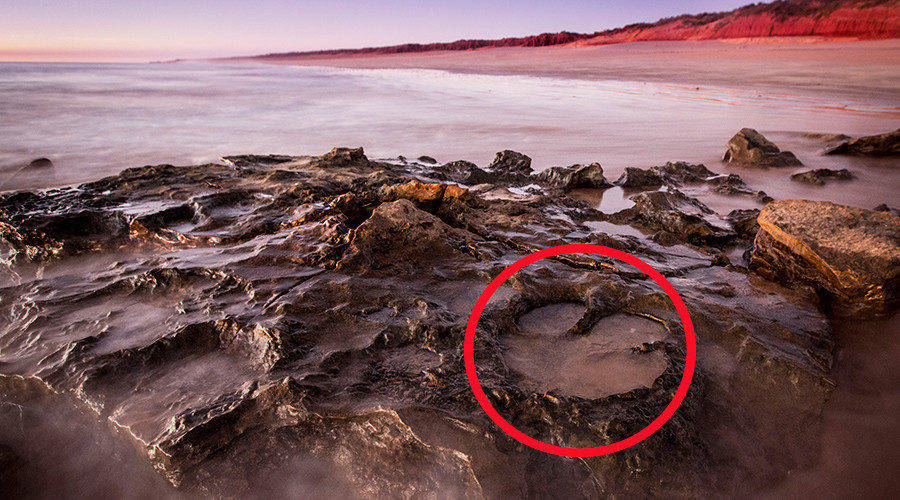
Jurassic highway: Thousands of dino footprints uncovered, including rare stegosaurus tracks

Australia dinosaur footprint
© University of Queensland
An area of Australian coastline has been dubbed 'Jurassic Park' after paleontologists scouring the landscape discovered an "unprecedented" number of dinosaur tracks dating back around 130 million years.

The Dampier Peninsula has been identified as a former home to scores of prehistoric beasts, thanks to researchers from the University of Queensland and James Cook University, who successfully documented thousands of footprints along the 25km (16 miles) stretch of coast.

New analysis of the area took five years (2011-2016) to complete, and has just been published in the Journal of Vertebrate Paleontology.

Dig

500 year old Ming Dynasty mummies unearthed at Chinese construction site

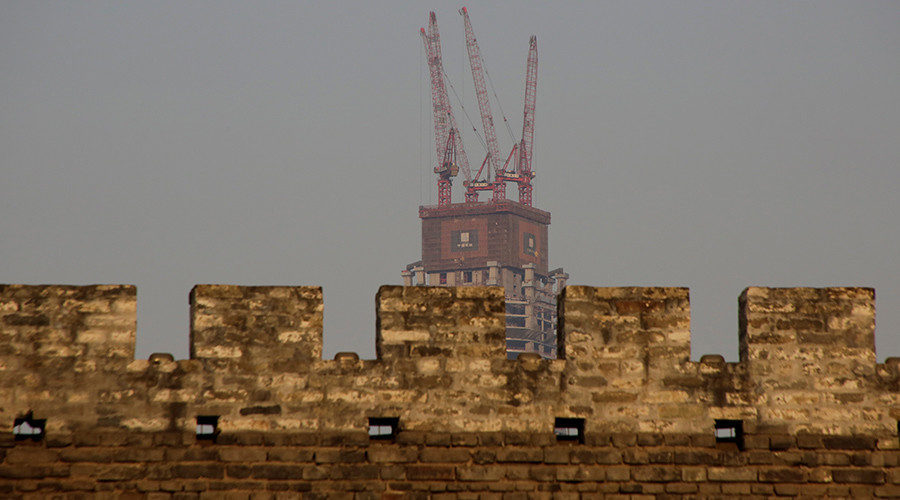
China Zun
© Jason Lee / ReutersThe construction site of China Zun is seen behind the Ming Dynasty City Wall, China
A construction crew in China made an unexpected discovery when attempting to install plumbing, unearthing a tomb containing the mummies of a couple believed to date back to the Ming Dynasty.

The discovery of the corpses, which are believed to be around 500 years old, was made in Taikang county in Zhoukou, Henan province, the Dahe Daily reported. Other discoveries found at the site included a tombstone and two crystal coffins.


Boat

Ancient military harbor for epic Greek battle found

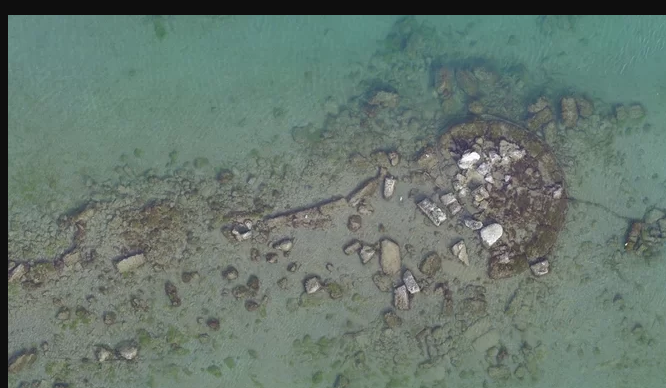
 Battle of Salamis
© V. MentoyannisAt the end of the jetty there was a round tower, which would have been part of the fortified harbor during the Battle of Salamis.
Greek archaeologists have found the ancient military harbor of the island of Salamis — the very physical space from which the largest and most decisive naval battle ever fought in antiquity was launched.

The ancient harbor was identified as being located in the small and well-protected Bay of Ambelaki, in the eastern part of the Greek island, during an archaeological search by a team of 20 experts from two Greek universities — the Ephorate of Underwater Antiquities and the Hellenic Institute of Marine Archaeology — according the Greek Ministry of Culture and Sports.

"This is the first systematic underwater reconnaissance to be initiated by Greek institutions in a severely polluted marine environment, yet in a crucial area of historical importance," the ministry said. [10 Epic Battles That Changed History]

Archaeology

Archeologists uncover 4,000yo tomb of one of the most important Egyptian noblemen from 12th Dynasty

Egyptian tomb brother Sarenput II
© Vivek Prakash / Reuters The tomb dates back to almost 4,000 years ago.
A team of archaeologists has uncovered the tomb of the brother of Sarenput II, one of the most important Egyptian noblemen from the 12th Dynasty. The discovery reveals new details about those who lived within the corridors of power during the period.

The team from the University of Jaén in Andalucia made the discovery in Aswan, Egypt where they have been working since 2008.

A mummy was found inside the tomb along with pottery, two cedar coffins and two wooden models representing funerary boats and scenes of everyday life at the time, according to a statement from the university.

Info

Ancient Greek artifact unearthed at Crimean bridge construction site

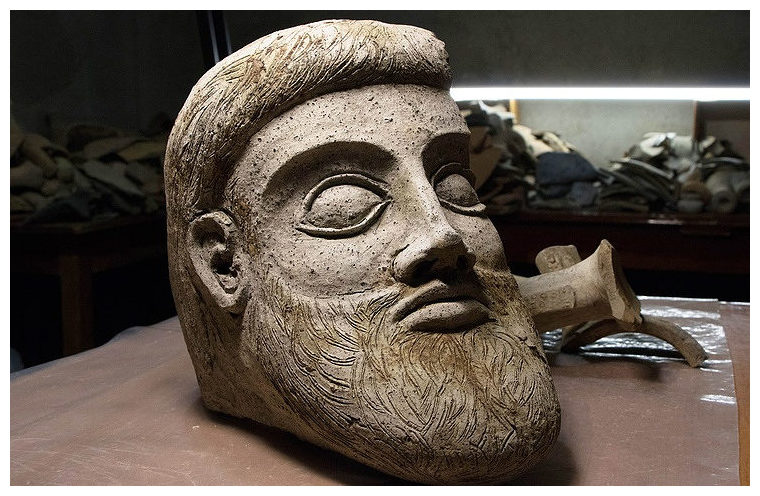
A part of a unique terracotta statue has been found at the Crimean bridge construction site during underwater diggings near the Ak-Burun Cape, Sergei Olkhovsky, head of the underwater unit of Russia's Academy of Sciences, said on Wednesday.
Ancient Greek Statue
© Crimean bridge information centerSuch objects have never been found in the northern Black Sea area before, according to the head of the underwater unit of Russia’s Academy of Sciences.
"As far as we know, this unique artifact discovery is the first of its kind in the northern Black Sea area, such objects have never been found here before. In order to figure out what it was used for, when and where it was made, we will cooperate with the leading ancient Greek art experts and will also carry out a laboratory test of the clay," the Crimea Bridge information Center quoted Olkhovsky as saying.

Mass production of terracotta artifacts began in the sixth century BC. Usually, figurines not more than 40 centimeters tall were made. However, the fragment unearthed during the current diggings, is believed to have been part of a bigger sculpture.

Info

14,000 year old engraved 'tablets' discovered in France

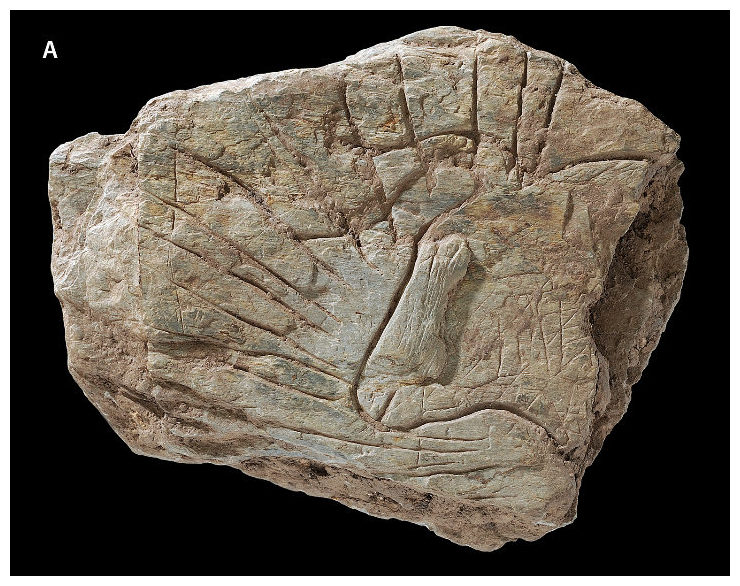
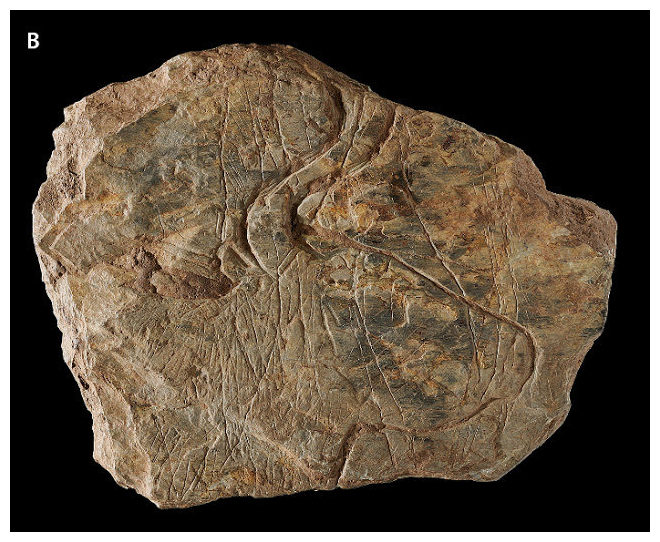
Some forty prehistoric engravings, more than 14,000 years old, have been discovered in Finistere, at the town of Plougastel-Daoulas, in Brittany (northwestern France).

Head of aurochs
© N. Naudinot/PLOS ONE
Head of aurochs
© N. Naudinot/PLOS ONEFragment 317 with a bifacial ornamentation: side A) head of aurochs surrounded by radiating lines; side B) head of aurochs.
Depicting several animals, these artistic vestiges date back to the Upper Palaeolithic period and are extremely rare in Europe.

The discovery, whose secret has been well kept, has only just been unveiled but is in fact not a recent one.

It dates back to 1987.

Bulb

Knowledge is Power: How oral cultures memorize so much information

ancient cultures
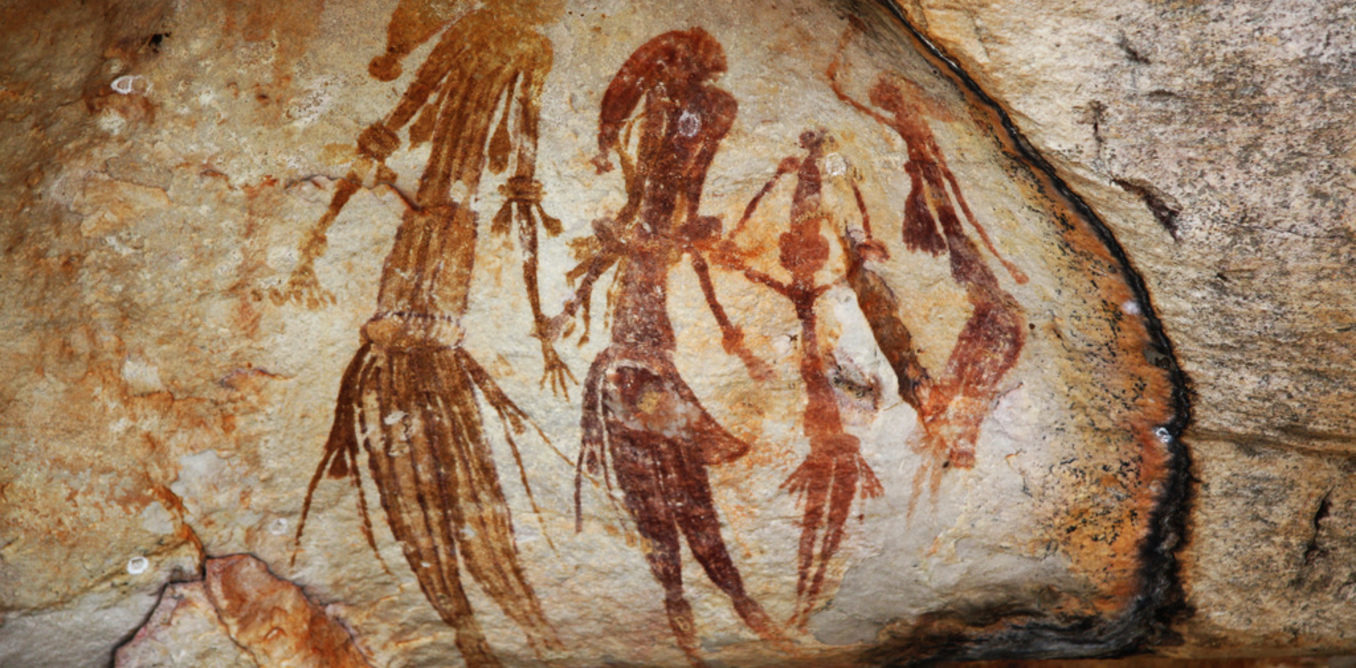
© PsyorgBradshaw rock paintings help Aboriginal people record knowledge to memory.
Ancient Celtic bards were famous for the sheer quantity of information they could memorize. This included thousands of songs, stories, chants and poems that could take hours to recite in full.

Today we are pretty spoiled. Practically the whole of human knowledge is conveniently available at our fingertips. Why worry about memorising something when we can simply Google it?

The answer seems pretty evident when we go into a panic after losing our smartphones!

Long before the ancient Celts, Aboriginal Australians were recording vast scores of knowledge to memory and passing it to successive generations.

Aboriginal people demonstrate that their oral traditions are not only highly detailed and complex, but they can survive - accurately - for thousands, even tens of thousands, of years.

Yet I struggle to remember what I did last Tuesday. So how did they do it?