Secret HistoryS


Black Cat

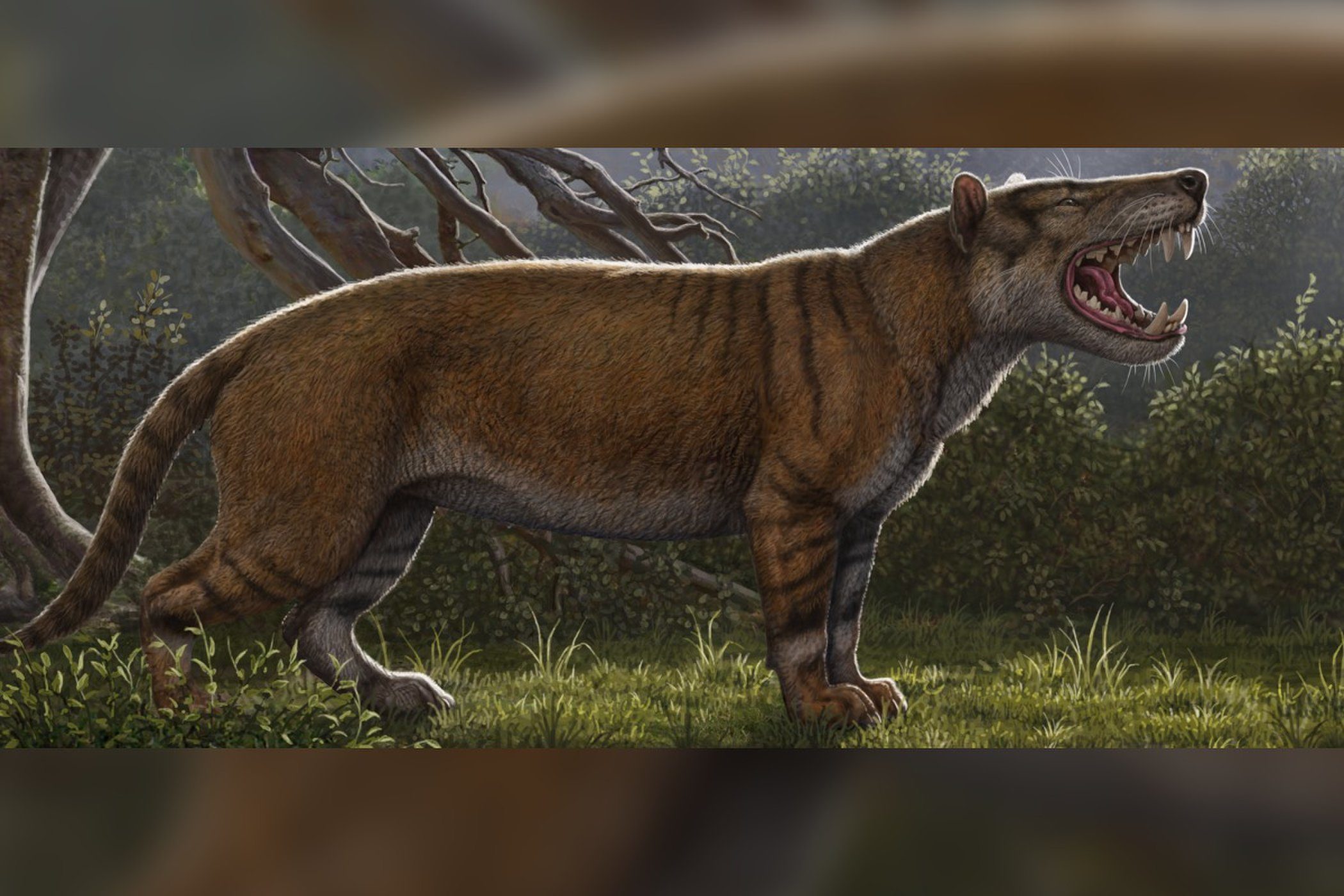
New species of giant carnivore found in Kenya museum drawer

Simbakubwa kutokaafrika - big lion
© Mauricio Anton
When Ohio University integrative biologist Nancy Stevens peered into a drawer in the wooden cabinets on the top floor of a Nairobi museum in 2010, she saw a chunk of rock containing massive teeth and knew she had come across something important.

The overlooked fossils stored at the National Museums of Kenya belonged to one of the largest meat-eating mammals ever to walk the Earth, a beast called Simbakubwa kutokaafrika that stalked Africa 22 million years ago, according to research by Stevens and co-author Matthew Borths published on Thursday.

Bigger than any carnivorous land mammal alive today - even a polar bear - Simbakubwa's skull was the size of a rhino's, its 20-centimetre canine teeth as large as bananas. It weighed about a ton and was 2½ metres snout to rump.

Dig

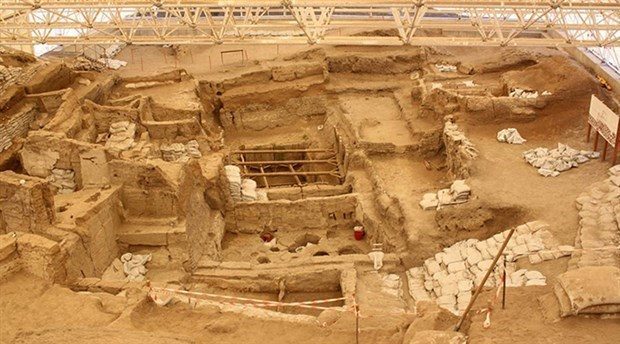
Çatalhöyük: The Stone Age settlement where humanity took its first steps toward city life

catalhoyuk
Beginning in the 1960s, work at Çatalhöyük (in central Turkey) has unearthed numerous levels of close-knit households where a large community of people lived during the Stone Age as humanity began to reject nomadic life.
The Konya Plain stretches for hundreds of miles across central Turkey. Almost 60 years ago, in a remote spot some 30 miles from the regional capital of Konya, a team of archaeologists began exploring two small hills. A fork in a local footpath and the two mounds themselves gave the site its modern name. Fork (çatal in Turkish) and mound (höyük) combine to form Çatalhöyük. Today the site is regarded by UNESCO as the most significant human settlement documenting early settled agricultural life.

Founded over 9,000 years ago on the bank of a river that has since dried up, Çatalhöyük is believed to have been home to an egalitarian Stone Age society who built distinctive homes, arranged back-to-back without doors or windows. They went in and out through openings in the roof. On the inside, they left wall paintings and enigmatic figurines.

These dwellings also played an important role in their funerary practices: Residents buried the dead under their homes. At its peak, the town housed as many as 8,000 people, who supported themselves through agriculture and raising livestock.

Comment: See also:


Star of David

AIPAC and the US Federal Election Commission

Netanyahu aipac
Reviewing AIPAC's history since its 1963 creation reveals a consistently well-organized campaign of manipulation and evasion of the US election law as one necessary ingredient to its invincible image on Capitol Hill. The American Israel Political Affairs Committee has long claimed it is not a political action committee, that they do not endorse candidates nor provide financial donations to political campaigns. As with all things involving AIPAC, there is another side to the story.

As the result of a 1988 Sixty Minutes interview by Mike Wallace, it became clear that AIPAC had a long history of involvement in US electoral politics as it targeted non-AIPAC members of Congress for defeat with the use of "80 shell-front pro-Israel PACs." Unfortunately, Wallace never inquired whether AIPAC was in compliance with the Federal Election Commission laws. It comes as no surprise to know they were not and continue to resist efforts at accountability or adhering to the standard rule of registering as a foreign entity.

Soon after Sixty Minutes aired, a memo written by AIPAC's Deputy Political Director Elizabeth Schrayer in 1986 became public. In that memo, Schrayer instructed her assistant to direct AIPAC affiliated PAC's; that is those PACs with non- identifiable AIPAC names, to channel political donations into the campaigns of AIPAC's favored candidates.

Sherlock

6,000 years ago Aegean farmers replaced hunters of ancient Britain

ancient briton
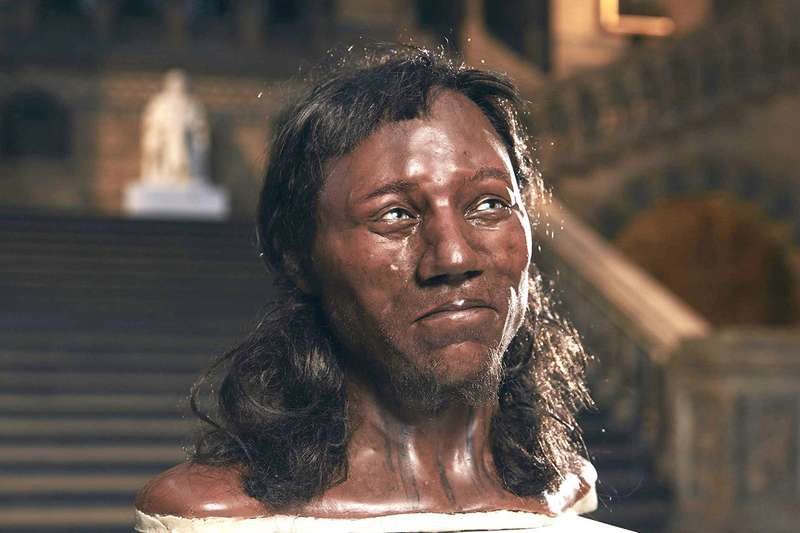
© Jonathan Brady/PA via AP, FileOn this Wednesday Feb. 7, 2018, file photo a full facial reconstruction model of a head based on the skull of Britain's oldest complete skeleton on display during a screening event of The First Brit: Secrets Of The 10,000 Year Old Man at The Natural History Museum, in London. Scientists say a wave of migrants from a region that is now Greece and Turkey arrived in Britain some 6,000 years ago and virtually replaced the existing hunter-gatherer population, according to a study published Monday April 15, 2019, in the journal Nature. According to Nature, genetic samples of ancient remains show there was little interbreeding between the newcomers and the darker-skinned foragers that had inhabited the British Isles for millennia.
A wave of migrants from what is now Greece and Turkey arrived in Britain some 6,000 years ago and virtually replaced the existing hunter-gatherer population, according to a study published Monday in the journal Nature.

Scientists examining samples of ancient remains dating as far back as 8500 BC found the dark-skinned foragers who had inhabited the British Isles since the last Ice Age left comparatively little trace in the genetic record after the transition to farming, suggesting there wasn't much interbreeding with the newcomers who arrived around 4000 BC.

By contrast, the same Aegean migrants mixed extensively with local populations when they introduced farming to continental Europe about 1,000 years earlier, according to previous DNA studies.

Comment: It's notable that according to another study detailed in The first farmers were direct descendants of hunter-gatherers and not migrants:
They discovered that the Neolithic farmers were direct descendants of the hunter-gathers. The finding strongly indicates that farming became commonplace because the indigenous population changed its subsistence strategy, rather than because it was overrun by incomers who brought the practice with them.
See also:


Info

Megalith tombs were family graves in European Stone Age says new study

The Ansarve site
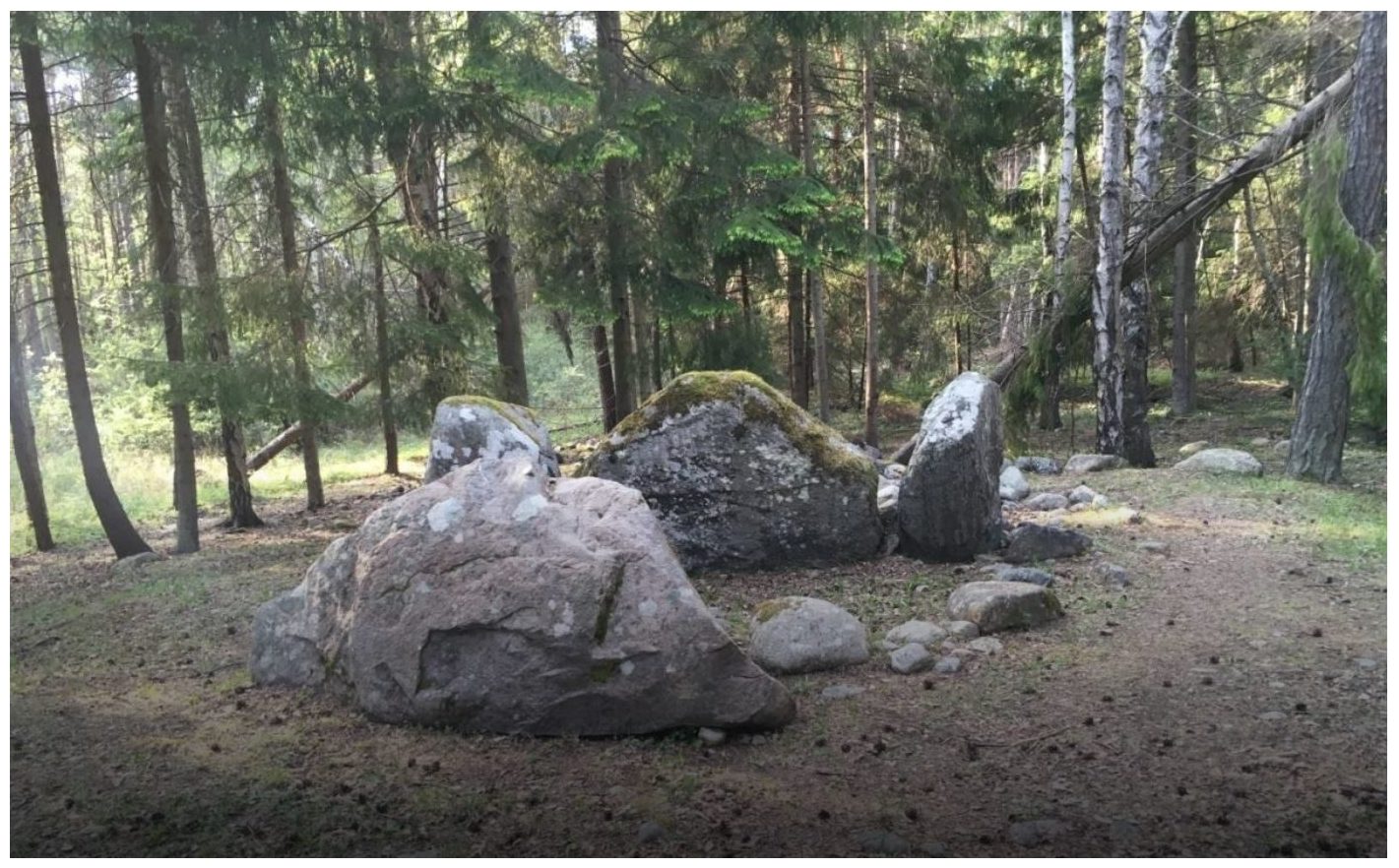
© Magdalena Fraser by HeritageDailyThe Ansarve site on the island of Gotland in the Baltic Sea is embedded in an area with mostly hunter-gathers at the time.
In a new study published in the Proceedings of the National Academy of Sciences, an international research team, led from Uppsala University, discovered kin relationships among Stone Age individuals buried in megalithic tombs on Ireland and in Sweden.

The kin relations can be traced for more than ten generations and suggests that megaliths were graves for kindred groups in Stone Age northwestern Europe.

Agriculture spread with migrants from the Fertile Crescent into Europe around 9,000 BCE, reaching northwestern Europe by 4,000 BCE. Starting around 4,500 BCE, a new phenomenon of constructing megalithic monuments, particularly for funerary practices, emerged along the Atlantic façade. These constructions have been enigmatic to the scientific community, and the origin and social structure of the groups that erected them has remained largely unknown. The international team sequenced and analysed the genomes from the human remains of 24 individuals from five megalithic burial sites, encompassing the widespread tradition of megalithic construction in northern and western Europe.

The team collected human remains of 24 individuals from megaliths on Ireland, in Scotland and the Baltic island of Gotland, Sweden. The remains were radiocarbon-dated to between 3,800 and 2,600 BCE. DNA was extracted from bones and teeth for genome sequencing. The team compared the genomic data to the genetic variation of Stone Age groups and individuals from other parts of Europe. The individuals in the megaliths were closely related to Neolithic farmers in northern and western Europe, and also to some groups in Iberia, but less related to farmer groups in central Europe.

The team found an overrepresentation of males compared to females in the megalith tombs on the British Isles.

Magnify

11,600 year old, 5m tall Shigir Idol may have originally stood tall beside a paleo-lake

Shigir Idol
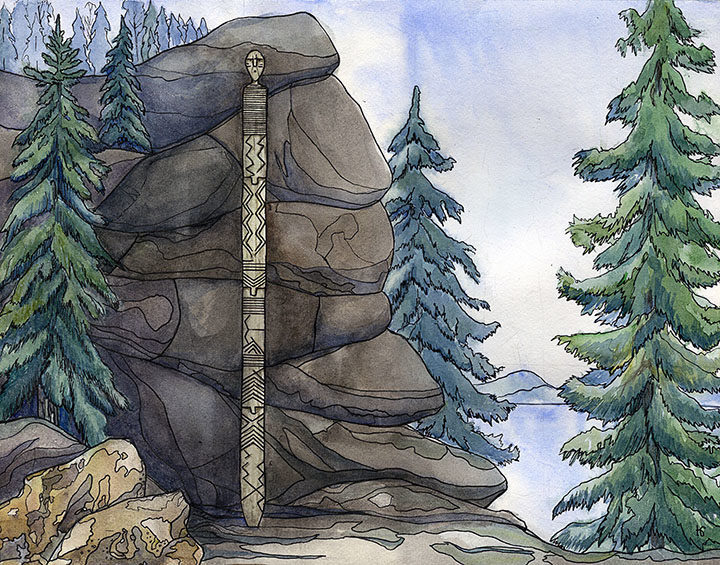
© Olga Gertcyk, The Siberian TimesThe stunning idol is three times as old as the Egyptian pyramids. Drawings: Nina Belanova, Sasha Skulova.
Wooden statue 5.3m high with eight faces gazed over the water for only two decades, but leaves us with a conundrum 11,600 years later.

With its evocative main face and O-shaped mouth, its mysterious zigzag etched lines, the Shigir Idol is now accepted as one of the world's oldest examples of monumental art.

All the more remarkably, it is made of larch not stone yet still survives, thanks to it falling into a peat bog, once a paleo-lake, in which it was superbly preserved.

Now experts who know it best are suggesting some intriguing new theories about this ancient relic found late in the 19th century by tsarist gold prospectors.

Comment: For more on the idol, and for some information about the intriguing history of the region in which it was found, see:


Info

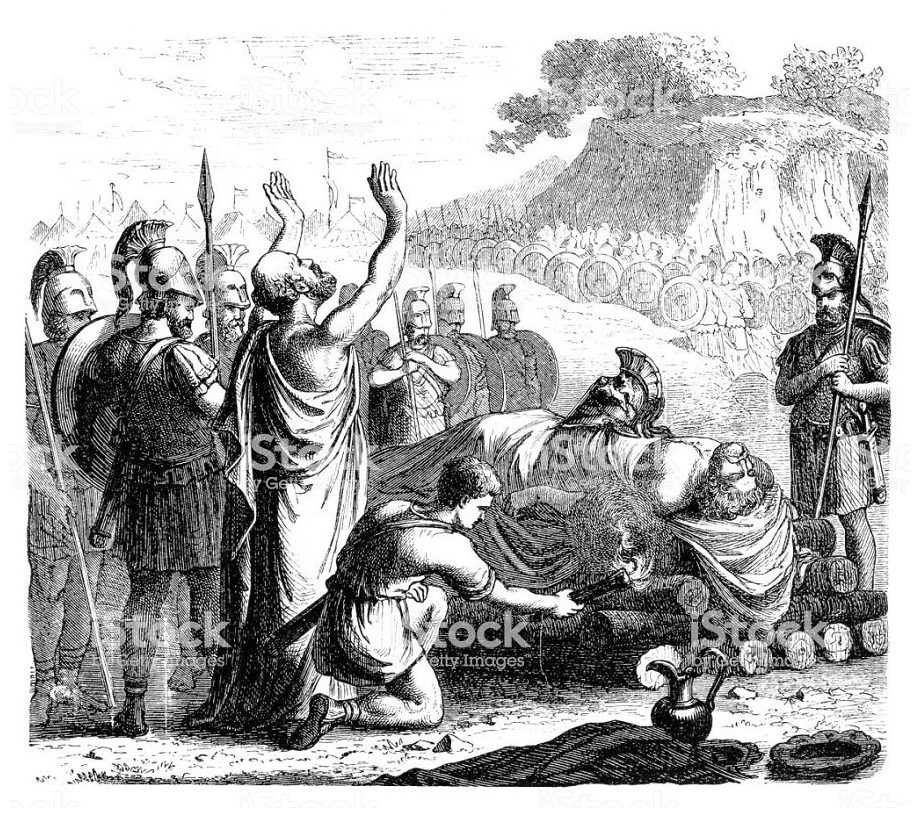
The awkward logistics of cremation in ancient Greece

Ancient Greek funeral pyre
© Nastasic/Getty ImagesA nineteenth century illustration depicting an ancient Greek funeral pyre.
The story of the long conflict between Sparta and Athens in the fourth century BCE is considered one of the foundational narratives of European civilisation - but it also contains multiple problems.

Prime among these, a new study argues, is the combustibility of dead soldiers.

The main source of information on the conflict is the History of the Peloponnesian War written by the Athenian historian and general Thucydides (460-400 BCE).

The book is held to be one of the fundamental texts in the development of the discipline of history - a key exercise in objective reporting, a description of cause-and-effect without resorting supernatural explanations.

As early as 1929, historian Charles Norris Cochrane called the writer the father of "scientific history".

It's a wonderful soubriquet, except, says ancient historian Owen Rees from the UK's Manchester Metropolitan University, it isn't true - at least when it comes to Thucydides' detailed, and famous, description of how the Athenians dealt with their war dead.

In a painstaking recreation of the physics and fuel loads of ancient pyres, Rees concludes that the historian's portrayal of the valiant war dead - their bodies retrieved, sorted according to membership of 10 tribes, left in state for three days, and then burned before being placed in massive communal tribal coffins and carried back to the city to be displayed before a ceremonial burial - is significantly flawed, and may indeed be dead wrong.

Cross

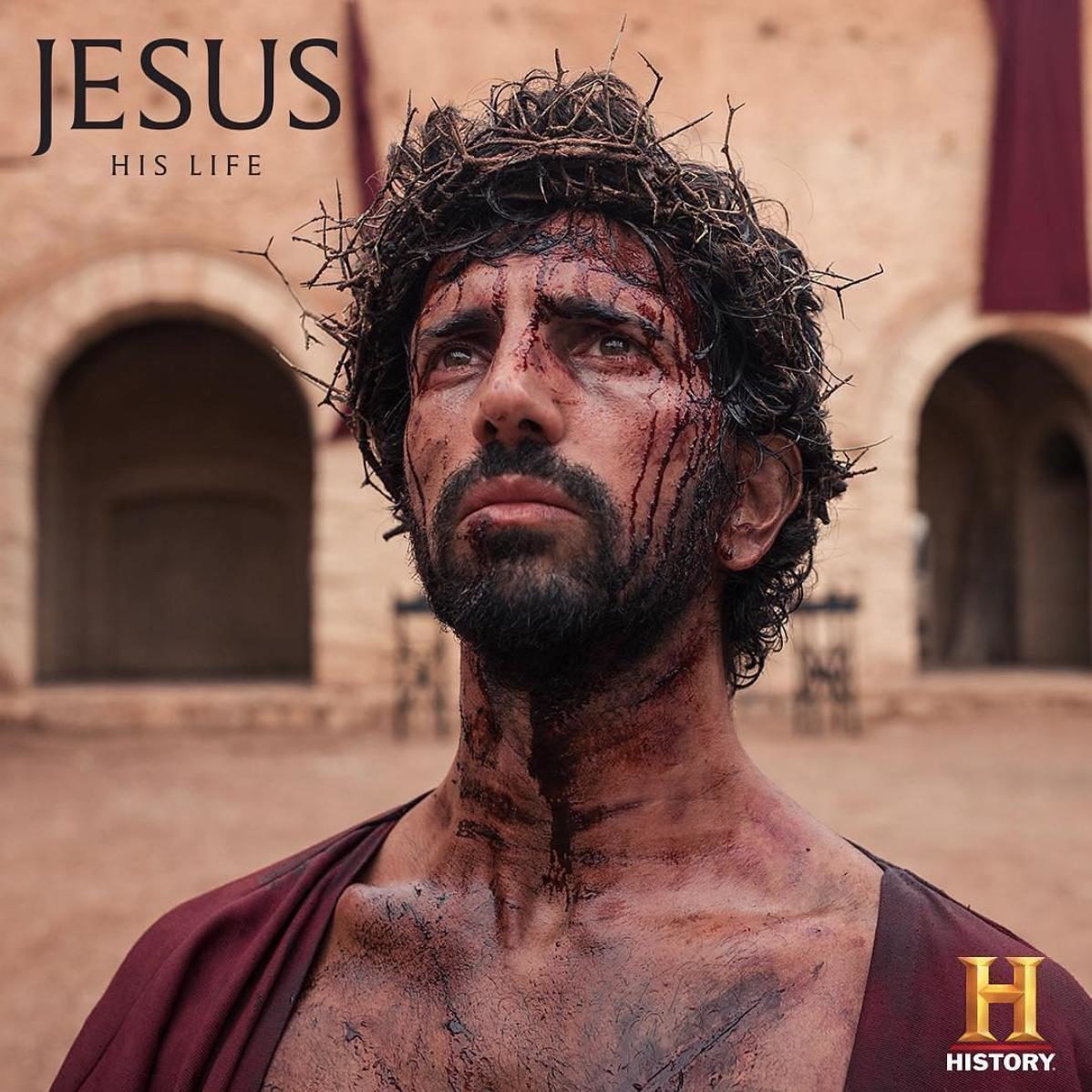
Reviewing History Channel's 'Jesus: His Life' - zero scholarship, total propaganda

jesus his life
When I heard about the History Channel's new TV special, Jesus : His Life, I was quite interested to see how they were going to handle the subject. As the author of the recently published book, Deciphering the Gospels Proves Jesus Never Exited, obviously I knew that my perspective on the subject would be different than whatever might be presented, but I was still quite interested to see how they were going to present the subject matter.

Before the first episode even aired, I went to the History Channel website to read about it. This did not bode well. What I saw immediately is that this would not be an actual documentary. In looking at the list of "experts" featured in the series I immediately recognized that there wasn't a single historian among them. Essentially every person associated with the program is a theologian. The about page for the programs notes, "The series interviews and consulted with a diverse group of scholars, faith leaders and theologians from across the ideological spectrum to provide a rounded picture of the life and times in which Jesus lived."

Of those on the list of featured "experts" I recognized a few as obvious charlatans, such as Joel Osteen, a popular televangelist, but also a few respectable scholars, such as Candida Moss and Mark Goodacre. Regardless, this gets at something that I think is extremely important. One of the biggest problems with the popular understanding of Christian origins today stems from the fact that theologians are passed-off in our society as historians, which they are not. I believe that programs like this, which have been common in America for about thirty or forty years now, play a key role in presenting theologians as historians.

Bad Guys

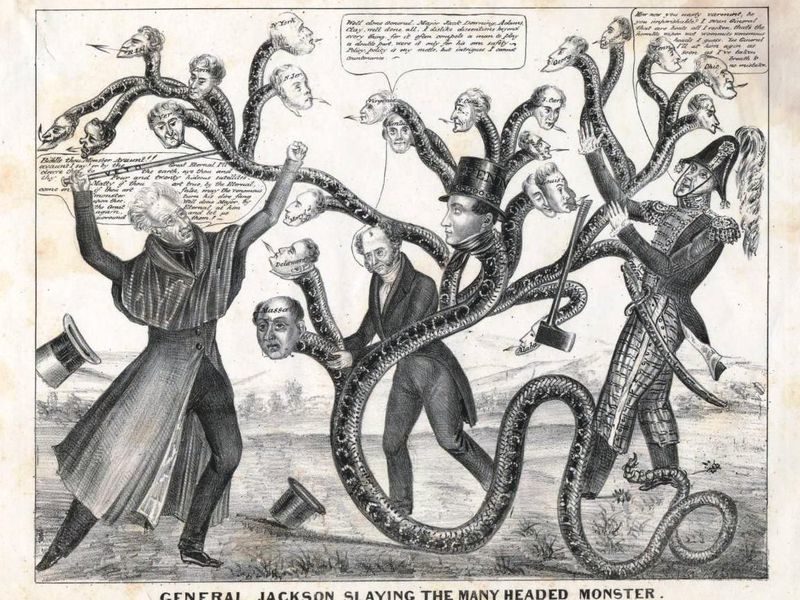
Conspiracy theories abounded in 19th-century American politics

conspiracy early america
© H.R. Robinson, via Wikimedia Commons.In 1836, both camps in the so-called Bank War—supporters of U.S. president Andrew Jackson, and supporters of the Second Bank of the United States president Nicholas Biddle—lobbed accusations of conspiracy to sway Americans to their sides.
From claims that NASA faked the moon landing to suspicions about the U.S. government's complicity in the assassination of John F. Kennedy, Americans love conspiracy theories. Conspiratorial rhetoric in presidential campaigns and its distracting impact on the body politic have been a fixture in American elections from the beginning, but conspiracies flourished in the 1820s and 1830s, when modern-day American political parties developed, and the expansion of white male suffrage increased the nation's voting base. These new parties, which included the Democrats, the National Republicans, the Anti-Masons, and the Whigs, frequently used conspiracy accusations as a political tool to capture new voters-ultimately bringing about a recession and a collapse of public trust in the democratic process.

During the early decades of the American republic, the Federalist and Jeffersonian Republican Parties engaged in conspiratorial rhetoric on a regular basis. Following the War of 1812, the Federalist Party faded from the political landscape, leaving the Republicans as the predominant national party. Their hold was so great that in 1816 and 1820, James Monroe, the Republican presidential candidate, ran virtually unopposed, but in 1824, the Republicans splintered into multiple and disparate factions. Five viable candidates ran in that election cycle, and John Quincy Adams won the presidency.

Comment: The definition of conspiracy, according to Wiki, is as follows:
In criminal law, a conspiracy is an agreement between two or more persons to commit a crime at some time in the future.
Politically literate citizens judging much of what goes on in Western politics today, perhaps as a culmination of that which began centuries ago, know that vast conspiracies have been in play, and are evidently afoot (although to place the blame at the feet solely of the Masons would be naive), and so in our highly propagandized times the necessity for people to discern truth from lies has never been more important:


Play

Corbett Report: The Dark History of Minimum Wage

money fist
There's something strange about the idea of a minimum wage. It's one of those subjects that everyone has a strong opinion about, even if they have no idea what makes actual economic sense. But perhaps the most surprising thing of all is that the minimum wage has a dirty secret that most economists don't want you to know about. Today we explore The Dark History of the Minimum Wage.


For those with limited bandwidth, CLICK HERE to download a smaller, lower file size version of this episode.

For those interested in audio quality, CLICK HERE for the highest-quality version of this episode (WARNING: very large download).

Watch this video on BitChute / DTube / YouTube or Download the mp4

Comment: The theorists of the Progressive Era weren't entirely wrong. The labor market may be different in various ways than it was then, but minimum wage laws did have at least some of the desired effect back then. It's arguable that they still are having those effects, given the data provided above and the limits of the studies cited. Here's what Thomas Sowell had to say in his 2018 book Discrimination and Disparities:
A wage rate set above where it would be set by supply and demand in a freely competitive market tends to have at least two consequences: (1) an increase in the number of job applicants, due to the higher wage rate, and (2) a decrease in the number of workers actually hired, due to labor's having been made more expensive. ...

... there was no significant difference between the unemployment rates of black and white teenagers in 1948. The unemployment rate for black 16-year-old and 17-year-old males was 9.4 percent. For their white counterparts, the unemployment rate was 10.2 percent ... when there was no effective minimum wage.

After the effectiveness of the minimum wage law was restored by recurring minimum wage increases in later years, not only did teenage unemployment rates as a whole rise to multiples of what they had been in 1948, black teenage male unemployment rates became much higher than the unemployment rates for white teenage males - usually at least twice as high for most years from 1967 on into the twenty-first century.

Labor force participation rates tell much the same story. ... a rising minimum wage rate prices the younger blacks out of jobs first and to the greatest extent.

Unfortunately, when minimum wage laws reduce the employment prospects of inexperienced and unskilled black teenagers, that reduces their labor force participation, and therefore reduces their rate of acquisition of work experience and job skills.
...
Internationally, unemployment rates have been markedly lower in times and places where neither governments nor labor unions set most wage rates.