
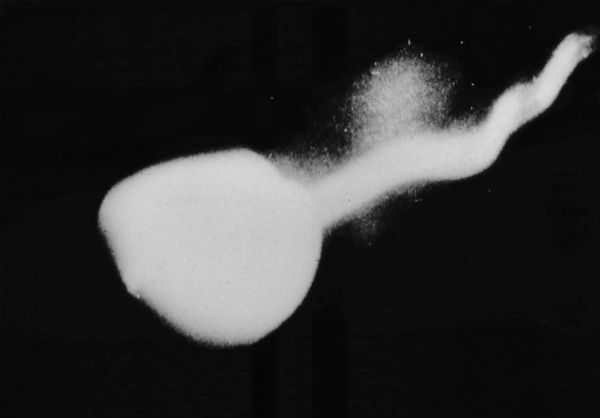
© The Oregonian (Archives)A 1930 "meteor fireball".
The explosion that followed was even more startling. The shock wave reverberated across the sky for miles, shattering windows and cracking walls.
A recreational mountain climber might have had the best view.
"I was standing still for a moment, looking toward Portland," recalled Thurston Skei, who was working his way up Mount Adams just before 8 a.m. on July 2, 1939. "I saw a trail of smoke coming down through the sky. There was a bright flash at the head of the smoke column as if a huge rocket had exploded."
A few people called police to ask if Martians had attacked. (This was nine months after Orson Welles' War of the Worlds radio broadcast had confused and worried listeners.) Many more residents thought there had been an earthquake. (The Oregonian reported that the University of Washington's seismograph had remained quiet.)












Comment: See also: