Secret HistoryS


Map

Huge volcanic eruption in Alaska linked to rise of Roman Empire in new study

Volcanic Eruption
© InterNetwork Media/Getty Images
The assassination of Julius Caesar in 44 BCE triggered a nearly two-decade power struggle that led to the fall of the Roman Republic and the rise of the Roman Empire.

Historic records say the period was marked with strange sightings in the sky, unusually cold weather and widespread famine - and a new study suggests a volcanic eruption in Alaska may have been the cause.

The paper was published in the Proceedings of the National Academy of Sciences on Monday.

An international team of scientists and historians used an analysis of volcanic ash (tephra) found in Arctic ice cores to link the period of unexplained extreme climate in the Mediterranean with the crater-forming eruption of Alaska's Okmok volcano in 43 BCE.

"To find evidence that a volcano on the other side of the Earth erupted and effectively contributed to the demise of the Romans and the Egyptians and the rise of the Roman Empire is fascinating," said lead author Joe McConnell of the Desert Research Institute (DRI) in Reno, Nevada.

The advent of the Roman Empire also brought an end to the dynasty of Ptolemies, the last of the pharaohs.

Light Saber

The Father of Capitalism and the Abolition of Slavery

adam smith slavery abolition
Adam Smith
It has become a common trope that slavery and the slave trade is responsible for the industrial revolution, if not our entire modern prosperity. Slavery is often called capitalism's "dark side." A recent column in the Guardian claimed the slave trade "heralded the age of capitalism" and Guardian columnist George Monbiot said on Twitter: "The more we discover about our own history, the less the 'trade' on which Britain built its wealth looks like exchange, and the more it looks like looting. It meant extracting stolen resources and the products of slavery, debt bondage and land theft from other nations." The same line has been taken by London Mayor Sadiq Khan, who tweeted: "It's a sad truth that much of our wealth was derived from the slave trade."

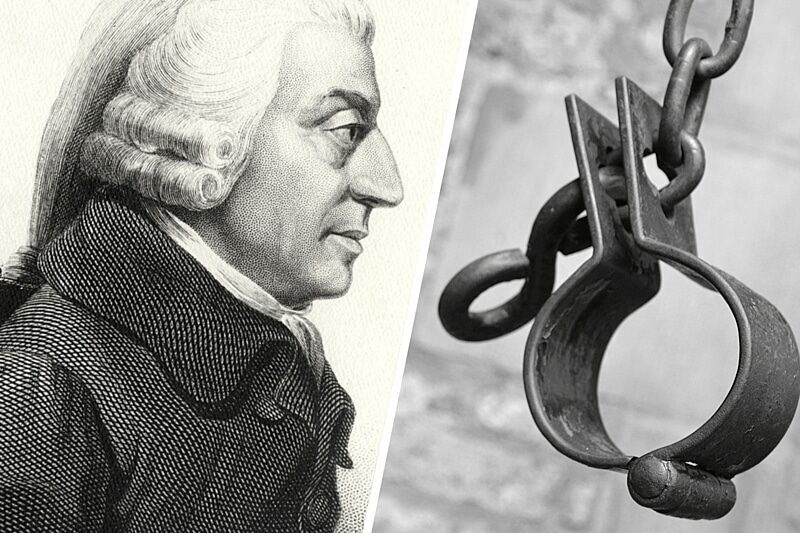
But what did the "father of modern economics," Adam Smith, actually think about slavery? And is it responsible for our modern prosperity?

Adam Smith argued not only that slavery was morally reprehensible, but that it causes economic self-harm. He provided economic and moral ammunition for the abolitionist movement that came to fruition after his death in 1790. Smith was pessimistic about the potential for full abolition, but he was on the side of the angels.

Map

Huge 4,500-year-old stone circle discovered near Stonehenge

structure near stone henge
© Picture: PA/Metro.co.ukThe vast neolithic circle of deep shafts was found near Stonehenge
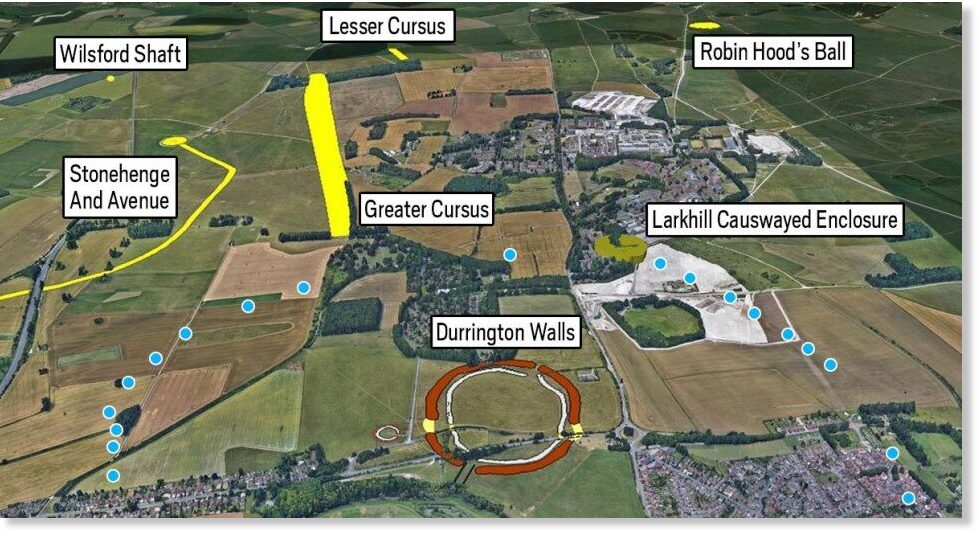
Archaeologists have discovered a major new prehistoric monument just a short distance away from Stonehenge. Some 20 or more massive prehistoric shafts - more than 10 metres wide and five metres deep - form a vast circle more than two kilometres in diameter around the Durrington Walls henge. Coring of the shafts suggest the features are neolithic and excavated more than 4,500 years ago, around the time Durrington Walls was built. It is thought the shafts served as a boundary to a sacred area or precinct associated with the henge.

Comment: For the truth about Stonehenge check out Secret History of the World by Laura Knight-Jadczyk.


Russian Flag

Russia vis a vis Europe: Two different histories

Russian army parade
© Alexei Nikolsky/Russian Presidential Press and Information Office/TASSMoscow's Victory Parade in Red Square
A considerable amount of baggage has become attached to the word "European" over the half-millennium that Europe has dominated the world. There's the geographical meaning - from the Atlantic to the Urals - but, because Europe is a peninsula on the western end of Asia, the frontier is subject to debate. Diplomats sometimes use the word to mean members of the European Union. But the most important meaning is the value-laden one - to be "European" is to be modern, civilised, rational, to hold "values", to be successful. To be powerful. Not to be "European" is to be none of these things, perhaps even their opposites. Europeans are rulers and exemplars; the others are subjects and inferiors. Throughout the period of European domination, to be considered "European" was favoured and to adopt European habits, dress styles, education and appearance was desirable. Not to be "European", on the other hand, was an insult: your culture didn't make the grade. This meaning is commonly found today, especially in the smug phrase "European values".

I have been considering writing this essay for some years but have put off doing so because I know that for many readers "Europe" means "best" and to say Russia is not European is to say that it's not good enough. But at last President Putin has given me the opening: "Россия - это не просто страна, это действительно отдельная цивилизация". "Russia, it's not simply a country it is certainly a separate civilisation". And who would dare disagree with him?

Comment:


Info

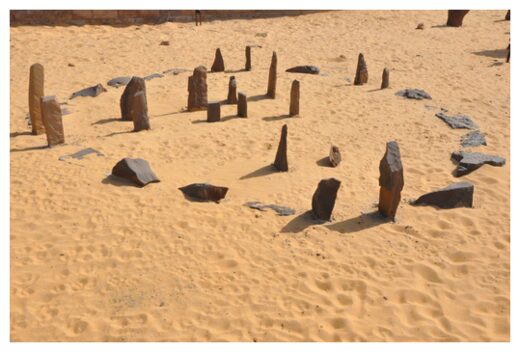
The world's first astronomical site was built in Africa and is older than Stonehenge

Stone circle of Nabta Playa
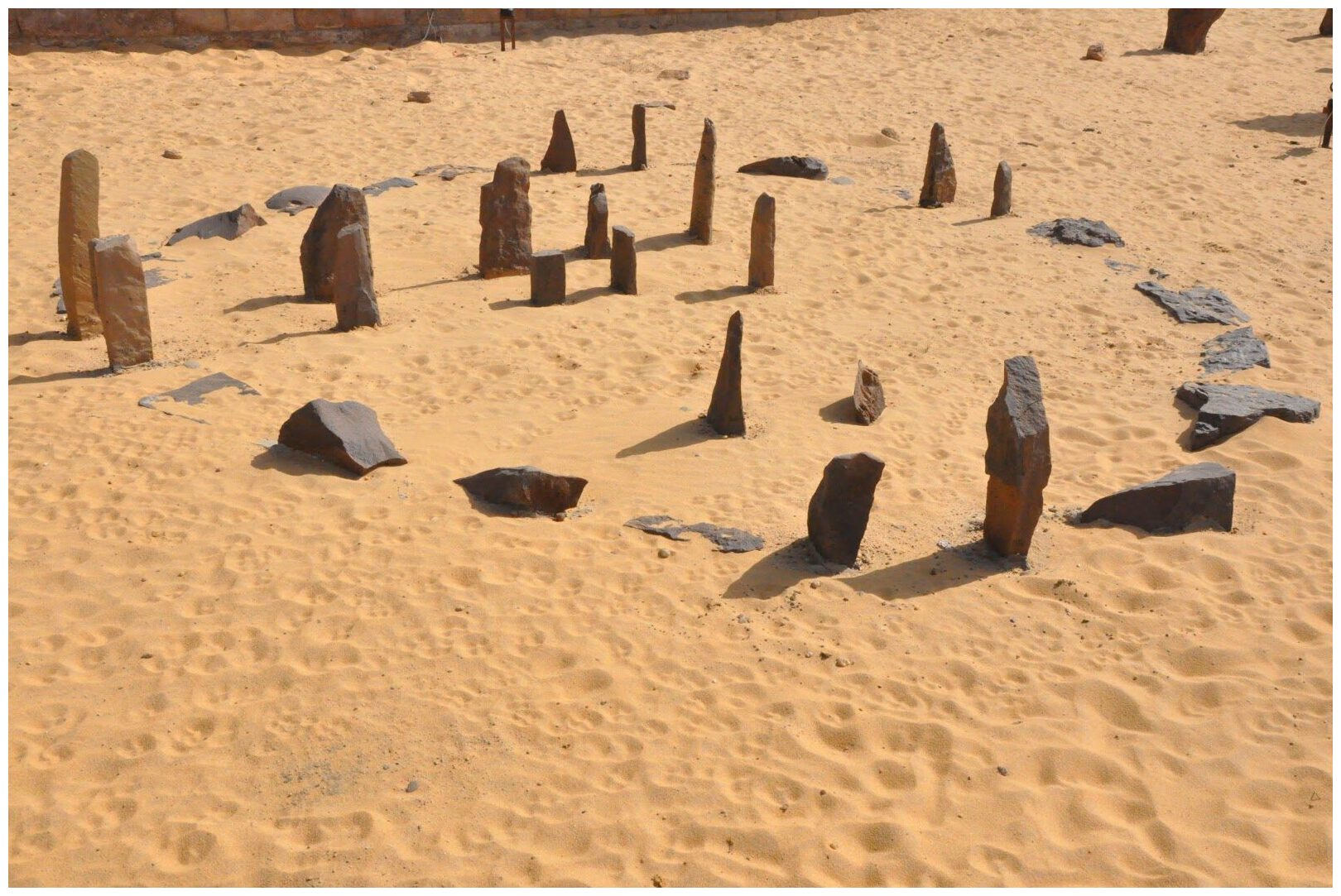
© Wikimedia CommonsThe stone circle of Nabta Playa marks the summer solstice, a time that coincided with the arrival of monsoon rains in the Sahara Desert thousands of years ago.
For thousands of years, ancient societies all around the world erected massive stone circles, aligning them with the Sun and stars to mark the seasons. These early calendars foretold the coming of spring, summer, fall, and winter, helping civilizations track when to plant and harvest crops. They also served as ceremonial sites, both for celebration and sacrifice.

These megaliths — large, prehistoric monuments made of stone — may seem mysterious in our modern era, when many people lack a connection with, or even view of, the stars. Some even hold them up as supernatural, or divined by aliens. But many ancient societies kept time by tracking which constellations rose at sunset, like reading a giant, celestial clock. And others pinpointed the Sun's location in the sky on the summer and winter solstice, the longest and shortest days of the year, or the spring and fall equinox.

Europe alone holds some 35,000 megaliths, including many astronomically-aligned stone circles, as well as tombs (or cromlechs) and other standing stones. These structures were mostly built between 6,500 and 4,500 years ago, largely along the Atlantic and Mediterranean coasts.

The most famous of these sites is Stonehenge, a monument in England that's thought to be around 5,000 years old. Though still old, at that age, Stonehenge may have been one of the youngest such stone structures to be built in Europe.

The chronology and extreme similarities between these widespread European sites leads some researchers to think the regional tradition of constructing megaliths first emerged along the coast of France. It was then passed across the region, eventually reaching Great Britain.

But even these primitive sites are at least centuries younger than the world's oldest known stone circle: Nabta Playa.

Located in Africa, Nabta Playa stands some 700 miles south of the Great Pyramid of Giza in Egypt. It was built more than 7,000 years ago, making Nabta Playa the oldest stone circle in the world — and possibly Earth's oldest astronomical observatory. It was constructed by a cattle worshiping cult of nomadic people to mark the summer solstice and the arrival of the monsoons.

"Here is human beings' first attempt to make some serious connection with the heavens," J. McKim Malville, a professor emeritus at the University of Colorado and archaeoastronomy expert, tells Astronomy.

"This was the dawn of observational astronomy," he adds. "What in the world did they think about it? Did they imagine these stars were gods? And what kinds of connections did they have with the stars and the stones?"


Blue Planet

Affluent Galilean Christian town destroyed in 7th century unearthed by archeologists

Byzantine
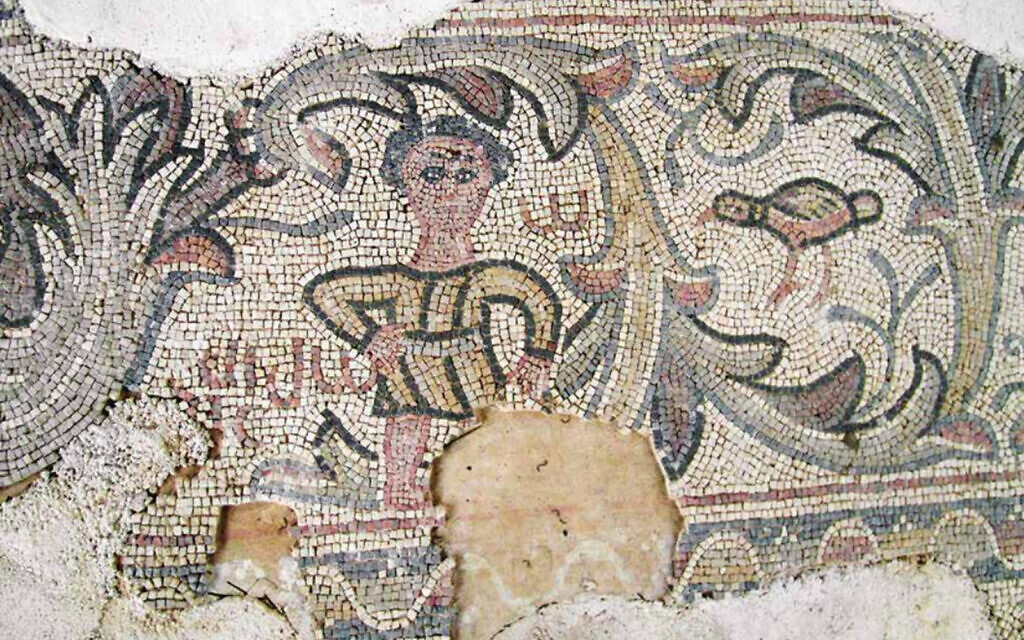
© Israel Antiquities AuthorityPart of a Byzantine-era mosaic unearthed in 2007 in northern Israel at the Pi Mazuva dig site.
Israeli archaeologists have published a 360-degree analysis of a rural, affluent Christian town in the Galilee that was most likely destroyed by Persian invaders in 613 CE.

Unearthed in 2007 in a salvage excavation before roadworks near Shlomi and Kibbutz Hanita, the remains of the Byzantine settlement at Pi Mazuva are located in modern Israel's northwest corner on the border with Lebanon. The finds include Christian iconography, a large house and a colorful, high-quality, partially preserved mosaic floor.

The findings were published in June's edition of Atiqot, a research journal produced by the Israel Antiquities Authority, and initially reported on in Haaretz. The lead researchers were Gilad Cinamon, Yoav Lerer, Gabriela Bijovsky and Rina Talgam.

Comment: See also: Also check out SOTT radio's:


Vader

SOTT Focus: The Enemy Within: A Story of the Purge of American Intelligence

nsa building
"Western Europe has only 20 to 30 more years of democracy left in it; after that it will slide, engineless and rudderless, under the surrounding sea of dictatorship, and whether the dictation comes from a politburo or a junta will not make that much difference."

- Willy Brandt (German Federal Chancellor, right before he stepped down in 1974)
Believe it or not, but the dystopic view that democracy is dead is by no measure a new idea. However, what might disturb you is where this design, in its contemporary form, really germinated from.

The idea that democracy is in a crisis and needs to be replaced with a new form of "governance" did not originate from the outcries of an oppressed people demanding their rights to a decent life. We are not presently seeing an organic, grassroots process in reforming how government, that is, democracy will be "improved" upon. Rather, what we are seeing is a controlled disintegration of the very thing we think we are trying to uphold, and this destruction has been in the works for over 45 years.

It is no coincidence that Samuel P. Huntington is very fond of the Willy Brandt quote "prophesising" the end of democracy (which was used at the beginning of both his books 'The Crisis of Democracy' and 'Disaffected Democracies'), that is after all his purpose in life...to see to it that that prophecy comes true.

In this paper I will go through how the Henry Kissinger crew successfully purged the last significant remnants of decency within the CIA and reshaped the government structure into the Deep State that we see it grotesquely throbbing as today. In this story, we will see how those prominent figureheads who prophesise the "end of democracy" have been the very orchestrators of its destruction.

Archaeology

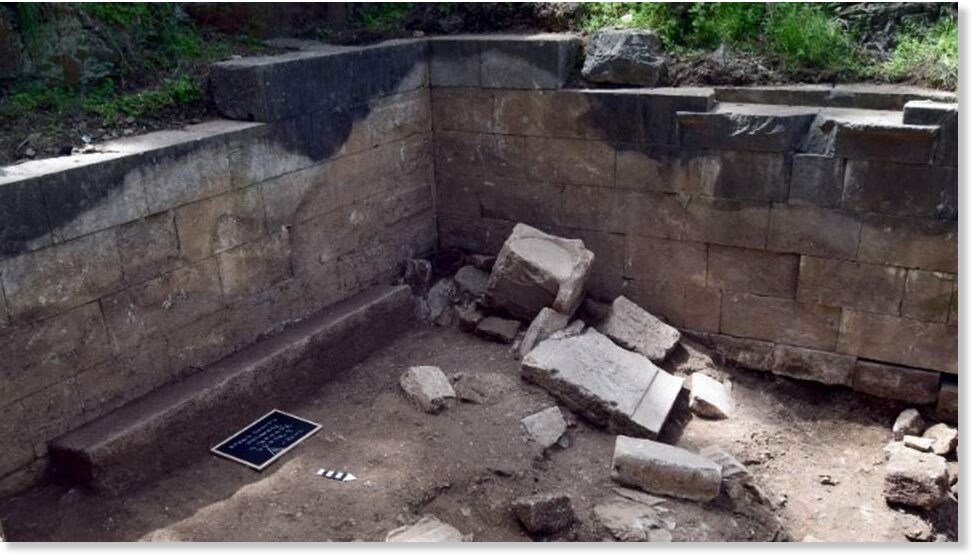
Temple of Nemesis found under remains of ancient Mytilini theatre

temple of Nemesis
Temple of Nemesis
A temple of Nemesis was found under the ancient theatre of Mytilini, on the northeast island of Lesvos, according to a report on the news website Sto Nisi.

The remains of the temple were found in the south entry passage (parodos), under a series of large limestones.

Latest dates show that the theatre had two construction phases, in the Hellenistic era (3rd century BC) and the Roman one (1st century AD). The temple itself dates to the 1st century AD and was identified by a stone altar for offerings and a series of dedicatory inscriptions by priests and prominent personalities.

Handcuffs

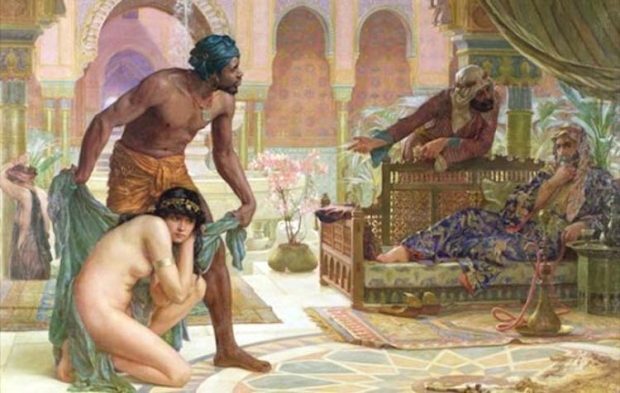
Best of the Web: Erdogan pins upheaval in US on 'fascism and racism', overlooking Turkish slave trade

slavery whites ottoman empire
Slavery is and always has been about 'equal opportunities'
After President Donald Trump, the world's busiest leader must be President Recep Erdogan of Turkey. But despite his crammed schedule (threatening Europe, denouncing France, Greece, Cyprus, Egypt, Israel, Saudi Arabia, and the United Arab Emirates; attacking Kurds in Turkey, Syria and Iraq, waging war in Libya and Syria, drawing plans for the invasion of Armenia and Greece, sending ships to the Eastern Mediterranean to steal undersea hydrocarbon from waters which do not belong to Turkey, sending troops to more than half-a-dozen Middle Eastern and African countries, bribing Lebanese fundamentalists to threaten the Armenians of that country with genocide, jailing Turkish journalists, shutting electronic communication, converting the Byzantine Hagia Sophia cathedral to a mosque...), Turkey's dictator found time recently to tweet that the U.S. social-political upheaval is a result of "racism and fascism."

Meanwhile, his slavish media extrapolated that the root of the U.S. crisis is slavery. Putting aside Turkish racism against the Alevis, Armenians, Assyrians, Greeks, Jews, Kurds, and Syrian Arab refugees, let's look at Turkey's slavery record.
"More whites were brought as slaves to North Africa than blacks brought as slaves to U.S or to the 13 colonies from which it was formed. White slaves were still bought and sold in the Ottoman Empire, decades after blacks were freed in the U.S."

¬ Thomas Sowell, black American economist and social theorist.
Who were the North African slave masters who plagued Western Europe from the 16th century to the early 19th century? They were the Barbary Coast pirates of Algeria, Tunisia, and Libya. Their sovereign was the Ottoman sultan whose navy protected them when the pirates were challenged by Western navies. Ottoman Turkey was also their main customer for slaves. For four centuries, the pirates raided Italy, Spain, Portugal, the Netherlands, England and Ireland kidnapping natives and selling them in the slave markets of North Africa. They even raided Iceland where the attacks were called Tyrkjaranio (Turkish raid).

The U.S. Navy was not immune to Barbary pirate attacks. The U.S. paid tribute to them to stave off attacks on its ships. According to historians, the Barbary Coast pirates enslaved 1,250,000 Europeans. The slave-hunting expeditions were year-round affairs to replenish slaves who had died or had converted to Islam.

Blue Planet

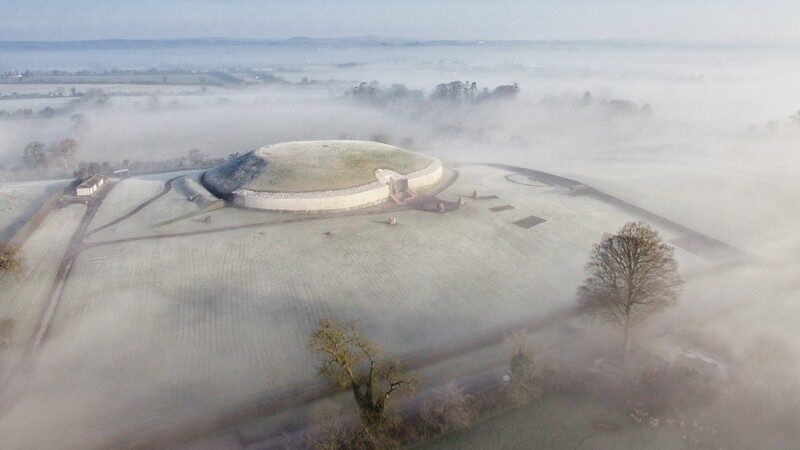
Rare instance of incest uncovered at prehistoric Newgrange monument in Ireland

Newgrange
© Ken Williams/ShadowsandStone.comFigure 1 | Newgrange passage tomb, Ireland. Cassidy et al.1 report that the analysis of DNA from a man buried in this 5,000-year-old monument reveals evidence of incest.
A study of the DNA of Ireland's Stone Age inhabitants has produced spectacular results, with far-reaching consequences for our understanding of prehistoric population movement and the structure of that ancient society. Writing in Nature, Cassidy et al.1 report their striking discoveries from this project.

The authors looked at the period, around 4000 bc, when farming appeared as a new, Neolithic way of life, supplanting the older and more mobile Mesolithic lifestyle based on fishing, hunting and foraging for wild foods. Cassidy et al. examined the social structures of these farming communities over the following 1,500 years, focusing on the people buried in passage tombs — a type of monument featuring a chamber, covered by a mound, that is entered along a passage. The most famous Irish passage tomb is the enormous monument at Newgrange (Fig. 1), which is part of a World Heritage site of the United Nations Educational, Scientific and Cultural Organization. This huge circular mound is one of three major tombs built in the Brú na Bóinne cemetery complex in County Meath, north of Dublin, in eastern Ireland.

Comment: See also: And check out SOTT radio's: