
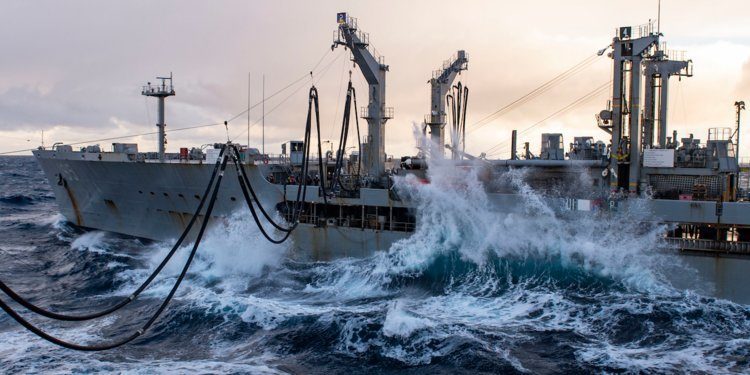
© US Navy/Mass Comm. Specialist 3rd Class Joe J. Cardona GonzalezFleet replenishment oiler USNS Leroy Grumman alongside the amphibious assault ship USS Iwo Jima in the Norwegian Sea, October 27, 2018.
Trident Juncture is a regularly scheduled exercise, and this year's version was meant to test the alliance's ability to respond collectively to a threat - in this case an attack on Norway - and the logistical muscles needed to move some 50,000 troops, thousands of vehicles, and dozens of ships and aircraft on short notice.
Trident Juncture also saw the first time a US aircraft carrier, the USS Harry S. Truman, sailed above the Arctic Circle since the early 1990s. The Truman strike group was joined by the USS Iwo Jima expeditionary strike group.
Working in the harsh conditions found in the northern latitudes in autumn was also part of the plan, said US Navy Adm. James Foggo, who commands US naval forces in Europe and Africa and was in charge of Trident Juncture.
"One of the things that we took advantage of was the opportunity to do this in October and November," Foggo said on the most recent episode of his podcast, "On the Horizon."














Comment: And NATO's Nordic partners didn't fare so well either: