OF THE
TIMES


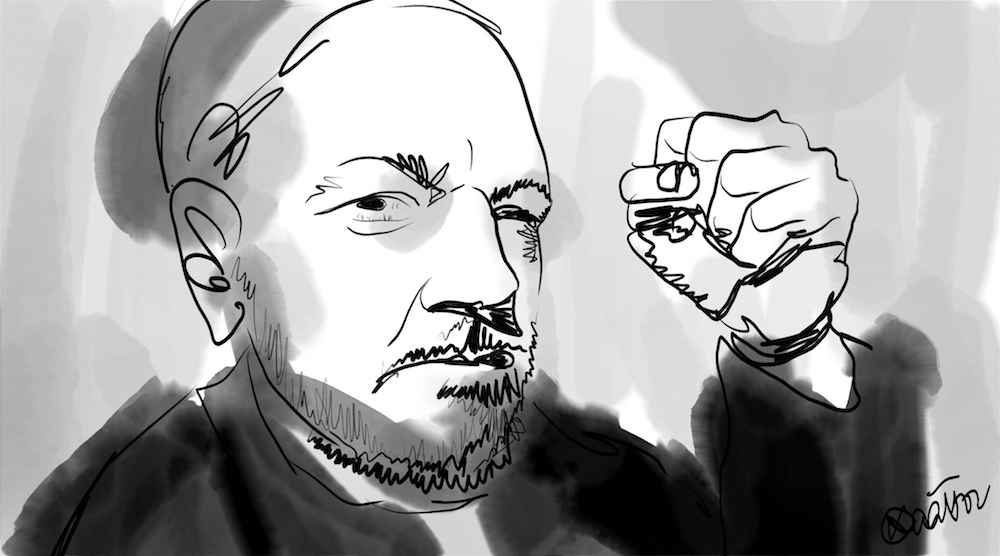
If Julian Assange's transfer to the US isn't stopped, other journalists and publishers face the imminent risk of being persecuted, detained or even tortured, his father exclaimed as his extradition trial got under way in London.The Guardian reports that Assange continues to be abused in Belmarsh Prison
"We're here to vigorously and firmly support Julian in this ten-year-long oppression and political action that's [reached its] culmination here in Belmarsh," his father John Shipton told reporters outside the courthouse, which is adjacent to the prison.
Shipton, himself an anti-war activist in his youth, lashed out at "the oppression of journalism [and] the ceaseless malice" directed against his son. He drew attention again to the "ten-year-long arbitrary detention of Julian," as well as his inhuman and degrading treatment at HM Prison Belmarsh, which amounted to torture, according to UN Rapporteur Nils Melzer.That is what will happen to journalists, publishers and publications if this extradition, this political extradition of Julian Assange, is successful.
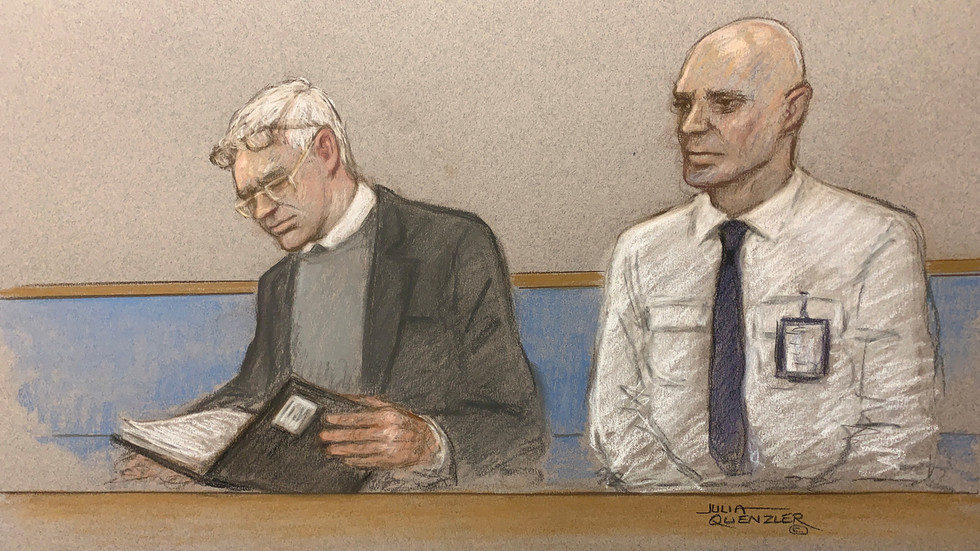
Julian Assange was handcuffed 11 times, stripped naked twice and had his case files confiscated after the first day of his extradition hearing, according to his lawyers, who complained of interference in his ability to take part.Kristinn Hrafnsson, the head of Wikileaks, continues to point to the elephant in the room. Assange is really on trial for exposing war crimes committed by the U.S.:
Their appeal to the judge overseeing the trial at Woolwich crown court in south-east London was also supported by legal counsel for the US government, who said it was essential the WikiLeaks founder be given a fair trial.
Edward Fitzgerald QC, acting for Assange, said the case files, which the prisoner was reading in court on Monday, were confiscated by guards when he returned to prison later that night and that he was put in five cells.
The judge, Vanessa Baraitser, replied that she did not have the legal power to comment or rule on Assange's conditions but encouraged the defence team to formally raise the matter with the prison.
The details emerged on the second day of Assange's extradition hearing, during which his legal team denied that he had "knowingly placed lives at risk" by publishing unredacted US government files.
The court was told Wikileaks had entered into a collaboration with the Guardian, El País, the New York Times and other media outlets to make redactions to 250,000 leaked cables secret cables in 2010 and publish them.
Mark Summers, QC, claimed the unredacted files had been published because a password to this material had appeared in a Guardian book on the affair. "The gates got opened not by Assange or WikiLeaks but by another member of that partnership," he said.
The Guardian denied the claim.
"There's absolutely nothing new that is being presented here this morning by the Crown Prosecution Service on behalf of US prosecution," Hrafnsson told a crowd of journalists who gathered outside Woolwich Crown Court where the extradition hearing for Assange began.
Lawyers representing US authorities presented arguments that were "more of the same things we've been hearing for ten years." Back in July 2010, WikiLeaks was accused of putting US lives at risk by exposing its military and intelligence operations worldwide, but "ten years later, there is no evidence of such harm."
"And to the contrary, a Pentagon official was forced to admit in Manning's trial in 2013 that nobody was physically harmed because of the revelations in 2010 and 2011. And now, in 2020, they are in court, not able to present a single evidence of that harm," Hrafnsson reminded the press, before hitting back at the US side.At any rate, the very existence of the extradition trial is a disgrace, Hrafnsson pointed out: "It is a shameful thing that we have to defend journalism in a court of law in this country."And I'm sitting there listening to these claims, these subjective claims, and thinking: Why aren't we discussing the harm that was revealed by WikiLeaks in 2010 and 2011? Why aren't we talking in court about war crimes, the assassination of innocent civilians by the military, the slaughtering of Reuters journalists?
The imprisoned publisher's legal team believe he is unlikely to receive a fair and unbiased trial in the US, but the ongoing proceedings in Britain are also far from flawless.
The courtroom in Woolwich has only a dozen seats reserved for the general public, Hrafnsson revealed, and journalists have trouble getting inside.
"Very hard to talk about open and transparent proceedings, especially when the microphones are so bad that you have to stretch your ear to hear what is being presented," the WikiLeaks editor-in-chief added.
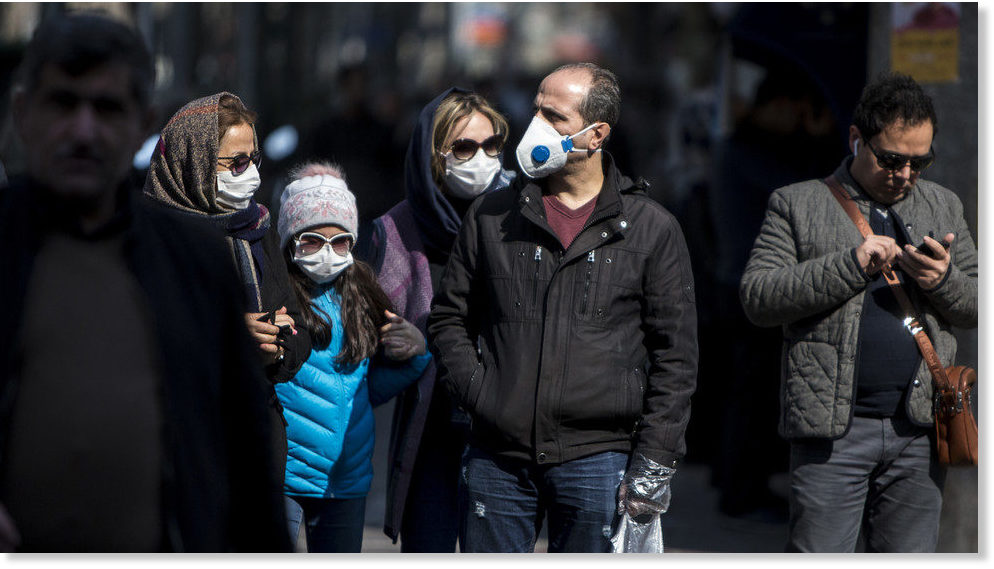
The minister has no mask or protective clothing on in the videos, and could therefore have passed the virus on to multiple people in the vicinity. The coronavirus death toll in the country currently stands at 15, according to IRNA, with 95 infected.Based on Iran's current numbers, the death rate is as high as 20%, ten times higher than what it should be based on the numbers coming out of China and the rest of the world. Either those numbers are bunk and the death rate is higher, or Iran has many more undiagnosed cases (probably the second option).
Iran is experiencing the deadliest outbreak so far outside of China, where the virus originated.
Comment: See also: