Puppet MastersS


Stock Down

How Western interests aim to flummox Russia

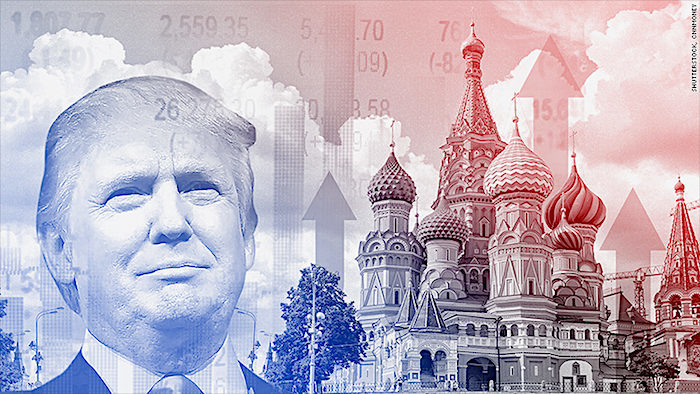
trump and kremlin
© True Viral News
An article by Robert Berke in oilprice.com, which describes itself as "The No. 1 Source for Oil & Energy News," illustrates how interest groups control outcomes by how they shape policy choices.

Berke's article reveals how the US intends to maintain and extend its hegemony by breaking up the alliance between Russia, Iran, and China, and by oil privatizations that result in countries losing control over their sovereignty to private oil companies that work closely with the US government. As Trump has neutered his presidency by gratuitously accepting Gen. Flynn's resignation as National Security Advisor, this scheme is likely to be Trump's approach to "better relations" with Russia.

Berke reports that Henry Kissinger has sold President Trump on a scheme to use the removal of Russian sanctions to pry President Putin away from the Russian alliance with Iran and China. Should Putin fall for such a scheme, it would be a fatal strategic blunder from which Russia could not recover. Yet, Putin will be pressured to make this blunder.

One pressure on Putin comes from the Atlanticist Integrationists who have a material stake in their connections to the West and who want Russia to be integrated into the Western world. Another pressure comes from the affront that sanctions represent to Russians. Removing this insult has become important to Russians even though the sanctions do Russia no material harm.

We agree with President Putin that the sanctions are in fact a benefit to Russia as they have moved Russia in self-sufficient directions and toward developing relationships with China and Asia. Moreover, the West with its hegemonic impulses uses economic relationships for control purposes. Trade with China and Asia does not pose the same threat to Russian independence.

Berke says that part of the deal being offered to Putin is "increased access to the huge European energy market, restored western financial credit, access to Western technology, and a seat at the global decision-making table, all of which Russia badly needs and wants." Sweetening the honey trap is official recognition of "Crimea as part of Russia."

Comment: If the US removes sanctions against Russia, will other countries follow suit? Clearly, Russia has risen to greater economic stability due to the sanctions, having regrouped its resources, driven development and defeated the intent. Anyone under the delusion that sanctions have dealt a big blow to Russia and that they are a useful change agent, at least in this scenario, are still living in a fantasy.

See also: Observing Trump - business against war


Megaphone

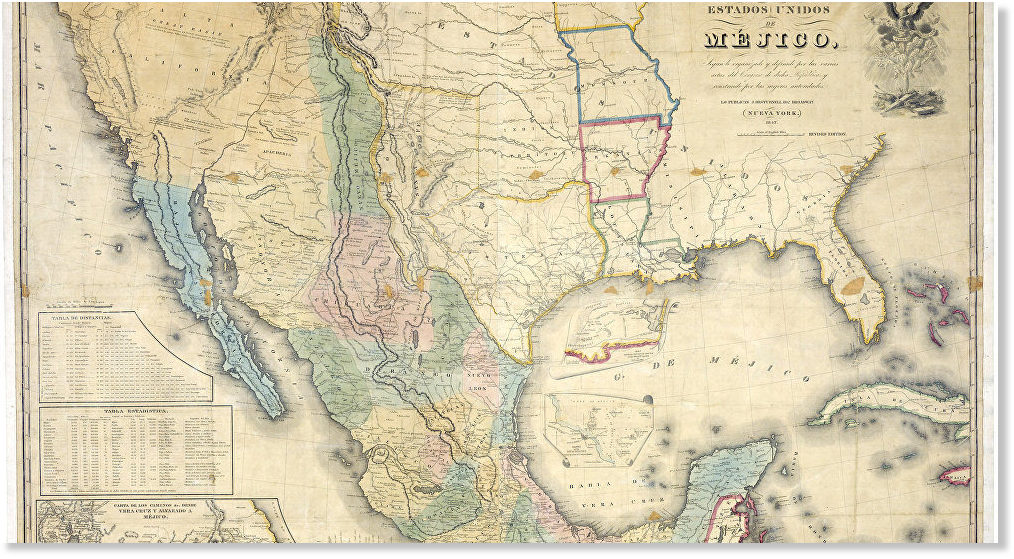
The absurdity of Russia "returning Crimea" - Like asking US to return California

1847 north american map
Speaking to Radio Sputnik, political commentator and The Duran contributor Adam Garrie pointed out just how absurd White House Press Secretary Sean Spicer's statement that Russia must 'return Crimea' really sounds. The journalist also explained the reasons for the 'civil war' that's going on in Washington over its policy on Russia.

On Tuesday, Spicer said that the Trump administration expected Russia to "deescalate violence in the Ukraine and return Crimea" to Kiev. Shortly thereafter, Russian officials responded, emphasizing that Russia does not 'return' its territories, and reaffirming that the Crimea issue is permanently closed.

Asked to comment on this apparent flip-flop by Trump, who had earlier hinted that he would "take a look" at recognizing Crimea as part of Russia, and said that the Crimean people "would rather be with Russia," The Duran political author Adam Garrie explained why Spicer's comment didn't just border on the absurd, but completely crossed that boundary.

"Crimea was of course part of Russia ever since 1783. Before that it was part of the Crimean Khanate of the Ottoman Empire; so I don't know who they want to 'return' it to," Garrie said, speaking to Radio Sputnik.

"The whole situation is absurd," the journalist noted, particularly given the US's positioning itself as a country that promotes democratic values, and the fact that an overwhelming majority of Crimeans "voted to return home to their historical mother country of Russia. They should be praising it! It was done without a shot being fired, it was done smoothly and peacefully."

Magnify

Observing Trump - business against war

Strategy and Policy Forum
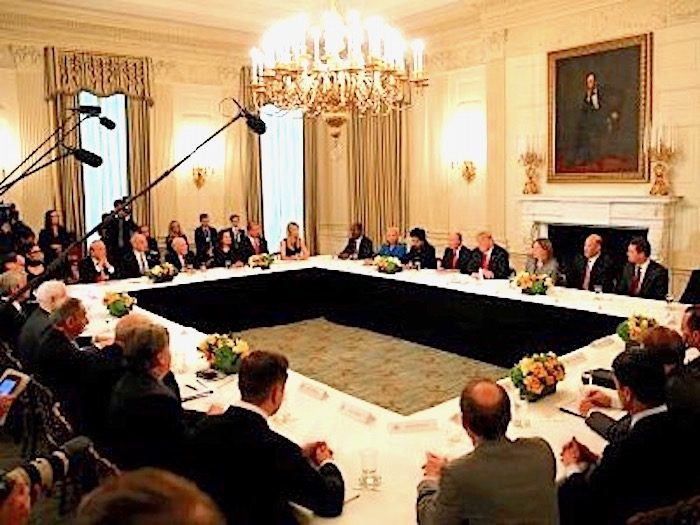
© American Enterprise InstituteDonald Trump inaugurates the Strategy and Policy Forum at the White House.
Thierry Meyssan invites us to observe Donald Trump without judging him by the same criteria as his predecessors, but by trying to understand his own logic. He notes that the President of the United States is trying to restore peace and relaunch world commerce, but on new foundations, completely different from the current system of globalisation.

Seeking to overthrow the Power that preceded him, which is still trying hang on despite him, President Trump cannot compose his administration by relying on the political class or on senior civil servants. He has therefore solicited new collaborators, entrepreneurs like himself, despite the risk that this confusion of role categories may entail.

According to the Puritan ideology, which has been in fashion since the dissolution of the Soviet Union, mixing state policy with one's own private affairs is a crime - one of the reasons for which a strict separation has been installed between these two worlds. On the contrary, though, during the last few centuries, politics was not regarded from a moral standpoint, but from that of efficiency. It was therefore considered normal to associate entrepreneurs with politics. Their own personal enrichment was not considered to be 'corruption' unless they grew fat on the proceeds of the Nation, but not when they developed it on their own.

Concerning his relations with the Great Powers, President Trump approaches Russia on the political level, and China on the commercial level. He is relying on Rex Tillerson (ex-head of Exxon-Mobil), a personal friend of Vladimir Putin, as his Secretary of State - and on Stephen Schwarzman (the boss of the capital-investment company Blackstone), a personal friend of President Xi Jinping, as President of a new consultative organisation tasked with proposing the new commercial policy - the Strategy and Policy Forum, inaugurated by President Trump on 3 February at the White House. The meeting brought together 19 top-level entrepreneurs. Contrary to previous practises, his advisors were not chosen according to whether or not they had supported the President during his electoral campaign, nor in terms of the size and influence of the businesses they managed, but rather in terms of their personal capacity as managers.

Comment: The old dynamics of the geopolitical arena have run the gamut, with doom as its more than likely outcome. Instead of playing into the power and damnation course set by his predecessors, Trump is segueing 'enemies with grudges' into 'cooperators with benefits'...certainly a healthier approach with longer lasting guarantees, should this trajectory be allowed to flourish. It is a bold move to come back from the edge, one that would never have been considered nor implemented by the entrenched left.


Attention

Farage: 'EU voters are more anti-immigration than I am'

Nigel Farage
© Toby Melville / Reuters
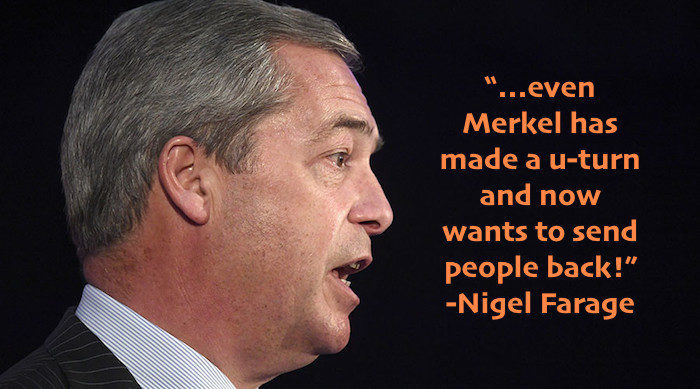
Former UKIP leader Nigel Farage has accused Eurocrats of "despising" their own voters, who he says mostly want migration from Muslim countries to stop.

In a fiery speech to the European Parliament in Strasbourg, Farage said most EU citizens have a "harder line" on immigration than himself or even US President Donald Trump. Farage pointed to a recent poll of 10,000 people by think tank Chatham House, which revealed that across 10 major EU states 55 percent of voters thought Muslim migration should be stopped. About 25 percent neither agreed nor disagreed, and 20 percent disagreed.

"I have no doubt that many of you here when you hear what I have to say will despise your own voters. "Only 20 percent of people want immigration from Muslim countries to continue. Which means your voters have a harder line position on this than Donald Trump or myself or frankly any party sitting in this parliament. I simply cannot believe that you are blind to the fact that even Mrs Merkel has made a U-turn and now wants to send people back," Farage said, referring to the German chancellor.

Comment: While Farage seems to have his finger on the pulse of EU citizenry and glibly conveys their druthers, perhaps all this should have been determined before the proxies were trained, the first bomb was dropped and the migrations began. It is becoming clear that part of the bigger picture is the aim to destroy not only the ME, but cripple the EU as well.


Pirates

US not coordinating with Russia on Daesh airstrikes in Syria

US fighter jets Syria
© Flickr/ U.S. Department of Defense
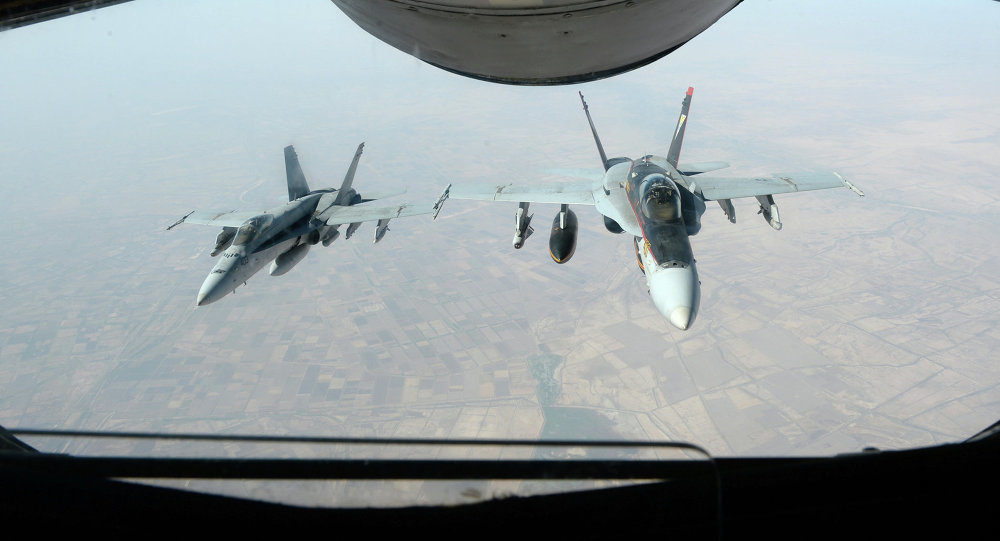
The US Department of Defense has not been coordinating strikes with Russia taken in the Syrian city of Palmyra, Operation Inherent Resolve spokesperson told Sputnik.

Daesh recaptured Palmyra last December and the terror group's gains in the historic city prompted the Syrian army to launch an offensive to retake it. Russia's General Staff stated on Saturday that the Syrian army has been advancing toward the city.

"The [US] Department of Defense is not coordinating airstrikes with the Russian military in Syria," Operation Inherent Resolve spokesperson said on Tuesday.

The spokesperson also noted that the Defense Department "maintains a channel of communication with the Russian military focused solely on ensuring the safety of aircrews and de-confliction of airspace."

Comment: Not a good sign. The world could use some relief with better US/Russian relations and communication. The Pentagon and the US intelligence apparatus certainly have different plans.


Bullseye

The foundations behind India's demonetization

freedom in a cage
"The urge to save humanity is almost always a false front for the urge to rule." ~ H. L. Menken

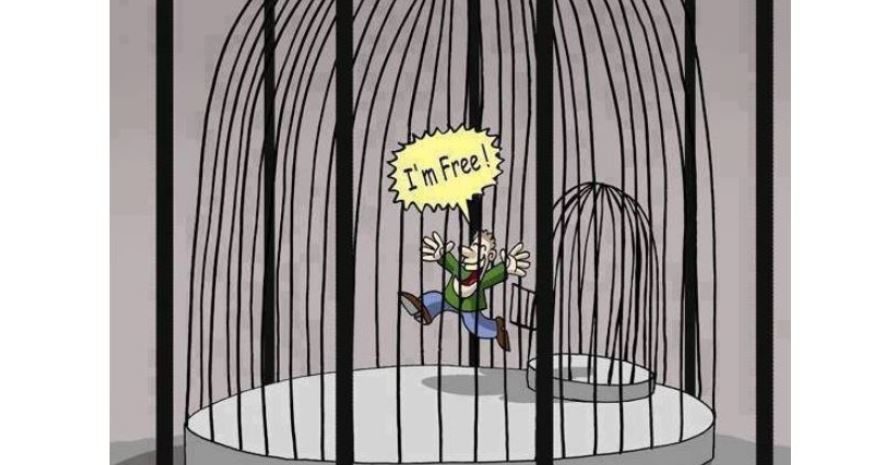
The short story is that American banking and government institutions are partnering on a do-or-die global ultimatum to shift all countries from cash to digital currency. The ultimatum is that if a country does not play ball by cooperating, they lose out in trade since digital will become the default platform.

Quietly, India was chosen to kick-off off the campaign. The so-called "financial-inclusion" drive that started in India November 9, 2016, is anything but. Additional promotional language states the goal to create "a holistic ecosystem approach" to solve the merchant and customer issues limited by cash-only systems. Translation: Think...Big Brother.

This well-thought-out globalist scheme was not simply the brainchild of India's Prime Minister Modi.
In early November, without warning, the Indian government declared the two largest denomination bills invalid, abolishing over 80 percent of circulating cash by value. Amidst all the commotion and outrage this caused, nobody seems to have taken note of the decisive role that Washington played in this. That is surprising, as Washington's role has been disguised only very superficially. ~ Norbert Haering, Global Research, 1 January 2017

Comment: See also:


Attention

Is Trump next after Flynn?

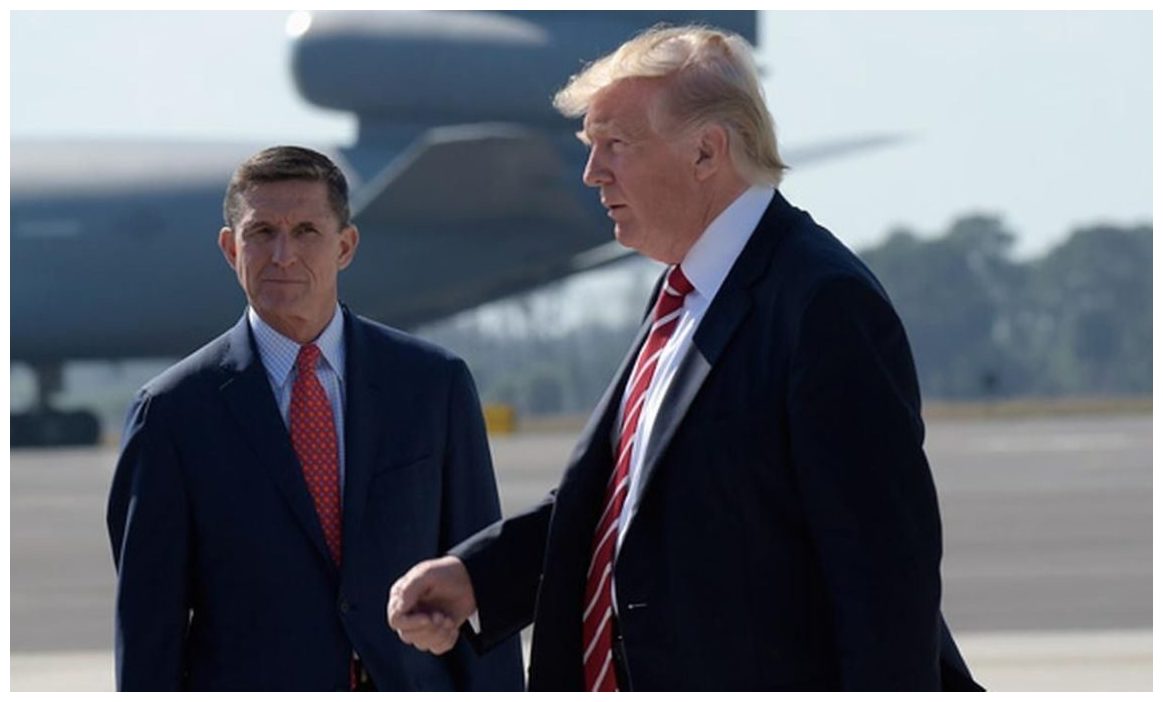
Trump and Flynn
© Strategic Culture Org
Just three weeks into the Trump presidency, and his political enemies in the Washington establishment have scored big, with the forced resignation of Trump's National Security advisor Michael Flynn. The establishment includes state intelligence agencies and aligned corporate news media, who have been gunning for Trump ever since his shock election last November.

It's a hugely damaging blow to the inner circle of the Trump White House.

The US media reporting on Flynn's resignation this week had the unmistakable air of victory-crowing. Like sharks in a pool, they smell blood.

Flynn had to go after the Washington Post and others reported that he wasn't telling the truth about phone calls he had been holding with Russian ambassador Sergey Kislyak during the transition to the Trump administration. Flynn hadn't denied the calls in late December, but he had maintained that the subject of US sanctions on Russia were not discussed.

Persistently the US media did not give up on the charges against Flynn, which shows that their confidence on the subject was underwritten by intelligence sources. Or put another way, this was an intelligence-led witch-hunt which was based on the illegal disclosure of private information.

Bad Guys

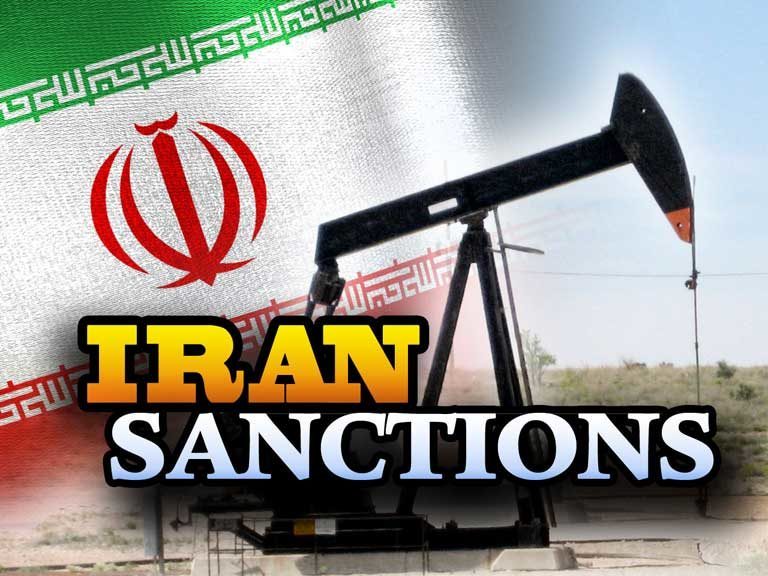
Sword of sanctions knows no scabbard: America's endless economic war on Iran

Iran sanctions
Any U.S. shooting war with Iran will probably be escalation of the sanctions war, a war the US kicked off with the fall of the Shah in 1979, escalated to the United Nations in 2006, and will probably never bring to a conclusion.

The Obama administration tried a sanctions limited cease-fire with the Iran nuclear deal but, with the election of Donald Trump, the peace may turn out to be fleeting and inconsequential.

The key element of the JCPOA (Joint Comprehensive Plan of Action) nuclear deal with Iran was relaxation of sanctions against Iran in return for concessions by Iran on its nuclear programs.

In a bizarre twist, the first stage of JCPOA as negotiated by John Kerry did not involve unraveling sanctions restrictions on U.S. corporations. Those remained largely unchanged. Instead, JCPOA involved the removal of some UN sanctions on Iran and an announcement that non-US parties would no longer face penalties themselves, i.e. "secondary sanctions, " for doing business with a clutch of key Iranian companies.

In the old days, you see, a European bank or corporation could be itself liable to "secondary sanctions" for doing business with a long list of Iranian entities implicated in U.S. nuclear sanctions; but not anymore! JCPOA knocked about 200 entities off the U.S. sanctions list, the biggest one being Iran National Oil Company, and oil was back on the menu!

Back on the menu for the Europeans, at least.

Comment: Iran war rhetoric and the 'Trump-ordered' dawn raid in Yemen: WWIII isn't 'coming' - It's happening NOW


Info

How Obama's Muslim Brotherhood strategy and Flynn's intel-sharing with Russia both led to a Russian win in the Middle East

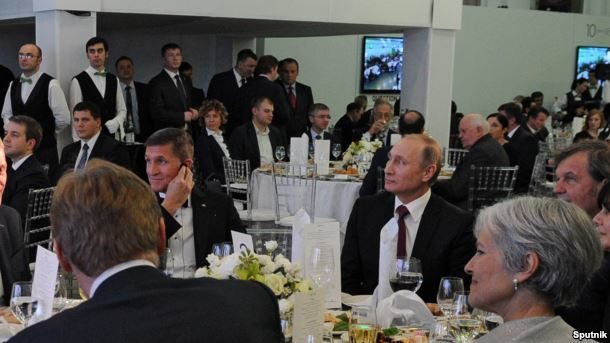
flynn putin
The rise and fall of General Michael Flynn should come as no surprise. While a policy of seeking some realist accommodation of Russian interests in the conduct of American foreign policy makes sense, the extent of such an accommodation and the methods used to achieve it must not compromise American national security. Flynn has proven for several years that his ambitions outstrip his understanding of the rule of law and the requirements of securing the American national interest at the big league level. His own arbitrary approach to bureaucratic politics rivals the fecklessness and negligence of that interest in Obama's ideologically-driven Muslim Brotherhood strategy in the MENA region. That strategy contributed to the Arab winter, catastrophic chaos and overall policy failures in Egypt, Libya, Syria and Iraq and further deterioration in U.S.-Russian relations.

As I noted in Part 2 of "Obama's Muslim Brotherhood Strategy", Flynn and others in the top ranks of the JCS and DIA had determined by no later than 2013 that Obama's policy of supplying arms to Syria's radicalized rebels was becoming a catastrophic failure. Moreover, it was being driven largely by the U.S. administration's unhealthy fixation on Putin and Russia as an inveterate enemy of America's 'liberal democratic order' - a term that means something different to American liberals, conservatives and libertarians each and thus drives much of the politics surrounding Russia policy.

Comment: If Hersh's account is correct, Flynn arguably made the right choice at the time, if the alternative was simply sitting back and watching the Obama administration support terrorism in Syria. Now that he's gone, however, Trump has been forced to take a harder position on Crimea. Whether that will prevent cooperation with Russia in other areas remains to be seen. But one thing's for sure: the pro-terrorist anti-Russian hardliners in the CIA will not give up easily.


X

EU Parliament passes controversial trade deal with Canada

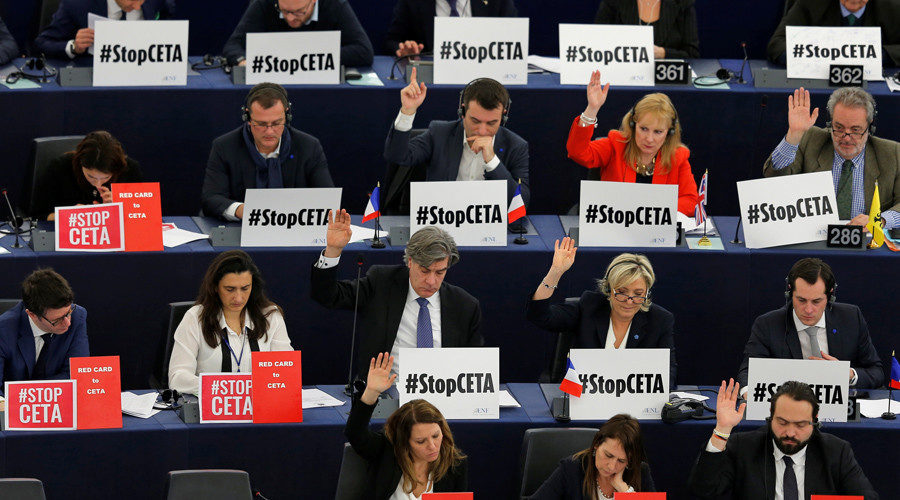
CETA EU
© Vincent Kessler / Reuters
The European Parliament has approved a landmark free trade deal between the EU and Canada. Hundreds gathered in Strasbourg, France to protest the Comprehensive Economic and Trade Agreement (CETA).

The approval allows CETA to come into force provisionally in the coming months.

The EU parliament voted to support most of the terms of the contentious trade deal, notably tariff reduction, which will apply eight years after negotiations began.

The members of parliament approved the deal with 408 votes in favor, 254 against and 33 abstentions.