
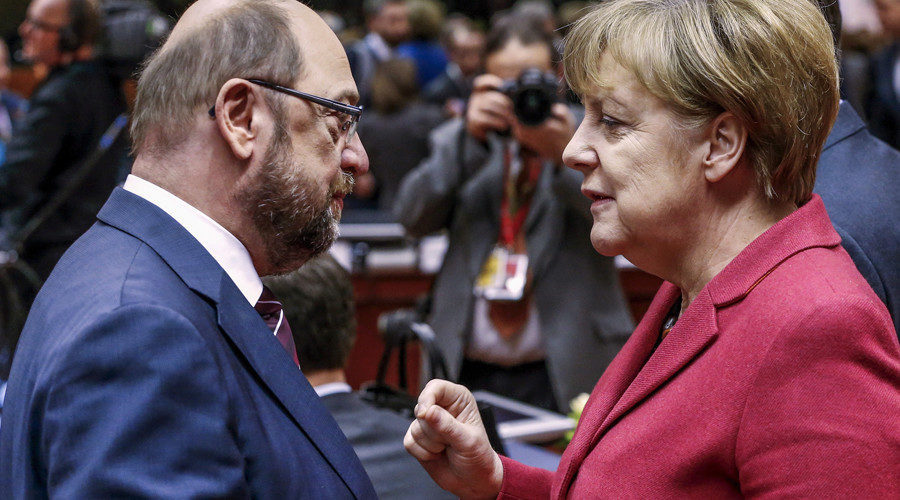
© Yves Herman / Reuters
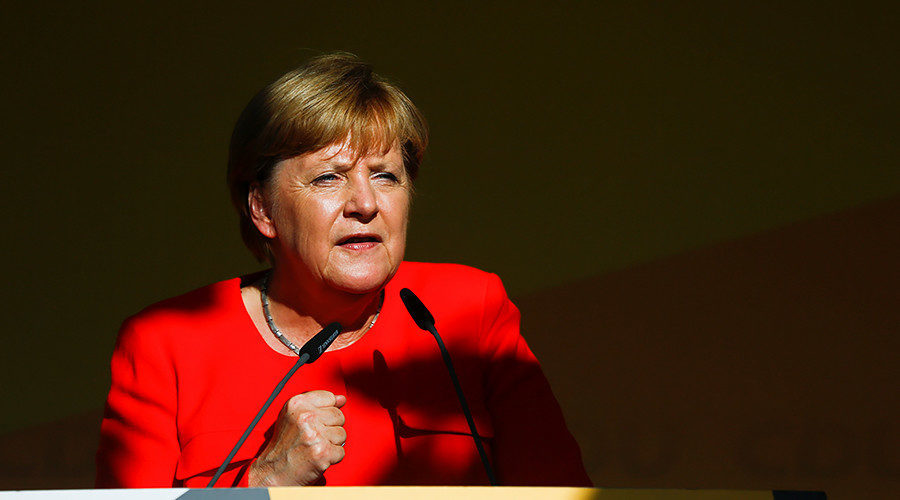
Over in Berlin, they've been enduring an election campaign so tedious that American media outlets are making its very dullness the story. Last week Quartz chuckled about how "Germany's election campaign is a snooze" and The Wall Street Journal's news-peg was "Stunning Plot Twist in Germany's Big Election: Wow, It's Boring."
Unlike last year's US Presidential contest, there are few fireworks and little showbiz. Instead of something like Donald Trumps "Make America Great Again" slogan, Angela Merkel's CDU is using "für ein Deutschland in dem wir gut und gerne leben (for a Germany in which we live well and happily)" which hardly rolls off the tongue. And their SPD opponents, led by Martin Schulz, aren't channeling Hillary Clinton's feistiness either with "Die Zukunft braucht neue ideen. Und einen, der sie durchsetzt (The future needs new ideas. And someone who implements them)."
The fact both realistic candidates for chancellor have so much in common removes the scope for the usual political jousting. Both are liberals who favor a strong European Union under Berlin's leadership. And Schulz appears to broadly support Merkel's 2015 decision to open German doors to millions of migrants.










Comment: For more on the German elections: 'Lost years' and 'stagnation'? Doubts linger as longtime leader Merkel on way to securing new term