Puppet MastersS


Question

War Powers Act: When did Congress vote to support the Saudi's Yemen war?

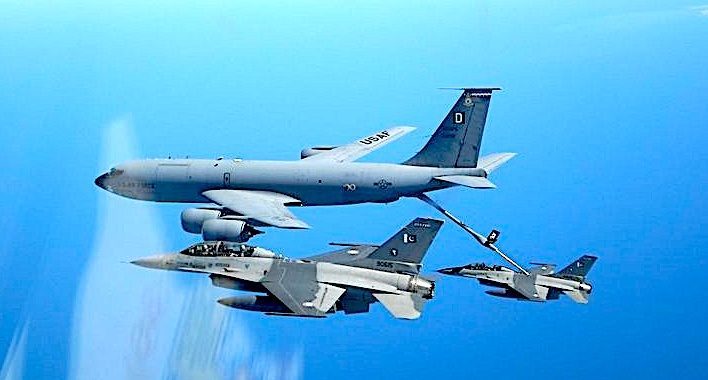
jets refueling
© PinterestMidair refueling, courtesy USAF
Lawmakers use War Powers Act to finally question legality of U.S. involvement.

The bill introduced by a bipartisan group of House members last week to end the direct U.S. military role in the Saudi coalition war in Yemen guarantees that the House of Representatives will vote for the first time on the single most important element of U.S. involvement in the war-the refueling of Saudi coalition planes systematically bombing Yemeni civilian targets.

In doing so, moreover, the bipartisan bill, H. Con. Res. 81, will provide a major test of Congressional will to uphold the War Powers Act of 1973, which reasserted a Congressional role in restraining presidential power to enter into wars without its approval in the wake of the Vietnam War debacle.

Since the Obama administration gave the green light to the Saudi war of destruction in Yemen in March 2015, it has been widely recognized by both Congress and the news media that U.S. military personnel have been supplying the bombs used by Saudi coalition planes. But what has seldom been openly discussed is that the U.S. Air Force has been providing the mid-air refueling for every Saudi coalition bombing sortie in Yemen, without which the war would quickly grind to a halt.

Comment: It is disturbing to think that H. Con. Res. 81 will be a revelation to most US citizens. (For that matter, Congress as well.) No matter if the US is operating offshore Yemen, it is still complicit by its service to Saudi attacks.

More on US Air Force's increased involvement in Saudi War in Yemen from MintPress News:
New data from the Air Force showed a 50% increase in the number of in-air refueling sorties US planes have flown in the past year, over the first year of the war.

This has been common in US-backed air wars, as the US has much more in-air refueling capacity than other nations. The refueling allows Saudi warplanes to remain in the air over Yemen much longer without going back to refuel, letting them launch more strikes.

All of this just adds to American complicity in the massive number of civilians the Saudi airstrikes have killed, which was already a problem because the Saudis were flying American-made planes and dropping American-made bombs. That the US is also directly fueling the planes just further undercuts the claims the US is trying to broker peace in Yemen.
And from Military.com:
Since April 2015, the Air Force has logged 1,778 tanker sorties for the operation, Air Forces Central Command spokeswoman Capt. Kathleen Atanasoff told Military.com on Tuesday. That includes 1,069 over the past year, an increase of 360, or 50 percent, from the 709 in the previous period.

"These operations are ongoing, with aircraft refueling occurring daily," Atanasoff said in an email. The service's tankers such as KC-135 Stratotankers and KC-10 Extenders participated in 7,564 refueling "events" with coalition aircraft, with "about 54 million pounds of fuel off-loaded in support of Saudi operations in Yemen," Atanasoff said.

Refueling numbers are tracked by the command but, unlike statistics on strikes and sorties against the Islamic State and the Taliban, aren't publicly released via the command's airpower summary factsheets.


Shopping Bag

Maduro: Global oil trade in ruble and yuan currency basket

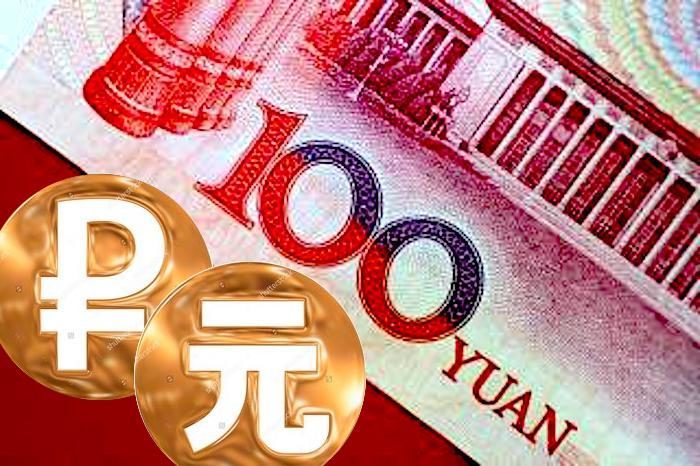
Yuan, ruble symbols
© Reitersedoa/Pinterest/KJN
The President of Venezuela Nicolas Maduro has proposed oil producing countries should discuss creating a currency basket for trading crude and refined products. "Developing a new mechanism of controlling the oil market is necessary," he said on Wednesday at the Russian Energy Forum, being held in Moscow this week.

According to Maduro, trading paper futures has an adverse impact on the oil market, undermining attempts by the Organization of the Petroleum Exporting Countries (OPEC) to stabilize prices.

Introducing alternative currency baskets, including the yuan, ruble, and other currencies will eliminate the impact of futures trading, according to the Venezuelan president.

Maduro insisted Venezuela is dealing with its debt to Russia, and that Rosneft's deal with Venezuelan state oil producer PDVSA is "subject to negotiation." "We fulfill all the obligations to Russia. If we get more favorable terms for restructuring the debt, this will be the result of a deal between the two governments," said Maduro.

Maduro pointed out that US sanctions make it difficult to negotiate the debt issue with American debt holders. Caracas is framing a plan to deliver its crude to alternative markets should the White House impose sanctions on trading the country's oil, Maduro said in response to a question on the possibility of PDVSA's default. "Venezuela has plans A, B, C, and others. There are other international companies interested in buying oil and refined products. We will create the best terms for them," he said.

Comment: Dollar dumping will turn US markets into a proverbial 'basket case.' Venezuela is sitting on the largest field of black gold and its impact will change financial history, should Maduro succeed in 1) keeping this resource in Venezuela's control, 2) changing out the payment system to new currencies, and 3) staving off a revolution by outside influences.


Nuke

US Defense Secretary: Iran compliant, stay in the nuclear deal

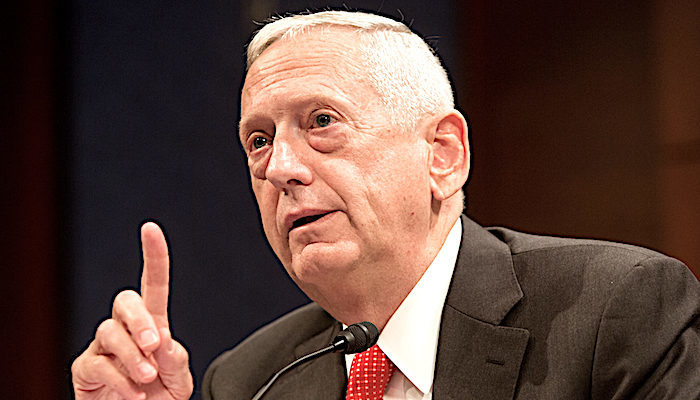
Mattis
© Getty ImageUS Defense Secretary James Mattis
"I believe that they [Iran] fundamentally are [in compliance]. There have been certainly some areas where they were not temporarily in that regard, but overall our intelligence community believes that they have been compliant and the IAEA [International Atomic Energy Agency] also says so," Mattis said during a House of Representatives hearing Tuesday.

"The point I would make is that if we can confirm that Iran is living by the agreement, if we can determine that this is in our best interest, then clearly we should stay with it," Mattis told the Senate Armed Services Committee. "I believe at this point in time, absent indications to the contrary, it is something that the president should consider staying with."

Iran is "not in a material breach of the agreement," said General Joseph Dunford, chairman of the Joint Chiefs of Staff. "I believe that [the agreement] has delayed Iran's nuclear program."

Under the deal negotiated in July 2015, Iran agreed to reduce the number of its uranium enrichment centrifuges by two-thirds, cap its enrichment below the level needed for weapons-grade material, reduce its enriched uranium stockpile by 98 percent from around 10,000kg for 15 years, and allow international inspections.

In exchange, much of the international sanctions against Tehran have been lifted. Some US sanctions, however, still remain in effect.

Comment: Trump has to know that if the deal is scrapped, Iran would never knuckle under to more restrictions, no matter who was on the other side of the negotiating table.


Boat

China seeks closer military ties, docks warships in London

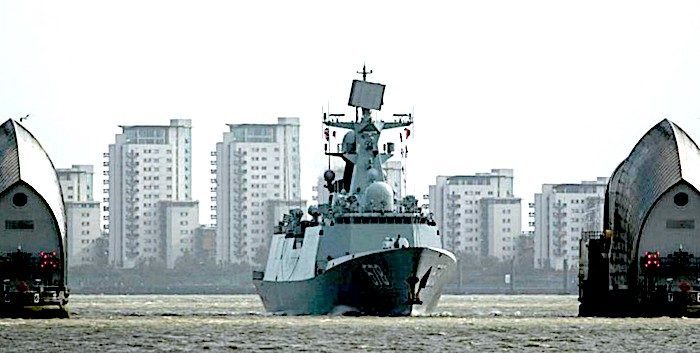
Chinese ships
© South China Morning PostChinese war fleet docks in London.
London and Beijing must forge closer military ties in a world that is "far from being peaceful," Chinese Ambassador to Britain Liu Xiaoming said, as warships from China docked for the first time in London.

Two Chinese 54A frigates from the 26th Navy Task Force arrived in Docklands in the lower Thames as part of a European goodwill tour. Liu said the arrival of the two 4,000-ton, 440ft-long frigates is also a sign of China's commitment "to world peace."


Bad Guys

Why isn't NATO bombing Madrid like it did Yugoslavia?

catalan independence separatist
© Francois Lenoir / ReutersCatalan Raimon Castellvi, wearing a flag with an Estelada (Catalan separatist flag), holds a sign as he protests outside the European Commission in Brussels after Sunday's independence referendum in Catalonia, Belgium October 2, 2017.
It is a little bit late for the EU to remember international law on its Western border when it was ignoring it on its Eastern border, Marko Gasic, an international affairs commentator, told RT.

Catalonia's leader has vowed to declare the region's independence from Spain in the coming days.

Carles Puigdemont, the breakaway region's president, said he does not plan to delay the declaration of independence for much longer and is ready to "act at the end of this week or the beginning of next," he said in an interview with the BBC on Tuesday.

Attention

President of Catalonia vows to proclaim independence 'within days'

catalan independence protest
© Albert Gea / ReutersA Catalan regional police officer looks on as people who showed up to support the Spanish national police officers staying in town, hold up Spanish flags as police vehicles depart in Pineda de Mar, north of Barcelona, Spain, October 3, 2017.
The president of Catalonia has said he will put the results of the independence referendum, deemed illegal by Madrid, into effect by next week, and urge Madrid not to intervene. It comes as Spain's King Felipe VI has vowed to uphold constitutional order.

In an interview to the BBC on Tuesday, the breakaway region's president, Carles Puigdemont, said he does not plan to delay the declaration of independence for much longer and is ready to "act at the end of this week or the beginning of next."

Any attempt of the authorities in Madrid to override the Catalan regional government in a bid to hinder its actions in compliance with results of Sunday's popular vote would be "an error which changes everything," Puigdemont warned. He, however, did not elaborate on the Catalan regional government's possible response to such a scenario.

Chess

Pence's staff chief Ayers floats 'purge' of anti-Trump Republicans to wealthy donors

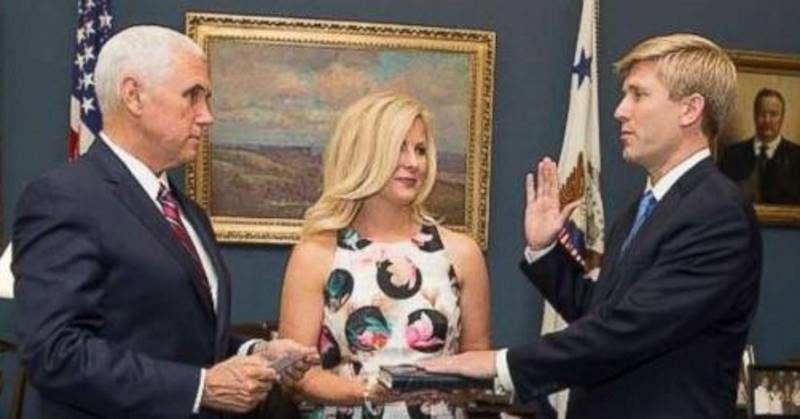
Pence Ayers
Vice President Mike Pence swears in his new chief of staff, Nick Ayers, who was joined by his wife and three children at the White House on July 28, 2017
Nick Ayers urges donors to 'form a coalition' to take on GOP leaders and members who don't back the president.

Vice President Mike Pence's chief of staff railed against congressional leaders in closed-door remarks to wealthy donors and called for a "purge" if GOP lawmakers don't quickly rally behind President Donald Trump's agenda.

In remarks at a Republican National Committee event at the St. Regis Hotel in Washington on Tuesday morning, Nick Ayers also warned that Republicans are "on track to get shellacked" in next year's midterm elections if GOP lawmakers don't pass Trump's legislative priorities.

But Ayers reserved his harshest criticism for congressional leaders and members who have not offered full-throated support for the president.

"Just imagine the possibilities of what can happen if our entire party unifies behind him? If - and this sounds crass - we can purge the handful of people who continue to work to defeat him," Ayers said, according to an audio recording of the remarks obtained by POLITICO. Listen here.

Attention

Putin calls global community to abandon double standards in war on terror as other officials accuse U.S. of collaborating with ISIS

Vladimir Putin
© Alexei Nikolsky/Russian Presidential Press and Information Office/TASS

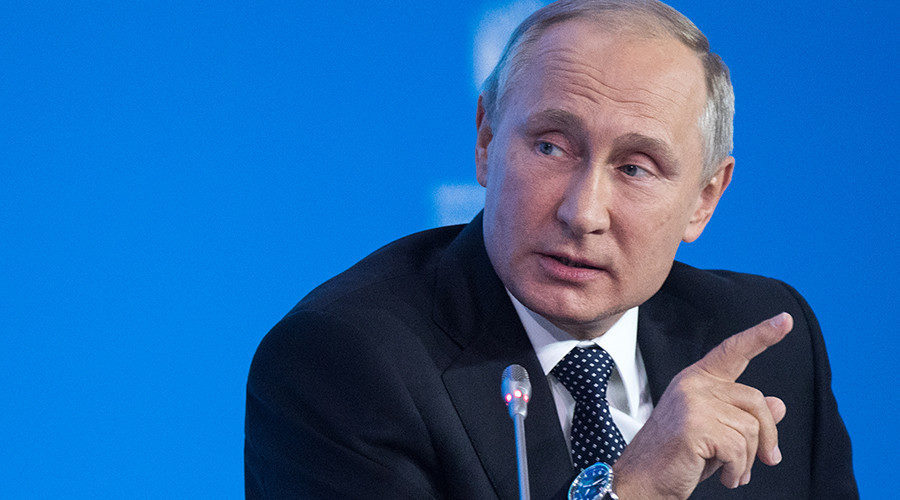
Vladimir Putin has called on the global community to abandon the double standard policy


Russian President Vladimir Putin has called on the global community to abandon the double standard policy in the fight against terrorism.

"We support an integrated approach to countering terrorism, the spread of its ideology and funding illegal armed groups, as well as rejection of the double standard policy in the fight against the major modern threat," says the presidential welcome address to the participants of the 16th meeting of foreign intelligence, security and law enforcement chiefs that the FSB opened in Kranosdar.

Comment: The Russian Defense Ministry has said that the US support for terrorist factions in Syria is the main obstacle to the anti-terror fight in the war-torn country.
"The main obstacle to the complete elimination of Daesh in Syria is not the military capabilities of terrorists, but rather the support of [our] American colleagues," Russian Defense Ministry spokesman Maj. Gen. Igor Konashenkov said Wednesday.

He went on to say that a series of Daesh attacks against the Syrian forces have been carried out from the areas where the "US military mission" is deployed.
In a clever counter-move, Lavrov said Wednesday that Russia will be providing assistance to Syrian armed groups that have chosen to fight against the Nusra Front in the Idlib de-escalation zone:
"We have information that the armed formations which have joined the arrangement on the Idlib de-escalation zone have started to fight more actively against Jabhat al-Nusra. We will be assisting them in this matter, as well as, of course, assisting the Syrian army," Lavrov told reporters after a meeting of Russian special services chiefs in Krasnodar which was televised by RT.
See also: Lavrov: US-led forces in Syria consistently act in ways that help terrorist groups


Info

Mattis links Pakistani intel to terrorism, threatens to revoke "non-NATO ally" status - but will give Pakistan one more chance

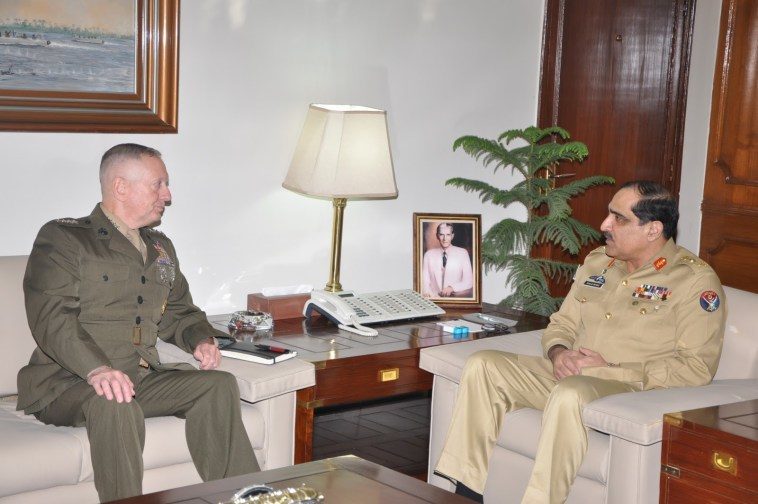
mattis pakistan
US Defense Secretary James "Mad Dog" Mattis has just stated that the US is considering revoking Pakistan's status as a non-NATO ally.

Pakistan joined a club of US partner which are given non-NATO ally status in 2004. Being classed as a non-NATO ally gives nations outside of Europe and Europe's often controversial near-abroad, similar rankings and ostensibly privileges as formal members of the US led alliance. Other members of the non-NATO ally group include Israel, Japan, South Korea, Egypt and Jordan.

Mattis has stated that the US may kick Pakistan out of the group because of Pakistan's alleged support of the Afghan Taliban.

Donald Trump and his cabinet colleagues have worked hard to push a narrative that Pakistan is a state sponsor of terrorism and that in particular, Pakistan aids armed factions in neighbouring Afghanistan. The allegations which have thus far not been backed up by any evidence, are similar to the kinds of things said by Indian mass media and Hindutva politicians.

However, Pakistan's growing schism with the United States is, in reality, over a host of issues, all of which are related to Pakistan's pivot away from the US and its related pivot towards China and Russia.

Comment: Looks like the U.S. isn't ready quite yet to send Pakistan into the arms of Russian and China. Mattis says the U.S. will try "one more time" to work with Pakistan before taking additional measures:
Mattis told a House Armed Services Committee hearing on October 3 that "we need to try one more time to make this strategy work with them, by, with, and through the Pakistanis, and if our best efforts fail, President [Donald] Trump is prepared to take whatever steps are necessary."

The defense chief also said he would travel to Islamabad soon, but he did not provide details.

Mattis was testifying alongside Joint Chiefs of Staff Chairman General Joseph Dunford in their second hearing of the day on U.S. policy in Afghanistan.
...
New agencies have reported that measures being discussed include potentially downgrading Pakistan's status as a major non-NATO ally.

Asked during the hearing whether that option was being discussed, Mattis replied, "I am sure it will be."

Pakistan has regularly denied it provides safe havens to extremist groups.

The Pakistani Embassy in Washington said late on October 3 that Islamabad had achieved success in counterterrorism operations inside Pakistan.

"However, unless the same level of success is achieved in [Afghanistan], long lasting-peace in the region will remain out of reach," the embassy said in a statement.


Yoda

Putin: Countries prefer to do business with Russia because there's no double-dealing

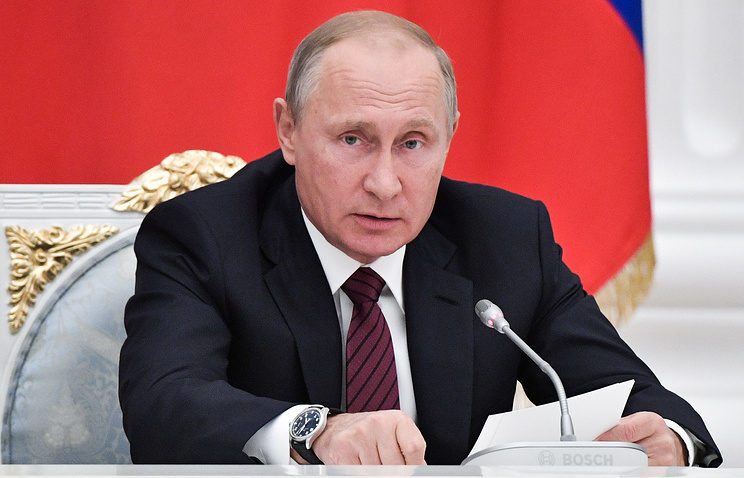
Vladimir Putin
© Sergey Guneev / Sputnik
Russia plays it straight when it comes to agreements, which is why the country is attractive to foreign business despite sanctions, said Russian President Vladimir Putin.

"The most significant advantage we have is that we never double-deal. We are always honest with our partners. We openly lay out our position," Putin said at the 2017 Russian Energy Week in Moscow.

Russia is more reliable compared to other countries, according to the president. "That's what accounts for Russia's attractiveness for foreign partners, not our military potential," he added.

Comment: See also: Saudi King's momentous visit to Moscow: Middle East, bilateral trade, humanitarian issues will all be on table