OF THE
TIMES
"And for one man to cope with them is an extraordinary feat. Only occasionally does he express anger - he does it as anyone of us would feel-say on an attack like The Guardian's utterly false story."

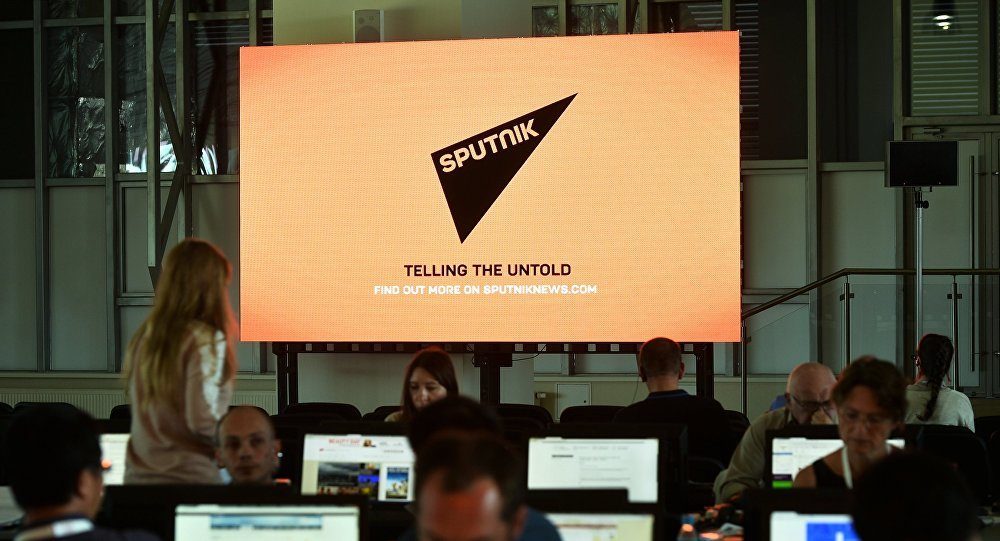
On Sunday, British newspaper the Times published the names and photographs of eight people working for the local branch of Russian news agency, Sputnik.Sputnik employees hit back:
"I would call it harassment," British journalist Neil Clark said.
Considering the steady stream of Russia-bashing in the UK media, revealing employees' identities like that is "tantamount to incitement" as it "might put those people in danger," he argued.Speaking to RT, the journalist noted that the Times along with its sister publication, the Sunday Times had "waged a war against Russian media for a number of years," with its goal being to "get Sputnik closed down." He explained that the outlet's actions fall in line with the general attitude the mainstream media harbors against Russian media operating in the UK. Both Sputnik and RT often are accused of being 'propaganda' vehicles and depicted by the British press as engaging in 'information warfare' against the UK.McCarthyism on steroids is what we've got at the moment against Russian media.
The story in the Times came a month after hackers, claiming to be part of the Anonymous group, began dumping documents, reportedly belonging to shadowy Scottish-based think tank Institute for Statecraft (IFS). The leaked documents revealed how the IFS' state-funded Integrity Initiative managed a covert 'network' of officials, journalists and public figures involved in combating so-called 'Russian propaganda' in the UK and overseas.
- UK-funded 'Integrity Initiative' Exposed Infiltrating European Media Through Fake News Factories
- Documents Expose British Government Covert Anti-Russian Propaganda and Truth Behind Skripal Case
- MP demands public inquiry into Tory funding of Integrity Initiative, the 'so-called-think-tank dealing in disinformation'
The revelations caused uproar within the Labour Party whose MPs accused the IFS of waging a slander campaign against their party leader, Jeremy Corbyn, under the guise of fighting so-called disinformation from Moscow and demanded an official probe.
Neil Clark said that it was an important story which didn't get much coverage in the UK outside of the Russian news agencies.All proper media outlets should be reporting on these leaks. But they're not. The Times and the Sunday [Times] are going after those media outlets which have reported on them.
Journalistically this is appalling.
Employees of Sputnik news agency were appalled when a British paper revealed their names and photos under the headline 'Kremlin stooge' but say it falls in line with the fervent Russia-bashing trend in the UK media.
The employees mentioned varied from reporters to management to a person in charge of the IT department. The outlet was referred to as a "Kremlin stooge" in the story's headline and the piece cited a politician who claimed that Sputnik actively seeks to "destabilize" the country.
Johanna Ross, a producer at Sputnik, experienced "a bit of a shock" having seen her face printed on the pages of one of Britain's leading papers. It was especially saddening that her profile was featured under the 'Kremlin stooge' headline.
"But it's hardly surprising given the anti-Russian sentiment prevalent in all UK newspapers," Ross told RT.Johanna's colleague, Daniel Powell was also "annoyed" to learn that the Times included him in the 'stooge list.' The paper was "being foolish and disrespectful to the staff," Powell, said. He believes it is the controversies plaguing British domestic politics that make Russian-owned outlets easy targets.It's certainly isn't nice to see yourselves being put up there as some kind of identity parade of a fearsome kind of criminals as if you've done something wrong.The Times piece targeting Sputnik followed a number of leaks by a group - supposedly associated with Anonymous - about a controversial Scottish-based think tank, the Institute for Statecraft (IFS).It forms part of the anti-Russian agenda perpetuated by the government as a deflection tactic from Brexit and other issues.
The leaked files revealed how the IFS' Integrity Initiative used taxpayers' money to manage a covert 'network' of public figures and engaged in Europe-wide meddling under the guise of fighting so-called 'Russian propaganda.'
A report in the Times emphasized the "mounting suspicion" that a cyber-attack on the Institute for Statecraft was ordered by none other than the Kremlin. That assumption was largely based on the fact that RT and Sputnik were among the first to cover the issue.
Those working for Russian-owned news agencies have "done nothing wrong" by reporting on the IFS leaks, journalist Luc Rivet told RT, because the story is important and something the citizens should know about.
Sputnik producer Johanna Ross doesn't feel discouraged from covering such topics either.This very much indicates that we're doing something right here. It's certainly not going to dissuade us from investigating the Integrity Initiative more.
Comment: The Guardian has become its own mechanism for demise, banking on a reputation it no longer has, nor deserves. Choices: Freedom in a lie; prisoner in the truth - or - Prisoner in a lie; freedom in the truth. Assange is the touchstone.