OF THE
TIMES
"Major movers" such as China, Russia and the European Union have a strong "motivation to de-dollarize," said Korin, co-director at the energy and security think tank, on Wednesday.Irrespective of where you reside in the world, chances are you feel some sense of unease, a nagging concern for the future and a deep instinctual understanding that an era you knew and navigated your entire life is slipping away and won't be coming back.
"We don't know what's going to come next, but what we do know is that the current situation is unsustainable."
- Anne Korin, Institute for the Analysis of Global Security.
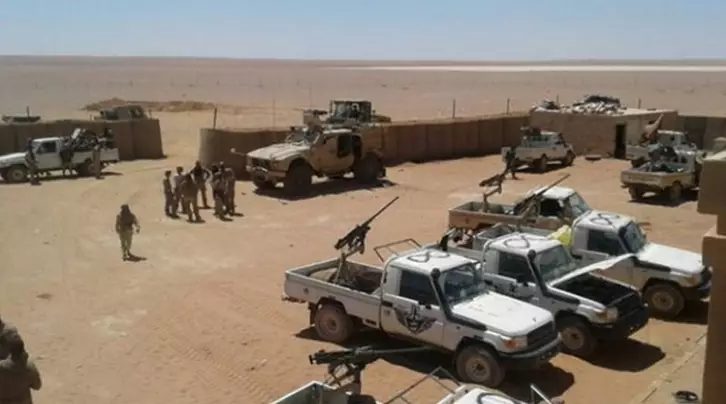
"As distinct from other peoples, most Americans do not recognize -- or do not want to recognize -- that the United States dominates the world through its military power. Due to government secrecy, our citizens are often ignorant of the fact that our garrisons encircle the planet. This vast network of American bases on every continent except Antarctica actually constitutes a new form of empire -- an empire of bases with its own geography not likely to be taught in any high school geography class. Without grasping the dimensions of this globe-girdling Baseworld, one can't begin to understand the size and nature of our imperial aspirations or the degree to which a new kind of militarism is undermining our constitutional order."Grimly enough, 15 years later, as TomDispatch managing editor Nick Turse makes clear today, not a word of what Johnson wrote isn't applicable to this moment as well. The United States remains, in the phrase of another TomDispatch author, David Vine, a base nation. Millions of Americans have been to or served at one or more of those garrisons scattered in an historically unprecedented way across, as Johnson said, every continent but Antarctica. In recent years, in every size and shape those bases have, as Turse points out, only multiplied across the Greater Middle East and increasingly parts of Africa, thanks to Washington's never-ending war on terror. Yet coverage of them, discussion of them, debate about them in this country is essentially nil. America's Baseworld, a looming reality of the twenty-first century, remains no part of any conversation, not in the mainstream media, not on cable news, nowhere -- not, at least, until Donald Trump recently withdrew perhaps 1,000 U.S. military personnel from a number of small bases in northeastern Syria (even if new ones are soon to return to Southern Syria) to the shocked reaction of national security types everywhere.

By the end of 2019, fighting in Yemen will have claimed about 102,000 lives. In addition, an estimated 131,000 Yemenis will have died from hunger, disease and the lack of health clinics and other infrastructure between 2015-2019. The estimated combined death toll from war and disease is a staggering 233K.Stars and Stripes, November 5, 2019: Separatists sign deal to stop infighting
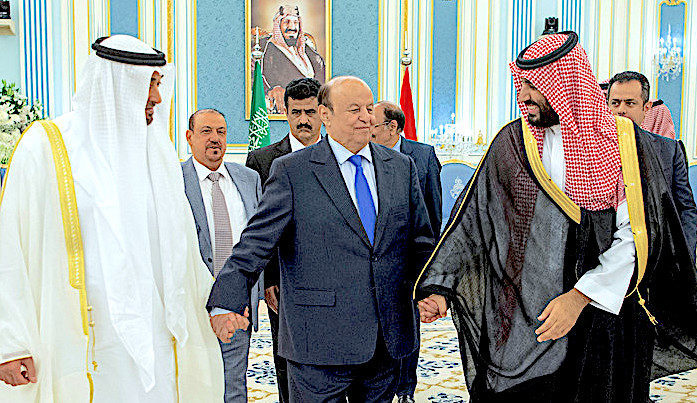
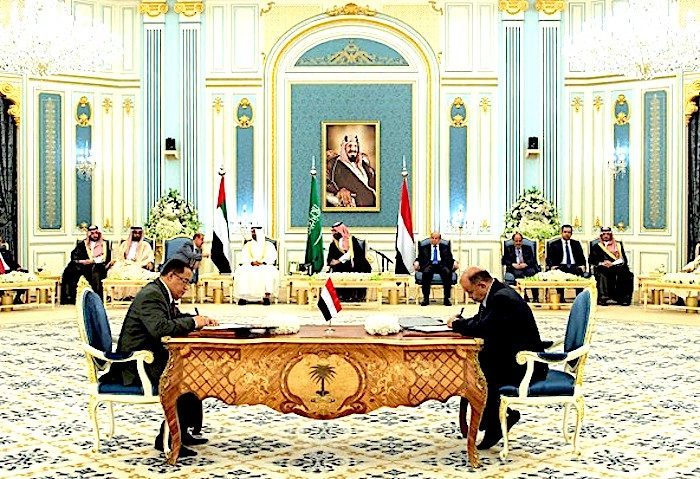
The two groups are in an alliance against Yemen's Houthi rebels. Tuesday's power-sharing deal allows for President Hadi to return to Aden and envisages a new Cabinet.[T]he separatists agreed to disband their militias, which would be integrated into Hadi's forces within three months. In return, the southern separatists are to take part in United Nations-brokered talks between Hadi's government and the Houthi rebels.© BANDAR ALJALOUD/SAUDI ROYAL PALACE /APYemeni Southern Transitional Council member and former Aden Governor Nasser al-Khabji and Yemen's deputy PM al-Khanbashi sign power-sharing deal in Riyadh, 5/11/2019.
The agreement further dictates that both sides pull their forces out of Aden, and says all sides would be under the Saudi-led coalition's control. It leaves only a unit of the presidential guard in Aden to protect Hadi, while coalition forces will protect the southern separatists' leaders.
The agreement solves two short-term problems, if it can be successfully implemented. It prevents a war-within-a-war between the southern separatists and Hadi's government. It also provides more credibility to future government negotiations with the Houthis.
Attending the ceremony were Saudi Crown Prince Mohammed bin Salman and Abu Dhabi's crown prince, Mohammed bin Zayed Al Nahyan. Also present was Aidarous al-Zubaidi, the head of the secessionist Southern Transitional Council.
Saudi Arabia has in the past weeks increased its military presence in southern Yemen, airlifting in additional troops, armored vehicles, tanks and other military equipment.

The United States' plan to build two military bases near oilfields in Syria is a violation of the country's sovereignty and an attempt to recoup costs, senior Russian lawmaker Konstantin Kosachev, a member of Russia's upper house of parliament and chairman of the foreign affairs committee, said Wednesday.Sputnik, 6/11/2019: Withdrawal? Minimum 800 US soldiers to remain to secure oil fields"The formal reason [for the construction of military bases] is to prevent terrorists from gaining access to oilfields. The informal reason - recoup the costs of military operations in Syria. The fact is that the sovereignty of Syria is being radically violated."Kosachev criticized the United States' European allies for remaining silent on this matter despite them being fond of discussing the rule of law in the European Parliament.
Turkish state news agency Anadolu on 5 October cited local sources as witnessing US construction equipment being put into use in oil-rich areas of Deir ez-Zor in Syria's east.
A Sputnik correspondent reports, citing sources in the region, that the US is building a military base near the Syrian town of Rmelan in the al-Hasakah governorate. The latter is located near some 1,300 oil wells. The base is reportedly being built in the direct proximity of these wells and will be four square kilometres in size. Its security will be ensured by both US troops and local Kurdish militia.
"Syrian oil is a national asset of all Syrians. [Russia] believes that Syrians should control their own natural resources, including oil", Russian Deputy Foreign Minister Sergei Vershinin said.

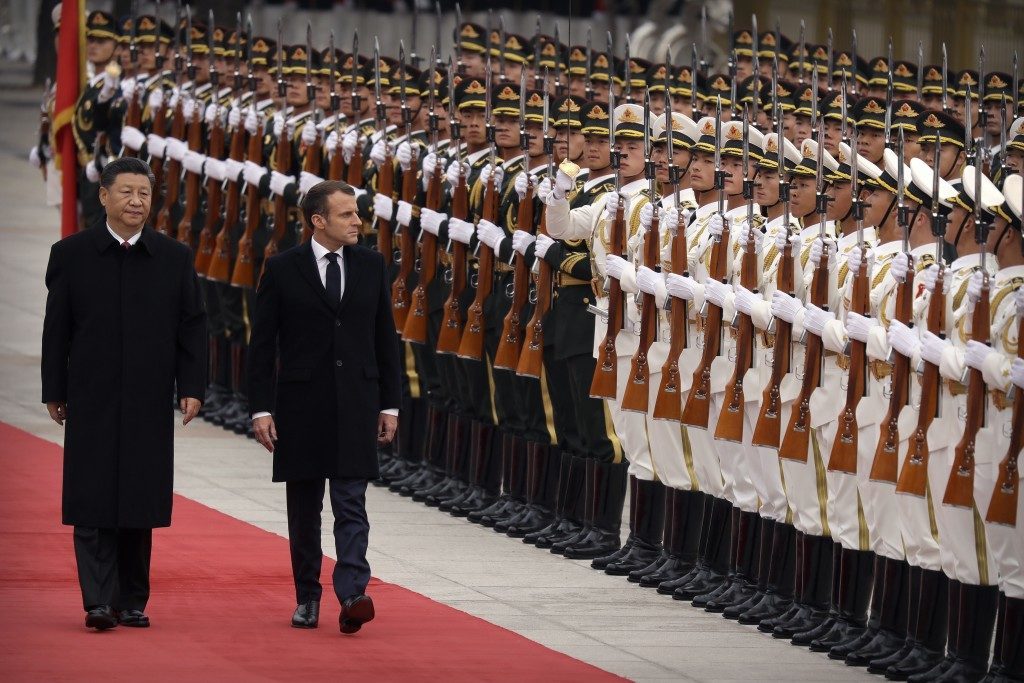
Comment: Prior to leaving for China, Macron told The Economist during an hour-long interview: The president also argued that it is high time for Europe to "wake up". He was asked whether he believed in the effectiveness of Article Five, the idea that if one NATO member is attacked all would come to its aid: Update 21:30 CET
Proving Macron's point, NATO's Secretary-General (secretary, really) has since piped up to counter Macron by saying "European unity cannot replace transatlantic unity," and warning that "the EU cannot defend Europe without outside assistance."
What a brain-dead cuck!
Update 8 Nov @13:00 CET
Maria Zakharova loves it though: