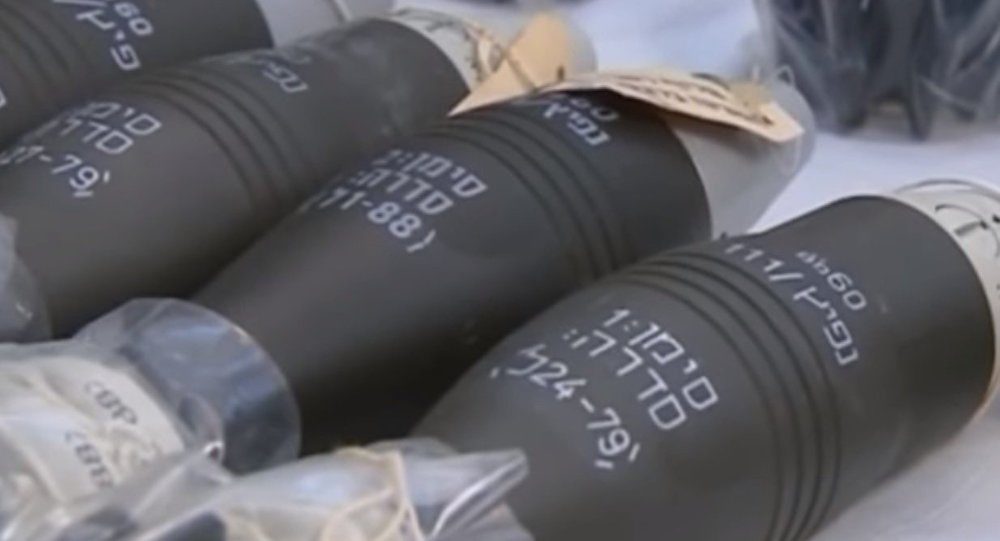
© Youtube / Syrian ministry of defense
The Syrian military's mop-up operations in areas liberated from terrorists have led to the discovery of
tens of thousands of tonnes worth of weapons, ranging from small arms and rocket launchers to US-made TOW anti-tank missiles, C4 explosives, and even tanks.
Authorities in southern Syria have uncovered another major underground cache of weapons and ammunition abandoned by terrorist forces as they fled the region.
A government source told the Syrian Arab News Agency that the arms and ammo stocks included over 300,000 rounds of ammunition for automatic rifles, sniper rifles, 12.7mm and 22mm machineguns, tank shells, anti-tank missiles, and 60, 80 and 120 mm mortar shells, along with explosives. The source said that part of the haul consisted of US and Israeli-made weapons.
RTMon, 30 Dec 2019 18:05 UTC
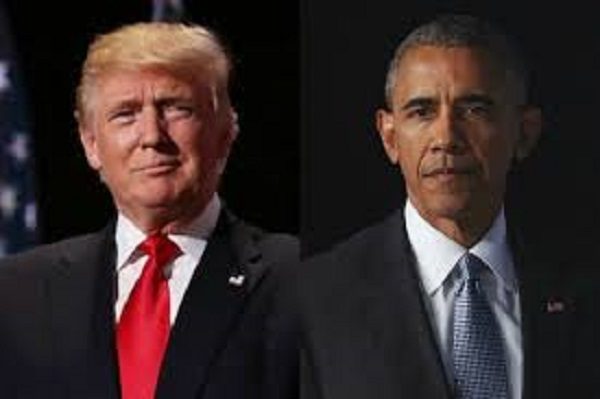
Despite years of 'Russiagate' accusations and an ongoing impeachment drive against him, President Donald Trump has tied with former President Barack Obama as America's most admired man of 2019, according to a new poll.
In the survey, published by Gallup on Monday, 18 percent of respondents named the current occupant of the White House as their most admired man, while another 18 percent named his predecessor. No other man - in a top ten that included entrepreneur Elon Musk, Vermont Senator Bernie Sanders, and the Dalai Lama - scored higher than two percent.
2019 marks Obama's 12th year in the top spot, but Trump's first. The president's ascendancy to pole position comes amid rising approval levels. Gallup notes that public support for Trump has risen from 36 percent in 2017, to 40 percent in 2018, to 45 percent this year.
RTSun, 29 Dec 2019 18:57 UTC
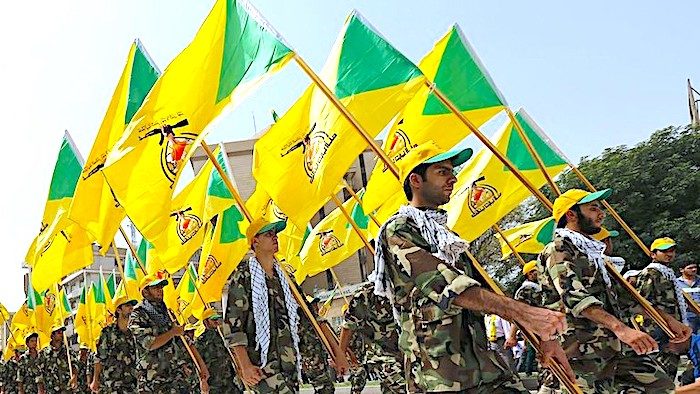
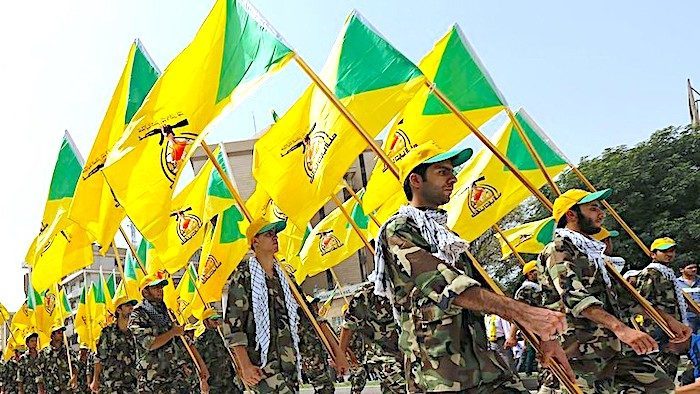
© Reuters/Thaier al-SudaniKataib Hezbollah
US airstrikes have pounded three Kataib Hezbollah military facilities near the town of Qaim, Iraq, as well as two targets in Syria, in response to the group's alleged bombing of an Iraqi military base on Friday.
The US carried out
"defensive strikes" against the supposed Kataib Hezbollah facilities on Sunday, US officials told Reuters.
The targets included weapons storage locations and command and control stations, and F-15 fighter jets were used in the attack. Three locations near Qaim, on the Iraq/Syria border, and two locations in Syria were hit.
Chief Pentagon spokesman Jonathan Hoffman said in a statement that
the strikes were a "response to repeated Kataib Hezbollah attacks on Iraqi bases that host Operation Inherent Resolve (OIR) coalition forces." Reuters' military sources said that
at least 18 militiamen were killed in the strikes, including at least four local Kataib Hezbollah commanders.
Comment: The Iraqi government is
not pleased, to say the least. President Salih called the attacks "unacceptable" and "damaging". He
said:
"This contradicts our agreements. It is harmful to Iraq and is unacceptable," Salih was quoted as saying. The president was also said to have characterised the attacks as being inconsistent with the security agreements between the two countries.
Major General Abdul Karim Khalaf, spokesman for the Commander-in-Chief of the Iraqi Armed Forces, described the US attacks as a "dangerous aggravation which endangers the security of Iraq and the region," Iraqi media reported. PM Mahdi's office
described the attacks as "
an unacceptable vicious assault that will have dangerous consequences". He is also reported to have
said: "We have previously confirmed our rejection of any unilateral action by the coalition forces or any other forces inside Iraq, and we consider it a violation of Iraqi sovereignty and a dangerous escalation that threatens the security of Iraq and the region."
Mahdi's statement highlights the uneasy relationship between militias like Kataib Hezbollah and the Iraqi government. Together with a smattering of other mostly Shiite militias, the group was sanctioned by the Iraqi government to fight Islamic State (IS, formerly ISIS) from 2014 onwards. However, despite Mahdi referring to them as "Iraqi armed forces," efforts to bring these 'Popular Mobilization Forces' under the command of the Iraqi military have only been partially successful.
Iraq's top Shiite cleric, Grand Ayatollah Ali al-Sistani, acknowledged that some of these groups have carried out "illegal practices," but condemned the US airstrike. Sistani said on Monday that "the Iraqi authorities alone are entitled to deal with these practices and take the necessary measures to prevent them."
Mahdi's government has yet to announce its official position on Sunday's strikes and its future relationships, both with militia groups like Kataib Hezbollah and with the United States. Following a meeting of the Iraqi National Security Council on Monday, Baghdad announced that its relationship with the US is now up for "review."
Tehran called the strikes an act of terrorism:
"US military aggression against Iraq and Iraqi forces is direct evidence of US terrorism, [Tehran] condemns it", Iranian Foreign Ministry spokesman Abbas Mousavi said on Monday.
"With these attacks, the United States has shown its strong support for terrorism and disregard for the sovereignty of countries, and must accept responsibility for the consequences of this unlawful act".
Meanwhile, Esper and Pompeo are taking a
victory lap:
Top national security advisers told President Donald Trump that the air raids against Shiite militias in Iraq and Syria were a total success - and briefed him on 'other' ways to punish Iran for the alleged attacks on US interests.
"We will not stand for the Islamic Republic of Iran to take actions that put American men and women in jeopardy," US State Secretary Mike Pompeo declared, standing beside Defense Secretary Mark Esper at a press event at Trump's Mar-a-Lago resort.
The Pentagon chief in the meantime said the Sunday strikes were successful and that officials discussed 'other options' with Trump.
Earlier in the day, US F-15 fighter jets struck three Kataib Hezbollah targets at Qaim near the Syrian border, and two in Syria. According to the Shiite militia group, at least 25 of their fighters were killed and nearly three dozen injured in the strikes. Washington accuses the group of "repeated attacks on Iraqi bases that host Operation Inherent Resolve (OIR) coalition forces."
Pompeo threatened Tehran earlier this month with a "decisive US response" should its sponsored militias continue their attacks on US forces, even though Iran's involvement has not been conclusively proven. On Friday, as if on cue, the latest rocket attack on a base near Kirkuk killed an American contractor and injured several US troops.
Facing the increasing possibility of a proxy war between Washington and Tehran breaking out on his soil, Iraqi caretaker Prime Minister Adel Abdul Mahdi called an emergency meeting of his security council on Sunday night.
Naturally Netanyahu is
pleased:
"Prime Minister Benjamin Netanyahu spoke today with American Secretary of State Mike Pompeo and congratulated him on an important US action against Iran and its regional proxies," the statement said.
Some reports on the results of the attack, from
Moon of Alabama:
The results of the air strikes were devastating:
Elijah J. Magnier @ejmalrai - 6:20 UTC · Dec 30, 2019
32 killed and 45 wounded the count of #US violent aggression on #Iraq security forces brigades 45 and 46 last night on a military position established to counter-attack and raid #ISIS remnant at al-Qaem, the borders between Iraq and Syria.
The al-Qaem/al-Bukamal border station is the only open one between Iraq and Syria which is not under U.S. control. The U.S. was furious when the Iraqi prime minister Adil Abdul Mahdi allowed it to be established. It was previously attacked by Israel which had launched its assault from a U.S. air force base in east Syria.
TØM CΛT @TomtheBasedCat - 6:11 UTC · Dec 29, 2019
It wasn't just Hezbollah Battalions members who were affected, there are also wounded among the ranks of the Missiles Forces / Rocket Battalion which is considered a separate unit apart from the numbered brigades.
The dead include Abu Ali Madiniyah, the commander of the 1st battalion of the 45th Brigade.
See also:
Rocket attack on Iraqi base kills US civilian contractor, multiple servicemen injured
RTMon, 30 Dec 2019 17:31 UTC
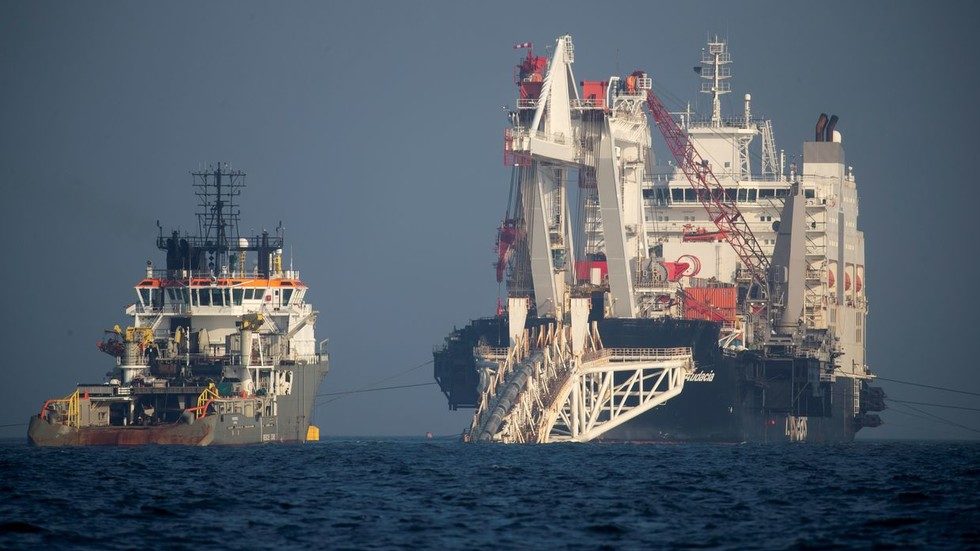
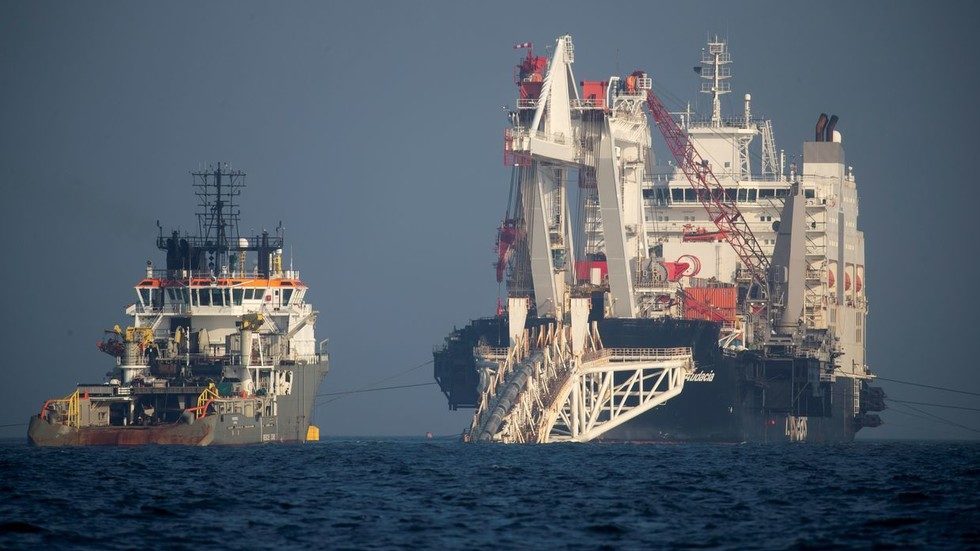
© Reuters / Axel SchmidtThe Nord Stream 2 pipe laying vessel Audacia off Ruegen island, Germany, in 2018.
President Vladimir Putin and Chancellor Angela Merkel have reiterated their support for the Nord Stream 2 natural gas pipeline from Russia to Germany, the Kremlin says, as the US seeks to curb the project with sanctions.
"The attitude for further support of the Nord Stream 2 project was confirmed" during a phone call which was initiated by the German side on Sunday, according to a statement on the Kremlin website.Earlier this month, the US State Department issued an ultimatum to European companies taking part in the project, threatening them with sanctions if they do not cease their work by January 20.
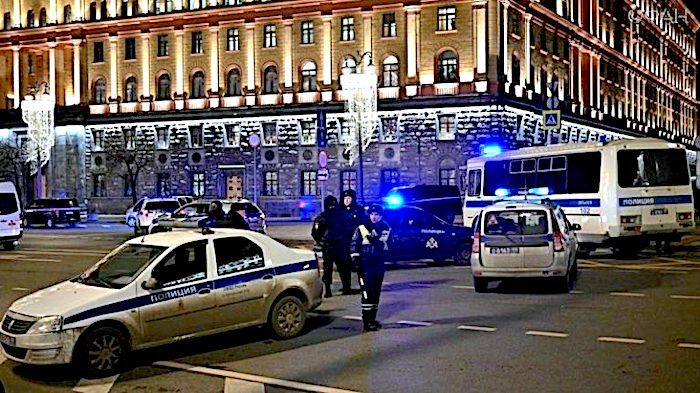
© Unknown
for quite a while, the Russian Federal news agency
reported.G4S, as a company, is surrounded by quite a few scandals, and probably
the most famous of it is the terrorist attack in the US city of Orlando on June 12th, 2016, committed by an employee of the company,
Omar Mateen. 49 people died as a result of the Orland Nightclub shooting, and 53 others were wounded.
In the United States alone, G4S security guards stand watch over
airports, water and power plants, nuclear facilities, immigration transportation and even, as in the case of Mateen,
gated communities.Since 2008,
G4S Secure Solutions — the company's American subsidiary — has received nearly
$830 million worth of federal, state and local government contracts, including for the Department of Homeland Security, according to the SmartProcure database. Its private clients include
Google (GOOGL.O) and J.P. Morgan Chase.
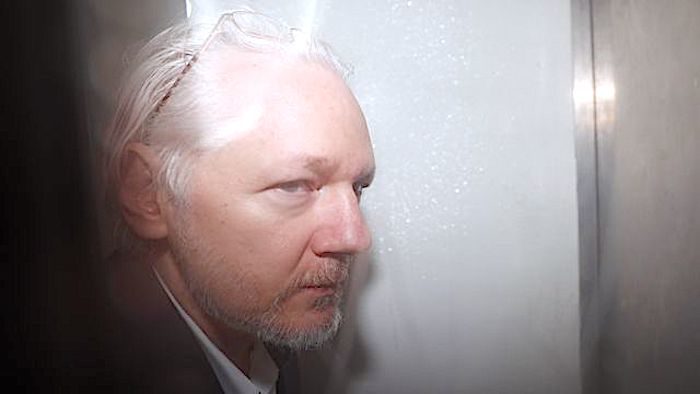
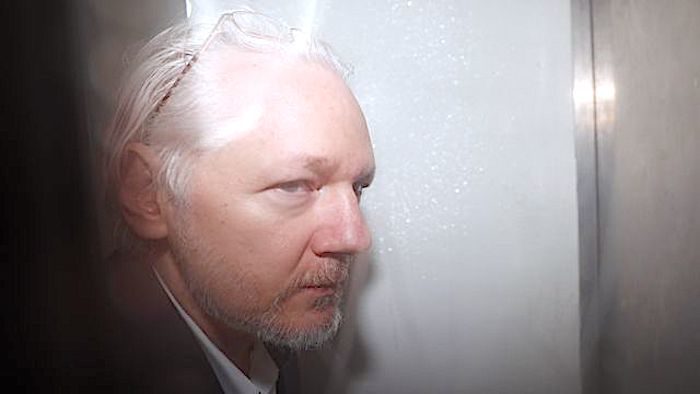
© AP/Frank AugsteinWikiLeaks founder Julian Assange is seen in a prison van traveling to Westminster Magistrates Court in London, Friday, Dec. 20, 2019.
WikiLeaks founder Julian Assange was brought from Belmarsh Prison yesterday to appear in person at Westminster Magistrates Court and provide video-link witness testimony in the Spanish prosecution of
David Morales, the founder of security firm UC Global. Morales, a former Spanish military officer, is accused of spying on Assange in the Ecuadorian embassy and was charged in October with
privacy violation, bribery and money laundering.The hearing was held in private session. No members of the media or the public were allowed inside the courtroom to see or hear Assange, on the remarkable grounds that the Spanish
prosecution of UC Global involves "matters of national security." His appearance took place 24 hours after he appeared via video-link in a case management hearing ahead of the scheduled February 24 trial on the application by the United States to extradite him. Assange has been charged with 17 counts of espionage and is threatened with life imprisonment over his role in WikiLeaks' publication of the documents leaked by whistleblower Chelsea Manning which exposed US war crimes and diplomatic intrigues.
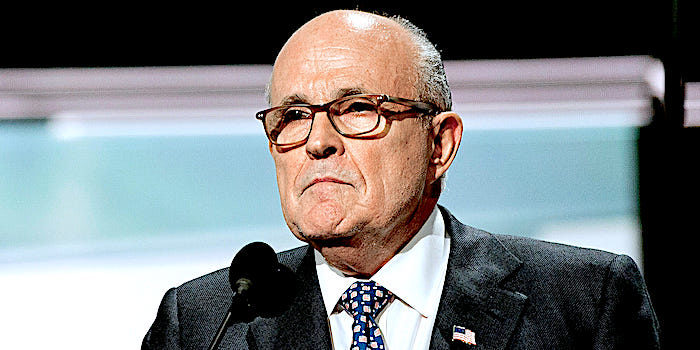
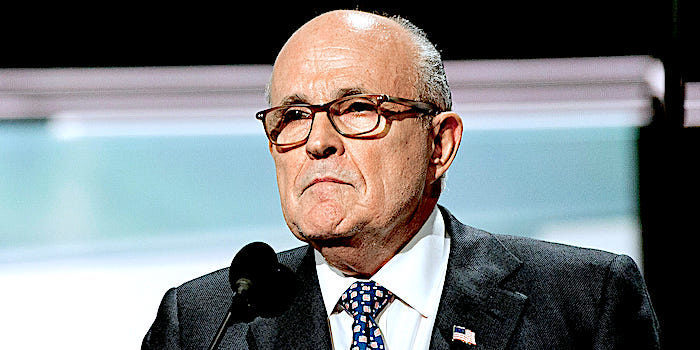
© Mark Reinstein/ShutterstockTrump Attorney Rudy Giuliani
Russians have a huge long-term advantage over the US in the battle for Ukraine, because they understand the background, the players, the language, and so many other nuanced things where Americans are mostly at sea. Throw in their intelligence assets, with which Ukraine is riddled, and it is hard to see how the US can even compete.
This Russian TV report is a classic example of good insight.
RTSun, 29 Dec 2019 17:32 UTC
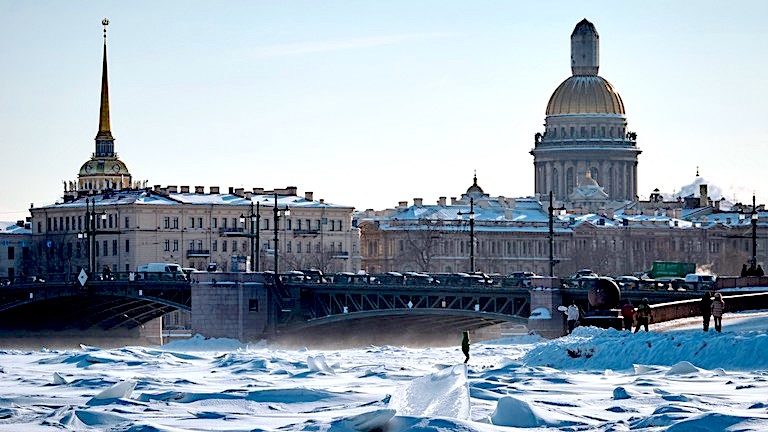
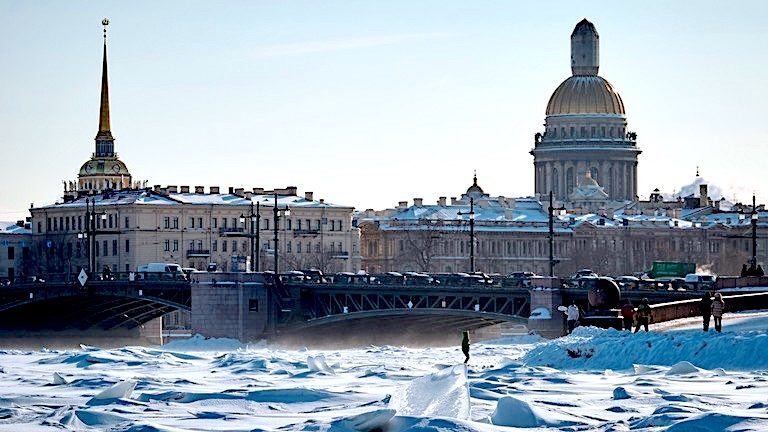
© Sputnik/Alexey DanichevSt. Petersburg
The suspects were detained on Friday, Russia's Security Service (FSB) announced.
They were planning to target "crowded areas" in the country's second largest city.
The operatives acted on "information earlier received from the American partners," it added.
Earlier on Sunday,
Vladimir Putin thanked Donald Trump for sharing intelligence that allowed them to prevent terrorist attacks on Russian territory. The two leaders talked on the phone, agreeing to continue cooperation in the field of fighting terrorism.
Comment: Putin called Trump to
thank him for the intelligence needed to prevent the New Year attacks:
The Federal Security Service later confirmed that the information provided by their US counterparts led to the arrest of two Russian citizens who planned terrorist attacks at public places in St. Petersburg during New Year's celebrations.
The Kremlin statement didn't give more details besides mentioning that a "range of issues of mutual interest" was discussed during the conversation initiated by Moscow and that the two leaders agreed to maintain bilateral cooperation in the fight against terrorism.
In October, the head of FSB, Aleksandr Bortnikov, revealed that contacts between the security agencies of the two countries have intensified recently, in cybersecurity and other areas. He said then that the US provided information about people who had been planning terrorist attacks in Russia.
Two years ago, Washington warned Moscow about a planned bombing at one of the main cathedrals in St. Petersburg, while Russia actively assisted the US investigation into the Boston Marathon bombing in 2013.
Although "sometimes politics gets in the way of helping each other out," but not when the lives of innocent civilians are at stake, Chris Phillips, former Head of the UK's National Counter Terrorism Security Office, commented on the exchange.
"We live in such an interconnected world that the intelligence sources that the US has obviously got are also dealing with people that are planning incidents in St Petersburg," he told RT.
Today, the FSB released
footage of the raid:
The video, made public by the security service this Monday, shows an entry team surrounding and handcuffing one of the men - said to be a Russian citizen - in the stairwell of a multi-story building. The camera then jumps to the moment his flat was thoroughly searched, uncovering a cache of shotgun cartridges, combat knives, and electric wires.
His accomplice, also a Russian national, appears on another video while presumably pledging allegiance to Islamic State (IS, formerly ISIS) in Arabic.
The FSB didn't expand much on the arrests, but said it secured enough evidence proving the suspects were planning to carry out terrorist attacks in St. Petersburg.
Andrew Korybko
One World Mon, 30 Dec 2019 12:05 UTC
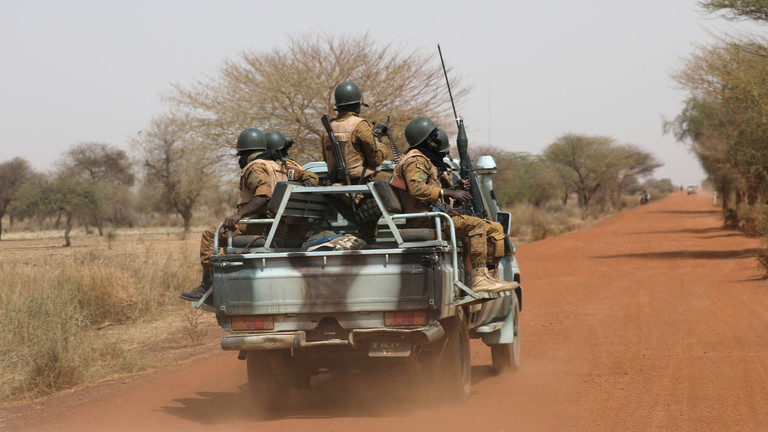
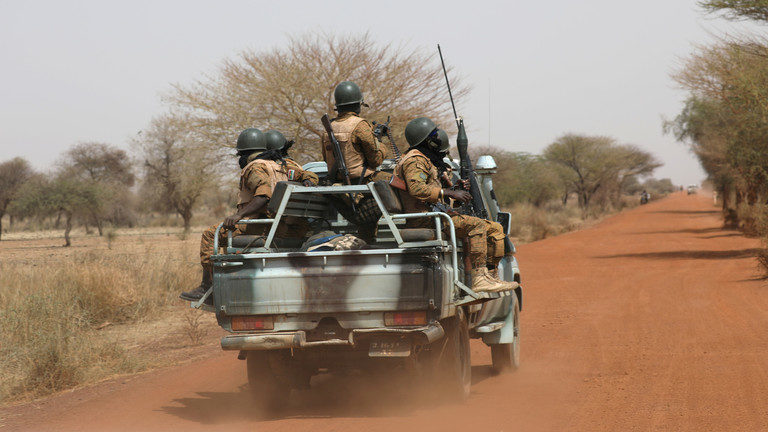
© Reuters / Luc GnagoFILE PHOTO: Soldiers from Burkina Faso patrol on the road of Gorgadji in the Sahel area of Burkina Faso.
The landlocked West African nation of Burkina Faso is a time bomb that's about to explode as evidenced by the drastic increase in terrorist-related violence there over the past year and its attendant humanitarian consequences, yet both the region and the rest of the world as a whole seem powerless to prevent what the UN warned last month might become "another Syria".
Burkinabe BackgrounderThe word "Syria" has become a euphemism for many things to different people, but practically everyone can agree that it's a buzzword for one of the worst humanitarian crises this century, which is why the world should take notice when the UN warned last month that the landlocked West African nation of Burkina Faso is at risk of becoming "
another Syria". That country has been experiencing
a drastic increase in terrorist-related violence all throughout the past year as a result of its Malian neighbor's security challenges finally spilling across its border and destabilizing this fragile but geostrategically significant state, exactly as the author foresaw would inevitably happen in a series of three articles that he published in just as many years. The reader is encouraged to skim through them at the very least in order to better acquaint themselves with the genesis of this crisis:
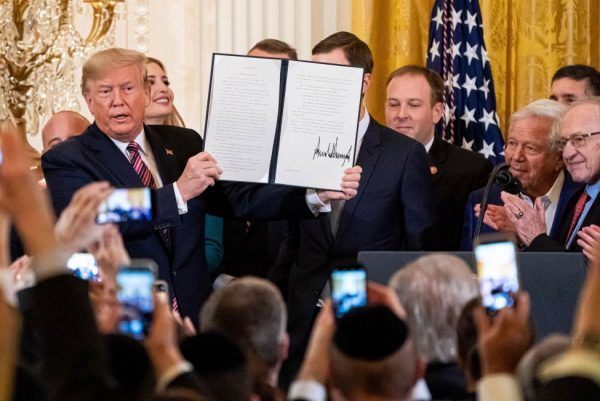
Executive order implies that "Jewishness" is now a nationality
Dems: "Literally Hitler!"
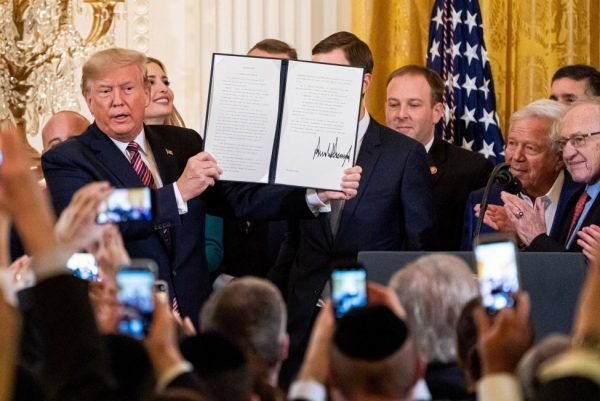
The pandering by Donald Trump and those around him to Israel and to some conservative American Jews is apparently endless. Last Wednesday the president
signed an executive order that is
intended to address alleged anti-Semitism on college campuses by cutting off funds to those universities that do not prevent criticism of Israel. To provide a legal basis to defund, the administration is relying on title VI of the Civil Rights Act of 1964,
which prohibits any discrimination based on race, color or national origin. Since the Act does not include religion,
Trump's order is declaring ipso facto that henceforth "Jewishness" is a nationality.
The executive order does not mention Israel by name, but it does state that its assumptions are based on "the non-legally binding
working definition of anti-Semitism adopted on May 26, 2016, by the International Holocaust Remembrance Alliance (IHRA), which states, 'Antisemitism is a certain perception of Jews, which may be expressed as hatred toward Jews. Rhetorical and physical manifestations of antisemitism are directed toward Jewish or non-Jewish individuals and/or their property, toward Jewish community institutions and religious facilities'; and (ii) the 'Contemporary Examples of Anti-Semitism' identified by the IHRA, to the extent that
any examples might be useful as evidence of discriminatory intent."
Comment: We would ordinarily agree with the author. However, given that things are as they are, and given how powerful the lobby has become, why keep standing up to it and losing every time? How about yielding instead, thereby giving it all the rope it needs...
So we say let them call their network a nationality. They do after all have a nation-state now. And, like their Western Christian counterparts, almost none of them are religious anymore.
If you think about it, this actually simplifies things. Judaism the religion is long dead. But Zionism, the secular replacement for that religion, is thriving. Whether or not most Jews globally consider themselves adherents of it, it is the only show in town for them.
So in that sense, yes, if you criticize 'Zionism', you're criticizing 'the Jewish nation', thus you're being a critic of Jews, thus 'anti-Semitic'.
The danger of course, which they're apparently oblivious to, or willing to risk, is that this expansion of censorship to all criticism of Jews further accentuates the division between Jews and every other people. When it was a religious movement, the Jewish ideology could to a better extent 'blend' and 'integrate among the nations'.
But now that it's a national project with a significant diaspora and (for all intents and purposes) explicit dual-national allegiance, it's highly visible and increases the odds of backlash - which is apparently underway in the form of a global wave of 'anti-Semitic attacks'.
Ultimately, it's reverse-Nazism. Instead of yellow Stars of David, Jews are getting highly-publicized special favors. Either way, Jews are set apart and thus exposed to retaliation from 'the herd'. This is NOT going to end well.

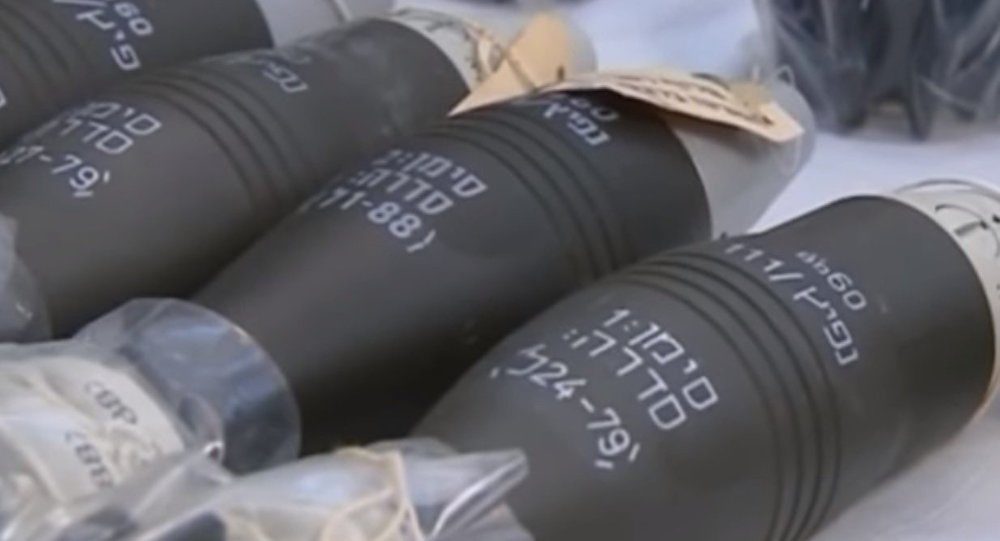









Comment: Check out Dilyana Gaytandzhieva's exposé of how some of those foreign made weapons were funneled to the terrorist proxy-army in Syria: Islamic State Weapons in Yemen Traced Back to US Government: Serbia Files (part 1)
It's true that this is just the latest, incriminating, find: