Puppet MastersS


Whistle

Damning: Ex-FBI unit chief blows whistle on Comey, McCabe over warrantless spying, abuse of civil liberties, millions in wasted spending

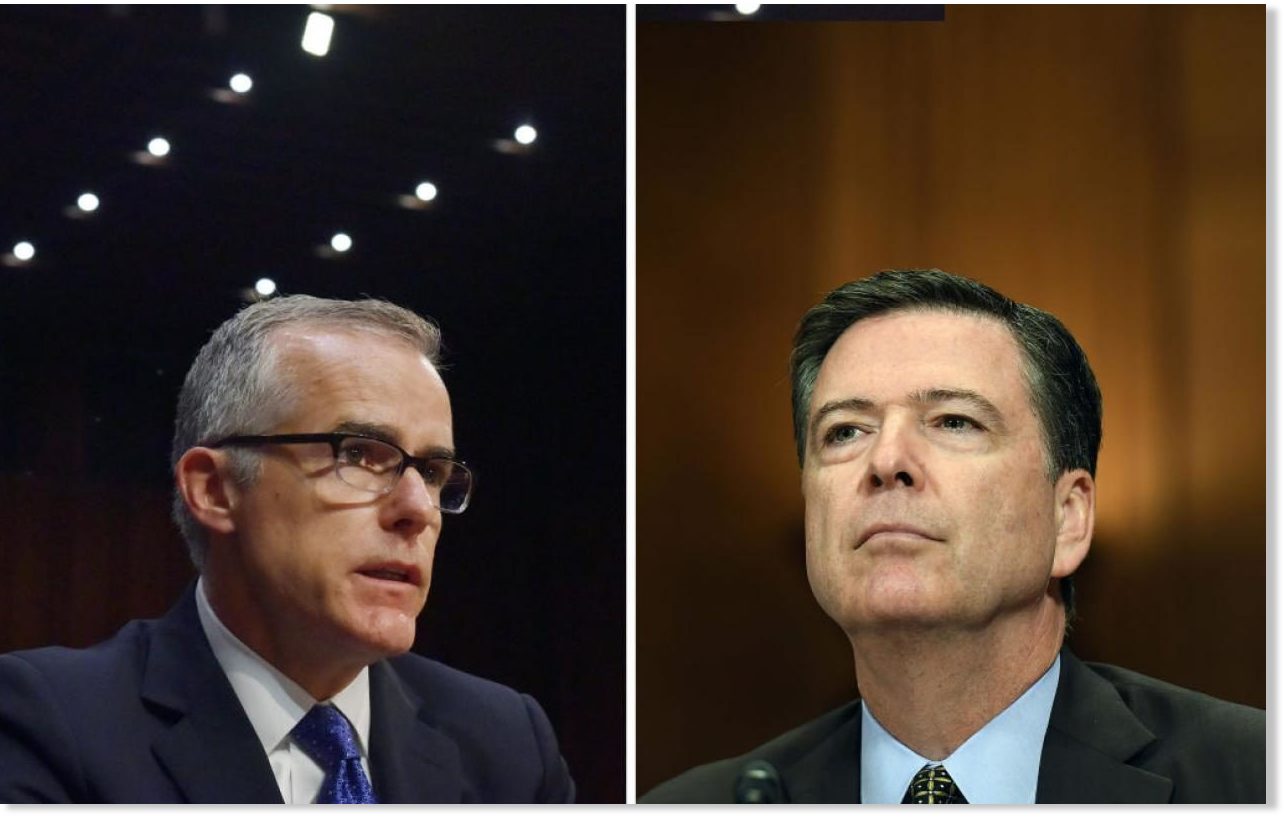
Andrew McCabe, left, and James Comey
© Jahi Chikwendiu/Matt McClain, Getty ImagesAndrew McCabe and James Comey
The FBI agent who ran the bureau's warrantless spying program said Wednesday he warned ex-Director James Comey and his deputy, Andrew McCabe that the program was a useless waste of taxpayer money that needlessly infringed Americans' civil liberties but his bosses refused to take action.

Retired Special Agent Bassem Youssef ran the FBI's Communications Analysis Unit from late 2004 until his retirement in late 2014. He told Just the News he fears the deeply flawed program, which was started in response to the Sept. 11 attacks, was allowed to keep going to give Americans a false sense of security in the war on terror and possibly to enable inappropriate spying, such as that which targeted President Trump's 2016 campaign.

"I have no doubt, or very little doubt, that it was used for political spying or political espionage," Youssef said during a lengthy interview for the John Solomon Reports podcast.

Youssef confirmed that the FBI performed an audit of the highly classified program (also known as the NSA program because it searched call records captured by the National Security Agency) after Edward Snowden leaked its existence.

Black Magic

'Can't participate, can't communicate': Day 3 of Assange's US extradition hearing

wikileaks
© Reuters / Paul Hanna
The third day of Julian Assange's extradition hearing saw lawyers honing in on the particulars of a US-UK extradition treaty, and unexpected drama as the whistleblower spoke to complain about lack of access to his defense team.

Proceedings began with a note of housekeeping from Judge Vanessa Baraitser, who said a photograph had been taken in court earlier in the week. She reminded attendees that this is a criminal offense, and said she would consider the culprit "in contempt" of court.

For the third day running, Assange sat in the glass-fronted dock, wearing a suit jacket, inspecting his notes and able to communicate with his lawyers only through holes in the glass. At the outset, his lawyers cautioned that he was on medication and may need occasional breaks.

'Political offenses'

Comment: See also: Craig Murray: Your man in the public gallery - Assange hearing Day 2


Newspaper

'Minsk pact needs to be implemented to build trust' - PM of Albania & OSCE chair

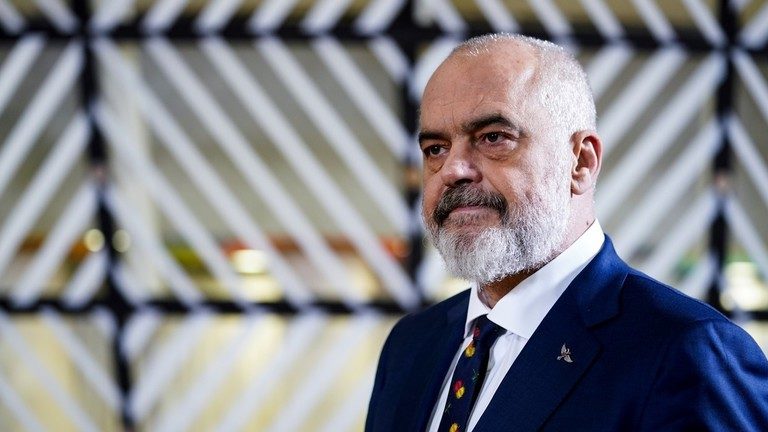
Edi Rama
© AFP / Kenzo TribouillardAlbanian prime minister Edi Rama
Albanian prime minister and OSCE chairperson-in-office Edi Rama has said that the Minsk agreements on the Ukraine conflict "need to be implemented" in their current form in order to "build trust" before they can be reviewed.

Speaking to RT, Rama said the Ukraine crisis was the main security challenge for the continent and that his top priority is to make improvements for "the people on the ground that suffer" and "have to go through hell."

Ukrainian president Volodymyr Zelensky suggested in December that the protocol signed in 2014 should be reviewed.

"Agreements are agreements, they need to be implemented. It's not good to go around them or to try to review them without first implementing them and building trust," he said.

Comment: As it is, it appears that it is Kiev that is repeatedly violating the Minsk agreements:


Gold Seal

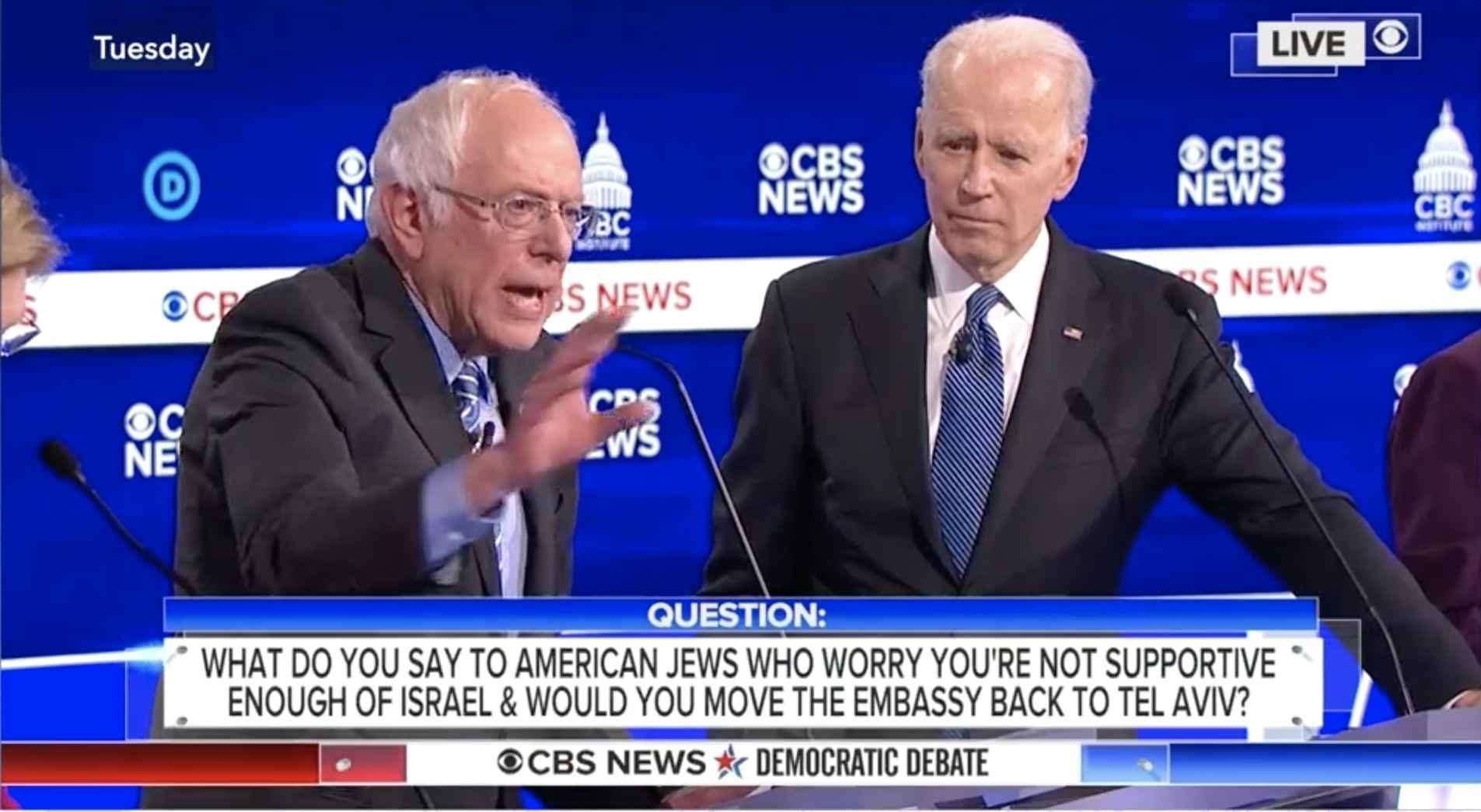
Sanders calls Netanyahu a 'reactionary racist', says he'll consider moving US embassy back to Tel Aviv

sanders dem debate
The South Carolina debate was something of a debacle, but the subject of Israel/Palestine finally came up.

Multiple candidates were asked about whether or not they would move the U.S. Embassy in Israel back to Tel Aviv. In 2017, the Trump administration chose to move the embassy to Jerusalem, an action that was condemned by many Democrats and praised by the Netanyahu government. It also led to widespread protests from Palestinians. Last July, Axios reported that, despite their concerns, none of the Democratic candidates would commit to moving the embassy back.

Comment: See also:


Magnify

House Republicans considering criminal referrals against Mueller prosecutors

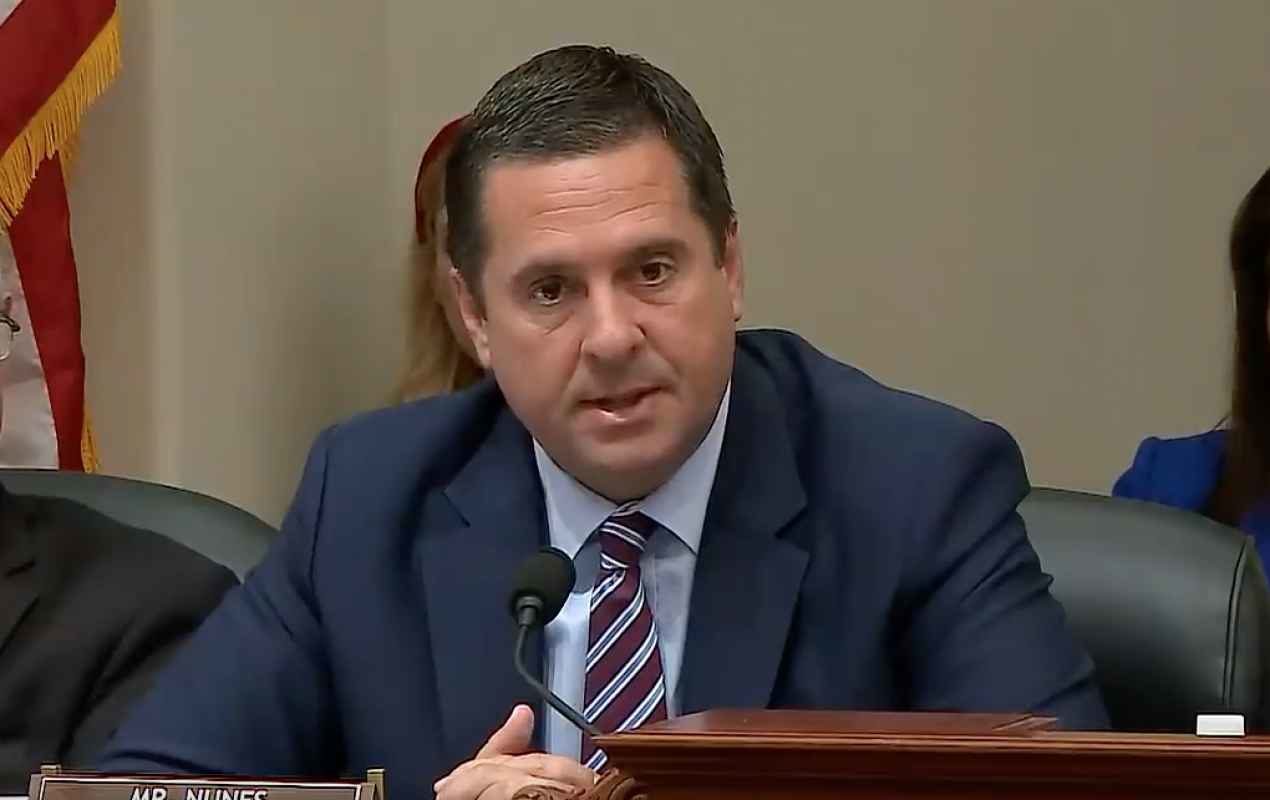
Devin Nunes
© House Intelligence CommitteeRep. Devin Nunes speaks at House Intelligence Committee hearing on the Mueller Report on Russian election meddling.
House Republicans have found evidence that Russia Special Counsel Robert Mueller's team may have misled the courts and Congress and are considering making criminal referrals asking the Justice Department to investigate those prosecutors, a key lawmaker says.

Rep. Devin Nunes, R-Calif., the former chairman of the House Intelligence Committee, told Just the News that his team has been scouring recent documents released by the FBI, including witness reports known as 302s, and found glaring evidence that contradicts claims the Mueller team made to courts and Congress.

"We're now going through these 302s, and we're going to be making criminal referrals on the Mueller dossier team, the people that put this Mueller report together," Nunes said during an interview on the John Solomon Reports podcast set to air on Tuesday.

Comment: See also:


Bullseye

120 years too late, US House finally passes law to make lynching a federal crime

US House
The House of Representatives on Wednesday passed a historic bill making lynching a federal hate crime — a vote that historians have said is more than a century overdue.

"Lynching is an American evil," tweeted Rep. Bobby Rush (D-Ill.), the bill's lead sponsor. "Today, we send a strong message that violence — and race-based violence, in particular — has no place in America."

H.R. 35, the Emmett Till Antilynching Act, passed the House overwhelmingly on a 410-4 vote, with Reps. Justin Amash (I-Mich.), Louis Gohmert (R-Texas), Thomas Massie (R-Ky.), and Ted Yoho (R-Fla.) voting "no." Sixteen representatives, from both sides of the aisle, did not vote on the bill.

It's been a long time coming, as the Washington Post reported:

HAL9000

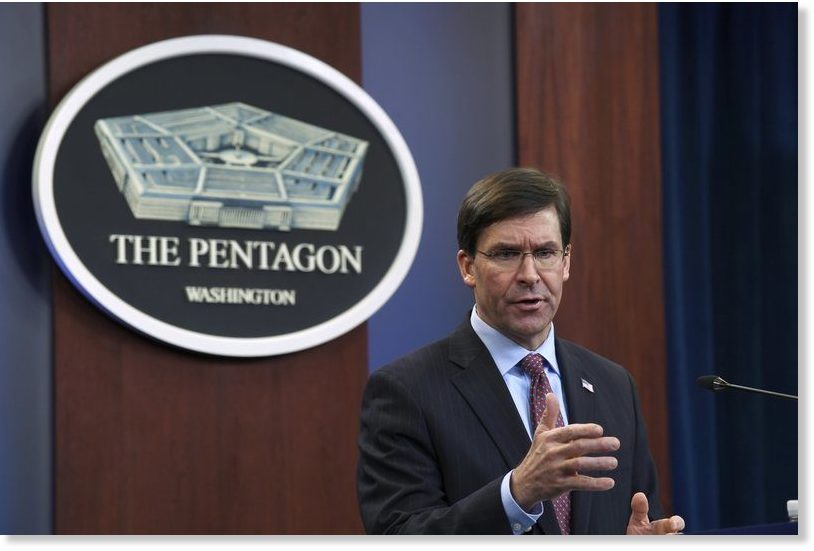
Pentagon adopts new ethical principles for using Artificial Intelligence in war

Mark Esper
The Pentagon is adopting new ethical principles as it prepares to accelerate its use of artificial intelligence technology on the battlefield.

The new principles call for people to "exercise appropriate levels of judgment and care" when deploying and using AI systems, such as those that scan aerial imagery to look for targets.

They also say decisions made by automated systems should be "traceable" and "governable," which means "there has to be a way to disengage or deactivate" them if they are demonstrating unintended behavior, said Air Force Lt. Gen. Jack Shanahan, director of the Pentagon's Joint Artificial Intelligence Center.

The Pentagon's push to speed up its AI capabilities has fueled a fight between tech companies over a $10 billion cloud computing contract known as the Joint Enterprise Defense Infrastructure, or JEDI. Microsoft won the contract in October but hasn't been able to get started on the 10-year project because Amazon sued the Pentagon, arguing that President Donald Trump's antipathy toward Amazon and its CEO Jeff Bezos hurt the company's chances at winning the bid.

Comment: If the whole world adopted US ethical "norms" for technological or geopolitical behavior, every man, woman and child on the planet would likely be in much worse shape then they are in now.

See also:


Network

Iran nuclear accord parties meeting to try to salvage deal

iran nuclear deal talks
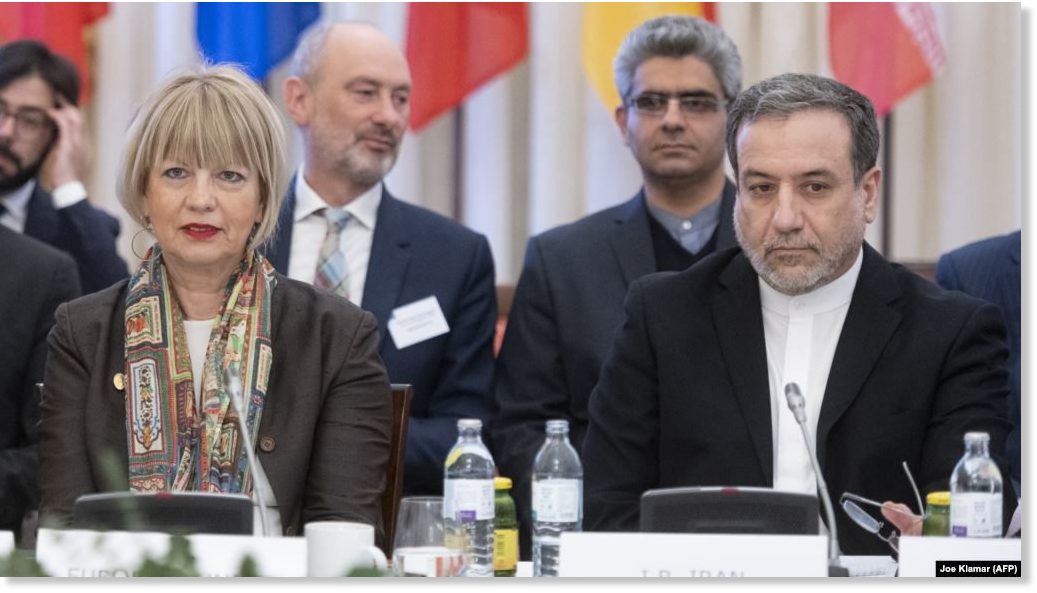
Abbas Araghchi (right), political deputy at the Iranian Foreign Ministry, and the secretary-general of the European Union External Action Service (EEAS), Helga Schmid, attend the Vienna meeting on February 26
The remaining members of the floundering Iran nuclear deal are meeting in Vienna for the first time since Germany, France, and Britain initiated dispute procedures that could reimpose UN sanctions on Tehran.

The February 26 talks come as the signatories try to rescue the landmark 2015 accord, which has been faltering since U.S. President Donald Trump unilaterally withdrew from it in 2018 and enforced crippling sanctions on Iran.

The meeting, overseen by the European Union, is being attended by senior diplomats from Iran, Britain, France, Germany, China, and Russia.

They have promised to uphold the deal that saw Iran agree to reduce its program of developing nuclear weapons in exchange for an easing of sanctions, even without Washington's support.

Bullseye

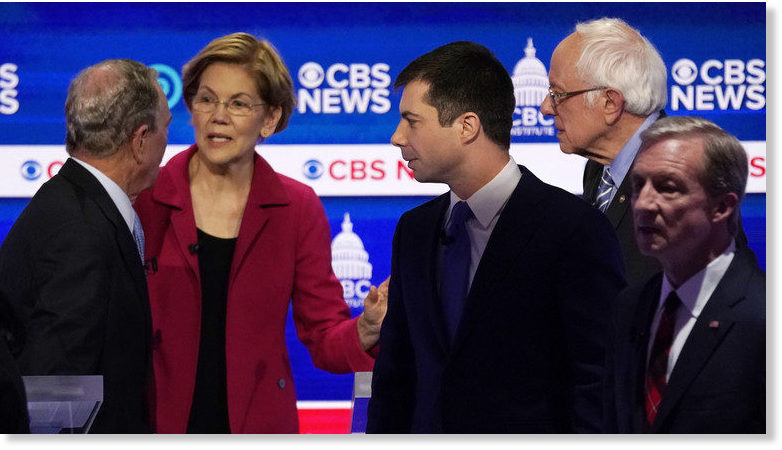
The whole Democratic primary is an Obama lookalike contest (and everyone's losing)

dem primary
© REUTERS/Jonathan Ernst
Within the Democratic primary is the real contest of 2020: who can convince voters they're most like former president Barack Obama, whom nostalgic alchemy has transformed into the closest thing the US has to a political saint?

Democratic candidates are jumping through hoops to grab a piece of the halo that has (however undeservedly) accrued to the 44th president, and they aren't exactly being subtle about it. Whether by constantly bringing up their tenure in his administration, inflating their collaboration on political initiatives, blanketing the airwaves with deceptive commercials that imply his endorsement, or even recycling his mannerisms on stage, most of the 2020 candidates are hoping to channel the beloved ex-president all the way to the White House.

With the party convulsed by an outbreak of Trump Derangement Syndrome that shows no signs of subsiding, even those constituents who had become disillusioned with Obama by the time he left in 2016 would gladly welcome him back into the White House - and their hearts. But how well are the current crop of candidates actually doing in convincing voters they're the second coming of Saint Barack?

Handcuffs

Best of the Web: British show-trial: Craig Murray reports on Day 2 of the Assange extradition hearing

assange extradition trial court sketch
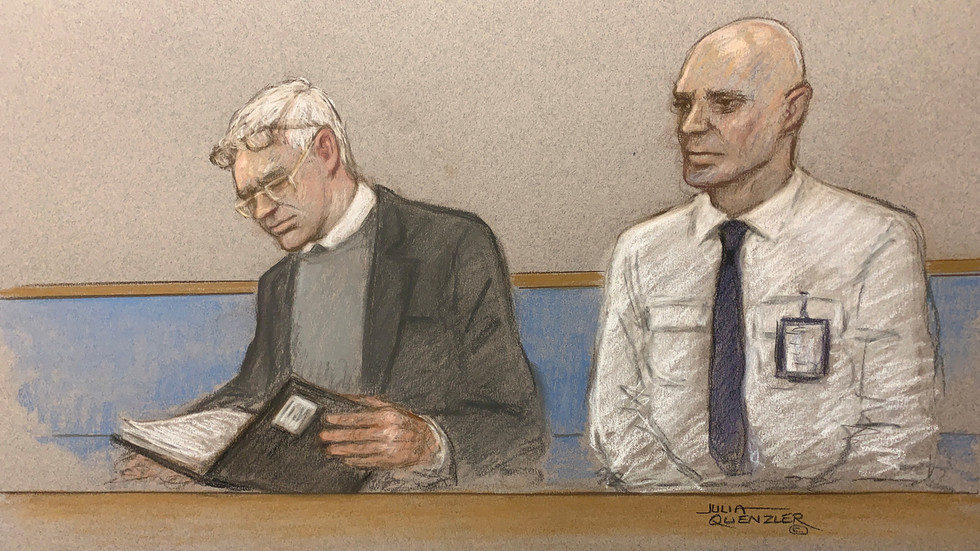
© Reuters/Julia QuenzlerCourtroom sketch of Julian Assange's extradition hearing, Monday February 24, 2020
This afternoon Julian's Spanish lawyer, Baltasar Garzon, left court to return to Madrid. On the way out he naturally stopped to shake hands with his client, proffering his fingers through the narrow slit in the bulletproof glass cage. Assange half stood to take his lawyer's hand. The two security guards in the cage with Assange immediately sprang up, putting hands on Julian and forcing him to sit down, preventing the handshake.

That was not by any means the worst thing today, but it is a striking image of the senseless brute force continually used against a man accused of publishing documents. That a man cannot even shake his lawyer's hand goodbye is against the entire spirit in which the members of the legal system like to pretend the law is practised. I offer that startling moment as encapsulating yesterday's events in court.

Comment: Assange's lawyers explode with frustration:
'Lies, lies and more lies': Lawyer slams day 2 of Julian Assange's US extradition hearing

As the hearing began, James Lewis QC, representing the US government, complained that the defense was receiving transcripts of court proceedings while the prosecution was not. Edward Fitzgerald QC, representing Assange, said the transcripts were privately made and they would share a copy if the prosecution paid half the costs.

At one point, journalist Kevin Gosztola, who was present in the press annex, tweeted to complain that Lewis "won't speak into the microphone" and that reporters "cannot hear a word."

Next, attention turned to WikiLeaks' 'most wanted' list of leaks it had asked for people to submit to the site. Summers said the list did not mention anything about US diplomatic cables and dismissed the "fantasy" claim that Manning uploaded the cables after seeing a request for them on that list.

To counteract the claim that Assange had recklessly released the leaks and put lives at risk (one of the prosecution's key arguments), the defense noted that Assange had partnered with major media organization to read and redact the cables, where necessary, before releasing them.

Shortly before midday, the public gallery was closed off to journalists, causing some confusion among journalists. The court rose for a short time to deal with the issue, before resuming again.

The defense continued to argue that documents Manning leaked on Iraq were "non-sensitive," would be of no use to an enemy and included no names. What's more, the defense claimed that Manning didn't require a username and passport to access the database where she obtained the Iraq and Afghanistan war logs, making the US government's hacking charge false.
Assange claims his ability to communicate with his defense team is being stymied and they are all still being spied on. He is currently being kept in the prisoner's dock as if he was a murderer:
"The other side must have something like 100 contact hours each day," Assange said upon the conclusion of the adjournment, before adding that his legal team is being spied on.
There is already enough spying on my lawyers as it is. There are a number of unnamed embassy officials here. There are two microphones in here. What's the point of asking if I can concentrate if I can't participate?
"I am as much a participant in these proceedings as I am at Wimbledon," Assange wistfully joked while alleging that there was a microphone in the glass defendants dock.

"It is your call Madam," the prosecutors said. Defense counsel Edward Fitzgerald argued that Assange is "no threat to anyone," adding: "He is a gentle man of an intellectual nature. There's no reason for him not to sit with us."
After Judge Baraitser threw out the comment on the Extradition Treaty, Assange's defense is arguing on Day 3 that his detention has violated multiple legal codes:
Presiding judge Vanessa Baraitser said during the close of Tuesday's proceedings that, although Article 4.1 of the US/UK Extradition Treaty cited does forbid political extraditions, this does not, in fact, appear in the UK Extradition Act - the only legal document which has force in court.

Picking up that point on Wednesday, Fitzgerald argued that international human rights law provides jurisdiction for an abuse of process argument under Article 5 of the European Convention on Human Rights (ECHR), which prohibits arbitrary detention.

Fitzgerald cited numerous precedents tying international law and the ECHR with English law in determining the legality of detention, essentially arguing that Assange's detention is illegal under all three.

The defense also argued that many of the prosecution's arguments in favor of extradition were based on international law and precedent, not English. Any subsequent acts of parliament are irrelevant when the specific defense which precludes extradition for so-called 'political offenses' is contained within the treaty signed between the US and the UK.