Puppet MastersS


Alarm Clock

Lockdown rundown: Downing Street hints could last to 2021, Merkel gives dire warning, some American states begin lifting measures

westminster
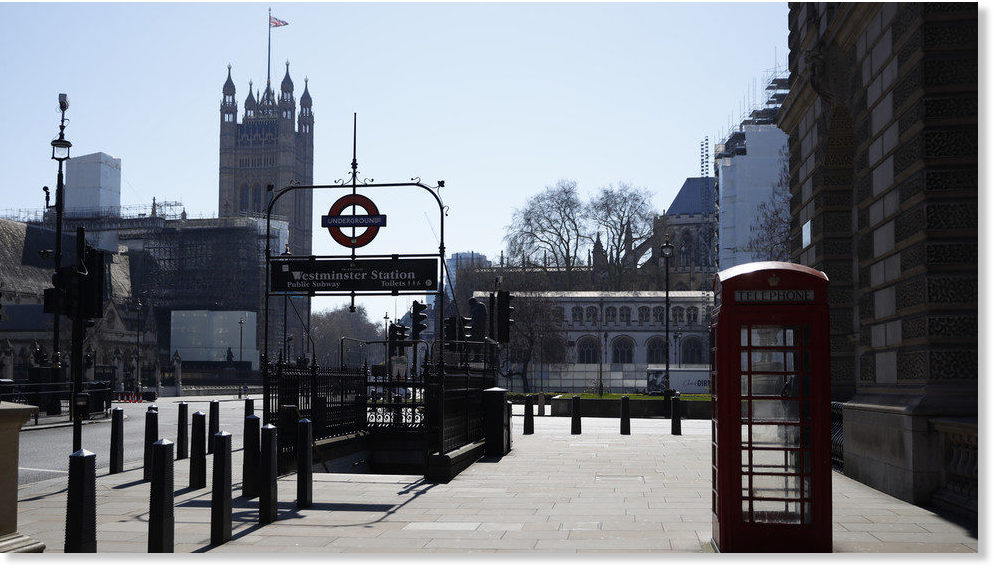
© AFP / Tolga AkmenEmpty streets are pictured in Westminster, central London
A spokesman for Prime Minister Boris Johnson has refused to rule out the possibility that stringent social distancing measures aimed at controlling the spread of Covid-19 could remain in place until next year.

Asked about the prospect of some lockdown measures lasting into 2021 during a press briefing on Thursday, the prime minister's spokesman would only say that the government would do "everything we can" to keep the infection rate down.


Downing Street also refused to roll back on remarks made by England's chief medical officer, Professor Chris Whitty, during the daily Covid-19 briefing on Wednesday, in which he revealed that the country will most likely need "very socially disruptive measures" into next year.

Whitty also gave a stark warning to the British public, saying they needed to be "realistic" about society returning "back to normal," claiming that could only happen with the availability of a vaccine or an effective treatment.

Comment: Scotland's Sturgeon laid out an initial plan to phase out the lockdown, saying it was time to have a 'grown up' conversation about returning to normality. But she too made sure to include a dire warning:
"A return to normal as we knew it is not on the cards in the near future... What we will be seeking to do is find a new normal - a way of living alongside this virus but in a form that keeps it under control," she said. Sturgeon added that social distancing and limiting contact with others will be "a fact of life" until Covid-19 treatments and vaccines offer new solutions.
In the U.S., Trump 'strongly' disagreed with Georgia's decision to lift their lockdown:
"I told the governor of Georgia that I disagree strongly with his decision to reopen certain facilities... which are in violation of the federal phase one guidelines," Trump told reporters at a White House briefing on Wednesday, adding that the state should "wait a little longer."


Although the president took issue with the Republican governor's decision, which has drawn major backlash from the opposition, he said he would not interfere, leaving the matter at Kemp's discretion. "I disagree with his decision but he has to do what he thinks is right."
For his part, Fauci is 'convinced' the U.S. should brace for a return of the virus in fall, with the CDC warning that it is 'likely' to be 'even more devastating'. That 'likely' is likely entirely made up, i.e., it's BS. They have no way of predicting that kind of thing.

Merkel said people shouldn't be complacent:
It is precisely because the figures give rise to hope that I feel obliged to say that this interim result is fragile. We are on thin ice, the thinnest ice even. We are still far from out of the woods. We are not living in the final phase of the pandemic, but still at the beginning.
France plans for schools and businesses to all reopen on May 11 across the entire country, i.e. all regions must lift lockdown measures at the same time. Over in Russia, 21 regions plan to adopt the QR-code system already in use in Moscow to restrict movement during their quarantine.


Eye 1

Court papers reveal Spanish firm spying on Assange stole his son's dirty diaper for DNA tests, blackmailed an Ecuadorian diplomat with nude photos

assange child baby embassy
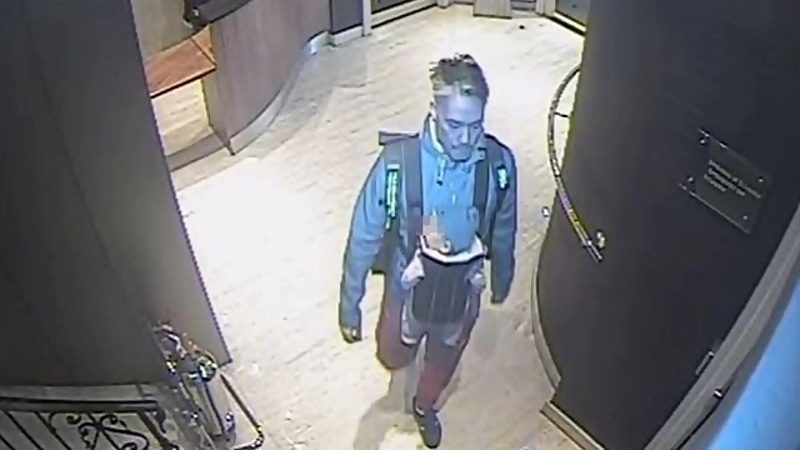
© El PaísActor Stephen Hoo photographed by UC Global bringing Assange’s baby into the Ecuadorian Embassy
Spanish security firm UC Global secretly obtained Julian Assange's son's dirty diapers and used "intimate photos" to blackmail a diplomat into continuing its surveillance contract on the Ecuadorian embassy, court documents show.

The bombshell revelations emerged on Tuesday in court documents from an ongoing criminal case against UC Global's owner, David Morales, in the Spanish courts. Morales is accused of privacy violation, bribery, and money laundering. While his company was hired to provide security for the Ecuadorian embassy in London, he allegedly spied on Assange's guests and the Ecuadorian staff on behalf of the US as well, traveling to the US with recordings from the embassy on a monthly basis.

Comment: Journalist Glenn Greenwald pointed up the hypocrisy of the US media bleating on about 'freedom of the press':
Founder of The Intercept and a long-time Assange supporter, Greenwald despaired at the apparent double standards and performative hyperbole of the US media establishment, which has long played up perceived persecution at the hands of US President Donald Trump.

And yet, journalists across the news media spectrum have been largely unwilling to openly defend the WikiLeaks founder, who faces extradition and judgement in the US courts.


He then singled out the American Civil Liberties Union (ACLU) and the Executive Editor at The Washington Post Marty Baron as among the few voices in US media daring to raise their heads above the parapet and cry foul over the attempted extradition of Assange from the UK to the US, for exposing gross abuses of power and potential war crimes by the US military in its so-called 'War on Terror' in the aftermath of the 9/11 attacks.

Responding to claims that Assange had "offended Hillary" and that this was why he had been abandoned by the US media establishment, Greenwald responded that it was, in fact, Jeff Sessions and Mike Pompeo that were behind Assange's ongoing persecution, neither of whom could be considered a friend to Hillary Clinton.

Theorizing as to the apparent indifference to Assange's plight, Greenwald continued suggesting that "they hate Assange because of what he did in 2016 in reporting on Hillary and either don't care if he is imprisoned or want that to happen."


Megaphone

'Can't offer help with one hand & smother with the other': Russia slams West & its allies after anti-sanction draft fails at UNGA

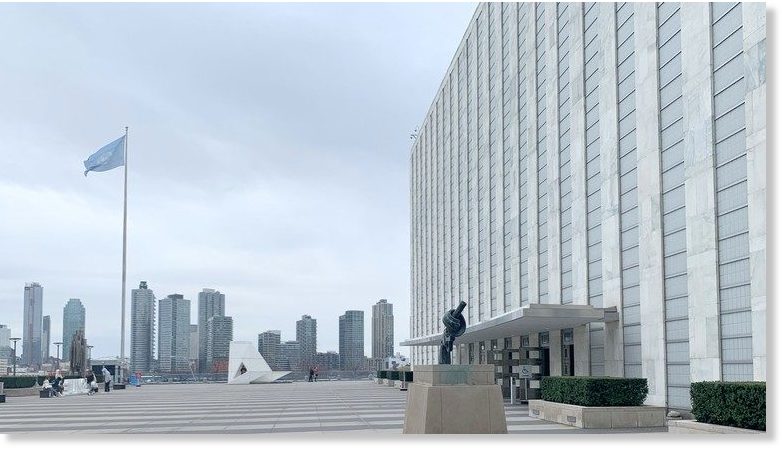
United Nations headquarters
© Global Look Press / Xinhua/ Wang JiangangUnited Nations headquarters
Moscow has blasted the decision by a group of countries, including the US, to block a draft resolution calling for an end to unilateral sanctions on developing countries gripped by the coronavirus pandemic.

The United Nations General Assembly (UNGA) rejected two draft resolutions on Wednesday, aimed at supporting the battle against the Covid-19. Both of the Russia-sponsored and the Riyadh-championed drafts received at least one "nay" after they were circulated among the body's members on Wednesday. A single objection is enough for a draft to be defeated in line with the special voting protocol in effect at the UNGA amid the pandemic.

While voting was by secret ballot, AP reported, citing diplomatic sources, that the Moscow-sponsored draft failed to win support from the EU, UK, US, Canada and South Korea. Meanwhile, the Ukranian Foreign Ministry boasted on Facebook that Kiev was the driving force behind the effort to shoot down the motion, which was aimed at relaxing the burden of sanctions on already-disadvantaged nations that are caught up in the fight against Covid-19.

Bulb

South Korean official says 'business as usual' in North - rumors about Kim seem unfounded

north korea
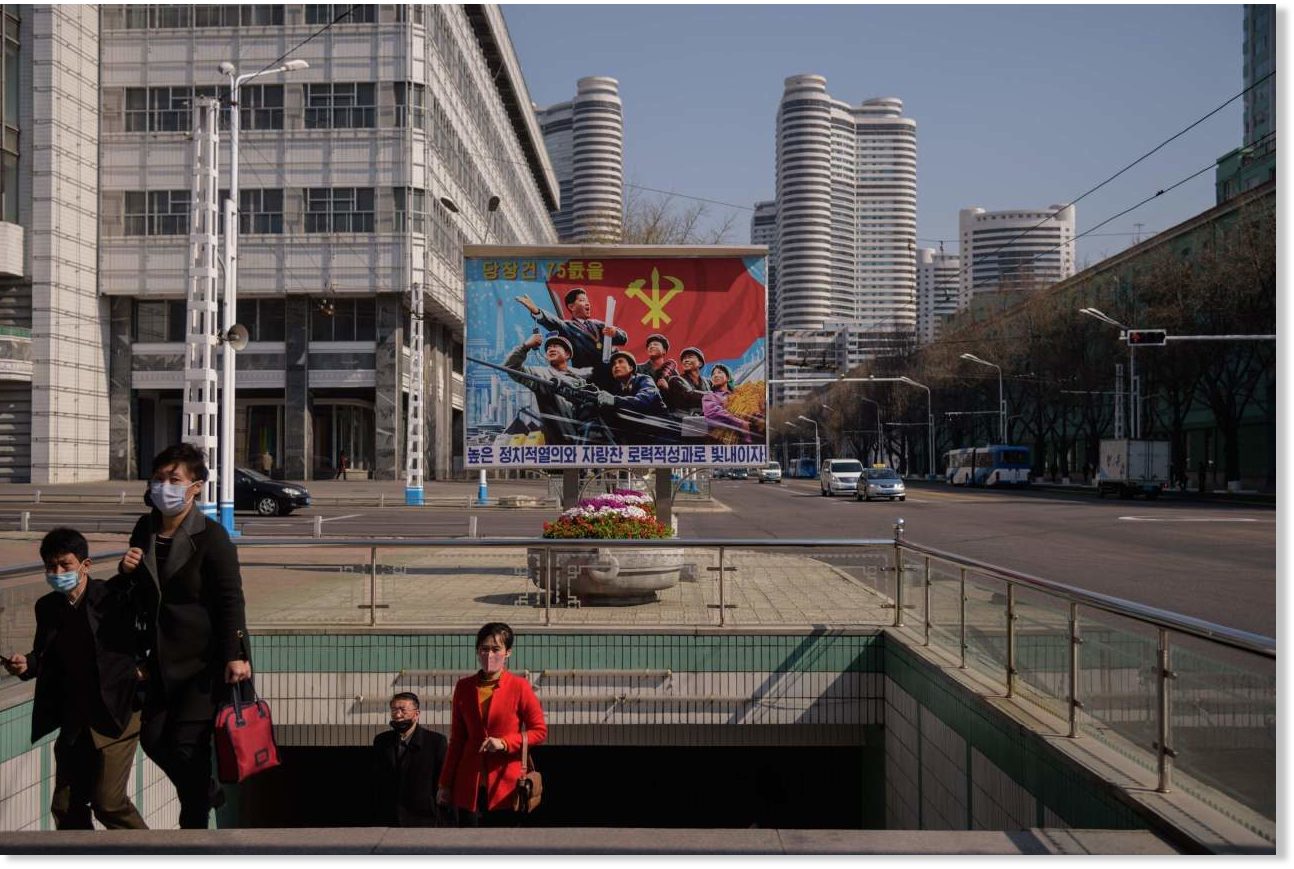
© AFP-Yonhap
North Korea appears to be conducting business as usual without any abnormal signs, a unification ministry official said Thursday, amid persisting speculation over leader Kim Jong-un's health condition.

Speculation about Kim's health problems spiked after CNN reported earlier this week that the US has intelligence that Kim is in "grave danger" after a surgery. South Korean officials have rejected the speculation, saying no unusual signs have been detected that suggest something may be wrong with Kim's health.

On Thursday, the unification ministry also said nothing unusual appears to be going on in the North.

"No unusual signs have been detected ... we are monitoring North Korean media and we have seen exchanges of letters between leaders, congratulatory and other birthday events," the ministry official said.

The official was referring to North Korean media reports that the country has sent congratulatory messages to several countries, including one to Syria on Friday, Zimbabwe on Saturday and Cuba on Monday.

Comment: See also:


No Entry

Trump announces 60-day immigration ban to shield American workers from competition

worker relief
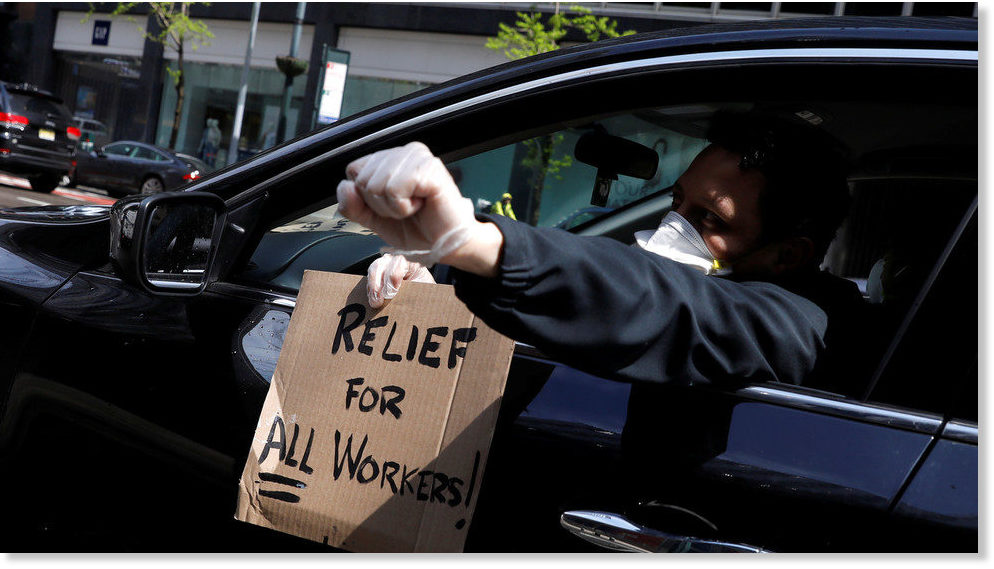
© REUTERS/Mike Segar
US President Donald Trump has ordered a two-month pause in issuing most work visas, so that more than 22 million Americans made unemployed by coronavirus lockdowns will not face as much competition.

The 60-day moratorium will apply only to immigrants seeking permanent residence permits, also known as "green cards," Trump said on Tuesday at the daily White House press conference about the US coronavirus response.

"By pausing immigration we'll help put unemployed Americans first in line for jobs as America reopens," the president said. "It would be wrong and unjust for Americans laid off by the virus to be replaced with new immigrant labor flown in from abroad."

The order has not been officially issued yet. Trump tweeted about it on Monday evening, setting off a frenzy of speculation as to what it might involve. Bloomberg News reported on a draft envisioning a 90-day ban on most work visas, with exemptions for workers in "food production and directly helping to protect the supply chain," as well as healthcare or medical research professionals.

Trump admitted that there will be "certain exemptions" from the ban, saying that "some people would be able to get in" but declined to elaborate. White House lawyers were still working on the executive order, he said, noting that he will sign it "most likely" on Wednesday.

Comment: Trump signed the order yesterday:
Trump justified the measure by citing the record unemployment claims due to the lockdown measures imposed to curb the Covid-19 pandemic, and noting that without such an intervention the US "faces a potentially protracted economic recovery with persistently high unemployment if labor supply outpaces labor demand."

The order carves out a number of exemptions. Notably, it does not apply to anyone who is a permanent US resident ("green card" holder), spouses of US citizens, children of US citizens aged under 21, or members of the US armed forces and their spouses or children.

Also exempt are immigrant investors under the EB-5 program, children seeking adoption under IR-4 or IH-4 visas, anyone seeking admission under SI or SQ special visas, those whose entry would "further important United States law enforcement objectives," or be "in the national interest."

Any "physician, nurse, or other healthcare professional" or those who intend to perform medical or other research intended to alleviate the effects of Covid-19 or combat its spread are also exempted from the ban.

Although temporary farm workers (H-2A visa holders) were not specifically exempted in the order, Trump said he was "taking care" of American farmers.

The 60-day ban could be "modified" going forward to be tougher or "less tough," the president told reporters on Wednesday, without offering details.
See also:


War Whore

Trump says US will 'destroy' Iranian gunboats that harass American ships - UPDATE

Iranian Revolutionary Guard
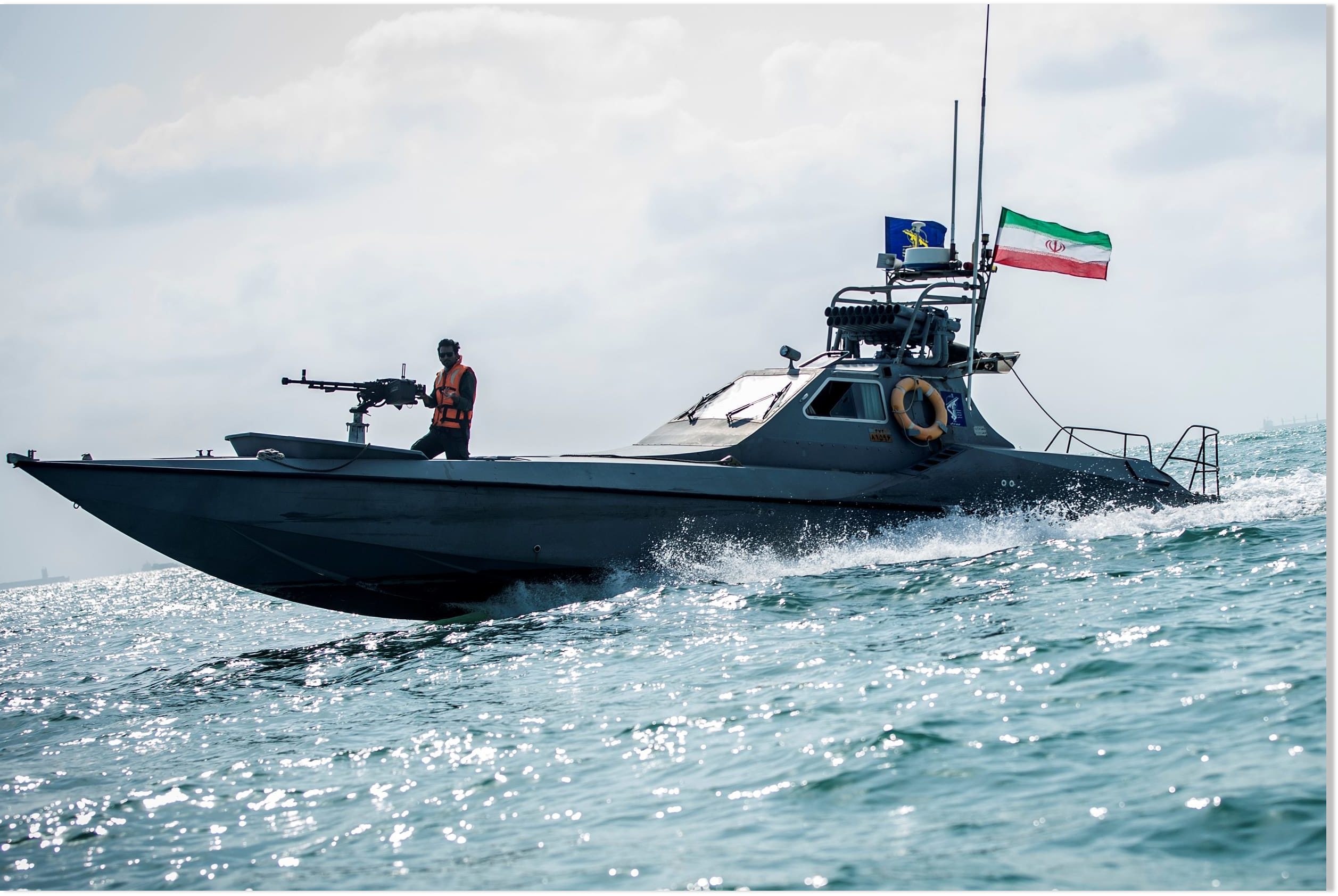
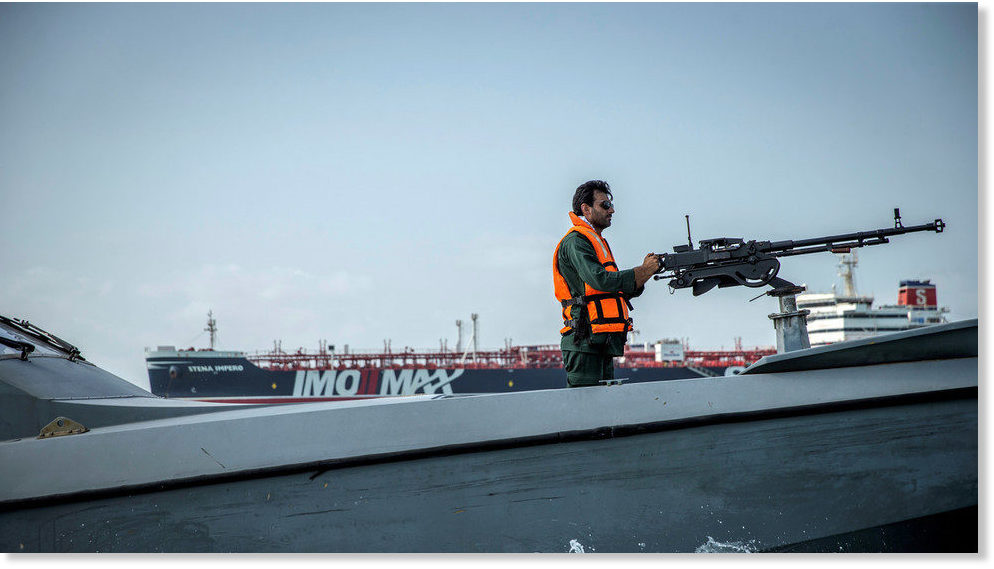
© Nazanin Tabatabaee | WANA | ReutersA boat of the Iranian Revolutionary Guard at undisclosed location off the coast of Bandar Abbas, Iran
President Donald Trump warned on Wednesday that the United States would destroy Iranian gunboats that harass American ships at sea.

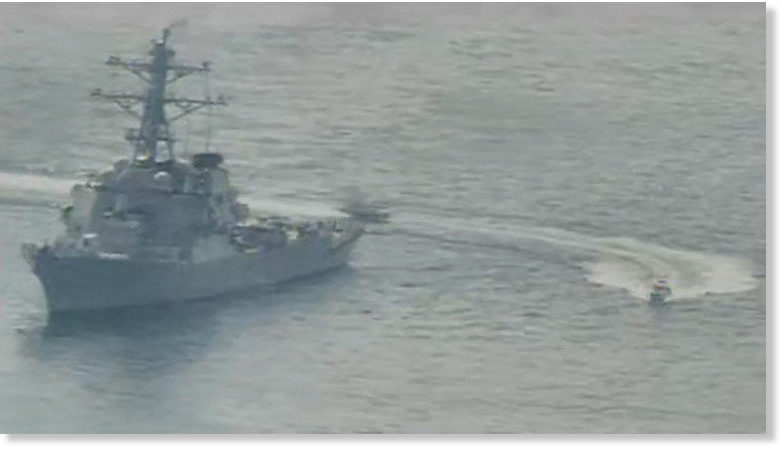
The threat, which contributed to a recovery in oil prices, came days after the Pentagon claimed that ships from Iran's Islamic Revolutionary Guard Corps Navy took "dangerous and provocative" actions near U.S. Navy and Coast Guard ships in the Persian Gulf.

"I have instructed the United States Navy to shoot down and destroy any and all Iranian gunboats if they harass our ships at sea," the president wrote in a post on Twitter.

Comment: Iran has answered with equivalent saber rattling:
Iran will not hesitate to retaliate against the US Navy if it attacks any Iranian vessel, Tehran's elite Islamic Revolutionary Guard Corps (IRGC) commander has warned, responding to a similar threat by Trump.

"I have ordered our naval forces to destroy any American naval force in the Persian Gulf that threatens the security of Iran's military or non-military ships," Major-General Hossein Salami said on Thursday, as cited by Tasnim News Agency.

Salami was responding to US President Donald Trump, who said that he had issued an order on Wednesday to "destroy any and all Iranian gunboats if they harass our ships at sea."

Last week, the US Navy accused Iranian warships of maneuvering in a "dangerous and provocative" manner near its own vessels in the Persian Gulf. Tehran rejected these claims, saying its patrol boats had to intercept and monitor the American ships because they were violating maritime protocols while navigating in the area.
The Swiss ambassador to Iran was summoned to deliver Iran's message to the US:
Iran's Foreign Ministry has summoned the Swiss ambassador, who represents the US interests in the country in the absence of an American diplomatic mission, to lodge a protest against the most recent US threats against the Islamic Republic.

"He [the diplomat] was given a note for the US authorities with Iran's decisive protest against the threats of the US forces, including their illegal presence and actions, destabilisation of the naval navigation in the north of the Persian Gulf and next to Iran's coast", Foreign Ministry spokesman Abbas Mousavi said.

The ministry said that Iran strongly opposes all threats made by US President Donald Trump in his tweet on 22 April and will respond to any threats to the country.

Iran, in its message conveyed via the Swiss ambassador, also advised Trump to focus on fighting the coronavirus pandemic right now because the US remains the leader in terms of the number of cases worldwide. Tehran additionally suggested that the American military would be of more use in helping Washington deal with the epidemic rather than patrolling the Gulf.


Oil Well

Will Trump go to war with Iran to save America's oil industry?

A boat of the Iranian Revolutionary Guard
© Reuters / WANA (West Asia News Agency) / Nazanin TabatabaeeFILE PHOTO: A boat of the Iranian Revolutionary Guard
It's believed that a US-Iran war would disrupt the flow of Middle Eastern oil and, as such, should be avoided at all costs. With US oil futures trading in the negative, has the risk of such a war suddenly become attractive?

Last week, nearly a dozen Iranian Islamic Revolutionary Guard Corps Navy (IRGCN) vessels harassed a formation of US Navy and Coast Guard ships operating in international waters in the northern Persian Gulf. According to the US Navy, approximately 11 Iranian fast patrol boats conducted "dangerous and harassing approaches" of a flotilla of six vessels, repeatedly crossing the bows and sterns of the American ships at high speeds.

Such maneuvers are not uncommon in the Persian Gulf, where the US and Iranian navies have faced off against each other several times over the years, employing similar harassing tactics, but always stopping short of actual confrontation.

As such, President Donald Trump's tweet on Wednesday, instructing the US Navy "to shoot down and destroy any and all Iranian gunboats if they harass our ships at sea," seemed like an unnecessary and dangerous escalation, especially given the history of the US-Iranian confrontation in the region and the potentially devastating consequences of such.

Comment: Bluster and rhetoric aside, it would seem that Trump has been doing everything in his power to avoid a full-scale war in Iran. Does his aim to MAGA outweigh the sanity of keeping things relatively peaceful still? Will those war-crazed neocons in Washington use the fears about oil and the economy for as yet another rationale for starting mass carnage in the Middle East? They will likely try.

See also:


Propaganda

How the Dept. of Homeland Security and the FBI are spreading more fear about Covid-19

FBI Covid-19
The story about how DHS fans the flames of fear is nearly as old as the terror attacks of 9/11.

In 2014, an article in The Council on Foreign Relations revealed how DHS told a scared public that Al Qaida could weaponize Ebola and spread the virus across the country.
"At present, we have no credible information that ISIL is planning to attack the homeland of the United States, but that is not by any means the end of the story," Homeland Security Secretary Jeh Johnson said.
Fast forward 6 years and that same scenario is being played out again, except this time it is with the coronavirus.

Despite having no evidence that terrorists are weaponizing COVID-19, the Department of Homeland Security's Assistant Director for Infrastructure Protection, Brian Harrell issued a nationwide alert, warning people that terrorists could purposefully infect grocery stores and gas stations with the coronavirus.

Comment: The FBI and DHS are speaking out of both sides of their mouths and we shouldn't be surprised if the virus, too, becomes a weaponized story complete with patsies "who were intending to infect people....". Nothing like creating more fear to justify more draconian policies - as if things weren't bad enough.


Light Sabers

'No business 7,000 miles away from home': Tehran accuses US forces of 'provoking' Iranian sailors in Persian Gulf

navy boat
© Reuters / U.S. Navy
Iran's foreign minister, Mohammad Javad Zarif, has slammed American forces for acting in a "provoking" manner towards Iranian sailors in the Persian Gulf, where the US has no business being.

Zarif didn't mince his words in his tweet, which also had a map attached, showing the distance of 7,592 miles from US shores to the Gulf.


American ships "have no business 7,000 miles away from home, provoking our sailors," he wrote.

Zarif also criticized the high coronavirus infection rates in the US military, which has reported more than 5,000 confirmed Covid-19 cases so far.

Eye 2

Israel forbids police from using cellular data to enforce Covid lockdown, but allows spy agency tech to track the infected

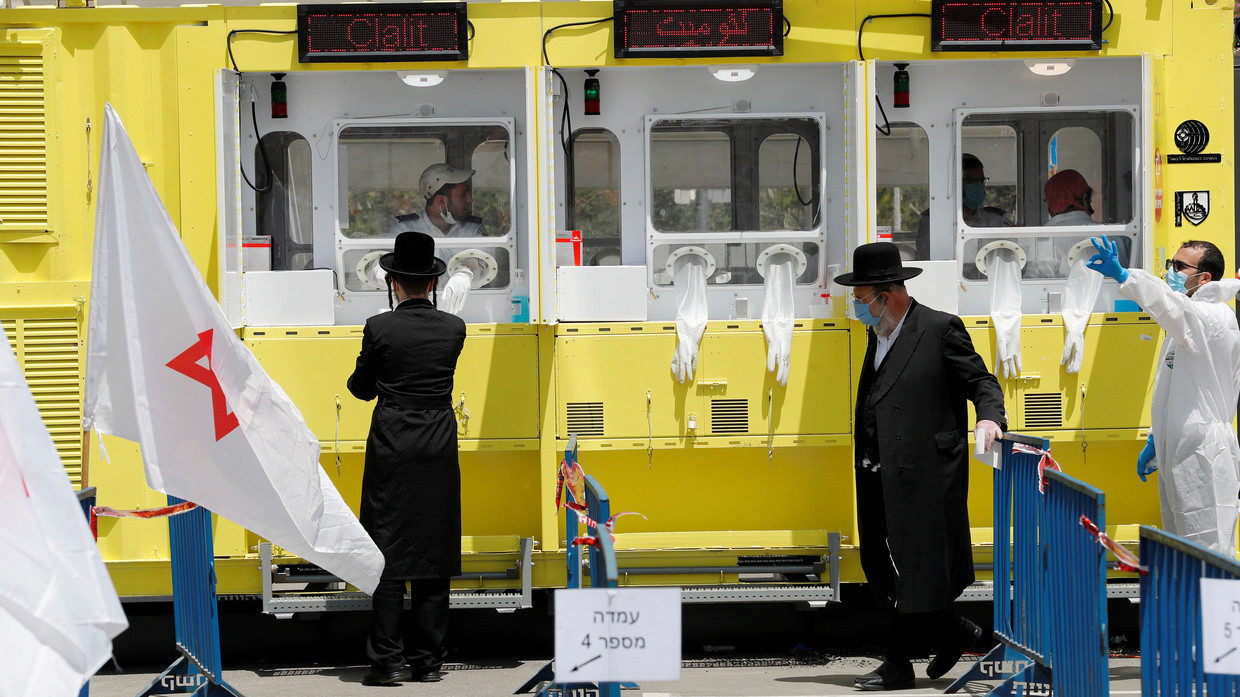
Ultra orthodox Jewish men testing coronavirus
© REUTERS/Ammar AwadUltra orthodox Jewish men stand by a testing station for coronavirus in Jerusalem, April 21, 2020.
The Israeli parliament has forbidden police from using cellphone data to enforce the coronavirus lockdown. However, authorities may still use technology developed by the country's spy agency to track the movements of the infected.

A parliamentary oversight committee suspended police use of cellphone data on Wednesday, a month after Prime Minister Benjamin Netanyahu approved the measure.

Describing the data use as a "great violation of privacy," committee member Ayelet Shaked said on Twitter that Israeli citizens are "for the most part" complying with stay-at-home orders, and police can make do with conducting home visits to enforce this.

Despite the ruling, Israeli authorities can still make use of technology developed by domestic intelligence agency Shin Bet to track the movements of coronavirus carriers and their associates. The exact technology used is a secret, but lawmakers have praised its effectiveness, with one government official telling Reuters that plans are underway to expand the surveillance dragnet to anyone crossing paths with confirmed carriers.

Comment: We've been predicting this for a very long time - the elites are afraid of the people and seek to control them in any way possible. This 'plandemic' presented the ideal scenario to institute more of these measures.