Puppet MastersS


Eye 1

If Democrats will cry 'racist' no matter what, Republicans should pass much stronger laws

truist park Atlanta
© Tyler Lahti / Flickr
In March, Georgia Republicans amended their state's election laws in a weak attempt to assuage voters disgusted with their enabling of the 2020 election circus. To punish their political opponents for requiring voter ID and creating an election season of a month long or more Democrats called up their character assassination squads.

Democrats have been throwing every bit of pressure they can at Georgia elected officials to get their way without winning power legitimately through elections. This has included pressure from Democrats' current and last U.S. presidents, Joe Biden and Barack Obama.

Biden called on companies to push his political goals outside of the legitimate political system by boycotting Georgia. He is the first president to openly push private companies to boycott a U.S. state over fully legal political outcomes he dislikes.

Biden also explicitly voiced support for Major League Baseball economically punishing Americans represented by members of his political opposition by withdrawing MLB's All-Star game from Atlanta. MLB quickly complied.

Comment: See also:


Newspaper

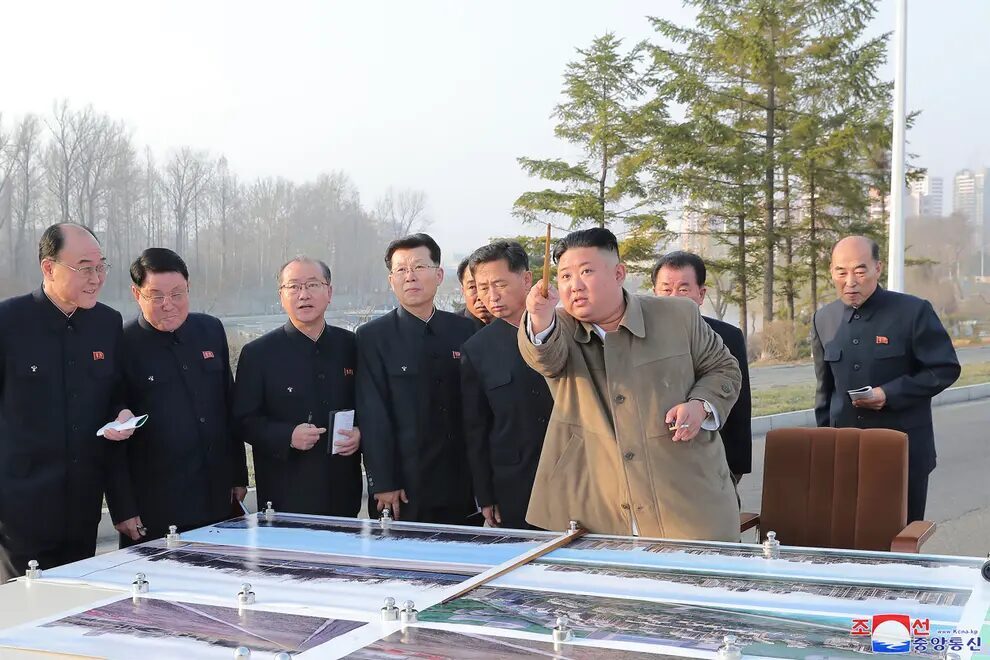
Kim says North Korea facing its 'worst-ever situation' due to lockdown and continued US sanctions

North Korea  Kim Jong Un
© (KCNA via KNS)FILE PHOTO: North Korean leader Kim Jong Un
Experts say Kim is facing perhaps his toughest moment as he approaches a decade in rule, with North Korea's coronavirus lockdown unleashing further shock on an economy devastated by decades of mismanagement and crippling U.S.-led sanctions over his nuclear weapons program.

The North's official Korean Central News Agency said Kim made the comments during an opening speech at a meeting of the Workers' Party's cell secretaries on Tuesday.

"Improving the people's living standards ... even in the worst-ever situation in which we have to overcome unprecedentedly numerous challenges depends on the role played by the cells, the grassroots organizations of the party," Kim said.

Comment: See also: Phishing for secrets: Russian cyber experts believe defense industry is being attacked by North Korea


Caesar

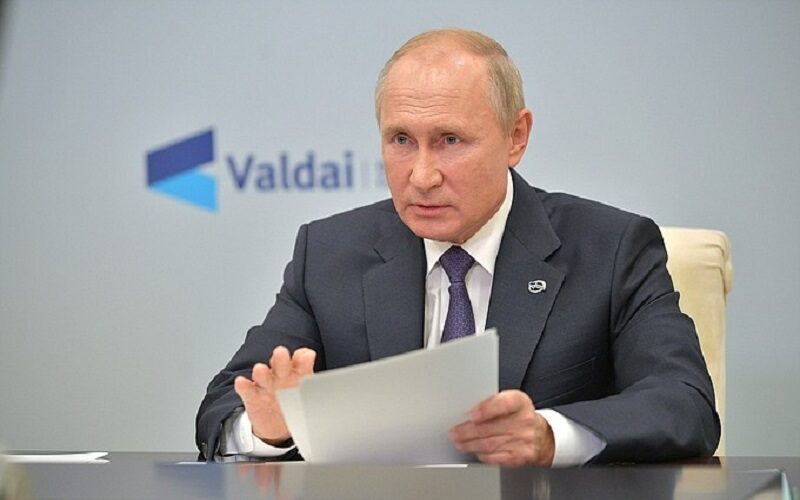
Best of the Web: Putin to deliver speech on April 21 that will be 'most important political event' and 'message for a new age'

putin speech valdai
Russian President Vladimir Putin is reportedly preparing to give a major address in which he will fire the starting pistol on a "new era" and set out a different vision for the future of his country as the Covid-19 pandemic wanes.

The chairwoman of the Russian Senate, Valentina Matvienko, told reporters on Tuesday that the speech would set out answers to a number of challenges facing the world.

"This will be a message for a new age," she said. "But at the same time, as always, current issues will be addressed, focuses will be defined and direct instructions will be given." Matvienko added that "in the current difficult environment facing the world, which comes with many obstacles for countries including Russia," the address would become "the most important political and public event."

Putin is due to speak to the national parliament, encompassing both the Senate and its lower house, the State Duma, on April 21. Kremlin spokesman Dmitry Peskov revealed on Monday that the annual message would be delivered in person, amid a relaxing of social distancing rules governing workplaces across the country. "The rest of the details are being worked out," he added.

Bullseye

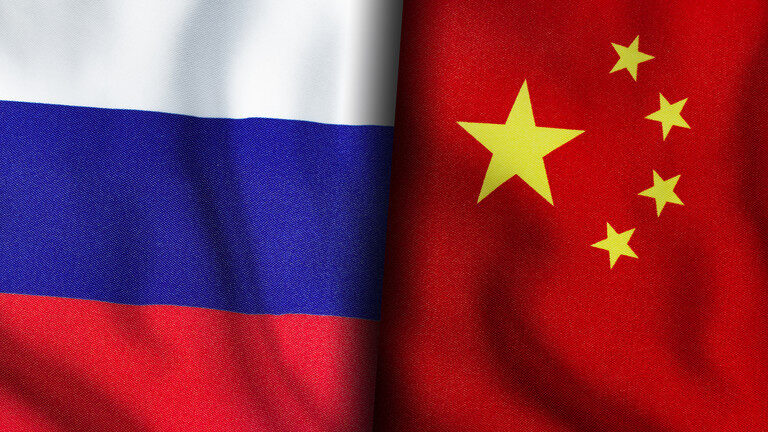
Russia & China won't create Eastern military bloc to rival NATO because exclusive clubs are 'counter-productive' - FM Lavrov

russia china flag
© Getty Images / atakan
Despite Moscow and Beijing forging an increasingly close partnership, the two see no potential benefits in establishing a formal alliance to face off against the US-led NATO military bloc, Russia's top diplomat has announced.

Speaking at a press conference on Tuesday with his Indian counterpart, Foreign Minister Sergey Lavrov told reporters that "Russian-Chinese relations have reached the best level in history." However, he said, "these relations will not lead us to pursue the goal of creating an armed forces alliance."

He criticized "talk of projects to create a 'Middle Eastern NATO,'" noting, "recently people are even discussing whether an 'Asian NATO' could be formed."

Comment: See also: The harmony between Tianxia and Westphalia


Attention

The coming antibiotic-resistance pandemic that could make COVID look like the flu

gloved hands/2 containers
© MintPress News/AP
Big pharmaceutical companies have not come out of COVID-19 looking like model global citizens. Pfizer has been accused of bullying South American governments after demanding they put up military bases as collateral in exchange for vaccines. Meanwhile, Bill Gates persuaded Oxford University to sign an exclusive deal with AstraZeneca for its new offering, rather than allow it to be copied freely by all. The British/Swedish multinational quickly announced it would fall 50 million vaccines short on its first shipment to the European Union.

But what if there were a looming health crisis that could make COVID look almost minor in comparison? The World Health Organization (WHO) has been warning of just such a case for some time now, predicting that antimicrobial resistance will kill up to 10 million people every year by 2050 — almost four times as many as the coronavirus has killed in the past 12 months.

"Antibiotic resistance is one of the biggest threats to global health, food security, and development today," they write, noting that without effective antibiotics all manner of conditions — including pneumonia, tuberculosis, gonorrhea, and salmonellosis — could become far more deadly. Drug companies are making this situation worse by encouraging the overuse of our precious stores of antibiotics, particularly in the Global South and also by refusing to invest enough resources into creating new ones.

Comment: Without a thought to future implications - thus complications, the vaccination gravy train enhances our individual vulnerabilities and accelerates our collective demise.


Snakes in Suits

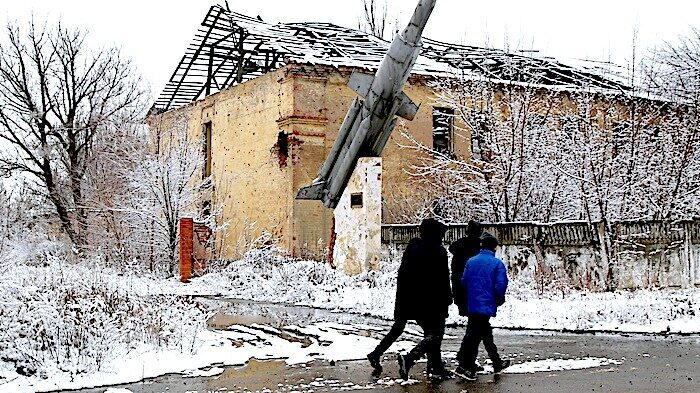
Moscow holds emergency talks with US over fighting in Donbass as Ukraine says NATO exercises will train troops for war with Russia

Veseloe
© Sputnik/Sergey AverinVillage of Veseloe, Donetsk region
Amid fears of worsening clashes in eastern Ukraine, Russian and American diplomats have held unscheduled bilateral talks in an effort to forestall an all-out conflict, which Moscow has warned could spell disaster for the region.

Russian Deputy Foreign Minister Sergey Ryabkov told reporters on Tuesday that
"we have had contact with the US administration on the situation in the Donbass, and we have exhaustively explained to their side what is happening. Washington should be concerned about the consequences of this coordinated policy."
He added that Western rhetoric over Ukraine is striking an increasingly belligerent tone.

The day before, US State Department spokesman Ned Price warned of credible reports of Russian troop movements on the border with Ukraine, which some in Kiev have claimed to be a precursor to an invasion. He added that Washington is "open to engagement with Moscow" to prevent a crisis and issued a "call on Russia to refrain from escalatory actions."

The Kremlin has denied that troop movements in western Russia are a preparation for war, with press secretary Dmitry Peskov saying that the country's army "moves around Russia in whatever direction it considers necessary to ensure the security of our country." He added that the deployments are within the context of "increased activity of the armed forces of NATO countries, other associations, individual countries."

Comment: Reports indicate this rapid buildup of aggression could spiral out of control sooner rather than later. The refusal to hold talks in Minsk suggests Ukraine's bias of venue, at this point, is a tantrum too far:
The Ukrainian delegation to peace talks on settling the conflict in Donbass will refuse to attend any discussions if they continue to be held in Minsk. Kiev accused Belarus of "hostile rhetoric" and being "influenced" by Russia.

The Trilateral Contact Group is made up of Ukraine, Russia and the Organization for Security and Co-operation in Europe (OSCE), and in September 2014, representatives from all three parties signed the Minsk Protocol, an agreement to end the Donbass war. Now, with worries that fighting may flare up again, there have been proposals to head back to the Belarusian capital for further talks.

According to Kiev's deputy prime minister, Alexey Reznikov, the Ukrainian side will refuse to attend.
"We said that we will not take part in the meetings of the Trilateral Contact Group if the Covid-19 quarantine suddenly ends and it is proposed to continue consultations in Minsk. To hold talks in real life, we will have to look for another country, another city."
This is because Belarus is "under the influence" of the Kremlin, and Kiev has lost confidence in its northern neighbor, he said. As things stand, due to Covid-19, discussions between the three parties take place via videoconference. Before the pandemic, they met face-to-face in the Belarusian capital.

Reznikov's assertion that Kiev will no longer go to Minsk follows attempts by other Ukrainian officials to move discussions to another country. Last summer, Ukraine's former president Leonid Kravchuk, who now serves on the Donbass negotiation team, revealed that he tried to move talks from Minsk to Sweden.

In response, the Russian Foreign Ministry then noted that "the key to success in settling the Ukrainian conflict is not in the change of negotiating venues or formats," but simply the political will of all parties.

The conflict is taking place in the Donetsk and Lugansk regions of Ukraine, collectively known as Donbass, where a civil war has raged for almost seven years. Separatists now control large swathes of land and have declared themselves to be independent of Kiev. While Russia does not recognize these breakaway states, Ukraine accuses the Kremlin of supporting them.
Has Donbass become another 'forever war'?

See also:


Dollar

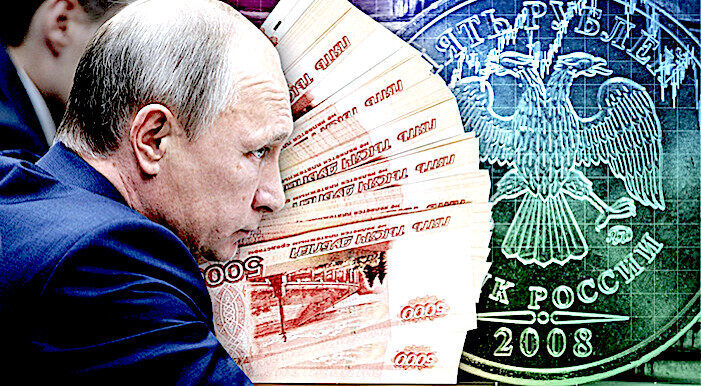
Russia developing financial battle plan in case of Western attack on its economy or sanctions against sovereign debt

Putin and money
© Reuters/Alexi DruzhininRussian President Vladimir Putin
Moscow is preparing to respond to a new wave of potential economic and financial sanctions from the US with measures designed to shore up its currency, keep payments flowing, and ensure the country can maintain business as usual.

Deputy Foreign Minister Alexander Pankin told RIA Novosti on Monday.
"There is clearly a deliberate calculation to create a toxic atmosphere around Russian securities in order to reduce their investment potential. These possible new restrictions on government bonds are a double-edged sword, and they would clearly harm America's financial institutions. But we have long become accustomed to the fact that lovers of unilateral restrictive measures have ceased to care about their own loss of business, or their citizens.

"Moscow is working to develop measures in case of any further hostile steps against Russia's sovereign debt. As always, we will react in a balanced and adequate way, starting with the principle of maintaining the stability of the Russian economy and the financial system."
A number of Russian officials have said in recent weeks that the country is exploring the development of a system to rival the SWIFT international payment mechanism.

Comment: Complications to the current build up of global tension are increasing:
Russia would be forced to defend itself if Western nations go through with plans to station short- and long-range missiles in Europe, a Moscow diplomat has warned, insisting they could be used to target the country's air defenses.

In a statement released on Monday, Foreign Ministry spokeswoman Maria Zakharova said that Washington was increasingly discussing proposals to deploy rocket launchers to the continent. Previously banned by the INF Treaty, research and development has reportedly resumed since the pact was torn up in 2019 by then-US President Donald Trump.

Citing British intentions to upgrade its missile launch complexes, the spokeswoman argued that
"the British military has now joined in with the openly hostile and destabilizing rhetoric to make it possible to deliver deep missile strikes, in order to neutralize enemy air defense systems. We cannot help but notice the obsession of these Anglo-Saxon commanders on the task of defeating purely defensive units designed to ensure the security of the Russian Federation in the event of a military attack."
She also said Russia disputes the officially declared ranges of the launchers, claiming that Britain was being "clearly and deliberately misleading" about its ability to strike targets at distance. The Foreign Ministry official added:
"We aren't closing the door to dialogue, but we can't rule out that Russia will be forced to shift its efforts towards military measures in response to emerging missile threats."
In her statement this week, Zakharova cited "cynical" US plans that she said had been put forward by US General John Rafferty "to test the prototype of the missile at the maximum range to see by how much it will exceed 500 km."


Brick Wall

Plug the gaps: Biden now wants to restart construction on Trump's border wall as new migrant surge from Guatemala is on its way

Biden/wall
© Chicago Tribune/Lucy Nicholson/KJN'Mind' the Gap
Joe Biden is considering restarting construction on Donald Trump's southern border wall as his administration continues to grapple with a growing immigration crisis including record numbers of illegal crossers. Homeland Security Secretary Alejandro Mayorkas told employees, according to the Washington Times, that construction might resume to plug 'gaps' in the current barrier between the U.S. and Mexico.

The move comes as Biden made a big spectacle on Day One of his administration by issuing an executive order freezing Department of Defense funding for border wall construction. He later officially ended the emergency order at the border, but there were concerns about where the funds would go that were already appropriated for the border wall project.

Now Biden's administration is facing record numbers of migrants arriving at the southern border every day and federal government holding facilities are 'stretched beyond thin,' according to an independent report concluded after a visit to the sites.

Comment: Plug the gaps: The current administration is spinning its remarks as to why it is suddenly concerned with closing incomplete access points to the wall. The hope is it will serve to divert the flood of 'damning overflow optics', instead of owning up to a gigantic reactionary mistake in judgement and misappropriation of approved Congressional funds.


Map

Roadmap to rescue Iran nuclear deal agreed in Vienna talks

Diplomats in Vienna
© Lars Ternes/Eu Delegation in Vienna/Getty ImagesDiplomats from the European Union, China, Russia and Iran held talks on Tuesday in Vienna.
A broad roadmap designed to rescue the Iran nuclear deal undermined by Donald Trump has been agreed in talks in Vienna, with the aim of bringing Iran and the US back into compliance in as little as two months.

Two working groups have been set up to examine the economic sanctions on Iran that the US will need to lift to come back into compliance with UN security council resolutions, and the steps Iran will need to take to bring its nuclear programme in line with the terms set out in the 2015 deal.

Since the US pulled out of the deal in 2018, Iran has taken a series of steps away from it, including on the use of advanced centrifuges, enriched uranium levels and limiting access for UN weapons inspectors to its nuclear sites.

Mikhail Ulyanov, the Russian ambassador to Vienna, hailed the outcome as "successful". He said two groups tasked to identify measures for Washington and Tehran to take had started work immediately, but it was impossible to say how long the process would be. A further meeting between diplomats is expected on Friday, suggesting the pace of the talks is designed to be intense, and already has a base of prepared background technical work on which to draw.

Comment: Negotiations work best when each side leaves the table believing it has won. So far:
Iran has rejected US proposals to suspend its 20% uranium enrichment in return for unfreezing $1 billion of its assets, Tehran's chief negotiator has said after a first round of talks to reinstate the 2015 nuclear deal.


Calendar

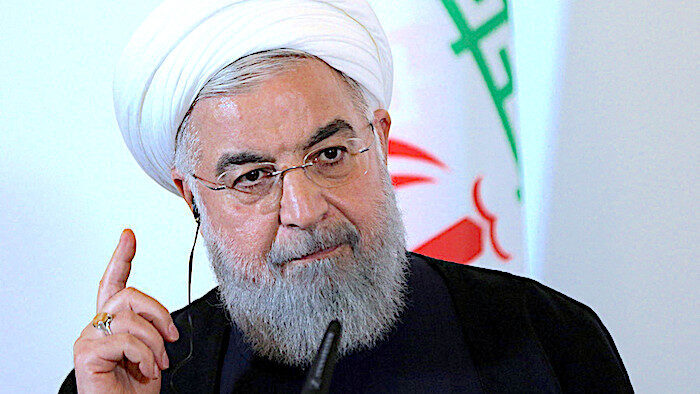
Day 2 of Vienna talks, Rohani argues for 'renaissance' of nuclear deal

Rouhani
© Lisi Niesner/ReutersPresident of Iran Hassan Rouhani
As international talks to revive a major nuclear agreement with world powers continued in Vienna, Iranian President Hassan Rohani said that he hoped negotiations led to a "renaissance" of the 2015 deal.

The day-old talks are U.S. President Joe Biden's first major effort to revive the Joint Comprehensive Plan Of Action (JCPOA) since taking office on pledges to curb Iran's nuclear program following his predecessor's withdrawal from the agreement three years ago. Rohani, in a statement on April 7, referring to the JCPOA, which was reached over hard-liners' opposition in the Austrian capital five years ago, said:
"Once again, all parties have come to the conclusion that there is no better alternative. Thus, we can hope for a renaissance of the Vienna nuclear agreement."
The U.S. and Iranian sides have publicly clashed over the order of possible concessions on U.S. sanctions and Iranian nuclear activities before a new deal can be achieved.

Comment: Some observations of those in attendance at the Vienna talks: