OF THE
TIMES

"Hell is empty and all the devils are here." William Shakespeare, The TempestMike Yeadon is a soft-spoken microbiologist and a former Vice President of Allergy and Respiratory Research at Pfizer. He spent 32 years working for large pharmaceutical companies and is a leading expert on viral respiratory infections. He is also a man on a mission, and his mission is to inform as many people as possible about the elite powerbrokers that are using the pandemic as a smokescreen to conceal their real objectives. Here's Yeadon in a recent interview:
"Depopulation"? Who said anything about depopulation? Isn't it a bit of a stretch to go from a mass vaccination campaign to allegations of a conspiracy to "depopulate a significant portion of the world"?"If you wanted to depopulate a significant portion of the world, and to do it in a way that wouldn't require destruction of the environment with nuclear weapons, or poisoning everyone with anthrax or something, And you wanted plausible deniability, whilst you had a multi-year infectious disease crisis; I don't think you could come up with a better plan of work than what seems to be in front of me. I can't say that's what they're going to do, but I cannot think of a benign explanation for why they are doing it." ("Interview with Dr Mike Yeadon", The Delingpole Podcast; Minute 44: 25)
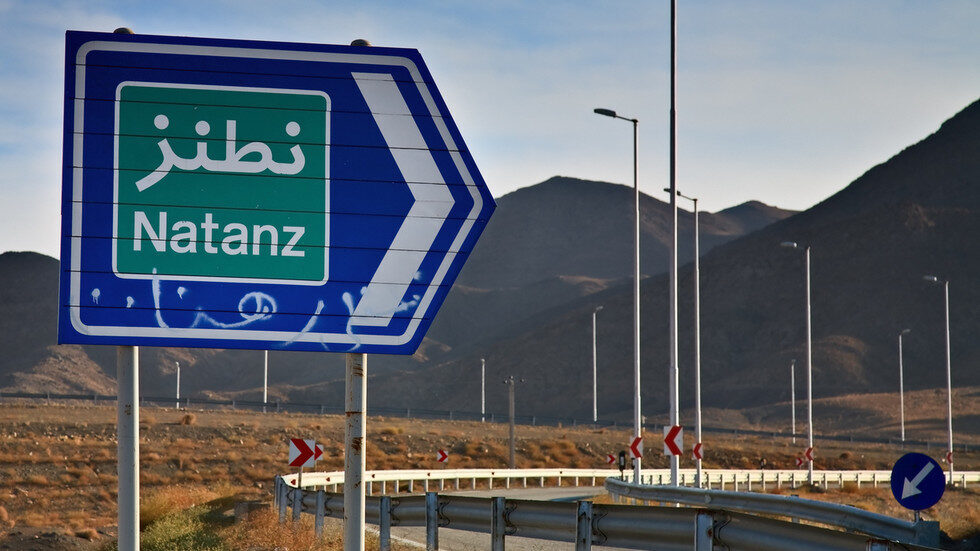
Kazem Gharib Abadi, Iran's ambassador to the United Nations office in Vienna, said Monday that the attack on the Natanz Fuel Enrichment Plant would only result in the older uranium centrifuges being replaced with newer, more advanced ones."Enrichment in Natanz is not stopped," Abadi wrote on Twitter. "Iran will react including by planning to implement several technical measures which the [International Atomic Energy] Agency will be informed [of] this week. Replacement process of the damaged centrifuges, including with the same machines with more capacity, has immediately begun."On Sunday, an explosion outside the Natanz plant temporarily shut off power to the facility, which produces enriched uranium for medical and power generation purposes. Tehran has denounced the incident as "nuclear terrorism" and blamed Israel, which in response has only reaffirmed its presumed right to attack Iran as "self-defense."An Iranian Foreign Ministry spokesperson earlier identified the damaged centrifuges as IR-1s, the oldest such devices in use in Iran. According to the JCPOA, Iran is only allowed to operate the slow IR-1s at Natanz and only above ground, where they are more vulnerable to attack. However, last month, the IAEA announced that Iran had begun using more advance IR-4 centrifuges at Natanz, which are four times more efficient than the IR-1s, and that they had been moved underground.Natanz was previously attacked in July 2020 in an apparent sabotage incident that destroyed an above-ground centrifuge workshop.It's unclear which type of centrifuge will replace the damage IR-1s. However, the day before the most recent attack was Iran's National Day of Nuclear Technology, and Iranian President Hassan Rouhani announced that 164 IR-6 centrifuges had been brought online at Natanz, with another 30 beginning the preparation process.The attack has come amid negotiations in Vienna aimed at reviving the JCPOA, which the US left in 2018 amid unsubstantiated claims Iran was in violation of the deal. After the US reimposed economic sanctions on Iran and forced its allies to comply, Tehran began backing away from the terms of the deal, which imposed strict limits on its uranium production and a renunciation of the pursuit of nuclear weapons. After US President Joe Biden took office earlier this year, it was anticipated he would depart from the policy of his predecessor, former US President Donald Trump, and return to the JCPOA. However, the US has so far been hesitant to do so, insisting Iran make the first move.Israel has also claimed Iran has a secret nuclear weapons program, but Tehran has rejected the claims, saying the Shiite-led government opposes nuclear weapons on a religious basis.

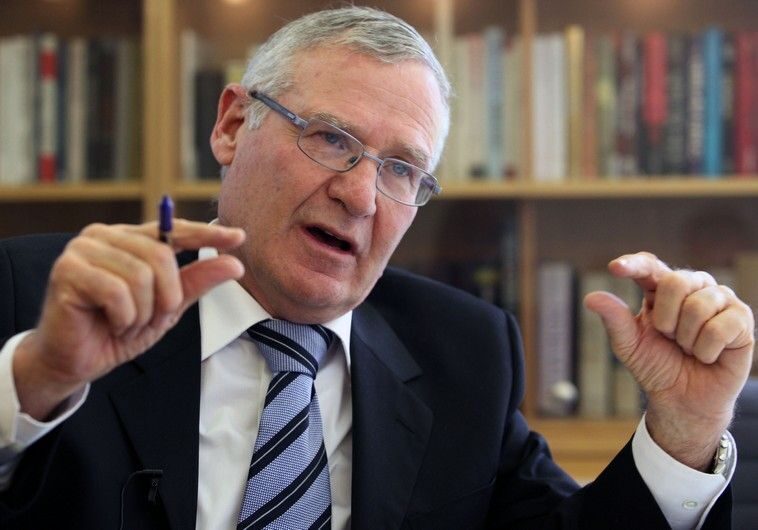
Israeli Prime Minister Benjamin Netanyahu should not have had the authority to approve the sabotage attack against Iran's Natanz nuclear facility, former Israeli Defence Force Head of Military Intelligence Amos Yadlin has said.Iran's retaliation may have already commenced:
"Sensitive operational actions with political and security implications involving potential escalation must be approved by the government. The cabinet can authorise the security cabinet to decide, and the security cabinet can authorise the prime minister and the defence minister. These processes did not happen, and the decisions were made while excluding all the decision-making bodies. Knesset oversight has not existed for a long time," Yadlin wrote in a multi-part Twitter thread on Tuesday.
According to the retired military officer, the Natanz attack served to carelessly stoke tensions with the Islamic Republic, without coordinating with Tel Aviv's American allies, and without actually improving Israel's national security situation.
"Over the years that I have participated in discussions...on the approval of Israeli actions in an enemy country, we have been faced with three main considerations: the expected achievement, the enemy's response and the potential for escalation, as well as implications for Israel's relations with its vital ally," Yadlin explained.
"48 hours after the explosion at Natanz, it has become clear that the attack did not result in the end of Iran's nuclear programme," the former official continued, adding that in the wake of media reporting on Israeli involvement in the sabotage, including "irresponsible leaks" from inside Israel, Tel Aviv should brace for Iranian retaliation. He added, however, that this response would be "measured," out of a desire on Tehran's part to avoid further escalation.
Of greater concern, Yadlin said, is that the Islamic Republic can now be expected to "take defiant measures" in the nuclear field, expanding enrichment with advanced centrifuges and reducing international supervision of its nuclear programme. "In the context of the negotiations, it is likely that Iran will harden its positions or even strengthen the hand of the Revolutionary Guards who have called on Iran not to return to the 2015 nuclear deal."
The officer also warned that even if Israel informed the US ahead of time about its plans to sabotage Natanz, the timing was "not conducive to building trust" with the Biden administration, trust which he said is "essential to coordinating positions and safeguarding Israel's interests."
Netanyahu, Yadlin alleged, probably does not have an up-to-date strategy for conducting its Iran sabotage campaign in the Biden era, "and without a doubt, in the shadow of the political crisis [facing Israel], the essential discussions have not taken place."
"Even taking a cautious view, it is doubtful whether we are not witnessing a political timing that influences the initiation of a security crisis with the goal of making it easier for Netanyahu to form another government. These are not the considerations that should inform such fateful decisions," the officer concluded.
"The Israeli ship was targeted at the Emirati port of Fujairah," the agency tweeted, adding that the number of the Israeli ship that was targeted is 9690559, it is called Hyperion, and it belongs to the Israeli PCC company which transports cars.
Israel has blamed the attack on Iran, Israeli Channel 12 reported, citing unnamed officials.
No casualties have been reported following the incident, the channel added. The attack was likely carried out with a missile or a drone, the Jerusalem Post reported, adding that the ship only suffered light damage.
The Hyperion is linked to the Israeli Ray Shipping company, which owned a vessel hit by an alleged Iranian attack on 28 February. An Israeli-owned ship was targeted in the Gulf of Oman while en route to Dubai - Prime Minister Netanyahu blamed the explosion on Iran, while Tehran rejected the accusations as "groundless."
Tuesday's attack comes amid spiralling tensions between Iran and Israel following the sabotage attack at the Natanz nuclear facility on Sunday, which disrupted the site's power grid. Tehran called the incident an "act of nuclear terrorism", while some Israeli and US media suggested that it was the results of a "classified Israeli operation."
Comment: Not everyone is falling for it. From Washington Examiner: