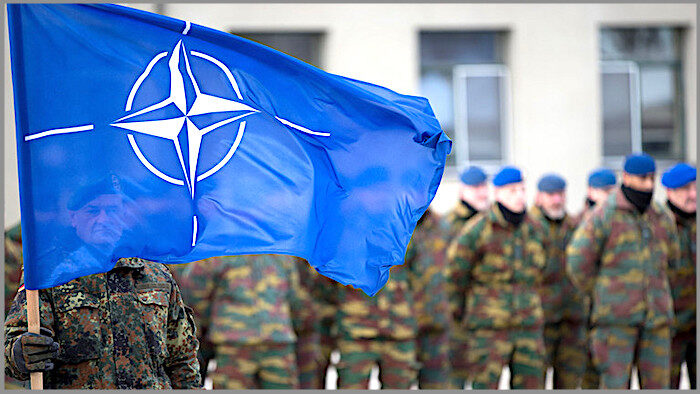
© Getty Images/Kay Nietfeld
The seeds of the current crisis were sown several decades ago, when Washington decided to double-deal with Moscow.
The current and rapidly escalating tensions between the US and Russia over Ukraine have dominated international headlines and moved stock markets in recent weeks. In reality, they have their roots in a series of NATO actions and omissions following the demise of the Soviet Union in 1989/91.
On the Russian side, there is a widespread perception that Moscow was misled by both Washington and NATO, a pervasive malaise about a breach of trust, and a violation of a 'gentleman's agreement' on fundamental issues of national security.
While the US protests that it never gave assurances to Gorbachev that NATO would not expand eastwards, declassified documents prove otherwise. But even in the absence of declassified documents and contemporary statements by political leaders in 1989/91, including Secretary of State James Baker and German Foreign Minister Hans-Dietrich Genscher (which can be confirmed on YouTube),
it is all too obvious that there is a festering wound caused by NATO's eastward expansion over the past 30 years, which has undoubtedly negatively impacted Russia's sense of security. No country likes to be encircled, and common sense should tell us that
maybe we should not be provoking another nuclear power. At the very least, NATO's provocations are unwise; at worst, they could spell apocalypse.
We in the West play innocent, and retreat into 'positivism', asserting that there was no signed treaty commitment, that the assurances were not written in stone. Yet
realpolitik tells us that if one side breaks its word or is perceived as having double-crossed the other, if it acts in a manner contrary to the spirit of an agreement and to the overriding principle of good faith (
bona fide),
there will be political consequences.

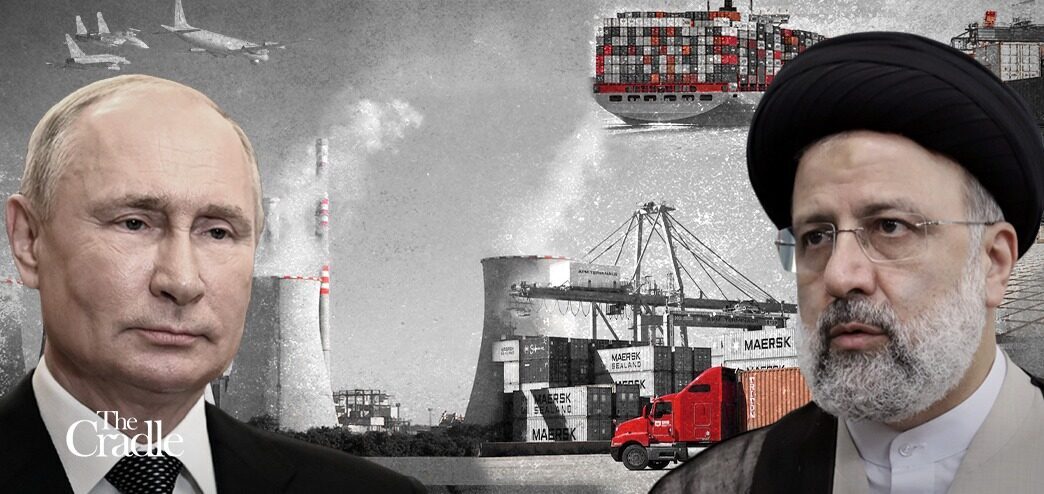










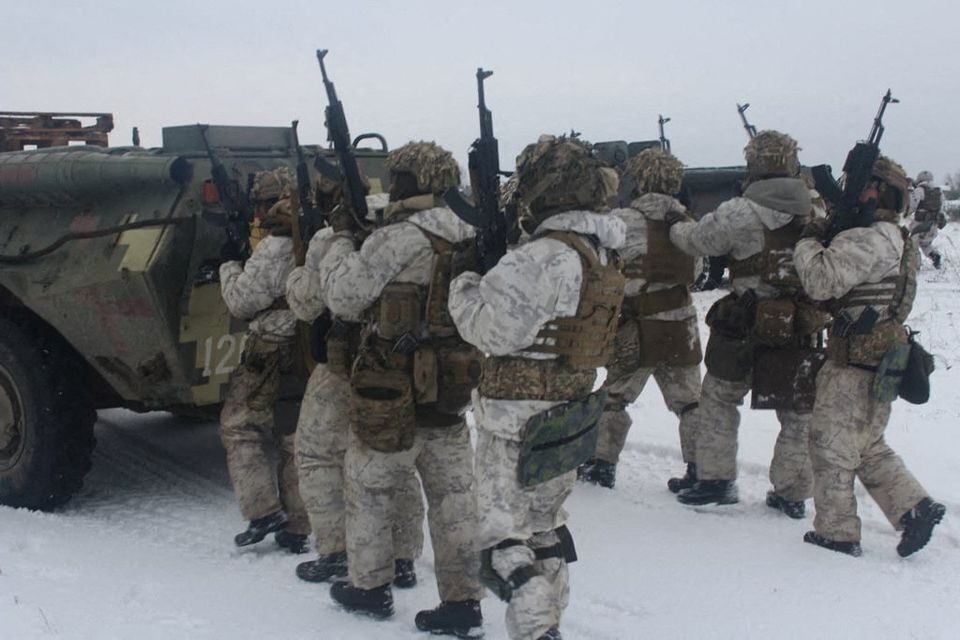




Comment: Seemingly in response to the West's dangerous escalations in Ukraine, we're seeing an acceleration of deals between the aspiring multipolar world, and in a very public way too, despite the threat of sanctions and hybrid warfare; it's almost as if there's some understanding that, soon enough, concern about Western sanctions will no longer be a high priority:
- Pepe Escobar: Iran-Russia hit maximum strategy
- Hungary's PM Orbán to visit Putin in Moscow to discuss gas, vaccines, nuclear power
- How China's Realpolitik approach to Venezuela, Iran & Afghanistan upends US' geopolitical game
- Iran, Russia, China kick off joint military drills in Indian Ocean amid growing ties
And check out SOTT radio's: NewsReal: Ukraine Gambit - US Attempting to Destroy Russia