
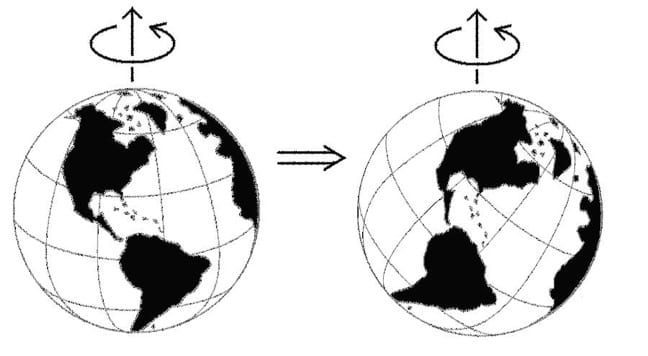
© Illustration courtesy of Victor C. Tsai/Wikimedia CommonsTrue polar wander occurs when the entire Earth shifts relative to its spin axis.
Their study in the journal Geophysical Research Letters is based on an analysis of fossil signatures from deep ocean sediments, the magnetic signature of oceanic crust and the position of the mantle "hot spot" that created the Hawaiian Islands. Co-authors Richard Gordon and Daniel Woodworth said the evidence suggests Earth spun steadily for millions of years before shifting relative to its spin axis, an effect geophysicists refer to as "true polar wander."
"The Hawaiian hot spot was fixed, relative to the spin axis, from about 48 million years ago to about 12 million years ago, but it was fixed at a latitude farther north than we find it today," said Woodworth, a graduate student in Rice's Department of Earth, Environmental and Planetary Sciences. "By comparing the Hawaiian hot spot to the rest of the Earth, we can see that that shift in location was reflected in the rest of the Earth and is superimposed on the motion of tectonic plates. That tells us that the entire Earth moved, relative to the spin axis, which we interpret to be true polar wander."

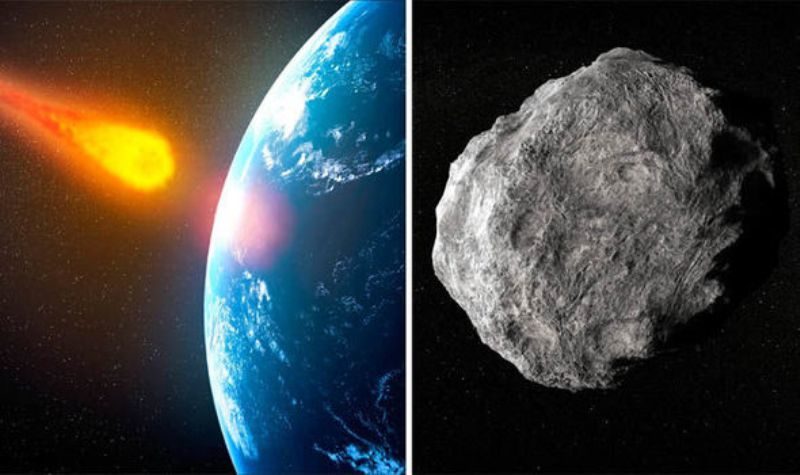



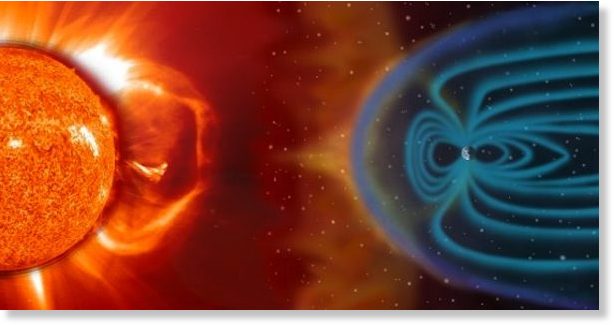












Comment: As Pierre Lescaudron writes in Of Flash Frozen Mammoths and Cosmic Catastrophes, there is another more likely driver for the cataclysmic shift of Earth's poles: See also: