Science & TechnologyS


Life Preserver

Chinese researchers unveil LED-activated 'bioglue' that seals gushing wounds within seconds

Bioglue, wound healing
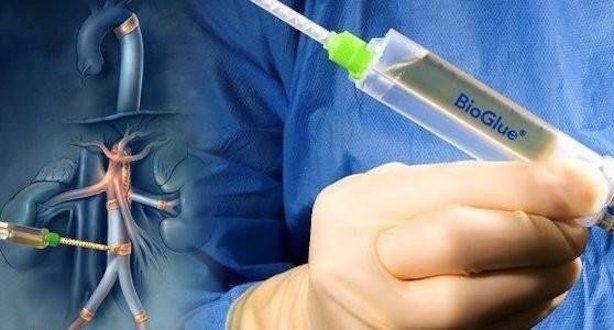
The new ‘bioglue’ is activated by UV light, which transforms the serum into a non-toxic hydrogel that can adhere to slippery, blood-stained surfaces while withstanding movement, like the beating of a heart.
Chinese researchers have unveiled a groundbreaking 'biological glue' which could be the breakthrough needed to stop patients with gushing open wounds from bleeding out, buying trauma surgeons vital time to save lives.

The new 'bioglue' is activated by UV light, which transforms the serum into a non-toxic hydrogel that can adhere to slippery, blood-stained surfaces while withstanding movement, like the beating of a heart.

"It is the first time that high-pressure bleeding of a beating heart with six-millimeter diameter cardiac penetration holes was rapidly stopped and the wounds were stably sealed by only using matrix gel within 20 [seconds] without suture," the authors state.

The researchers are so confident in their new bioglue that they believe the results speak for themselves, and quickly.

Warning: The following video is not for the squeamish or faint of heart.


Sun

Largest magnetic storm in two years may displace satellites from orbit & disrupt GPS

sun disk
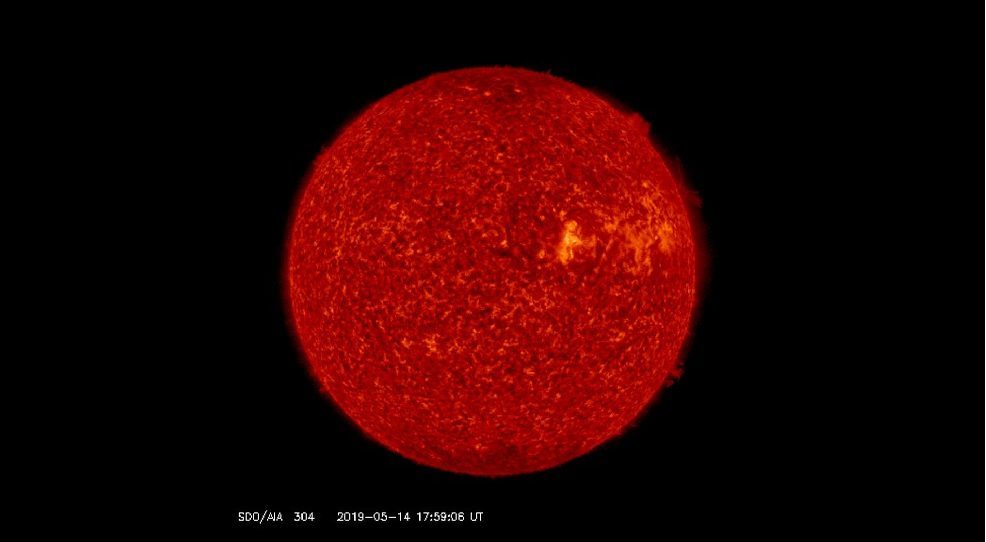
© Solar Dynamics ObservatoryThe image of the sun on May 14, 2019.
The largest magnetic storm in two years, which hit Earth on Tuesday, is no joke, Russian scientists warned, saying that increased solar activity threatens electronics and people's health.

The phenomenon may divert spacecraft from their orbit and create problems for satellite communications and GPS navigation, the Laboratory of X-Ray Astronomy at the Lebedev Institute of the Russian Academy of Science said.

Radio interference and Aurora Borealis in unusual places will be the other side effect of the magnetic storm. The Northern Lights may be seen in the sky, starting from the latitudes of 60 degrees - where Russia's Saint Petersburg is located - and above.

Comment: As we enter a particularly deep solar minimum and Earth's protective magnetosphere weakens storms like these are bringing an increasing array of surprises: Also check out SOTT radio's: Behind the Headlines: Earth changes in an electric universe: Is climate change really man-made?


Galaxy

Interstellar habitats: Bezos unveils Blue Moon lunar lander with ambitious vision for space colonization

Bezos space colony
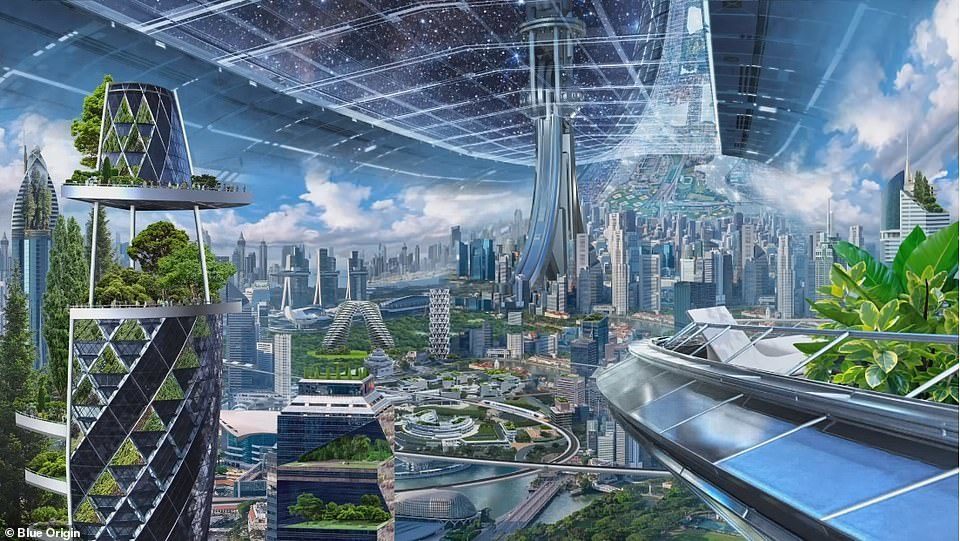
The habitats, reminiscent of the film Interstellar, could be built close enough to Earth to allow people to travel back and forth, and house ‘a million people or more each.’ And, according to Bezos, they’d have the ‘ideal climate’ at all times, ‘like Maui on its best day, all year long’
Last week, Amazon CEO Jeff Bezos finally lifted the veil on the lunar lander his aerospace company has been developing in secret for years, along with a plan to put humans back on the moon to stay.

And in the process, he also revealed an ambitious vision for space colonization.

Building off of a concept introduced decades ago by physicist Gerard O'Neill - who Bezos himself studied under during his time at Princeton, according to Fast Company - the Blue Origin founder outlined self-sustaining habitats that could hold entire cities, agricultural areas, and even national parks in space.

While such a future may still be a ways off, Bezos says it will be an 'easy choice' when faced with dwindling resources on Earth.

The habitats, reminiscent of the film Interstellar, could be built close enough to Earth to allow people to travel back and forth, and house 'a million people or more each.' And, according to Bezos, they'd have the 'ideal climate' at all times, 'like Maui on its best day, all year long.'

Comment: Bezos isn't alone in planning to stake claims to lunar territory:


Life Preserver

Algorithm similar to those used by Netflix and Spotify to recommend content allegedly predicts lethal heart attacks with 90% accuracy

LogitBoost CCTA scan
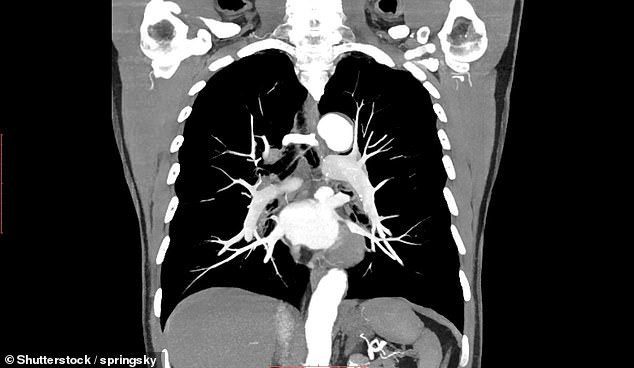
LogitBoost which was programmed to use 85 variables to calculate risks to a person's health who was complaining of chest pain. Patients had a coronary computed tomography angiography (CCTA) scan (pictured, stock scan) which gathered 58 of the data points
Algorithms similar to those employed by Netflix and Spotify to customise services are now better than human doctors at spotting who will die or have a heart attack.

Machine learning was used to train LogitBoost, which its developers say can predict death or heart attacks with 90 per cent accuracy.

It was programmed to use 85 variables to calculate the risk to the health of the 950 patients that it was fed scans and data from.

Patients complaining of chest pain were subjected to a host of scans and tests before being treated by traditional methods.

Their data was later used to train the algorithm.

It 'learned' the risks and, during the six-year follow-up, had a 90 per cent success rate at predicting 24 heart attacks and 49 deaths from any cause.

Comment: While this appears to be another useful tool for medical diagnosis, the downside of such technology is that humans may come to rely solely on its prognostications and may fail to notice contradicting information.


Eye 1

WhatsApp discloses vulnerability that allowed Israeli spyware to be installed on iPhones

whatsapp
A report from The Financial Times this afternoon details a vulnerability in WhatsApp that allowed attackers to inject Israeli spyware onto phones. The malicious code was developed by Israeli company NSO Group and transmitted by calling users via WhatsApp on iOS and Android.

The malicious code could be transmitted even if a user did not answer the WhatsApp call, the report explains. In many cases, the call would disappear from call logs, so it's possible that users could have been targeted and not even realize it.

Many details about the vulnerability remain unclear, but the report suggests that the loophole was open for several weeks. In a statement, WhatsApp said:
"This attack has all the hallmarks of a private company known to work with governments to deliver spyware that reportedly takes over the functions of mobile phone operating systems," the company said. "We have briefed a number of human rights organizations to share the information we can, and to work with them to notify civil society."

Moon

The moon is quaking as it shrinks

moon crust quake
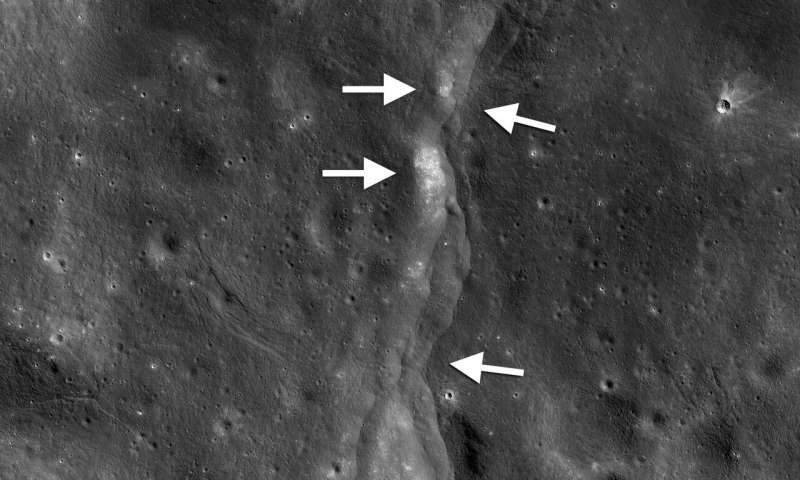
© LROC NAC frame M190844037LR; NASA/GSFC/Arizona State University/SmithsonianThis prominent thrust fault is one of thousands discovered on the moon by NASA's Lunar Reconnaissance Orbiter (LRO). These faults resemble small stair-shaped cliffs, or scarps, when seen from the lunar surface. The scarps form when one section of the moon's crust (left-pointing arrows) is pushed up over an adjacent section (right-pointing arrows) as the moon's interior cools and shrinks. New research suggests that these faults may still be active today.
A 2010 analysis of imagery from NASA's Lunar Reconnaissance Orbiter (LRO) found that the moon shriveled like a raisin as its interior cooled, leaving behind thousands of cliffs called thrust faults on the moon's surface.

A new analysis suggests that the moon may still be shrinking today and actively producing moonquakes along these thrust faults. A team of researchers including Nicholas Schmerr, an assistant professor of geology at the University of Maryland, designed a new algorithm to re-analyze seismic data from instruments placed by NASA's Apollo missions in the 1960s and '70s. Their analysis provided more accurate epicenter location data for 28 moonquakes recorded from 1969 to 1977.

The team then superimposed this location data onto the LRO imagery of the thrust faults. Based on the quakes' proximity to the thrust faults, the researchers found that at least eight of the quakes likely resulted from true tectonic activity-the movement of crustal plates-along the thrust faults, rather than from asteroid impacts or rumblings deep within the moon's interior.

Comment: For more on the similarities and connections within our solar system, check out:


Blackbox

Russian scientists succeed in making gold "flat"

Gold crystals
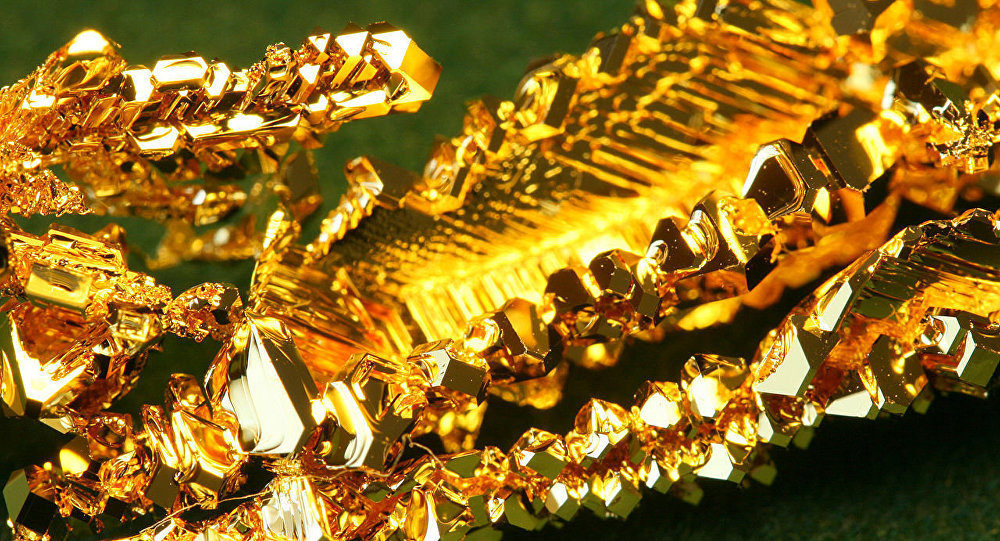
© CC BY 3.0 / Periodictableru /Gold crystals
There were earlier quite a few attempts to devise "flat" chemical structures from metals, but the structure of gold, for instance, was far too solid to do this. However, Russian physicists' latest efforts appear to have yielded fruit after they discovered that molybdenum sulphites would be more active with regard to the precious metal's atoms.

Russian scientists from the Moscow Institute of Physics and Technology have arrived at the conclusion that gold can be rendered as any bidimensional structure by means of attaching its atoms to a special base made of a sulphur or molybdenum compound, with the finding, written about in the journal Advanced Material Interfaces, expected to be used in the creation of cutting-edge transparent electronic devices.

"We are expecting the sphere of quasi-bidimensional materials to make huge leaps forward. In the not so distant past, they were not available even to scientists. Yet, today, one can indeed talk about huge prospects of the technology that we have proposed that can be used to develop flexible and transparent electronics. We'd love to see it roll off the assembly lines in the near future, and we are working on it", noted Alexey Arsenin, the director of the Institute's Centre for Photonics and Bidimensional Materials.

Comment: See also:


Microscope 1

India river yields giant viruses that could hold keys to evolution mystery

giant virus size compare bacteria
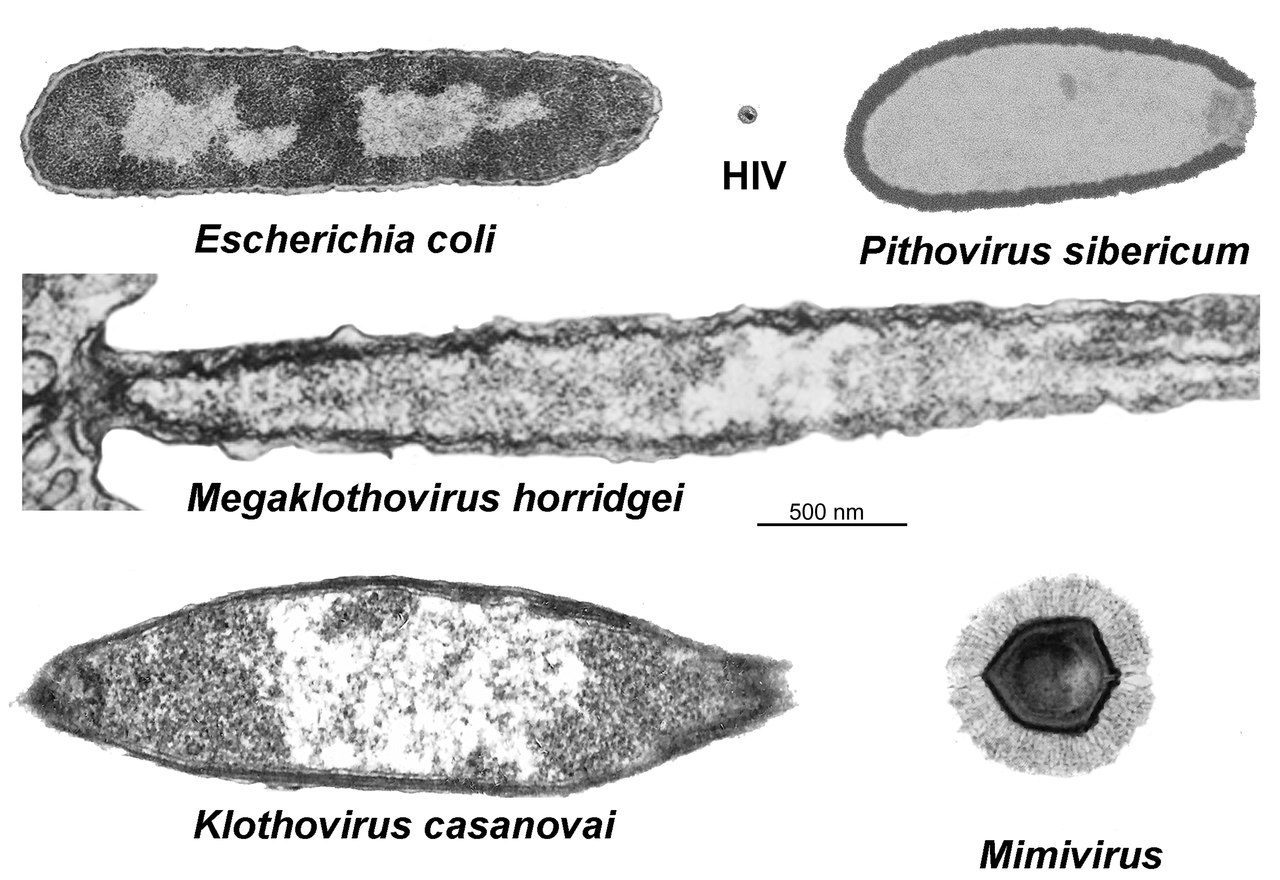
© By Domi751 - Own work, CC BY-SA 4.0/WikimediaComparison of size between various viruses and the bacteria E. coli
Over 20 new giant viruses have been discovered in sewage and pre-filtered water in Mumbai, India. They are able to hoard and pass on new genes when hopping from one host to another, a 5-year study claims.

Despite its ominous-sounding notion, there is no evidence that 'Giant Viruses' are causing disease in people. Or at least that is what we all would like to believe!

"There isn't enough evidence to suggest that they are directly linked to infections in humans," Dr. Anirvan, one of the lead researchers on the paper, told India Science Wire.

While posing no danger to humans, the viruses are of great interest to scientists, who believe they could help solve the riddle of evolution.

Comment:


Galaxy

Researchers say the universe probably 'remembers' every single gravitational wave

Numerical simulations of the gravitational waves
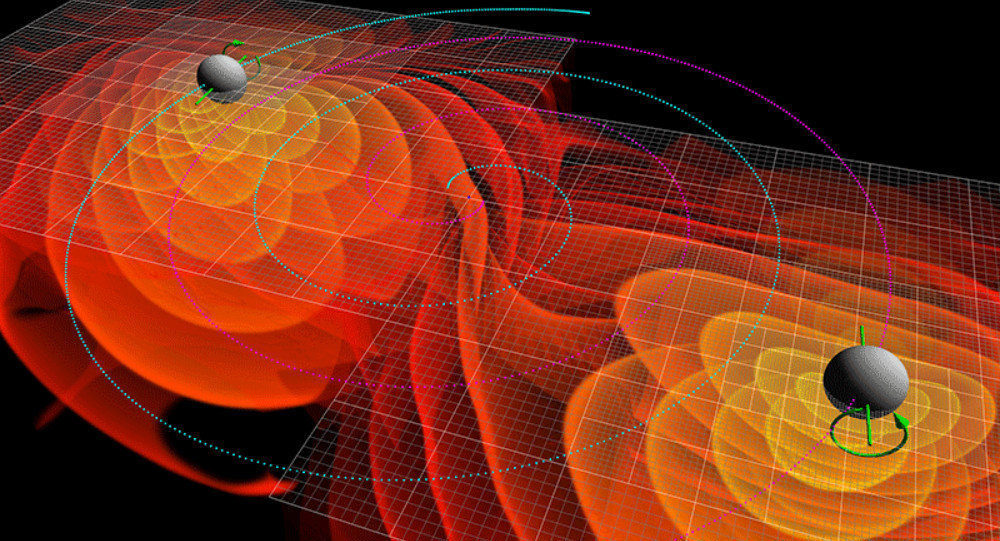
© NASA. Ames Research Center/C. HenzeNumerical simulations of the gravitational waves emitted by the inspiral and merger of two black holes
The universe might "remember" gravitational waves long after they've passed.

That's the premise of a theoretical paper published April 25 in the journal Physical Review D. Gravitational waves, faint ripples in space and time that humanity has only in the past few years managed to detect, tend to pass very quickly. But the authors of the paper showed that after the waves pass, they might leave a region slightly altered - leaving behind a sort of memory of their crossing.

These changes, which the researchers termed "persistent gravitational wave observables," would be even fainter than the gravitational waves themselves, but those effects would last longer. Objects might be shifted slightly out of place. The positions of particles drifting through space might be altered. Even time itself might end up slightly out of sync, running briefly at different speeds in different parts of Earth.

Comment: A dissenting voice:

Thunderbolts Project: Big science and the impossibility of gravitational waves (VIDEO)


Blue Planet

Chernobyl has become a refuge for wildlife 33 years after the nuclear accident

Chernobyl Nuclear Power Plant
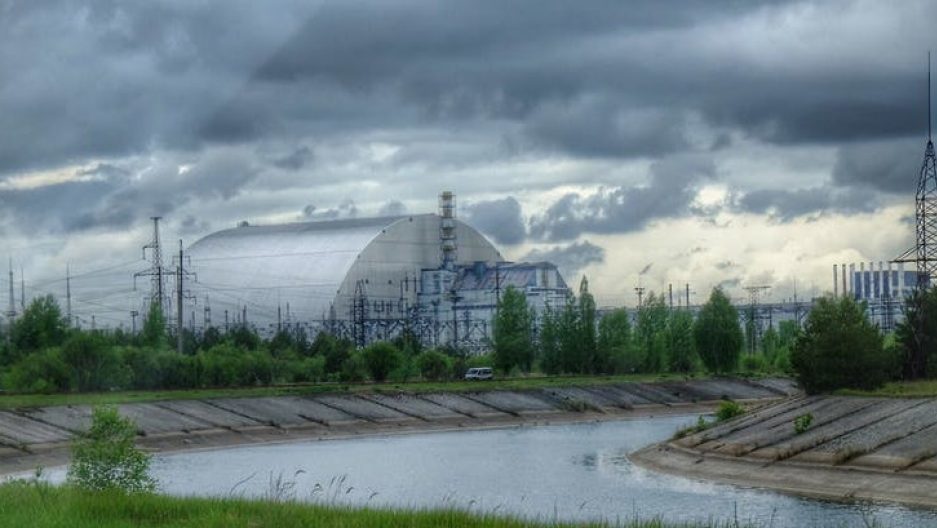
© Germán OrizaolaChernobyl Nuclear Power Plant (Ukraine) with the new safe confinement building over the number 4 reactor unit. May 2017.
Reactor number four of the Chernobyl Nuclear Power Plant suffered an explosion during a technical test on April 26, 1986. As a result of the accident, in the then Soviet Union, more than 400 times more radiation was emitted than that released by the atomic bomb dropped on Hiroshima (Japan) in 1945. It remains the largest nuclear accident in history.


Comment: That amount is still only between a hundredth and a thousandth of the volume of radiation released by US atmospheric nuclear tests in the 1950s and 60s.


Decontamination work began immediately after the accident. An exclusion zone was created around the plant, and more than 350,000 people were evacuated from the area. They never returned. And severe restrictions on permanent human settlement are still in place today.

The accident had a major impact on the human population. Although there are not clear figures, the physical loss of human lives and physiological consequences were huge. Estimates of the number of human fatalities vary wildly.


Comment: Like, really wildly. Tens were killed at the time, hundreds died from cancers in subsequent years, but radiation statistics become unreliable once claims get into the thousands. What is known, however, is that around 150,000 babies in western Europe were aborted in the late 1980s because women were terrified of the potential nuclear winter they were told would result from the accident...


The initial impact on the environment was also important. One of the areas more heavily affected by the radiation was the pine forest near the plant, known since then as the "Red Forest". This area received the highest doses of radiation, the pine trees died instantly and all the leaves turned red. Few animals survived the highest radiation levels.

Comment: See also: