Science & TechnologyS


Bullseye

The case for Intelligent Design: Why random processes cannot produce information

intelligent design
This is the important question ID raises against the neo-Darwinian claim that life came about by random processes. Here I offer some thoughts about the connection between information in the form of digital codes and the products they code for. I thus hope to support the argument for ID and for what seems to me the inescapable fact of teleology in nature.

If a random number generator were set to produce eight digit numbers, and it coincidentally spat out 87958007, which happens to be my phone number, would it then have produced information? Or if a prebiotic soup randomly produced a functional protein, or a string of DNA that coded for a protein (ignoring the low probability of such occurrences), would the soup have produced information?

I would argue no.

The specific sequences that carry information, phone numbers, for example, can only be defined as information in relation to the whole system of which they are a part. There needs to be a translation system with defined rules that sorts out which sequences contains information and which do not.

To claim that information in DNA could arise by random chance is therefore nonsense. A functional sequence could not be regarded as information until we have a complete set of rules which defines that certain sequences are functional and all others are nonfunctional gobbledygook.

Comment: More on Intelligent Design:


Bug

The crazy story of how Soviet Russia bugged an American embassy's typewriters

spy bug russia
© Stuart Bradford
Every engineer has stories of bugs that they discovered through clever detective work. But such exploits are seldom of interest to other engineers, let alone the general public. Nonetheless, a recent book authored by Eric Haseltine, titled The Spy in Moscow Station (Macmillan, 2019), is a true story of bug hunting that should be of interest to all. It recounts a lengthy struggle by Charles Gandy, an electrical engineer at the United States' National Security Agency, to uncover an elaborate and ingenious scheme by Soviet engineers to intercept communications in the American embassy in Moscow. (I should say that, by coincidence, both Haseltine and Gandy are friends of mine.)

This was during the Cold War in the late 1970s. American spies were being arrested, and how they were being identified was a matter of great concern to U.S. intelligence. The first break came with the accidental discovery of a false chimney cavity at the Moscow embassy. Inside the chimney was an unusual Yagi-style antenna that could be raised and lowered with pulleys. The antenna had three active elements, each tuned to a different wavelength. What was the purpose of this antenna, and what transmitters was it listening to?

Gandy pursued these questions for years, not only baffled by the technology, but buffeted by interagency disputes and hampered by the Soviet KGB. At one point he was issued a "cease and desist" letter by the CIA, which, along with the State Department, had authority over security at the embassy. These agencies were not persuaded that there were any transmitters to be found: Regular scans for emissions from bugs showed nothing.

Apple Green

For your post-holiday enjoyment, healthy ID snacks

lotus leaf
© William ThielickeSpecial repellent properties of the lotus leaf inspired the "ultimate non-stick coating"
Yesterday, Evolution News offered appetizers for 2020. But maybe you are bothered already by overeating during the recent holidays. No problem. Here are healthy nuggets with an ID flavor to snack on.

Better Suction Cups

Those plastic suction cups we use on glass fall off after a while. One would never think of getting them to stick to uneven rock. How about fastening them to rock underwater in a strong current? Impossible? The aquatic larvae of the net-winged midge do it. To the amazement of biologists from the University of Cambridge, these larvae even move around the rocks without losing their grip while subjected to "absolutely enormous" forces trying to pull them off, reports Phys.org.
The larvae have the ability to quickly detach and reattach to underwater rocks in torrential alpine rivers that can flow as fast as three metres per second. Their highly specialised suction organs are so strong that only forces over 600 times their body weight can detach them. [Emphasis added.]
The investigators had difficulty balancing while standing knee deep in the river, but they found the larvae "grazing on the underwater rocks, apparently oblivious to the torrents bearing down on them." The larvae possess the highest attachment strength ever recorded in insects. What's their secret?

Comment: See also:


Sun

A warning from ancient tree rings: The Americas are prone to catastrophic, simultaneous droughts

drought
© RODRIGO GARRIDO/REUTERS/NewscomOngoing drought has dried up a lagoon near Santiago, Chile.
For 10 years, central Chile has been gripped by unrelenting drought. With 30% less rainfall than normal, verdant landscapes have withered, reservoirs are low, and more than 100,000 farm animals have died. The dry spell has lasted so long that researchers are calling it a "megadrought," rivaling dry stretches centuries ago. It's not so different from the decadelong drought that California, some 8000 kilometers away, endured until this year.

By analyzing tree ring records, scientists have now found evidence that such tandem droughts are more than a coincidence: They are surprisingly common over the past 1200 years, and they may often share a common cause — an abnormally cool state of the eastern Pacific Ocean known as La Niña. "We did not expect there to be as much coherence as we see," says Nathan Steiger, a paleoclimatologist at Columbia University who presented the work this month at a meeting of the American Geophysical Union. "They just happen together." The results suggest that, in the future, extreme aridity could strike all along the Americas' western coast.

Comment: See also: Also check out SOTT radio's:


Cow Skull

Top fossils of 2019 - and a diminishing Darwinism

Australopithecus
© From left: Matt Crow/Cleveland Museum of Natural History, John Gurche (facial reconstruction); Dale Omori/Cleveland Museum of Natural HistoryAmong the top fossil discoveries reported this year was this 3.8-million-year-old skull of Australopithecus anamensis (artist’s reconstruction of the hominid, left).

Comment: It's notable that even the language used by the author of Science News reflects how at odds these discoveries are with the conventional theory of evolution. Website Uncommon Descent posted their own commentary in response and which can be found under the relevant points of the article in the yellow boxes.


This year's fossil finds, from vast new collections of species to wonderful and weird curiosities, helped reveal the richness and diversity of life on Earth over the last half a billion years.

1. Impressive invertebrates

518 million years ago

China's Qingjiang biota is a treasure trove of beautifully preserved fossils, including jellyfish (left), comb jellies (middle), mud dragons (right) and arthropods. The remains document the Cambrian explosion, a rapid flourishing of life-forms, and include many organisms never seen before — even at the most famous Cambrian fossil site, Canada's Burgess Shale (SN: 4/27/19, p. 14).
So even more fossils just popped into existence, just like that. No wonder even Darwin had doubts.
Tetrapod
D. Fu et al/Science 2019
2. Tetrapod walking

Comment: See also: And check out SOTT radio's:


Info

Researchers build a particle accelerator that fits on a chip

Accelerator-on-a-chip
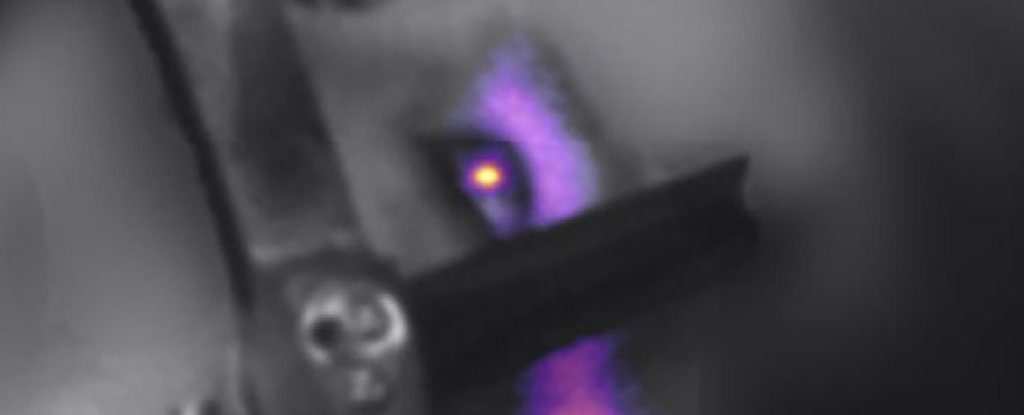
© Courtesy Neil SapraThis image, magnified 25,000 times, shows a section of an accelerator-on-a-chip. The gray structures focus infrared laser light (shown in yellow and purple) on electrons flowing through the center channel. By packing 1,000 channels onto an inch-sized chip, Stanford researchers hope to accelerate electrons to 94 percent of the speed of light.
On a hillside above Stanford University, the SLAC National Accelerator Laboratory operates a scientific instrument nearly 2 miles long. In this giant accelerator, a stream of electrons flows through a vacuum pipe, as bursts of microwave radiation nudge the particles ever-faster forward until their velocity approaches the speed of light, creating a powerful beam that scientists from around the world use to probe the atomic and molecular structures of inorganic and biological materials.

Now, for the first time, scientists at Stanford and SLAC have created a silicon chip that can accelerate electrons - albeit at a fraction of the velocity of that massive instrument - using an infrared laser to deliver, in less than a hair's width, the sort of energy boost that takes microwaves many feet.

Writing in the Jan. 3 issue of Science, a team led by electrical engineer Jelena Vuckovic explained how they carved a nanoscale channel out of silicon, sealed it in a vacuum and sent electrons through this cavity while pulses of infrared light - to which silicon is as transparent as glass is to visible light - were transmitted by the channel walls to speed the electrons along.

The accelerator-on-a-chip demonstrated in Science is just a prototype, but Vuckovic said its design and fabrication techniques can be scaled up to deliver particle beams accelerated enough to perform cutting-edge experiments in chemistry, materials science and biological discovery that don't require the power of a massive accelerator.

"The largest accelerators are like powerful telescopes. There are only a few in the world and scientists must come to places like SLAC to use them," Vuckovic said. "We want to miniaturize accelerator technology in a way that makes it a more accessible research tool."

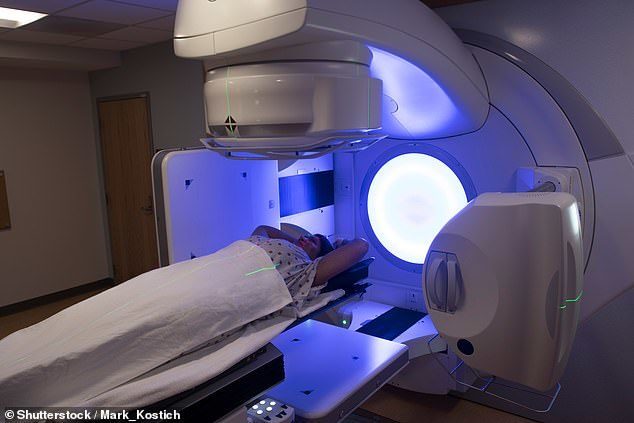
Team members liken their approach to the way that computing evolved from the mainframe to the smaller but still useful PC. Accelerator-on-a-chip technology could also lead to new cancer radiation therapies, said physicist Robert Byer, a co-author of the Science paper. Again, it's a matter of size. Today, medical X-ray machines fill a room and deliver a beam of radiation that's tough to focus on tumors, requiring patients to wear lead shields to minimize collateral damage.

"In this paper we begin to show how it might be possible to deliver electron beam radiation directly to a tumor, leaving healthy tissue unaffected," said Byer, who leads the Accelerator on a Chip International Program, or ACHIP, a broader effort of which this current research is a part.

Hammer

First evidence found of tool use by seabirds

puffin
© CC0 Public Domain
Three researchers from the University of Oxford and the South Iceland Nature Research Centre have found evidence of tool use by puffins — the first evidence of tool use by any seabird. In their paper published in Proceedings of the National Academy of Sciences, Annette Fayet, Erpur Snær Hansen and Dora Biro describe their evidence of puffins using sticks to scratch a part of their body.

Over the past several decades, researchers have found many examples of non-human primates using tools — several types of passerine birds have been found to use tools, as well. Crows have been observed using sticks for many purposes, and parrots have been seen breaking seashells with rocks. But until now, no instances of tool use by seabirds have been observed. Because of their relatively small brains, many in the field believed they simply did not have the capacity to make use of a tool. But the researchers in this new effort have disproven these beliefs.

Comment: By now we should probably not be so surprised, because, as noted above, this is just the latest evidence of tool use by animals of all kinds: See also: And check out SOTT radio's:


Comet 2

Our solar system may have captured 'alien' comets

Intersteller comets
© Roy Keeris/Flickr
According to the most popular theory, proposed by Dutch astronomer Jan Oort, during a very early phase of the solar system's formation, the giant planets scattered objects into the outer regions far away from the sun. There, the icy rocks and dust particles formed a kind of cloud.

Passing stars may then scatter these objects back into the inner solar system, where we observe them as comets. Coming from the Oort cloud, these long-period comets often take many more than 200 years to orbit the sun.

"We present a second potential origin for such comets," says Tom Hands, a postdoctoral researcher at the Institute for Computational Science of the University of Zurich. "They can be captured out of interstellar space in the relatively recent past."

Two interstellar visitors made headlines in the past years. In 2017, scientists detected an asteroid-like body later named Oumuamua. In August 2019, amateur astronomer Gennady Borisov discovered a comet that came from interstellar space and will leave the solar system again. Oumuamua and Comet Borisov are both leftovers of planet formation in other solar systems, in the same way our comets and asteroids are thought to be the leftovers of planet formation in our solar system.


In the wake of the discovery of the first two interstellar objects, Hands and Walter Dehnen of the University of Munich used computer simulations to study how interstellar objects could be captured by our solar system.

"These stowaways form around distant stars before being flung towards us, making a journey of many lightyears before encountering Jupiter and being captured into the solar system," explains Hands. "We simulated 400 million such bodies as they approached the sun and Jupiter."

Comment: Astronomers suspect 2016 meteor fireball event in Australia was caused by asteroid that had been 'captured' by Earth's gravity

Meanwhile more incoming asteroids are being detected as both Russia and the US develop plans to deal with them.


Nebula

Powerful magnetic 'ropes' observed surrounding the Whale galaxy

Whale Galaxy
© Jayanne English/University of ManitobaComposite image of the Whale Galaxy.

Comment: You can see a larger version of the image here.


Sometimes you just have to stand back in awe at the beauty of the Universe - and that's absolutely the case with this image from the National Radio Astronomy Observatory (NRAO), which captures the side view of a spiral galaxy know as the Whale Galaxy.

But if you look closer, the stunning picture also shows something else: the magnetic 'ropes' around the edges of the galaxy's disc.

These filaments, like cosmic strands of hair, show the galaxy's magnetic field extending into its halo.

The green colouring shows filaments with their magnetic field pointing towards the viewer, with the blue colouring showing filaments with their magnetic field pointing away. This phenomenon has never before been directly observed in the halo of a galaxy.

"This is the first time that we have clearly detected what astronomers call large-scale, coherent, magnetic fields far in the halo of a spiral galaxy, with the field lines aligned in the same direction over distances of a thousand light-years," says astrophysicist Marita Krause, from the Max-Planck Institute for Radio Astronomy in Germany.

Comment: See also: And check out SOTT radio's:


Comet 2

Incoming swarm: NASA detects FOUR more asteroids headed our way

asteroids
© Thomas Breher from Pixabay
NASA's Center for Near-Earth Object Studies (CNEOS) is currently monitoring a miniature swarm of four asteroids currently heading towards Earth, two of which were only detected on January 1.

CNEOS is tasked with watching the skies for any potentially hazardous asteroids, but given the vastness of space, that's a lot of sky to check which may explain why two of the four asteroids were only spotted yesterday.

2020 AC, with a diameter of roughly 89 feet and traveling at approximately 13,000 miles per hour, will lead the charge, flying past the Earth at 1:56 am EST.

Comment: If the sky is so big that it's lucky they spotted these at all, how many more are streaming our way?