
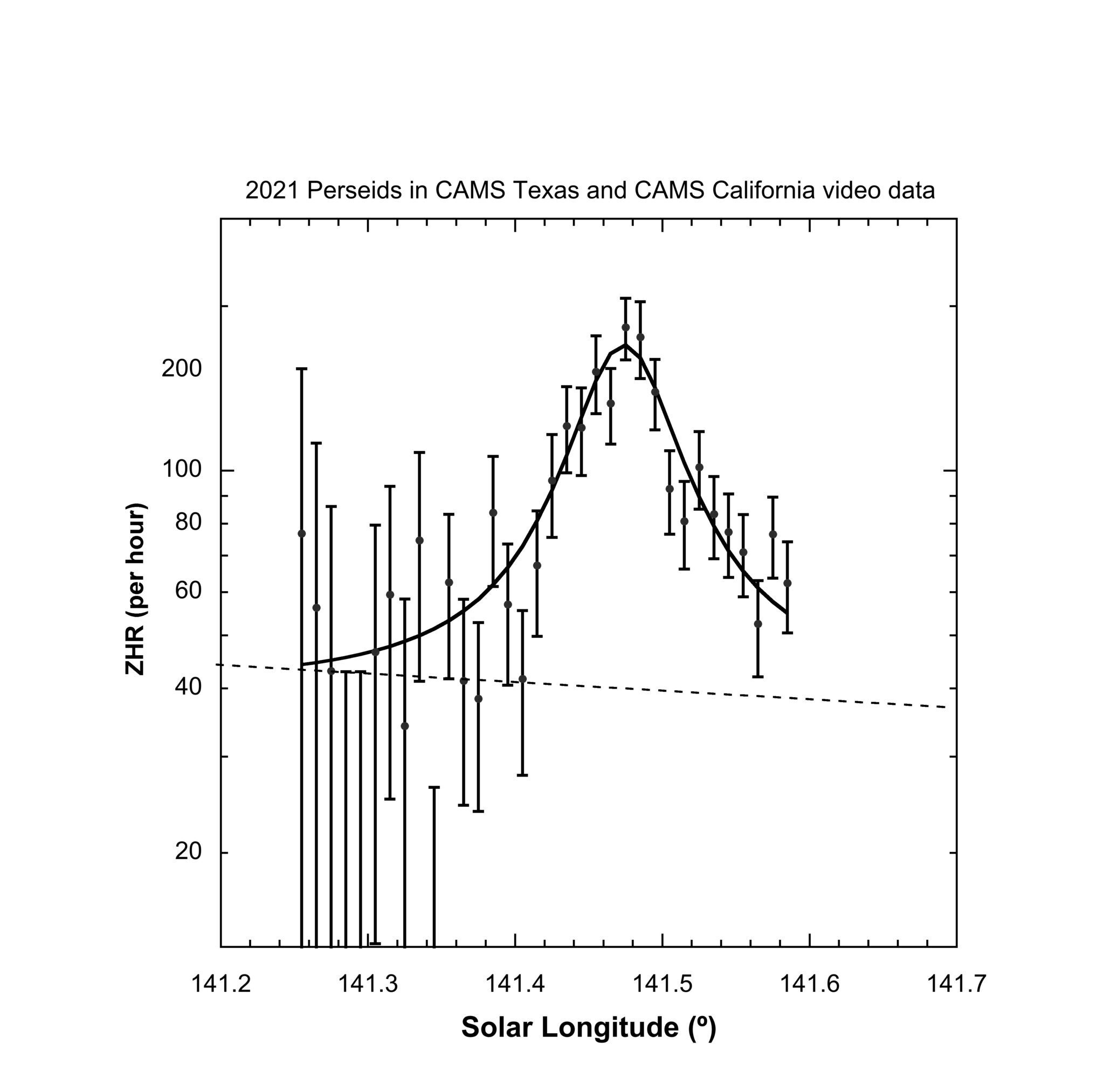
Figure 1 – 2021 Perseid rates according to CAMS Texas and CAMS California video data. The vertical scale is logarithmic. The dashed line is the level of normal annual Perseid activity.
Abstract: An unexpected outburst of Perseids was detected by low-light video observations on August 14, 2021. The outburst peaked at solar longitude 141.474 ± 0.005 degrees (equinox J2000.0) and the activity profile had a Full-Width-at-Half-Maximum of 0.08 degrees solar longitude and a peak rate of ZHR = 130 ± 20 per hour above the normal ~45 per hour annual Perseid activity. The Perseids had a steeper magnitude size distribution index than the normal annual shower component. The activity profile is similar to that derived from visual and forward meteor scatter observations. This activity may be related to the earlier smaller enhancements observed in 2018 and 2019.Introduction












Comment: More reporting from Twitter, with one camera capturing the flashes of the outburst, but not direct footage, and all thanks to the owner's cat walking past their motion detecting camera:
It's notable that the last outburst occurred just a few years ago, and that the origin of this particular one was not expected nor, as of yet, has its origin been ascertained.
Taken together with all the other Fire In The Sky activity being documented these days, it's looking like there's been a significant increase, and that there's likely more to come:
- Sott Exclusive: Nemesis, not 'Nibiru' - Clarifying mainstream reports about 'a large ninth planet' that periodically sends comets our way
- HUGE meteor fireball lights up western China's dark morning skies
- Michigan Meteor Event: Fireball Numbers Increased Again in 2017
- NASA space data supports citizens' observations: Meteor fireballs are increasing dramatically
- Fireball explodes over Russian city: Widespread panic and structural damage, Thousand people injured
See also: Something Wicked This Way ComesAnd check out SOTT radio's: