Science & TechnologyS


Info

Study investigates a rare type Icn supernova

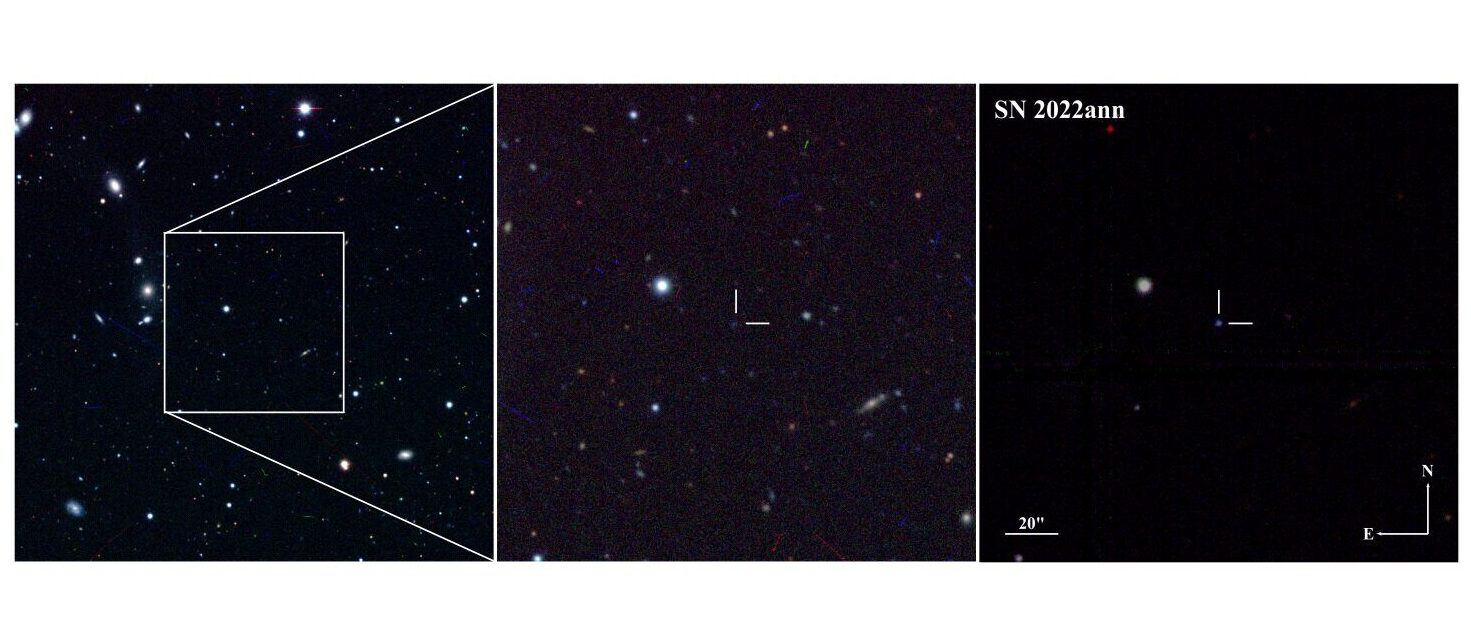
SN 2022ann
© Davis et al., 2022Finder charts of SN 2022ann (right) and its host galaxy, SDSS J101729.72–022535.6 (center and left).
An international team of astronomers has conducted optical and near-infrared observations of a rare Type Icn supernova known as SN 2022ann. The results of the study, published November 9 on the preprint server arXiv, shed more light on the nature of this supernova and its unique properties.

Supernovae (SNe) are powerful and luminous stellar explosions. They are important for the scientific community as they offer essential clues into the evolution of stars and galaxies. In general, SNe are divided into two groups based on their atomic spectra: Type I and Type II. Type I SNe lack hydrogen in their spectra, while those of Type II showcase spectral lines of hydrogen.

Type Icn SNe are an extreme subtype of interacting stripped-envelope supernovae (SESN). They have strong, narrow oxygen and carbon lines but weak or absent hydrogen and helium lines, presenting additional complications to the stripping mechanism. They have narrow emission features indicative of circumstellar interaction.

To date, only five Type Icn SNe have been discovered, and SN 2022ann is the latest addition to the short list of this SN subtype. SN 2022ann was detected on January 27, 2022 in the faint host galaxy SDSS J101729.72-022535, at a distance of about 710 million light years.

Microscope 2

48,500-year-old virus revived from Siberian permafrost

permafrost
© Tatiana Gasich/iStock/Getty Images PlusAs the world warms, permafrost is being exposed.
As the world warms up, vast tranches of permafrost are melting, releasing material that's been trapped in its icy grip for years. This includes a slew of microbes that have lain dormant for hundreds of millennia in some cases.

To study the emerging microbes, scientists have now revived a number of these "zombie viruses" from Siberian permafrost, including one thought to be nearly 50,000 years old - a record age for a frozen virus returning to a state capable of infecting other organisms.


Comment: Whilst true, viruses have also been found to be raining down on our planet from space: Viruses from space & evolution: Dr. Wickramasinghe explains it all in new video


The team behind the work, led by microbiologist Jean-Marie Alempic from the French National Centre for Scientific Research, says these reanimating viruses are potentially a significant threat to public health, and further study needs to be done to assess the danger that these infectious agents could pose as they awake from their icy slumber.

Comment: Of greater concern are those viruses being 'gain of functioned' at US bioweapon laboratories, and those falling from space:


Popcorn

Cryovolcanic eruption on comet 29P/Schwassmann-Wachmann reported

comet 29P/Schwassmann-Wachmann
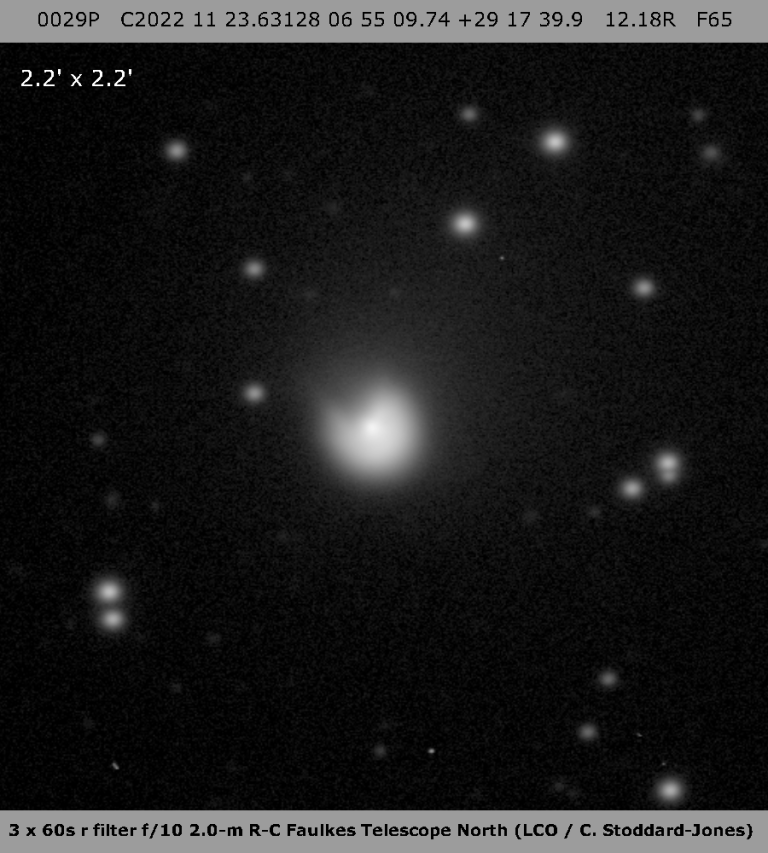
The British Astronomical Association (BAA) is reporting a new outburst of cryovolcanic comet 29P/Schwassmann-Wachmann. On Nov. 22nd, amateur astronomer Patrick Wiggins watched 29P increase in brightness by more than 4 magnitudes--a sign that a major eruption was in progress. On Nov. 23rd, André Debackère used the Faulkes Telescope North in Hawaii to photograph the expanding shell of debris:

The Pac-Man shape of the ejecta shows that this is not a uniform global eruption. Instead, it is coming from one or more discrete sources on the comet's surface.

This fits a leading model of the comet developed by Dr. Richard Miles of the British Astronomical Association. Miles believes that 29P is festooned with ice volcanoes. There is no lava. The "magma" is a cold mixture of liquid hydrocarbons (e.g., CH4, C2H4, C2H6 and C3H8) akin to those found in lakes and streams on Saturn's moon Titan. The cryomagma is suffused with dissolved gases N2 and CO, much like carbonation in a soda bottle. These bottled-up volatiles love to explode when a fissure is opened by the warming action of sunlight.

Comment: See also:


Info

New analysis helps reconcile differences between satellites and climate models

Weather Satellite
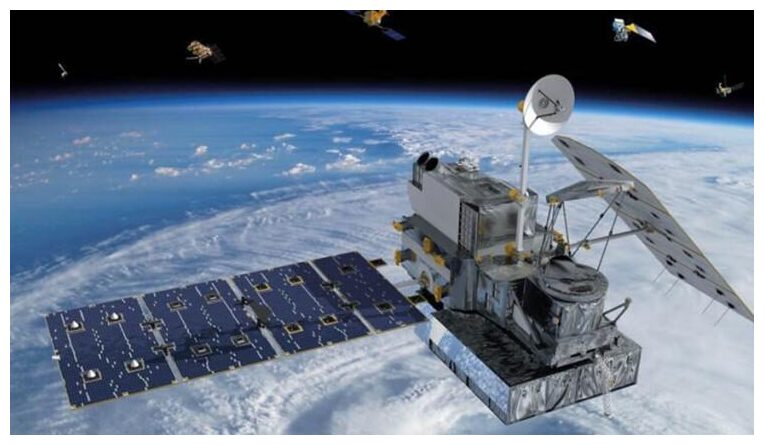
© NASANew research provides an improved understanding of the causes of historical changes in climate and increases confidence in model simulations of continued global warming over the 21st century.
Satellite observations and computer simulations are important tools for understanding past changes in Earth's climate and for projecting future changes.

However, satellite observations consistently show less warming than climate model simulations from 1979 to the present, especially in the tropical troposphere (the lowest ~15km of Earth's atmosphere). This difference has raised concerns that models may overstate future temperature changes.

Rather than being an indicator of fundamental model errors, the model-satellite difference can largely be explained by natural fluctuations in Earth's climate and imperfections in climate-model forcing agents, according to new research by Lawrence Livermore National Laboratory (LLNL) scientists.

"Natural climate variability appears to have partly masked warming over the satellite era," said Stephen Po-Chedley, a LLNL climate scientist and lead author of a paper appearing in the Proceedings of the National Academy of Sciences.

The results of the study provide an improved understanding of the causes of historical changes in climate and increase confidence in model simulations of continued global warming over the 21st century.

"Although the Earth is warming as a result of human emissions of carbon dioxide, natural variations in the Earth's climate can temporarily accelerate or diminish this overall warming trend," noted Zachary Labe, a co-author from Princeton University and the National Oceanic and Atmospheric Administration's Geophysical Fluid Dynamics Laboratory. In addition to modulating the rate of warming, natural fluctuations in climate such as the Interdecadal Pacific Oscillation also produce unique patterns of regional surface temperature change.

Info

Machine learning autonomously identify 1,000 supernovae

Supernovae
© California Institute of Technology
Today's astronomical facilities scan the night sky deeper and faster than ever before. Identifying and classifying known and potentially interesting cosmic events is becoming impossible for one or a group of astronomers. Therefore, increasingly they train computers to do the work for them. Astronomers from the Zwicky Transient Facility collaboration at Caltech have announced that their machine-learning algorithm has now classified and reported 1000 supernovae completely autonomously.

"We needed a helping hand and we knew that once we train our computers to do the job, they would take a big load off our backs", says Christoffer Fremling, a staff astronomer at Caltech and the mastermind behind the new algorithm, dubbed SNIascore. "SNIascore classified its first supernova in April 2021 and a year and a half later we are hitting a nice milestone of 1000 supernovae without any human involvement".

Many of the current and most exciting scientific questions that astronomers are trying to answer require them to collect large samples of different cosmic events. As a result, modern astronomical observatories have become relentless data-generating machines that throw tens of thousands of alerts and images at astronomers every night. This is particularly true in the field of time-domain astronomy, in which researchers look for fast-changing objects, or transients, such as exploding and dying stars known as supernovae, black holes eating orbiting stars, asteroids, and more.

"The traditional notion of an astronomer sitting at the observatory and sieving through telescope images carries a lot of romanticism but is drifting away from reality," says Matthew Graham, the ZTF project scientist at Caltech.

Apart from freeing time for astronomers to pursue other science questions, the machine learning algorithm is much faster at classifying potential supernova candidates and sharing the results with the astronomical community. With SNIascore the process is shortened from 2-3 days to about 10 min, or near real-time. Such early identification of cosmic explosions is often critical to better study their physics.

Info

A new study says genes and languages aren't always together

Map of Languages
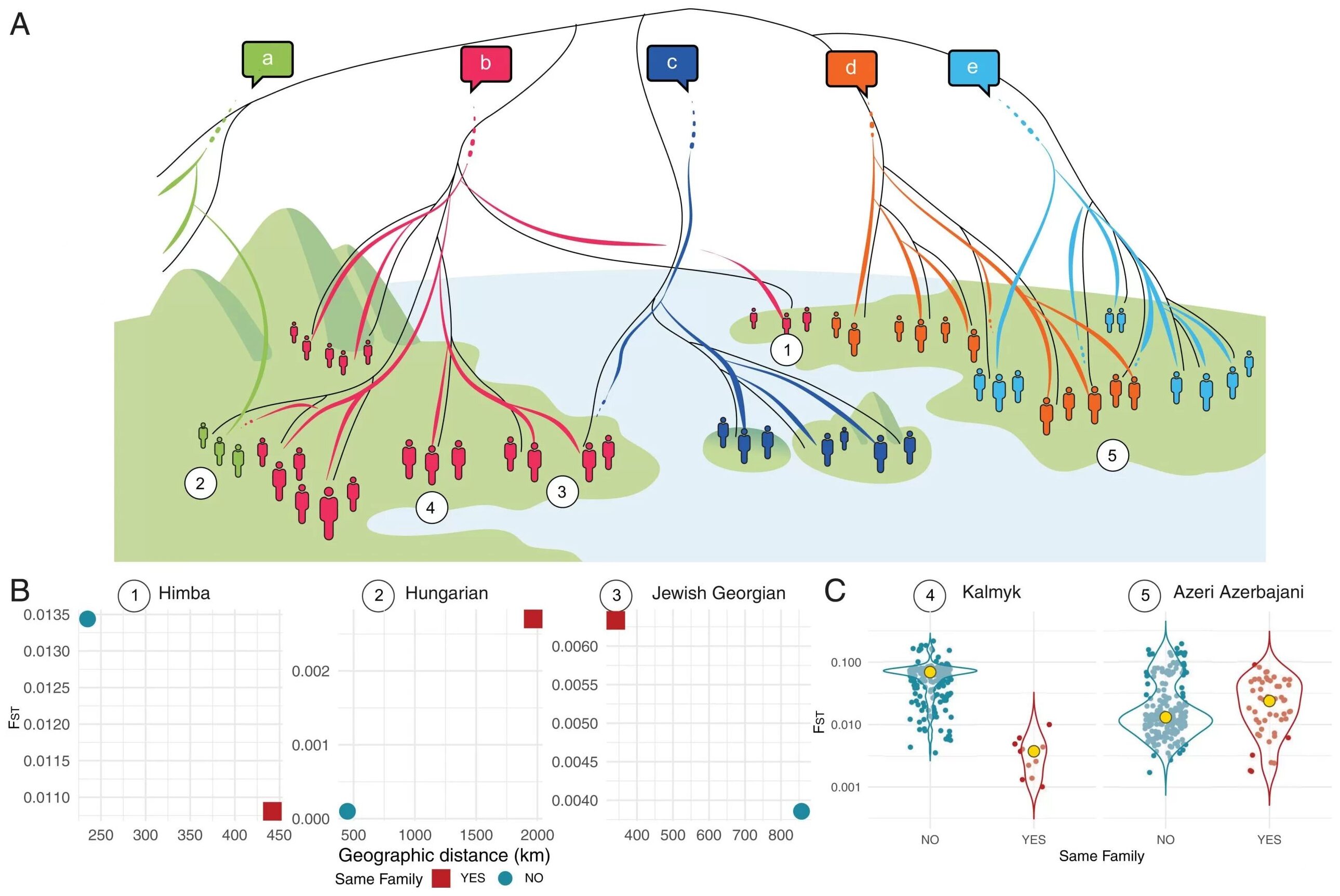
© Arkeonews NetOverview of linguistic and genetic similarity.
Over 7,000 languages are spoken around the world. This linguistic diversity, like biological traits, is passed down from generation to generation. But, as Charles Darwin originally proposed, have language and genes evolved in tandem over the last few thousand years? An interdisciplinary team from the University of Zurich and the Max Planck Institute for Evolutionary Anthropology in Leipzig (Germany) has now investigated this question on a global scale.

The researchers put together a global database linking linguistic and genetic data entitled GeLaTo (Genes and Languages Together), which contains genetic information from some 4,000 individuals speaking 295 languages and representing 397 genetic populations.

One in five gene-language links point to language shifts

In their study, the researchers examined the extent to which the linguistic and genetic histories of populations coincided. People who speak related languages tend to also be genetically related, but this isn't always the case. "We focused on cases where the biological and linguistic patterns differed and investigated how often and where these mismatches occur," says Chiara Barbieri, UZH geneticist who led the study and initiated it together with colleagues when she was a postdoc at the Max-Planck-Institute.

The researchers found that about every fifth gene-language relation is a mismatch, and they occurr worldwide. These mismatches can provide insights into the history of human evolution. "Once we know where such language shifts happened, we can better reconstruct how languages and populations spread across the world," says Balthasar Bickel, director of the National Center of Competence in Research (NCCR) Evolving Language, who co-supervised the study.

Better Earth

Ice Age summers in Central Europe were at times significantly WARMER than previously thought, new research reveals

earthworm crystals
© CHARLOTTE PRUD’HOMMEEarthworm calcite granules (ECGS) can be found in loess sequences
New method for determination of past climate data on land applied comparatively for the first time / Ice Age summers in Central Europe were at times warmer than previously known

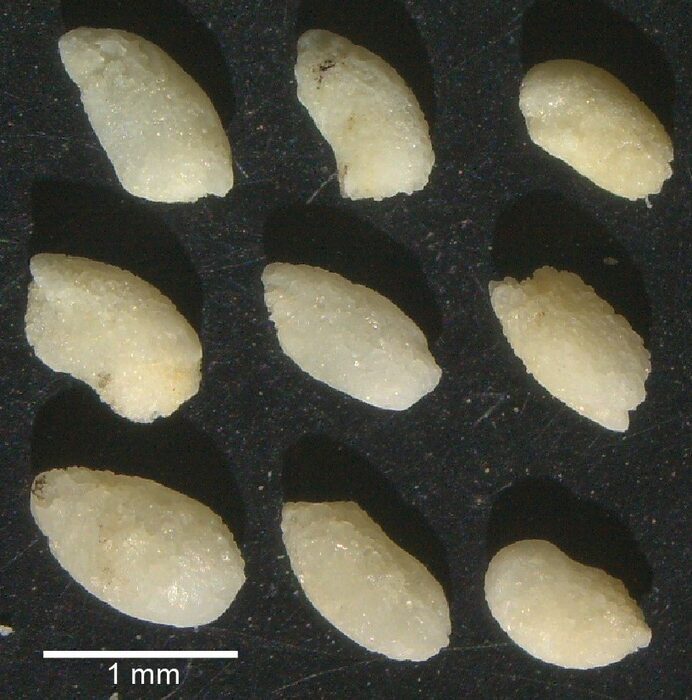
Scientists from an international research project led by Johannes Gutenberg University Mainz (JGU) have applied a new method to reconstruct past climate. As they report in the current issue of Communications Earth & Environment, they have determined temperatures and precipitation during the last Ice Age, which peaked about 25,000 years ago, by analyzing earthworm granules. "The new method was discovered at Université Paris 1 Panthéon-Sorbonne and further developed at the Max Planck Institute for Chemistry," said Dr. Peter Fischer of JGU's Institute of Geography, who was the lead investigator of the TerraClime project funded by the German Research Foundation (DFG) in which the study is embedded. "In cooperation with other scientists, including researchers from the University of Lausanne and Römisch-Germanisches Zentralmuseum, we used the method to reconstruct the climate at Schwalbenberg near Remagen and Nußloch near Heidelberg." The two sites form well-developed last-glacial dust deposits. The so-called loess contains sequences dating from 45,000 to 22,000 years before present, in which the earthworm granules with up to about only 2.5 millimeters in size can be found throughout. These calcitic granules, technically known as Earthworm Calcite Granules (ECGs), are secreted daily by earthworms. Using the so-called radiocarbon method, which is based on the decay of the naturally occurring radioactive carbon isotope (14C), researchers can precisely determine their age. Additionally, by analyzing the ratios of stable oxygen and carbon isotopes in the ECGs, it is then possible to reconstruct how warm or how humid it was at the time of their formation.

Comment: Whilst our planet has undergone a number of significant shifts over the last 45,000 years - see links below for fascinating insight - it is revealing that our understanding of Ice Ages is significantly different, and that life not far the glaciers themselves may have been much more hospitable than previously thought: Also check out SOTT radio's: MindMatters: America Before: Comets, Catastrophes, Mounds and Mythology


Fireball 5

New research reveals space debris, invisible meteors and near-Earth asteroids

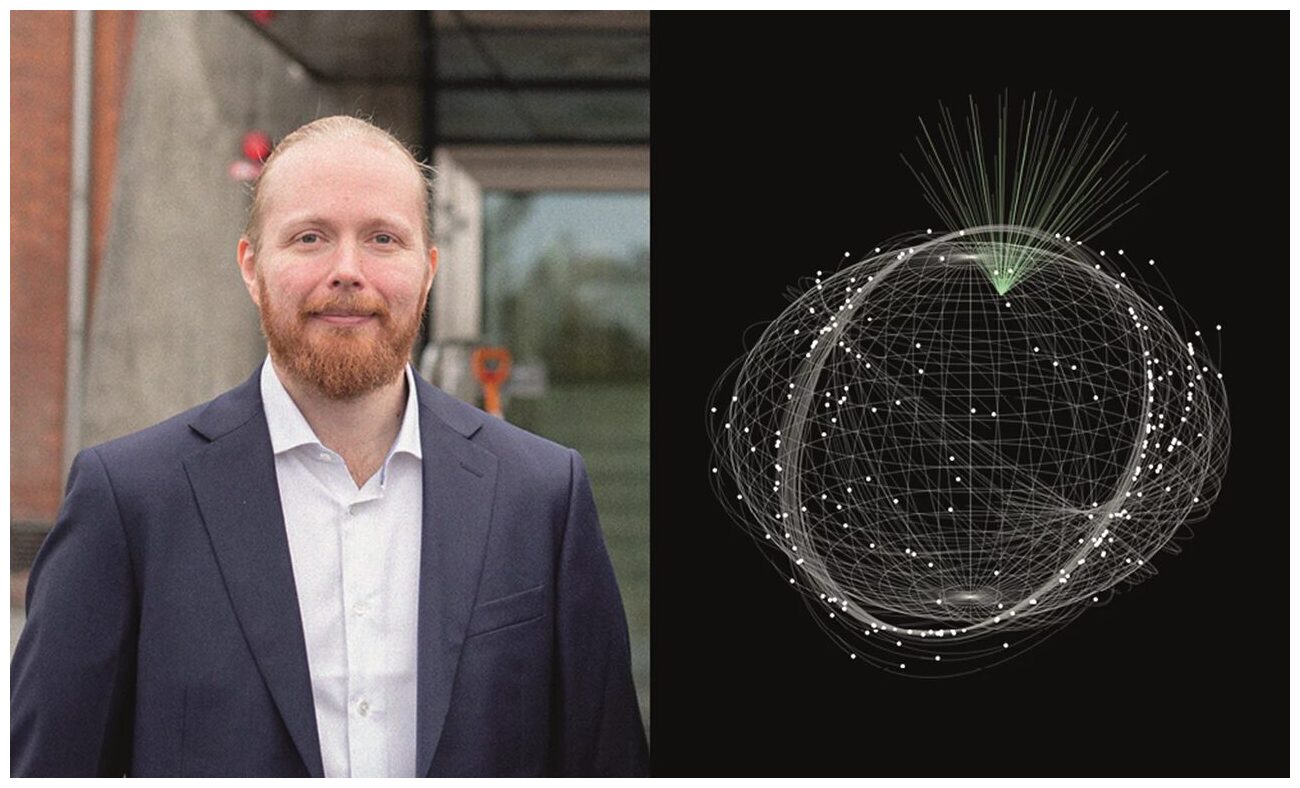
In a new thesis from the Swedish Institute of Space Physics and Umeå University, unique methods for the analysis of radar data and simulations of meteoroids in the solar system are presented. The methods have been applied to confirm the existence of rare high-altitude meteors as well as to measure space debris from the Kosmos-1408 satellite. On November 25, Daniel Kastinen defends his doctoral thesis.
Daniel Kastinen
© Martin Eriksson / Daniel Kastinen (illustrationDaniel Kastinen's thesis presents results that pave the way for future research and cross-disciplinary studies on meteors as well as on space debris and near-Earth asteroids.
"My primary goal has been to carefully analyze radar measurements of meteors and space debris and evaluate the precision of the measurements. This is to improve further analysis and use the results together with the new dynamical simulations. The work paves the way for future research and allows cross-disciplinary studies on meteors as well as on space debris and near-Earth asteroids", says Daniel Kastinen.

Every day, 10-200 tons of material from space, consisting of dust- sized particles and larger pieces of material - meteoroids, fall into the Earth's atmosphere. These particles come from parent bodies such as comets and asteroids and thus date back to the time when the solar system was formed. When a meteoroid hits the Earth's atmosphere and burns up in the form of a meteor, the material is dispersed in the atmosphere. Most of these meteors are invisible to the eye but can be detected by radar.

Document

Forum Conversation: Norman Fenton on the revelations of pandemic data

covid data
Forum: Norman Fenton, welcome to the Forum Conversation. The analysis you've done over the last few years gives incredible insight into what actually unfolded during the pandemic. Before we discuss those findings, can you help us understand how you apply your knowledge to evaluating information outside of your area of expertise, including medical data?

Fenton: For many years I've collaborated intensively with clinical experts in different medical domains. For example, before the COVID crisis, I was the principal investigator of a large project funded by the United Kingdom Engineering and Physical Sciences Research Council. Our group uses Bayesian statistical methods, where available knowledge and expertise are combined with data to help improve decision-making for prognosis and diagnosis of chronic medical conditions.

We analyzed data for specific conditions such as rheumatoid arthritis, diabetes, chronic heart failure, pelvic floor syndrome and multiple sclerosis, and worked with the clinicians to determine causal explanations for observed data so that they can be incorporated into our decision-support systems. So, for example, in the area of trauma we collaborated with surgeons to help improve the decision-making parameters for whether or not to amputate a limb.

For these types of analyses, there aren't massive relevant databases, which is why you need to combine the relatively small amount of available data with the perspective of experienced clinicians. We work with them to build frameworks for effectively eliciting the knowledge needed to make sound decisions. Practical causal models are designed that can be populated with the raw data that we have available, which then provides guidance for those involved in healthcare procedures.

Nebula

What was the US military's secret space plane doing on its record-breaking mission?

X-37B us secret space plane
© Boeing/US Space ForceThe X-37B after landing at NASA's Kennedy Space Center on Nov. 12
The uncrewed X-37B space plane touched down at NASA's Kennedy Space Station on Nov. 12 having spent a record 908 days in orbit

A secret space plane operated by the United States Space Force (USSF) has landed back on Earth after spending a record 908 days in orbit. But what it was doing above our heads remains shrouded in mystery.

The uncrewed X-37B space plane touched down at NASA's Kennedy Space Station on Nov. 12 at 5:22 a.m. ET, concluding the sixth mission that it and another identical vehicle have completed since the first flight in 2010. Details on its activities during the record-smashing trip are sparse, but officials claim it was conducting a number of scientific experiments at around 249 miles (400 kilometers) above Earth.

Comment: See also: