Science & TechnologyS


Info

Polarized x-rays from a magnetar in Cassiopeia constellation observed for the first time

A signature in the X-ray light emitted by a highly magnetised dead star known as a magnetar suggests the star has a solid surface with no atmosphere, according to a new study by an international collaboration co-led by UCL researchers.
Magnetar
© ESO/L. CalçadaArtist’s impression of a magnetar in the star cluster Westerlund 1.
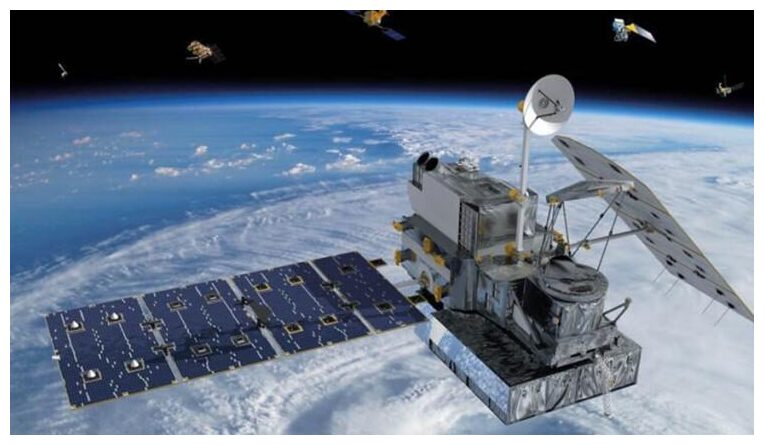
The study, published in the journal Science, uses data from a NASA satellite, the Imaging X-ray Polarimetry Explorer (IXPE), which was launched last December. The satellite, a collaboration between NASA and the Italian Space Agency, provides a new way of looking at X-ray light in space by measuring its polarisation - the direction of the light waves' wiggle.

The team looked at IXPE's observation of magnetar 4U 0142+61, located in the Cassiopeia constellation, about 13,000 light years away from Earth. This was the first time polarised X-ray light from a magnetar had been observed.

Magnetars are neutron stars - very dense remnant cores of massive stars that have exploded as supernovae at the ends of their lives. Unlike other neutron stars, they have an immense magnetic field - the most powerful in the universe. They emit bright X-rays and show erratic periods of activity, with the emission of bursts and flares which can release in just one second an amount of energy millions of times greater than our Sun emits in one year. They are believed to be powered by their ultra-powerful magnetic fields, 100 to 1,000 times stronger than standard neutron stars.

Boat

Centuries-old whaling logs are filling gaps in our climate knowledge

whaling logs
© Grist / Amelia Bates / Courtesy of Jayne Doucette, Woods Hole Oceanographic Institution
Whalers from the 18th and 19th centuries are helping 21st Century scientists on climate change.

A little after 7:30 in the morning on Wednesday, December 7, 1887, in the aftermath of remarkably strong northeasterly winds, Captain William A. Martin instructed the crew of the Eunice H. Adams, a whaling ship from Massachusetts, to anchor in cerulean water roughly 24 feet deep, close to Port Royal, South Carolina. Around 9 a.m., Charles Hamilton, a desperate crew member, jumped overboard — deserting his post, with the intention of swimming to land. He was intercepted mid-route by another ship, which returned him to the leaking brig he had tried to escape.

Later that day, an act of near-mutiny occurred. According to the ship's logbook, a signed letter from the majority of the crew was sent ashore to Port Royal authorities. In it, the men complained that the vessel they sailed on was "unseaworthy," unhappy with the unplanned stop and delay for repairs merely months into their voyage, in the hope that they'd be released from duty. Authorities did nothing. A sheet of rain beat down on the Eunice H. Adams, and the miserable crew was forced to continue to carry on to Cabo Verde, an archipelago on the westernmost point of Africa.

Comment: Ignoring the obligatory leftist slant of the article, one hopes the data gathered is used impartially. The logs are, after all, a unique and irreplaceable mine of information.


Galaxy

Closest known black hole to Earth discovered after years-long hunt

black hole close to earth  Gaia BH1
© GeminiObs/NOIRLab/NSF/AURA/J. da Silva/Spaceengine/M. ZamaniAstronomers using the International Gemini Observatory, operated by NSF’s NOIRLab, have discovered the closest-known black hole to Earth.
The dormant black hole is named Gaia BH1 and is located about 1,600 light-years away

Astronomers have reportedly discovered the closest-known black hole to Earth.

BH1 was located about 1,600 light-years away in the constellation Ophiuchus, making it three times nearer to Earth than the previous record holder.

The dormant black hole is about 10 times more massive than the sun, according to astronomers using the International Gemini Observatory. The observatory is operated by the National Science Foundation's NOIRLab.

In a release, NOIRLab said this marked the first unambiguous detection of a dormant stellar-mass black hole in the Milky Way.

There are an estimated 100 million stellar-mass black holes in the Milky Way alone, with nearly all of them active.

Sun

New evidence shows US. 'warming' over last 50 years exaggerated by up to 50%

global warming thermometer sun
© Shutterstock
The widespread use of regularly adjusted global and local surface temperature datasets showing increasingly implausible rates of warming has been dealt a further blow with new groundbreaking research that shows 50% less warming over 50 years across the eastern United States. The research attempts to remove distortions caused by increasing urban heat and uses human-made structure density data over 50 years supplied by the Landsat satellites. The 50% reduction in the warming trend is by comparison with the official National Oceanic and Atmospheric Administration (NOAA) homogenised surface temperature dataset.

The research was compiled by two atmospheric scientists at the University of Alabama in Huntsville, Dr. Roy Spencer and Professor John Christy. They used a dataset of urbanisation changes called 'Built-Up' to determine the average effect that urbanisation has had on surface temperatures. Urbanisation differences were compared to temperature differences from closely spaced weather stations. The temperature plotted was in the morning during the summertime. A full methodology of the project is shown here in a posting on Dr. Spencer's blog.

Galaxy

Astrophysicists make observations consistent with the predictions of an alternative theory of gravity

Hyades star cluster
© University of BonnIn the star cluster Hyades (top), the number of stars (black) in the front tidal tail is significantly larger than those in the rear. In the computer simulation with MOND (below), a similar picture emerges.
An international team of astrophysicists has made a puzzling discovery while analyzing certain star clusters. The finding challenges Newton's laws of gravity, the researchers write in their publication. Instead, the observations are consistent with the predictions of an alternative theory of gravity. However, this is controversial among experts. The results have now been published in the Monthly Notices of the Royal Astronomical Society.

In their work, the researchers investigated open star clusters. These are formed when thousands of stars are born within a short time in a huge gas cloud. As they "ignite," the galactic newcomers blow away the remnants of the gas cloud. In the process, the cluster expands considerably. This creates a loose formation of several dozen to several thousand stars. The weak gravitational forces acting between them hold the cluster together.

Brain

Motor units in the spinal cord might be far more flexible than we thought

MOTOR NEURON spinal cord
© Marshall et al, Nature Neuroscience (2022). DOI: 10.1038/S41593-022-01165-8
When humans and other mammals perform voluntary movements, a series of neural processes take place. The cerebral cortex, the outer region of the brain, sends signals to motor units (i.e., neurons) in the spinal cord, which in turn activate individual muscles.

Past neuroscience studies suggested that the cerebral cortex does not control individual motor units, but rather sends "common instructions" to a pool of motor units. In addition, experimental evidence supported the hypothesis that these motor units are recruited in a rigid, rather than adaptable, fashion.

Researchers at Columbia University have recently carried out a study aimed at investigating whether these two widely accepted ideas about the neural processes behind voluntary movements are reliable. Their findings, published in Nature Neuroscience, show that the cortex's control of motor units might be far more flexible than past studies suggested.

Clock

Entirely new way of measuring time

Measuring Time
© in-future/Getty Images
Marking the passage of time in a world of ticking clocks and swinging pendulums is a simple case of counting the seconds between 'then' and 'now'.

Down at the quantum scale of buzzing electrons, however, 'then' can't always be anticipated. Worse still, 'now' often blurs into a haze of uncertainty. A stopwatch simply isn't going to cut it for some scenarios.

A potential solution could be found in the very shape of the quantum fog itself, according to researchers from Uppsala University in Sweden.

Their experiments on the wave-like nature of something called a Rydberg state have revealed a novel way to measure time that doesn't require a precise starting point.

Rydberg atoms are the over-inflated balloons of the particle kingdom. Puffed-up with lasers instead of air, these atoms contain electrons in extremely high energy states, orbiting far from the nucleus.

Of course, not every pump of a laser needs to puff an atom up to cartoonish proportions. In fact, lasers are routinely used to tickle electrons into higher energy states for a variety of uses.

In some applications, a second laser can be used to monitor the changes in the electron's position, including the passing of time. These 'pump-probe' techniques can be used to measure the speed of certain ultrafast electronics, for instance.

Inducing atoms into Rydberg states is a handy trick for engineers, not least when it comes to designing novel components for quantum computers. Needless to say, physicists have amassed a significant amount of information about the way electrons move about when nudged into a Rydberg state.

Arrow Up

'Planet killer' asteroid found hiding in sun's glare may one day threaten Earth

"Only about 25 asteroids with orbits completely within Earth's orbit have been discovered to date because of the difficulty of observing near the glare of the sun."

Asteroid behind Sun
© DOE/FNAL/DECam/CTIO/NOIRLab/NSF/AURA/J. da Silva/SpaceengineAsteroids in the inner system are notoriously hard to detect because of the glare of the sun.
Astronomers have discovered a giant asteroid hiding in the glare of the sun that might one day cross paths with Earth

The 0.9-mile-wide (1.5 kilometers) asteroid is the largest potentially hazardous asteroid spotted in the past eight years and astronomers have dubbed it a "planet killer" because the effects of its impact would be felt across multiple continents.

The asteroid, named 2022 AP7, managed to avoid detection for so long because it orbits in the region between Earth and Venus. To spot space rocks in this area, astronomers have to look in the direction of the sun, and that is notoriously difficult due to the sun's luminosity. For example, flagship telescopes such as the James Webb Space Telescope and the Hubble Space Telescope never look toward the sun, as the star's brightness would fry their sensitive optics.

Because of that, astronomers have only a limited understanding of the nature of asteroids lurking in this region, and sometimes, surprises may happen. In 2013, a much smaller asteroid, only 66 feet wide (20 m), arrived from the direction of the sun completely without warning. That asteroid exploded above the city of Chelyabinsk in southeastern Russia, shattering windows on thousands of buildings.

Fireball

Taurid fireball SWARM forecast ahead of full blood lunar eclipse

taurid meteor
© GettyEvery seven years, the Taurid meteor showers produce an outburst of especially bright meteors in an event known as a “fireball swarm.” Such outbursts were reported in both 2015 and 2008, so chances are good for 2022, the American Meteor Society says.
Have you ever heard of the "Halloween Fireballs?" Astronomers call them Taurid meteors. They appear every year from late October through early November when Earth passes through a stream of debris associated with Comet 2P/Encke. Dan Bush photographed this Taurid exploding over Albany, Missouri:

"Fireball season has arrived," says Bush. "I have caught many with my meteor camera system including this Taurid fireball above the clouds on Oct. 27th and another good one on Oct. 28th"

We're about to see a lot more of these. Forecasters believe that a swarm of Taurid meteoroids is approaching Earth, and it could double the usual rate of fireballs--not only on Halloween, but also through the early weeks of November.

Comment: See also:


Comet 2

Randall Carlson's Halloween video lecture on the Taurid meteor stream's connection to Day of the Dead festivals

Day of the dead festival
© Tomas Bravo, ReutersWomen dressed as Catrina during a Day of the Dead festival in Mexico in 2014
Carlson breaks down Taurid Meteors as origin of global Death Festivals

My apologies for the late notice, but I want to make sure Tusk readers know of Randall Carlson's Halloween video being released tomorrow on HowTube.

I consider Randall's lectures on the origins of Halloween to be anything but child's play. Cultures around the world observe this period of the year, late October and early November, as the Week of the Dead.

Why is this important? Because this common deadly tradition preceded candy sale advertisements — and global cultural diffusion — by many centuries and we believe millenia. The core of Randall's argument is that the various observances are ultimately rooted in periodic global traumas from the Taurid Meteors — when the yearly light show, from time to time, arrives "chunky style."

Comment: Bonus Carlson from 2021:

See also: Witches, Comets and Planetary Cataclysms