Science & TechnologyS


Better Earth

Ice Age summers in Central Europe were at times significantly WARMER than previously thought, new research reveals

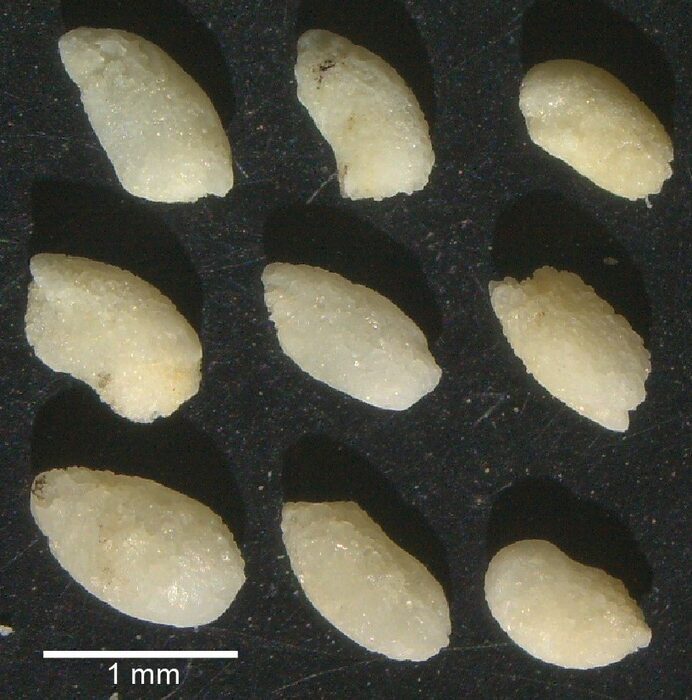
earthworm crystals
© CHARLOTTE PRUD’HOMMEEarthworm calcite granules (ECGS) can be found in loess sequences
New method for determination of past climate data on land applied comparatively for the first time / Ice Age summers in Central Europe were at times warmer than previously known

Scientists from an international research project led by Johannes Gutenberg University Mainz (JGU) have applied a new method to reconstruct past climate. As they report in the current issue of Communications Earth & Environment, they have determined temperatures and precipitation during the last Ice Age, which peaked about 25,000 years ago, by analyzing earthworm granules. "The new method was discovered at Université Paris 1 Panthéon-Sorbonne and further developed at the Max Planck Institute for Chemistry," said Dr. Peter Fischer of JGU's Institute of Geography, who was the lead investigator of the TerraClime project funded by the German Research Foundation (DFG) in which the study is embedded. "In cooperation with other scientists, including researchers from the University of Lausanne and Römisch-Germanisches Zentralmuseum, we used the method to reconstruct the climate at Schwalbenberg near Remagen and Nußloch near Heidelberg." The two sites form well-developed last-glacial dust deposits. The so-called loess contains sequences dating from 45,000 to 22,000 years before present, in which the earthworm granules with up to about only 2.5 millimeters in size can be found throughout. These calcitic granules, technically known as Earthworm Calcite Granules (ECGs), are secreted daily by earthworms. Using the so-called radiocarbon method, which is based on the decay of the naturally occurring radioactive carbon isotope (14C), researchers can precisely determine their age. Additionally, by analyzing the ratios of stable oxygen and carbon isotopes in the ECGs, it is then possible to reconstruct how warm or how humid it was at the time of their formation.

Comment: Whilst our planet has undergone a number of significant shifts over the last 45,000 years - see links below for fascinating insight - it is revealing that our understanding of Ice Ages is significantly different, and that life not far the glaciers themselves may have been much more hospitable than previously thought: Also check out SOTT radio's: MindMatters: America Before: Comets, Catastrophes, Mounds and Mythology


Fireball 5

New research reveals space debris, invisible meteors and near-Earth asteroids

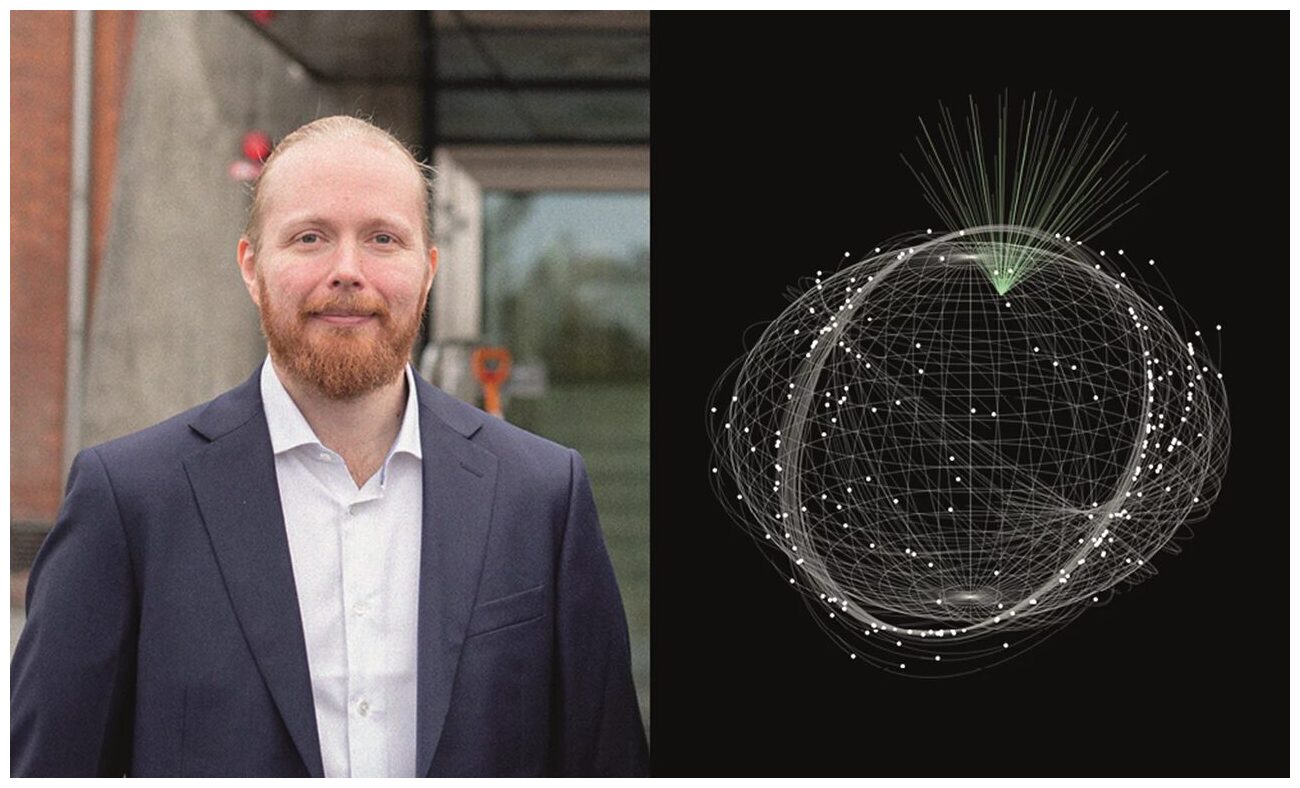
In a new thesis from the Swedish Institute of Space Physics and Umeå University, unique methods for the analysis of radar data and simulations of meteoroids in the solar system are presented. The methods have been applied to confirm the existence of rare high-altitude meteors as well as to measure space debris from the Kosmos-1408 satellite. On November 25, Daniel Kastinen defends his doctoral thesis.
Daniel Kastinen
© Martin Eriksson / Daniel Kastinen (illustrationDaniel Kastinen's thesis presents results that pave the way for future research and cross-disciplinary studies on meteors as well as on space debris and near-Earth asteroids.
"My primary goal has been to carefully analyze radar measurements of meteors and space debris and evaluate the precision of the measurements. This is to improve further analysis and use the results together with the new dynamical simulations. The work paves the way for future research and allows cross-disciplinary studies on meteors as well as on space debris and near-Earth asteroids", says Daniel Kastinen.

Every day, 10-200 tons of material from space, consisting of dust- sized particles and larger pieces of material - meteoroids, fall into the Earth's atmosphere. These particles come from parent bodies such as comets and asteroids and thus date back to the time when the solar system was formed. When a meteoroid hits the Earth's atmosphere and burns up in the form of a meteor, the material is dispersed in the atmosphere. Most of these meteors are invisible to the eye but can be detected by radar.

Document

Forum Conversation: Norman Fenton on the revelations of pandemic data

covid data
Forum: Norman Fenton, welcome to the Forum Conversation. The analysis you've done over the last few years gives incredible insight into what actually unfolded during the pandemic. Before we discuss those findings, can you help us understand how you apply your knowledge to evaluating information outside of your area of expertise, including medical data?

Fenton: For many years I've collaborated intensively with clinical experts in different medical domains. For example, before the COVID crisis, I was the principal investigator of a large project funded by the United Kingdom Engineering and Physical Sciences Research Council. Our group uses Bayesian statistical methods, where available knowledge and expertise are combined with data to help improve decision-making for prognosis and diagnosis of chronic medical conditions.

We analyzed data for specific conditions such as rheumatoid arthritis, diabetes, chronic heart failure, pelvic floor syndrome and multiple sclerosis, and worked with the clinicians to determine causal explanations for observed data so that they can be incorporated into our decision-support systems. So, for example, in the area of trauma we collaborated with surgeons to help improve the decision-making parameters for whether or not to amputate a limb.

For these types of analyses, there aren't massive relevant databases, which is why you need to combine the relatively small amount of available data with the perspective of experienced clinicians. We work with them to build frameworks for effectively eliciting the knowledge needed to make sound decisions. Practical causal models are designed that can be populated with the raw data that we have available, which then provides guidance for those involved in healthcare procedures.

Nebula

What was the US military's secret space plane doing on its record-breaking mission?

X-37B us secret space plane
© Boeing/US Space ForceThe X-37B after landing at NASA's Kennedy Space Center on Nov. 12
The uncrewed X-37B space plane touched down at NASA's Kennedy Space Station on Nov. 12 having spent a record 908 days in orbit

A secret space plane operated by the United States Space Force (USSF) has landed back on Earth after spending a record 908 days in orbit. But what it was doing above our heads remains shrouded in mystery.

The uncrewed X-37B space plane touched down at NASA's Kennedy Space Station on Nov. 12 at 5:22 a.m. ET, concluding the sixth mission that it and another identical vehicle have completed since the first flight in 2010. Details on its activities during the record-smashing trip are sparse, but officials claim it was conducting a number of scientific experiments at around 249 miles (400 kilometers) above Earth.

Comment: See also:


Satellite

JWST keeps on giving: Spots two unusually bright galaxies from the very early universe

JWST earliest galaxies
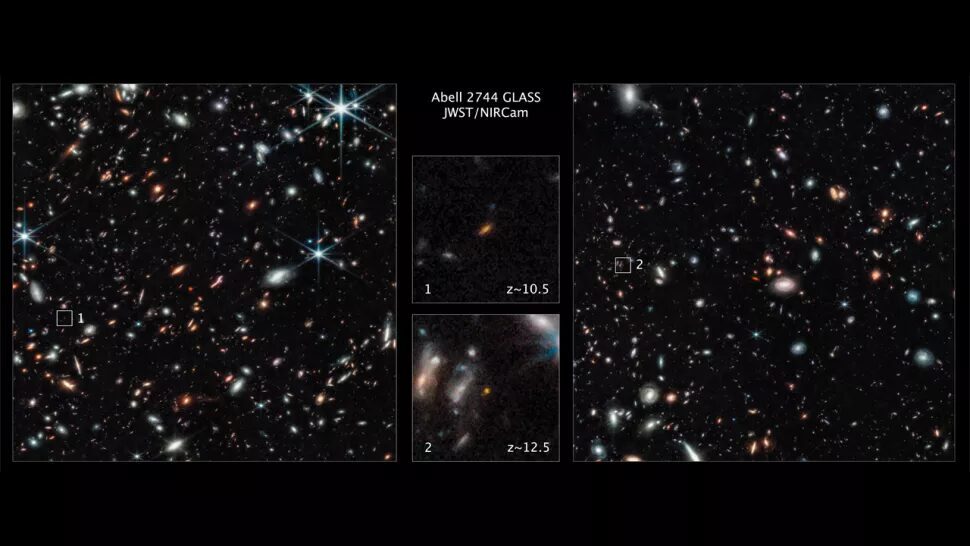
© NASA/ESA/CSA/Tommaso Treu (UCLA)/Zolt G. Levay (STScI)An image of the deep universe taken by the James Webb Space Telescope, in which two particularly distant galaxies are identified.
Galaxies seem to have formed faster and earlier than astronomers thought.

Researchers using the James Webb Space Telescope have found two extremely old galaxies from just 300 to 400 million years after the Big Bang. These galaxies are far brighter than expected, causing astronomers to question what they know about how galaxies formed when the universe was young.

"Somehow, the universe has managed to form galaxies faster and earlier than we thought," said Tommaso Treu, principal investigator for one of JWST's programs (GLASS-JWST), in a press briefing.

The most distant galaxy identified, called GLASS-z12, is thought to be from 350 million years after the Big Bang. The galaxies were identified in two JWST programs, the GLASS-JWST Early Release Science Program (Grism Lens-Amplified Survey from Space) and Cosmic Evolution Early Release Science Survey (CEERS). Data from these surveys identified galaxies that have high redshift, meaning that the light coming from them is shifted to the red end of the spectrum due to the expansion of the universe. The greater the redshift, the further the light has traveled before reaching us, hence the older the galaxy.

Clock

The leap second's time is up: world votes to stop pausing clocks

How, and whether, to keep atomic time in sync with Earth's rotation is still up for debate.
Leap Seconds
© Adam Smigielski/GettyFrom 2035, no extra seconds will be added to bring clocks in sync with astronomical time.
The practice of adding 'leap seconds' to official clocks to keep them in sync with Earth's rotation will be put on hold from 2035, the world's foremost metrology body has decided.

The decision was made by representatives from governments worldwide at the General Conference on Weights and Measures (CGPM) outside Paris on 18 November. It means that from 2035, or possibly earlier, astronomical time (known as UT1) will be allowed to diverge by more than one second from coordinated universal time (UTC), which is based on the steady tick of atomic clocks. Since 1972, whenever the two time systems have drifted apart by more than 0.9 seconds, a leap second has been added.

Stopping the adjustments is "a leap forward" for researchers who work on time and frequency, says Georgette Macdonald, director general of the Metrology Research Centre in Halifax, Canada. "I'm pleased their efforts got us to this moment."

Leap seconds aren't predictable, because they depend on to Earth's natural rotation. They disrupt systems based on precise timekeeping, Macdonald says, and can wreak havoc in the digital age. Facebook's parent company, Meta, and Google are among the tech companies that have called for leap seconds to be scrapped.

The CGPM — which also oversees the international system of units (SI) — has proposed that no leap second should be added for at least a century, allowing UT1 and UTC to slide out of sync by about 1 minute. But it plans to consult with other international organizations and decide by 2026 on what upper limit, if any, to put on how much they be allowed to diverge.

Binoculars

Scientists rediscover lost bird that hadn't been seen in 140 years in Papua New Guinea

The bird hadn't been sighted since 1882
Scientists have rediscovered the black-naped pheasant pigeon, a rare bird that was last sighted almost 140 years ago in Papua New Guinea.

The discovery was made in Fergusson Island, off the east coast of Papua New Guinea in September.

Researchers' cameras caught sight of the rare bird, a species that hasn't been documented by scientists since it was first described in 1882, reported Audubon Magazine.

John C Mittermeier, director of the lost birds programme at the American Bird Conservancy and a co-leader of the eight-member expedition, said: "To find something that's been gone for that long, that you're thinking is almost extinct, and then to figure out that it's not extinct, it feels like finding a unicorn or a Bigfoot."

"It's extraordinarily unusual."


Comment: See also: Bird believed extinct for 170 years spotted in Borneo - researchers were looking in the wrong place


Mars

The first life in our solar system may have been on Mars

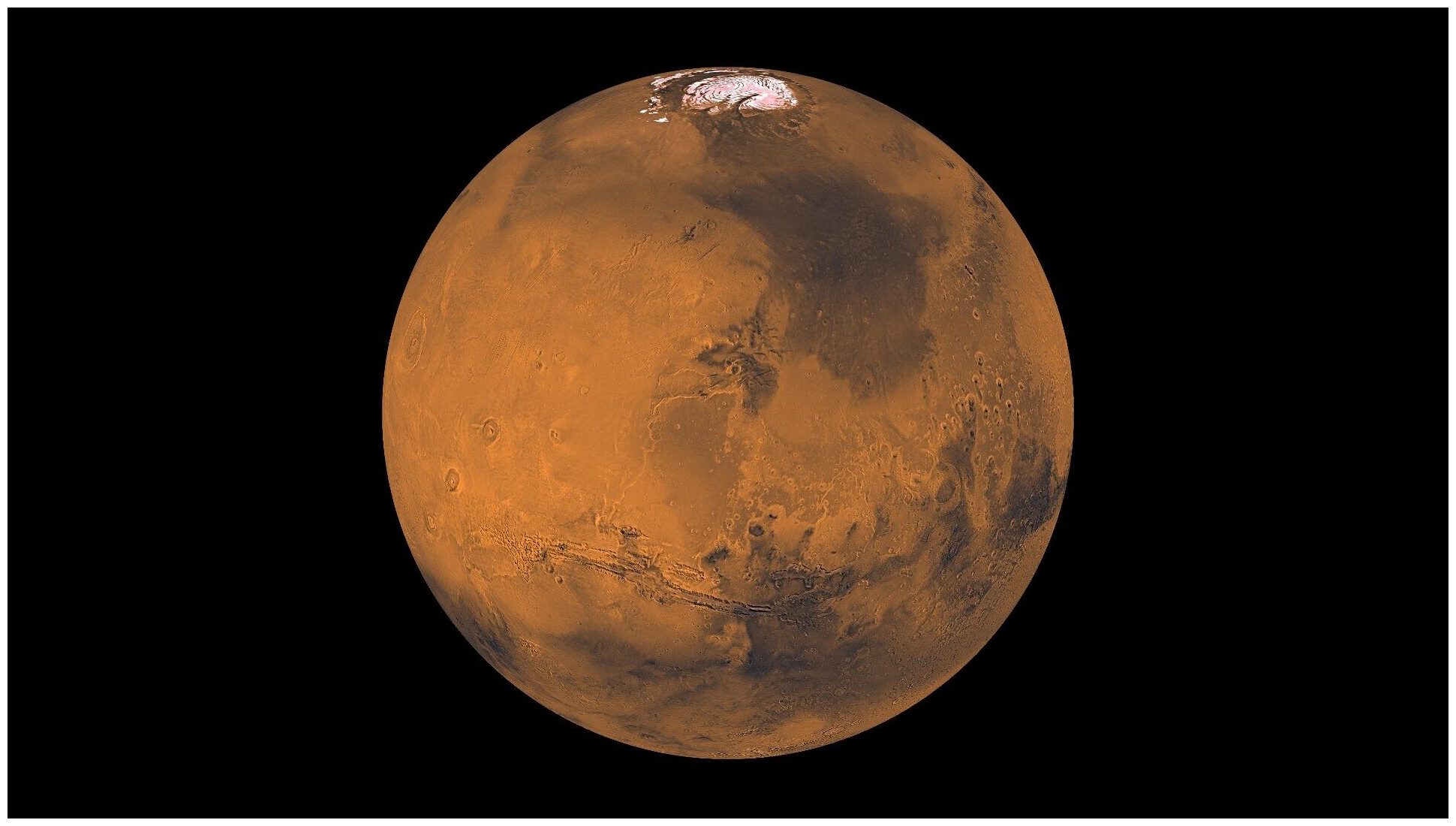
When Mars was a young planet, it was bombarded by ice asteroids delivering water and organic molecules necessary for life to emerge. According to the professor behind a new study, this means that the first life in our solar system may have been on Mars.
Mars
© NASA/JPL/USGS
Mars is called the red planet. But once, it was actually blue and covered in water, bringing us closer to finding out if Mars had ever harboured life.

Most researchers agree that there has been water on Mars, but just how much water is still debated.

Now a study from the University of Copenhagen shows that some 4.5 billion years ago, there was enough water for the entire planet to be covered in a 300-metre-deep ocean.

"At this time, Mars was bombarded with asteroids filled with ice. It happened in the first 100 million years of the planet's evolution. Another interesting angle is that the asteroids also carried organic molecules that are biologically important for life," says Professor Martin Bizzarro from the Centre for Star and Planet Formation.

In addition to water, the icy asteroids also brought biologically relevant molecules such as amino acids to the Red Planet. Amino acids are used when DNA and RNA form bases that contain everything a cell needs.

The study was published in the renowned journal Science Advances.

Snowflake Cold

Earth can regulate its own temperature over millennia, new study finds

Earth Temperature Regulation
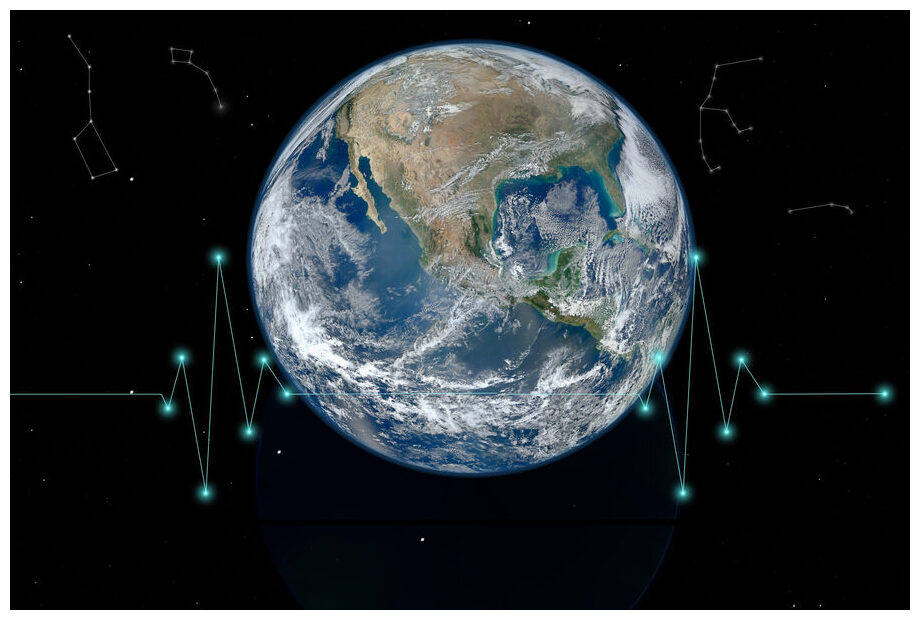
© Christine Daniloff, MIT; NASAA study by MIT researchers confirms that the planet harbors a “stabilizing feedback” mechanism that acts over hundreds of thousands of years to pull the climate back from the brink, keeping global temperatures within a steady, habitable range.
The Earth's climate has undergone some big changes, from global volcanism to planet-cooling ice ages and dramatic shifts in solar radiation. And yet life, for the last 3.7 billion years, has kept on beating.

Now, a study by MIT researchers in Science Advances confirms that the planet harbors a "stabilizing feedback" mechanism that acts over hundreds of thousands of years to pull the climate back from the brink, keeping global temperatures within a steady, habitable range.

Just how does it accomplish this? A likely mechanism is "silicate weathering" — a geological process by which the slow and steady weathering of silicate rocks involves chemical reactions that ultimately draw carbon dioxide out of the atmosphere and into ocean sediments, trapping the gas in rocks.

Scientists have long suspected that silicate weathering plays a major role in regulating the Earth's carbon cycle. The mechanism of silicate weathering could provide a geologically constant force in keeping carbon dioxide — and global temperatures — in check. But there's never been direct evidence for the continual operation of such a feedback, until now.

The new findings are based on a study of paleoclimate data that record changes in average global temperatures over the last 66 million years. The MIT team applied a mathematical analysis to see whether the data revealed any patterns characteristic of stabilizing phenomena that reined in global temperatures on a geologic timescale.

They found that indeed there appears to be a consistent pattern in which the Earth's temperature swings are dampened over timescales of hundreds of thousands of years. The duration of this effect is similar to the timescales over which silicate weathering is predicted to act.

The results are the first to use actual data to confirm the existence of a stabilizing feedback, the mechanism of which is likely silicate weathering. This stabilizing feedback would explain how the Earth has remained habitable through dramatic climate events in the geologic past.

"On the one hand, it's good because we know that today's global warming will eventually be canceled out through this stabilizing feedback," says Constantin Arnscheidt, a graduate student in MIT's Department of Earth, Atmospheric and Planetary Sciences (EAPS). "But on the other hand, it will take hundreds of thousands of years to happen, so not fast enough to solve our present-day issues."

The study is co-authored by Arnscheidt and Daniel Rothman, professor of geophysics at MIT.

Microscope 2

Twelve 'shocking' discoveries for evolution

topoisomerase
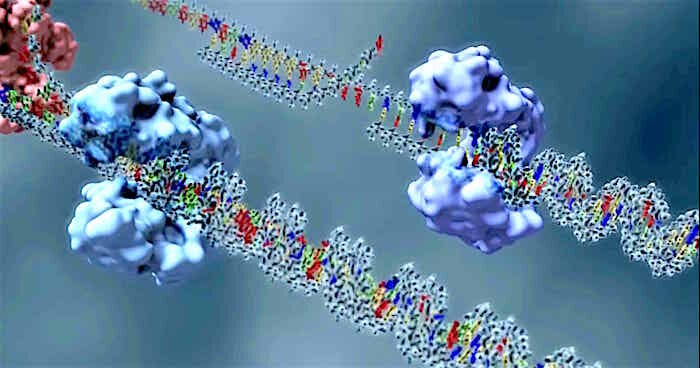
© unknownTopoisomerase
A correspondent preparing for a presentation asked if I "would care to chip in a few lines about what you see as truly remarkable or even shocking recent discoveries about genetics or epigenetics that provide additional support for the design inference. (Other than, that is, the famous work of ENCODE which seems to have deep-sixed the 'junk DNA' doctrine.)"

"Shocking recent discoveries"? Good question.

Not So Surprising for Intelligent Design

With two caveats, I'll share a few from the past 15 years or so. The first caveat is that many discoveries trickle in slowly over time. So, we could perhaps point to earlier evidence for some of the items below from more than 15 years ago, but I would argue that the evidence has become much more apparent or more widely acknowledged since then. The second caveat is that some discoveries might be surprising or "shocking" from an evolutionary perspective, but not necessarily from a perspective of intelligent design.