Science & TechnologyS


Biohazard

Best of the Web: Mad scientists: New Covid strain with 80% kill rate CREATED by Boston University

covid boston
In the new research , which has not been peer-reviewed, a team of researchers from Boston and Florida extracted Omicron's spike protein — the unique structure that binds to and invades human cells. It has always been present but it has become more evolved over time. Omicron has dozens of mutations in its spike protein that made it so infectious. Researchers attached Omicron's spike protein to the original wildtype strain that first emerged in Wuhan at the start of the pandemic. The researchers looked at how mice fared under the new hybrid strain compared to the original Omicron variant
US researchers have developed a new lethal Covid strain in a laboratory - echoing the type of experiments many fear started the pandemic.

The mutant variant — which is a hybrid of Omicron and the original Wuhan virus — killed 80 percent of mice infected with it at Boston University.


Comment: Indeed experiments on mice and in a laboratory do not necessarily reflect the possibility virulence and mortality of a virus on humans in a real world situation, however what's more concerning is why scientists are being funded to pursue such experiments.


When a similar group of rodents were exposed to the standard Omicron strain, however, they all survived and only experienced 'mild' symptoms.

The scientists also infected human cells with the hybrid variant and found it was five times more infectious than Omicron.

This suggests the man-made virus might be the most contagious form yet.

It will no doubt surprise many Americans that such experiments continue to go on in the US despite concerns similar studies may have led to the global Covid outbreak.


Comment: Americans might be surprised, but the US has the largest bioweapons research program of any country, with laboratories in vassal states across the planet.


Comment: See also: Bill Gates renews warnings over 'small pox terror' threat, FDA approved drug in May for disease that was 'eradicated' in 1980


Info

Study finds unexpected protective properties of pain

Work in mice illuminates how pain neurons shield the gut from damage.
Neurons
© Chiu Lab/HMSHMS researchers have identified the molecular conversation that occurs between pain neurons (red) in the gut and intestinal goblet cells (green) as a mechanism involved in protective pain signaling that shields the gut from damage.
Pain has been long recognized as one of evolution's most reliable tools to detect the presence of harm and signal that something is wrong — an alert system that tells us to pause and pay attention to our bodies.

But what if pain is more than a mere alarm bell? What if pain is in itself a form of protection?

A new study led by researchers at Harvard Medical School suggests that may well be the case in mice.

The research, published Oct. 14 in Cell, shows that pain neurons in the mouse gut regulate the presence of protective mucus under normal conditions and stimulate intestinal cells to release more mucus during states of inflammation.

The work details the steps of a complex signaling cascade, showing that pain neurons engage in direct cross talk with mucus-containing gut cells, known as goblet cells.

"It turns out that pain may protect us in more direct ways than its classic job to detect potential harm and dispatch signals to the brain. Our work shows how pain-mediating nerves in the gut talk to nearby epithelial cells that line the intestines," said study senior investigator Isaac Chiu, associate professor of immunobiology in the Blavatnik Institute at HMS. "This means that the nervous system has a major role in the gut beyond just giving us an unpleasant sensation and that it's a key player in gut barrier maintenance and a protective mechanism during inflammation."

Info

Fireball from Solar System's edge isn't what astronomers expected

Asteroid Comet
© ISTOCK / GETTY IMAGESThis stock image shows a comet hurtling through space, with an inset of a map of Canada. Scientists recently found that a space rock that lit up the skies over Canada in February 2021 wasn't actually a comet.
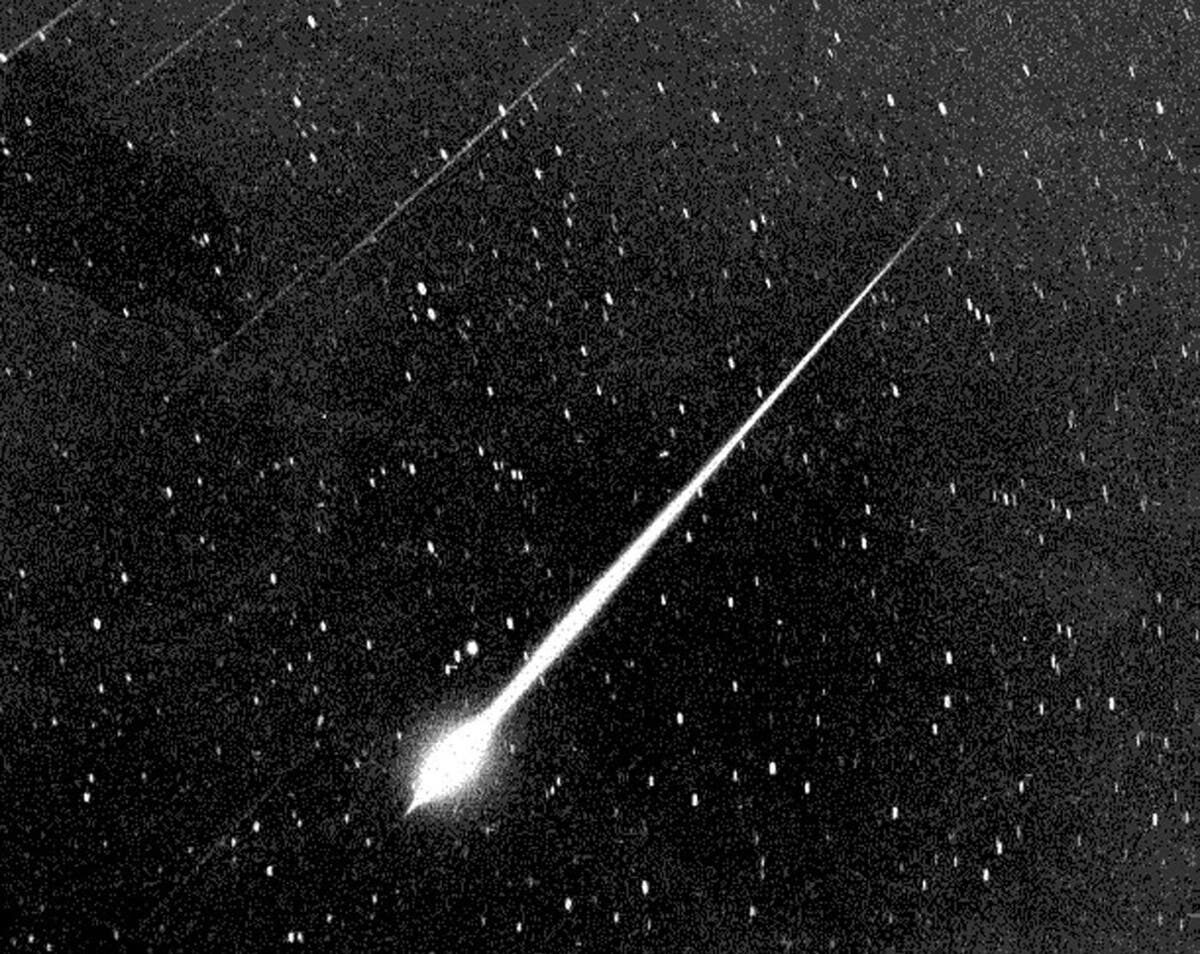
Just before dawn on 22 February 2021, a fireball lit up the skies across Canada's Alberta (see video below) province when a 2-kilogram space rock vaporized as it plunged through Earth's atmosphere. Although the object hailed from the Oort Cloud — a conglomeration of comets at the edge of the Solar System — it wasn't a comet, researchers now say. Data collected during its fall suggest the object was made of rock rather than ice and behaved more like an asteroid.

Independent observers of the new work say the find sheds light on the processes that formed our Solar System and challenges the conventional wisdom that the Oort Cloud only holds icy comets. "It's telling us that there was scattering and depositing of material from all over the Solar System into the Oort Cloud," says Karen Meech, a planetary scientist at the University of Hawaii's Institute for Astronomy.

The discovery could provide support for models that suggest objects from the asteroid belt were dispersed into the Oort Cloud soon after the Solar System's birth 4.6 billion years ago, says Bill Bottke, a Solar System dynamicist at the Southwest Research Institute. "This is very exciting," he says. "Now, we have to see what we can do to explain it."

First proposed by Dutch astronomer Jan Oort in 1950, the Oort Cloud is a spherical halo of comets that stretches out halfway to Proxima Centauri, the Sun's nearest neighbor, well beyond the view of even the largest telescopes. "Everything we know about it is indirect," says Denis Vida, a meteor astronomer at Western University who led the new study.

Scientists presume the Oort Cloud became populated with comets when the gravitational muscle of Jupiter and the other giant planets scattered far and wide the icy objects that were leftover from the formation of the outer Solar System. Occasionally, a passing star will gravitationally nudge an Oort Cloud object and send it plummeting into the inner Solar System. These objects are known as long-period comets, defined by their eccentric paths that take hundreds or even thousands of years to orbit the Sun.

Comet 2

30,000 near-Earth asteroids discovered, and rising - ESA

Asteroid Eros
Asteroid Eros, as seen by NEAR Shoemaker
We have now discovered 30,039 near-Earth asteroids in the Solar System - rocky bodies orbiting the Sun on a path that brings them close to Earth's orbit. The majority of these were discovered in the last decade, showing how our ability to detect potentially risky asteroids is rapidly improving.

In-depth What is a near-Earth asteroid?

Comment: See also:


Laptop

Soldiers slam Microsoft HoloLens after disastrous test: 'Would have gotten us killed'

Soldiers test Microsoft HoloLens headset
© U.S. ArmySoldiers testing the Microsoft HoloLens headset
Microsoft's high-tech HoloLens headsets were recently tested by the U.S. Army, which found that they have significant flaws that soldiers say "would have gotten us killed," according to reports.

More than 80 percent of the soldiers testing Microsoft's headset — designed to give them a "heads-up display" similar to those used by fighter pilots — have reported feeling nauseous, getting headaches, or suffering eyestrain according to a U.S. Army report obtained by Bloomberg and Business Insider.

Microsoft's Integrated Visual Augmentation System (IVAS), is supposed to let commanders project information onto a visor in front of a soldier's face, and include features such as night vision.

Cassiopaea

Red Alert: massive stars sound warning they are about to go supernova

Supergiant star Betelgeuse
© European Southern Observatory/L. CalçadaThis artist’s impression shows the supergiant star Betelgeuse as it was revealed thanks to different state-of-the-art techniques on ESO’s Very Large Telescope (VLT), which allowed two independent teams of astronomers to obtain the sharpest ever views of the supergiant star Betelgeuse. They show that the star has a vast plume of gas almost as large as our Solar System and a gigantic bubble boiling on its surface. These discoveries provide important clues to help explain how these mammoths shed material at such a tremendous rate.
Astronomers from Liverpool John Moores University and the University of Montpellier have devised an 'early warning' system to sound the alert when a massive star is about to end its life in a supernova explosion. The work was published in Monthly Notices of the Royal Astronomical Society.

In this new study, researchers determined that massive stars (typically between 8 and 20 solar masses) in the last phase of their lives, the so-called 'red supergiant' phase, will suddenly become around a hundred times fainter in visible light in the last few months before they die. This dimming is caused by a sudden accumulation of material around the star, which obscures its light.

Bulb

The era of fast, cheap genome sequencing is here

cartridges
© ILLUMINAReagents and buffer cartridges
Illumina just announced a machine that can crack genomes twice as fast as its current version — and drive the cost down to $200 a pop.

THE HUMAN GENOME is made of more than 6 billion letters, and each person has a unique configuration of As, Cs, Gs, and Ts — the molecular building blocks that make up DNA. Determining the sequence of all those letters used to take vast amounts of money, time, and effort. The Human Genome Project took 13 years and thousands of researchers. The final cost: $2.7 billion. [...]

Sequencing has led to genetically targeted drugs, blood tests that can detect cancer early, and diagnoses for people with rare diseases who have long sought answers. [...] Currently, the test is mostly limited to people with certain cancers or undiagnosed illnesses — although in two recent studies, around 12 to 15 percent of healthy people whose genomes were sequenced ended up having a genetic variation that showed they had an elevated risk of a treatable or preventable disease, indicating that sequencing may provide an early warning. [...]

Comment: To read the full article, go here.


Chalkboard

The spooky quantum phenomenon you've probably never heard ef

quantum physics
© Kristina Armitage for Quanta MagazineIn their proof that the world is contextual, Simon Kochen and Ernst Specker created a network of possible values of a particle’s spin measured in different directions.
Perhaps the most famously weird feature of quantum mechanics is nonlocality: Measure one particle in an entangled pair whose partner is miles away, and the measurement seems to rip through the intervening space to instantaneously affect its partner. This "spooky action at a distance" (as Albert Einstein called it) has been the main focus of tests of quantum theory.

"Nonlocality is spectacular. I mean, it's like magic," said Adán Cabello, a physicist at the University of Seville in Spain.

But Cabello and others are interested in investigating a lesser-known but equally magical aspect of quantum mechanics: contextuality. Contextuality says that properties of particles, such as their position or polarization, exist only within the context of a measurement. Instead of thinking of particles' properties as having fixed values, consider them more like words in language, whose meanings can change depending on the context: "Time flies like an arrow. Fruit flies like bananas."

Nuke

University engineers claim to have created a safe micro-nuclear reactor that fits in the back of a truck

BYU chemical engineering professor Matthew Memmott
© Brooklyn Jarvis Kelson/BYU PhotoBYU chemical engineering professor Matthew Memmott works in his lab on campus.
The new system uses molten salts instead of traditional fuel rods.

The world is rethinking nuclear power plants in the face of climate change.

Your average plant produces 8,000 times more power than fossil fuels and is environmentally friendly. There's one massive caveat, though, in the form of nuclear disasters, such as the 1986 Chernobyl incident and the 2011 Fukushima disaster.

Now, professor Matthew Memmott and colleagues from Brigham Young University (BYU) announced that they designed a new molten salt micro-reactor system that allows for safer nuclear energy production. As per a press release, it may also solve a number of other key issues related to nuclear energy production.

Fireball

NASA confirms DART mission impact changed asteroid's motion in space

DART NASA impact asteroid change motion impact
© NASA/ESA/STScI/HubbleThis imagery from NASA’s Hubble Space Telescope from Oct. 8, 2022, shows the debris blasted from the surface of Dimorphos 285 hours after the asteroid was intentionally impacted by NASA’s DART spacecraft on Sept. 26. The shape of that tail has changed over time. Scientists are continuing to study this material and how it moves in space, in order to better understand the asteroid.
Analysis of data obtained over the past two weeks by NASA's Double Asteroid Redirection Test (DART) investigation team shows the spacecraft's kinetic impact with its target asteroid, Dimorphos, successfully altered the asteroid's orbit. This marks humanity's first time purposely changing the motion of a celestial object and the first full-scale demonstration of asteroid deflection technology.

"All of us have a responsibility to protect our home planet. After all, it's the only one we have," said NASA Administrator Bill Nelson. "This mission shows that NASA is trying to be ready for whatever the universe throws at us. NASA has proven we are serious as a defender of the planet. This is a watershed moment for planetary defense and all of humanity, demonstrating commitment from NASA's exceptional team and partners from around the world."