Science & TechnologyS


Question

Scientists have detected a 'completely unprecedented' burst of energy in space

The gamma ray burst is the brightest ever detected in X-rays, according to scientists, and could shed light on the most energetic phenomena in space.
GRB in Space
© SCIENCE PHOTO LIBRARY - MEHAU KULYK VIA GETTY IMAGES
Scientists have spotted an "unprecedented" explosion of energy in space, known as a gamma ray burst (GRB), which appears brighter at some wavelengths than any event of this kind observed so far.

Gamma ray bursts are enormous eruptions fueled by intense cosmic phenomena, such as the deaths of huge stars, and they produce some of the brightest spectacles in the universe. News of this particular burst began rippling across social media following its detection on Sunday by the Fermi Gamma-ray Space Telescope and the Neil Gehrels Swift Observatory, both NASA missions, with some astronomers describing it as "an extraordinary event" and potentially "the brightest GRB ever."

Phil Evans, an astronomer at the University of Leicester who works on Swift's X-ray telescope, colorfully described the burst, known as GRB 221009A, as "stupidly really bright" in a tweet on Monday.

In an email to Motherboard, Evans emphasized that the discovery is so fresh that it will take a while to unpack its significance, but he noted that the burst is "clearly the brightest GRB we've seen in X-rays, at least at the time after the initial explosion that we've observed it."

Question

Strange ripples have been detected at the edge of the Solar System

Solar System inside the heliosphere
© NASAAn illustration showing the Solar System inside the heliosphere, with the termination shock and heliopause represented by two bubbles, one inside the other.
The bubble of space encasing the Solar System might be wrinkled, at least sometimes.

Data from a spacecraft orbiting Earth has revealed ripple structures in the termination shock and heliopause: shifting regions of space that mark one of the boundaries between the space inside the Solar System, and what's outside - interstellar space.

The results show that it's possible to get a detailed picture of the boundary of the Solar System and how it changes over time.

This information will help scientists better understand a region of space known as the heliosphere, which pushes out from the Sun and shields the planets in our Solar System from cosmic radiation.

There are a variety of ways the Sun affects the space around it. One of those is the solar wind, a constant supersonic flow of ionized plasma. It blows out past the planets and the Kuiper Belt, eventually petering out in the great emptiness between the stars.

The point at which this flow falls below the speed at which sound waves can travel through the diffuse interstallar medium is called the termination shock, and the point at which it is no longer strong enough to push back against the very slight pressure of interstellar space is the heliopause.

Both Voyager probes have crossed the heliopause and are, effectively, now cruising through interstellar space, providing us the first in situ measurements of this shifting boundary. But there's another tool out in Earth orbit that has been helping scientists map the heliopause since it commenced operations in 2009: NASA's Interstellar Boundary Explorer (IBEX).

Robot

Human Cyborgs are Just the Beginning

cyborg
The USG Administrative State believes that Human Augmentation is 'Imperative'

Ever since I wrote the substack article on human augmentation and the UK Ministry of Defence and the German Military Complex , discussing that these two organizations advocate for human augmentation in a report entitled "Human Augmentation - The Dawn of a New Paradigm", I have been wondering if the US government, that is to say the US Department of Defense (DoD) and the Administrative State which controls it, has developed similar plans.

This week I did a little research starting with the key words - "human augmentation" and "DoD" and there "it" is. The "it" being the strategy playbook and battlefield field plan for creating human cyborgs...

For those who lust for more stimulation and shaping after reading the following, this substack also relates to our June 16 substack entitled "ARPA-H, Intelligence Community within NIH".

To begin - there are various "hints" from various governmental agencies that human augmentation research is underway and has been ongoing for a number of years. For instance, this article:

Microscope 1

Evolution: A strong delusion 1.1

book blurred text
Reading a genetic code is a bit different to say reading a book, one word following the other until you get the the end - a linear progression.
The genome refers to all of the elements that make up the genetic "instruction manual" that specifies how cells form in structure and function. It is a vast instruction manual, more like an entire library than a single manual, consists of 3 billion individual letters for the human genome. There are only 4 molecular letters that form the genetic code, and in the case of DNA we symbolise those letters as A, T, C, and G. These letters pair together and we read them as a very long string of letters. Clusters of letter sequences make up what we can imagine as words, and these clusters form genes (rather like the chapters of a book). Genes combine to form chromosomes (like volumes of a book) and these combine to form the genome (the library).

Small parts of this genetic code can be responsible for large changes in cellular development and there are large parts of the code that we don't really know what it does.

Mars

Underground microbes may have swarmed ancient Mars

Mars
© Mohammed Bin Rashid Space Center/UAE Space Agency/APMars February 10, 2021
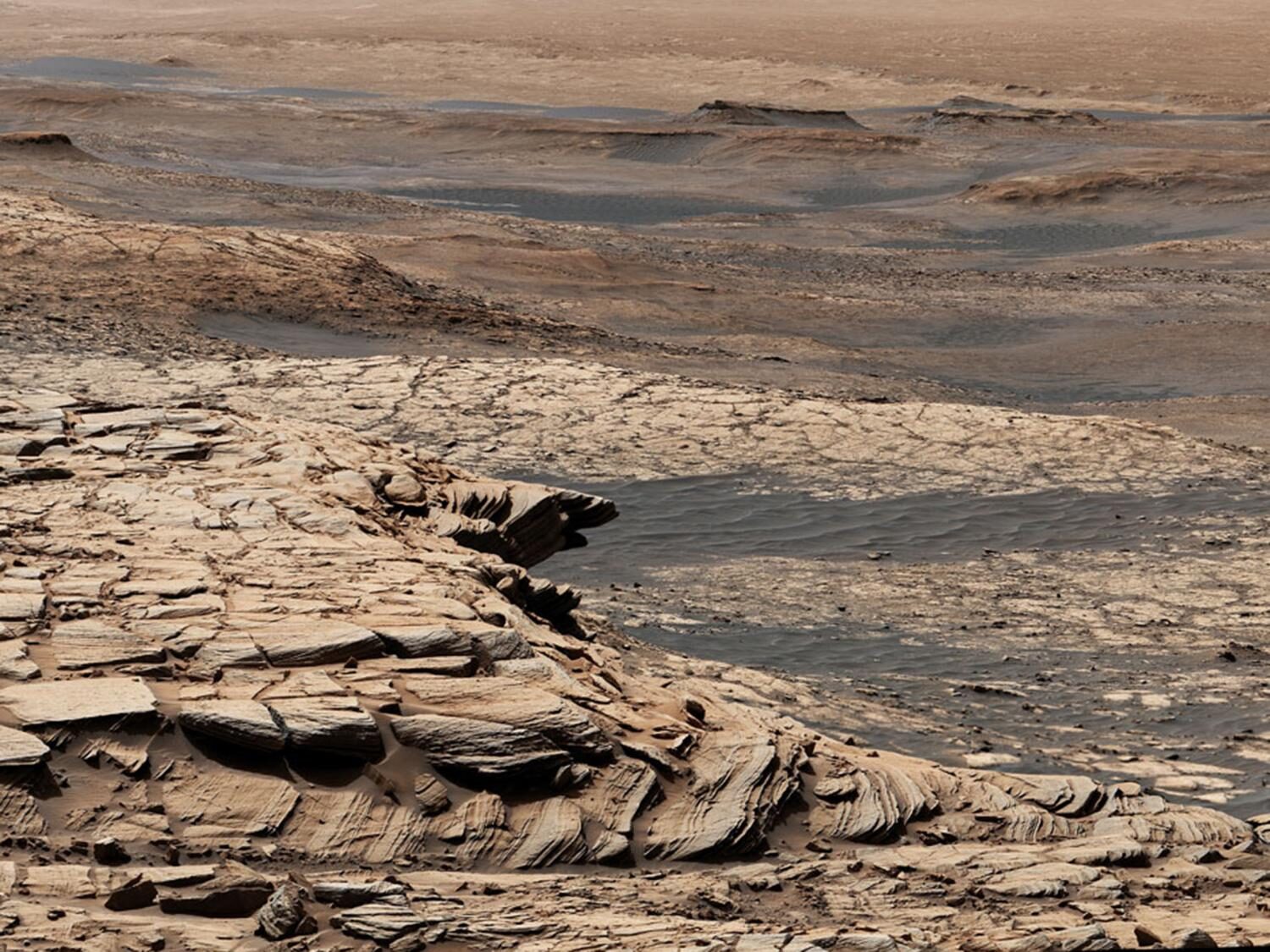
Ancient Mars may have had an environment capable of harboring an underground world teeming with microscopic organisms, French scientists reported Monday.

But if they existed, these simple life forms would have altered the atmosphere so profoundly that they triggered a Martian Ice Age and snuffed themselves out, the researchers concluded.

The findings provide a bleak view of the ways of the cosmos. Life — even simple life like microbes — "might actually commonly cause its own demise," said the study's lead author, Boris Sauterey, now a post-doctoral researcher at Sorbonne University. The results "are a bit gloomy, but I think they are also very stimulating. They challenge us to rethink the way a biosphere and its planet interact."

In a study in the journal Nature Astronomy, Sauterey and his team said they used climate and terrain models to evaluate the habitability of the Martian crust some 4 billion years ago when the red planet was thought to be flush with water and much more hospitable than today.

They surmised that hydrogen-gobbling, methane-producing microbes might have flourished just beneath the surface back then, with several inches (a few tens of centimeters) of dirt, more than enough to protect them against harsh incoming radiation. Anywhere free of ice on Mars could have been swarming with these organisms, according to Sauterey, just as they did on early Earth.

Better Earth

Ultra rare diamond suggests an ocean's worth of water hidden deep within our Earth

diamond
© Tingting GuA 1.5-carat diamond from Earth’s mantle in the hand of Tingting Gu of Purdue University.
A beautiful blue flaw in a gem-quality diamond from Botswana is actually a tiny fragment of Earth's deep interior — and it suggests our planet's mantle contains oceans' worth of water.

The flaw, technically called an inclusion, looks like a fish eye: a deep blue center surrounded by a white haze. But it's really a pocket of the mineral ringwoodite from 660 kilometers down, at the boundary between the upper and lower mantle. This is just the second time scientists have found this mineral in a chunk of crystal from this zone, and the sample is the only one of its kind currently known to science. The last example was destroyed during an attempt to analyze its chemistry.

"It is incredibly rare to even have a super deep diamond, and then to have inclusions is even rarer," says Suzette Timmerman, a mantle geochemist and postdoctoral fellow at the University of Alberta, who was not involved in the new discovery. Finding a ringwoodite inclusion is even more mind-boggling, she says.

Comment: See also:


Chalkboard

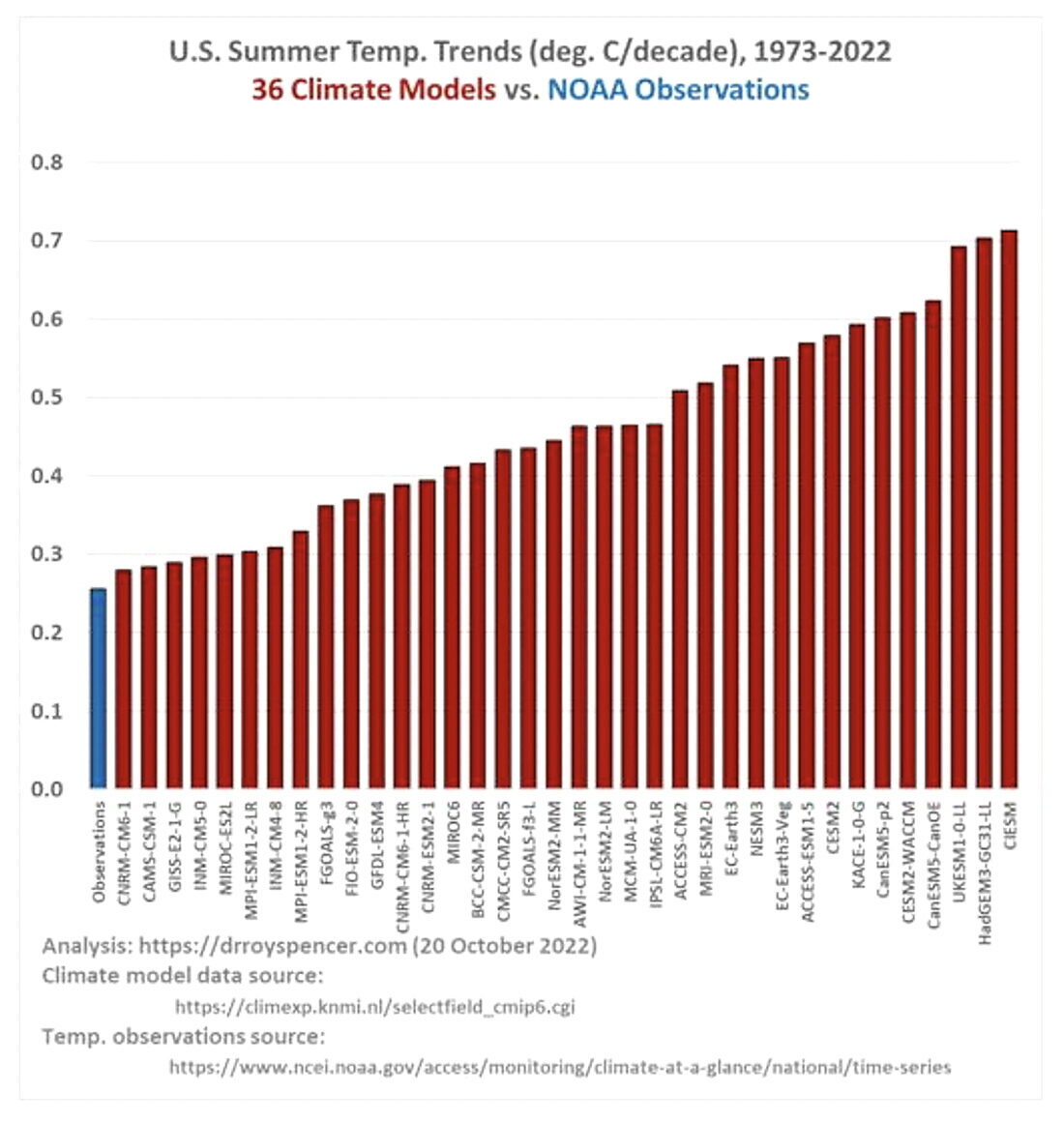
Satellite temperature data show almost all climate model forecasts have been wrong for the last 40 years

climate forecasts
A major survey into the accuracy of climate models has found that almost all the past temperature forecasts between 1980-2021 were excessive compared with accurate satellite measurements. The findings were recently published by Professor Nicola Scafetta, a physicist from the University of Naples. He attributes the inaccuracies to a limited understanding of Equilibrium Climate Sensitivity (ECS), the number of degrees centigrade the Earth's temperature will rise with a doubling of carbon dioxide.

Scientists have spent decades trying to find an accurate ECS number, to no avail. Current estimates range from 0.5°C to around 6-7°C. Without knowing this vital figure, the so-called 'settled' science narrative around human-caused climate change remains a largely political invention, not a credible scientific proposition. Professor Scafetta has conducted extensive work into climate models and is a long-time critic of their results and forecasts. In a previous work, he said many of the climate models should be "dismissed and not used by policymakers". Along with around 250 professors, he is a signatory to the World Climate Declaration which states there is no climate emergency and also notes climate models are "not remotely plausible as global tools".

Moon

Earth's Moon might have formed in just hours from a shattered mess

moon form earth mantle
© Dr Jacob KegerreisThe simulation shows the moon forming from the shattered remains of Theia and parts of Earth's ejected mantle.
The moon could have formed immediately after a cataclysmic impact that tore off a chunk of Earth and hurled it into space, a new study has suggested.

Since the mid-1970s, astronomers have thought that the moon could have been made by a collision between Earth and an ancient Mars-size protoplanet called Theia; the colossal impact would have created an enormous debris field from which our lunar companion slowly formed over thousands of years.

But a new hypothesis, based on supercomputer simulations made at a higher resolution than ever before, suggests that the moon's formation might not have been a slow and gradual process after all, but one that instead took place within just a few hours. The scientists published their findings October 4 in the journal The Astrophysical Journal Letters.

"What we have learnt is that it is very hard to predict how much resolution you need to simulate these violent and complex collisions reliably — you simply have to keep testing until you find that increasing the resolution even further stops making a difference to the answer you get," Jacob Kegerreis, a computational cosmologist at Durham University in England, told Live Science.

Info

Speeding cloud might have come from recent, nearby supernova

Hypervelocity clouds, generally thought to be falling fast into the Milky Way, might have an alternative explanation that places them near us.
supernova explosion
© Leslie ProudfitThis artist’s impression shows the complexity, dynamics, and destruction of a putative supernova explosion in the binary star system 56 Ursa Majoris. The blast carved out a bubble of hydrogen gas, stripped the companion star (lower right) of its outer layers, and sent a high-velocity cloud, dubbed MI, hurtling outward at 120 km/s. MI itself is seen in silhouette against the explosion, as if the central star were wearing a mask.
A mysterious cloud of neutral hydrogen gas, once thought to be falling fast into the Milky Way from its outskirts, might instead be the product of a recent, nearby supernova.

According to solar physicist Joan Schmelz (USRA) and her husband and collaborator, radio astronomer Gerrit Verschuur, the stellar explosion took place some 100,000 years ago, around the time Homo sapiens left Africa and migrated into Asia and Europe.

High-velocity clouds (HVCs) are generally thought to be huge, massive, and many thousands of light-years away. But because there's no good way of measuring their distance, their origin is still unclear. Most astronomers believe they have been blown out of the Milky Way by a process known as a galactic fountain. Alternatively, they could be intergalactic clouds of primordial gas falling prey to our galaxy's gravity.

However, a radio-bright HVC known as MI, which is speeding towards us at 120 kilometers per second (268,000 mph), may be much closer - and thus much smaller and less massive — than previously thought. In a study to appear in The Astrophysical Journal (arXiv preprint available here), Schmelz and Verschuur argue that it was ejected by a dying star, and subsequently accelerated when that star went supernova.

Light Saber

Best of the Web: Evolution: A Strong Delusion 1.0

Darwin statue
© PicasaCharles Darwin statue, Natural History Museum, London, UK
One of the things I've been thinking about for a long time is just how easily we assume some things are so, when in fact it's only that we have a well entrenched faith that such things are so. This can be both positive and negative. For me, being the science type of guy, Darwinian evolution has been the biggest of these assumptions on the negative side. It's a theory, but for the most part people assume it as fact, and that stance is not benign. In fact it has had the most incredible impact on our view of life.

That faith, in evolution as a fact, is so strong that I'm sure many have already left this page and are searching for the unsubscribe option for this Substack. The same sort of reaction someone believing the mRNA 'vaccine' is safe and effective would have to an 'anti-vaxer'. "What the hell is Winston on about now! He's lost the plot and deluded!" The concept is so deeply embedded into our psyche that to oppose it can elicit a visceral retort or religiously zealous combativeness.