
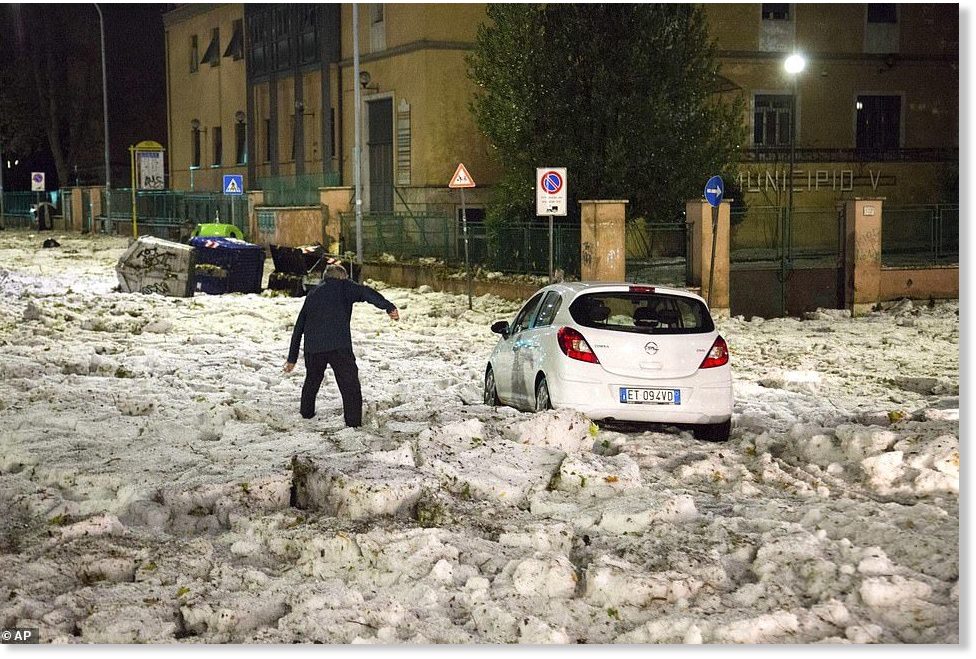
A man tries to reach a car that has been blocked by ice after a severe hailstorm hit Rome, Italy.
The adverse weather blanketed streets with icy chunks and trapped many drivers in their cars in the city's eastern neighbourhoods.
Some drivers abandoned their cars in the middle of streets that became flowing rivers of ice and were pictured slowly making their way through hail-covered streets.
Elsewhere in the city, buses were stopped and cars were abandoned after some streets were left severely flooded due to the rainfall.
A video captured icy water and hailstones running down escalators into an underground train station in the city.
Firefighters responded to similar incidents in Florence and Pisa, which were also hit by severe storms on Sunday.
The storms reached Sicily on Sunday, where the eastern province of Catania was hit by torrential rain for the second time in three days, thelocal.it reports.
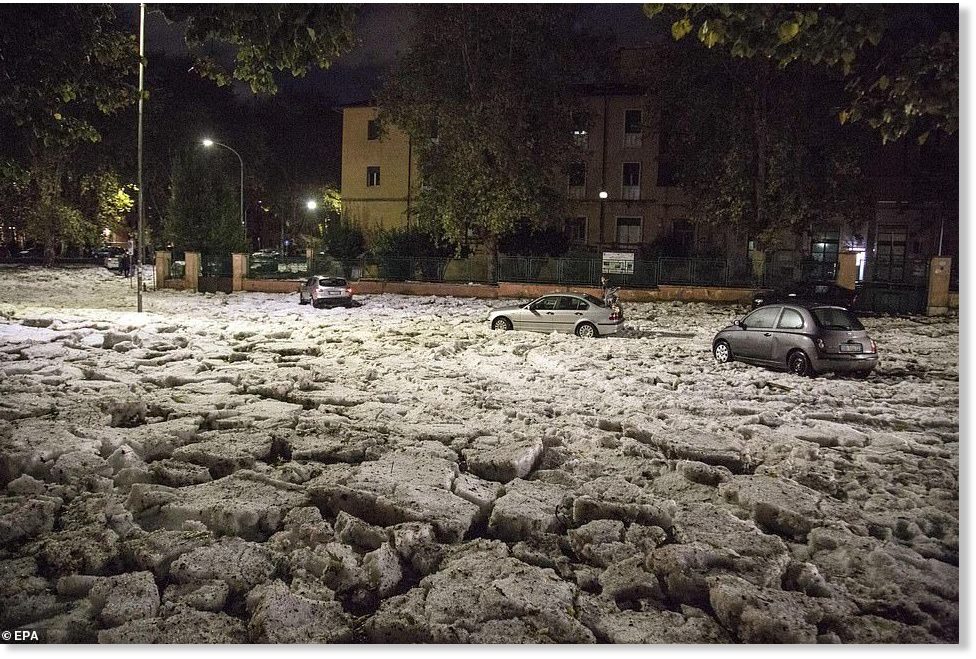
© EPACars are blocked in a road covered with massive chunks of hail in Rome after a storm and torrential rain hit the area

© EPAThe weather blanketed streets with icy chunks and trapped many drivers in their cars in Rome's eastern neighbourhoods
Rome is set for a clear week with temperatures expected to peak at 18C on Monday and reach highs of 23C on Thursday, although a severe weather warning for wind remains in effect for the Italian capital until Tuesday.




Comment: Some other intense hail storms from around the world recently include:
- Hail storm kills 400 kangaroos and 150 goats in New South Wales, Australia
- Freak 'hailnado' blankets southern Queensland with tennis-ball-sized hail
- Violent hail storm and ice accumulation hits Liguria, Italy
- Walnut-sized hail and flash floods hit Turkey's northern provinces
- Severe hailstorm cripples traffic, paralyzes public transport in Mexico - 2 feet deep hail cover
- 'Felt like gunshots hitting the windows': Residents of Greensburg, Indiana look back at weekend damage caused by baseball-size hail
- Massive hail injures multiple people, kills zoo animals and damages 400 vehicles in Colorado Springs
- Foot of hail on Highway 22 near Longview, Alberta makes it look like December instead of July
Such devastating hail across the planet is being under reported in the media.New research shows that Earth's upper atmosphere is cooling as the sun is entering one of the deepest Solar Minima of the Space Age. Martin Mlynczak of NASA's Langley Research Center says, It is likely that atmospheric dust loading from increased comet and volcanic activity is also contributing to these 'intense' or 'freak' hailstorms, the cooling effect of which causes ice crystals to form.