Storms
S


Cloud Precipitation

1 dead, 1 missing, dozens evacuated after floods and heavy rain affect 16 counties in Romania

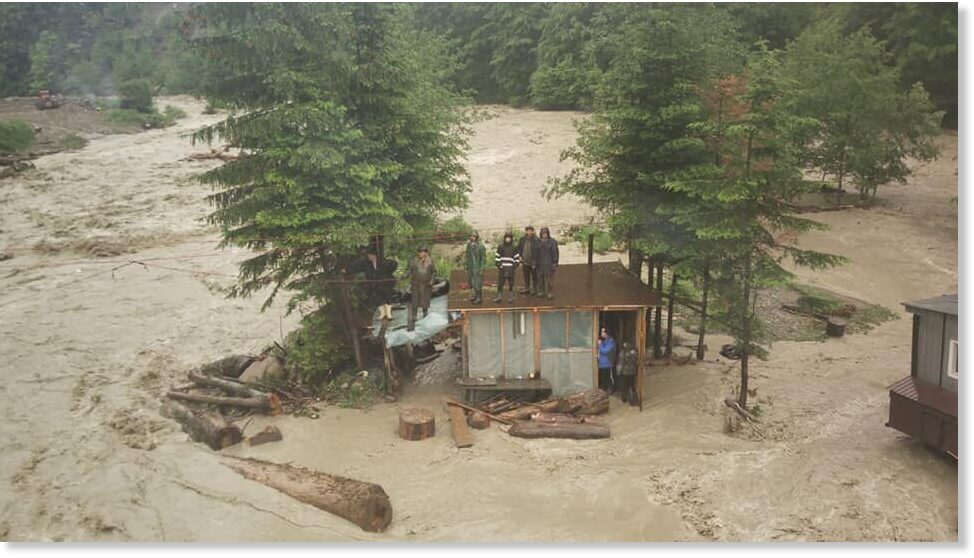
Workers left isolated by floods in Floods Vrancea
© Inspectoratul General pentru Situatii de Urgenta, Romania (IGSU)Workers left isolated by floods in Floods Vrancea County, Romania, June 2021.
Authorities in Romania report that floods, heavy rain and strong winds have affected wide areas of the country since 18 June 2021. As of 23 June as many as 16 counties were affected.

Firefighters were called on to remove flood water from houses, yards and streets or responded to incidents of wind damage including downed trees and power lines.

In a tragic incident in Bacău County, a car participating in an off-road competition was dragged by waters of the swollen Oituz river in Poiana Sărată. The driver of the car died in the incident, while the passenger managed to escape the vehicle.


Firefighters carried out searches for a man reported missing in flood water on 18 June in Mănăstirea Cașin, Bacău county. Seven people were pre-emptively evacuated due to flooding in the same area.


Blue Planet

Adapt 2030 Ice Age Report: The signs are unmistakable

noctilucent clouds over Paris
© YouTube/Adapt 2030 (screen capture)
As the second magnetic field in our solar system begins to take shape and strengthen from July / August of 2021 more signs are becoming increasingly visible across the skies, oceans and Earth. These are a dozen examples of hundreds that took place during the same time. Time to get your plan in order.


Tornado2

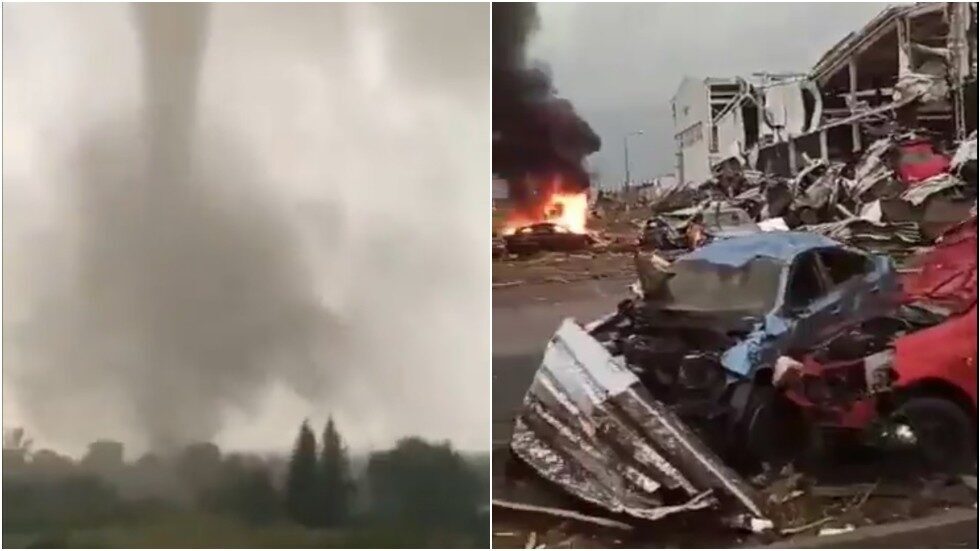
Best of the Web: Tornado kills at least 5 people, injures hundreds more, and destroys THOUSANDS of homes in Czechia

A tornado touches down in Czechia
© Twitter/@nedavidlak; Twitter/@kutka18A tornado touches down in Czechia, June 24, 2021; aftermath in the village of Lužice
At least three people have died and hundreds more injured after a rare tornado tore through a region in the southeastern Czech Republic.


Comment: The death toll is now up to 5 people.


The tornado was formed late on Thursday during a series of strong thunderstorms that hit the entire country. Seven towns and villages have been badly damaged, with entire buildings turned into ruins and cars overturned. Over 120,000 households were without electricity.

Some 360 extra police officers were sent to the area together with the military. The rescuers from many parts of the country who came to help were joined by their counterparts from nearby Austria and Slovakia.

They were using drones and helicopters to search the rubble. One person died of injuries in the hospital in the town of Hodonin.

The regional rescue service said more people likely died.


Comment: One Czech TV station said the tornado may have been a F3 or F4 on the Fujita scale, rated at "significant" to "severe" damage. Meteorologist Michal Žák said it was "probably the strongest tornado in recent [Czech]history" and very uncommon in Europe reports RT. Here's more incredible footage:


This major and rare tornado in Europe comes only days after powerful storms ripped through Belgium, including a tornado that obliterates almost 100 homes in country's south.

To understand why this uptick in tornado activity may be occurring now, see the comment here: More intense and frequent thunderstorms linked to global climate variability


Cloud Lightning

More intense and frequent thunderstorms linked to global climate variability

lightning strike
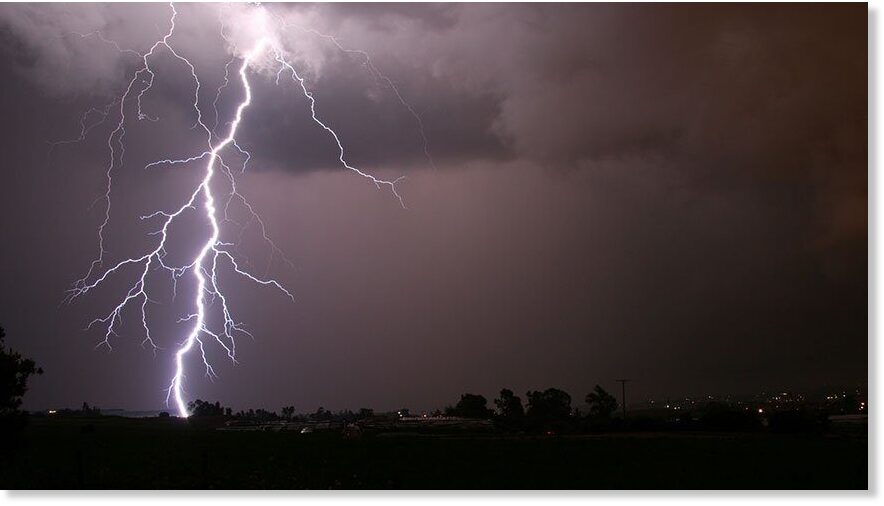
© Chris Maupin/Texas A&M UniversitySouthern Great Plains CG strike.
Large thunderstorms in the Southern Great Plains of the U.S. are some of the strongest on Earth. In recent years, these storms have increased in frequency and intensity, and new research shows that these shifts are linked to climate variability.

Co-authored by Christopher Maupin, Courtney Schumacher and Brendan Roark, all scientists in Texas A&M University's College of Geosciences, along with other researchers, the findings were recently published in Nature Geoscience.

In the study, researchers analyzed oxygen isotopes from 30,000-50,000 year old stalactites from Texas caves to understand trends in past thunderstorms and their durations, using radar-based calibration for the region's rainfall isotopes. They discovered that when storm regimes shift from weakly to strongly organized on millennial timescales, they coincide with well-known, global abrupt climate shifts during the last glacial period, which occurred between about 120,000 and 11,500 years ago.

Comment: In Pierre Lescaudron and Laura Knight-Jadczyk's book Earth Changes and the Human-Cosmic Connection they provide insight into just why we may be seeing an uptick now:
Hurricanes, lightning, and tornadoes

Introduction

The accumulation of cometary dust in the Earth's atmosphere plays an important role in the increase of tornadoes, cyclones, hurricanes and their associated rainfalls, snowfalls and lightning. To understand this mechanism we must first take into account the electric nature of hurricanes, tornadoes and cyclones, which are actually manifestations of the same electric phenomenon at different scales or levels of power. Because of this similarity, we will refer to these three phenomena collectively as 'air spirals' in the following discussion.

Discharge frequency

If air spirals are electrically driven, how then can we explain an increase in their frequency when the Sun's activity has dropped and the atmospheric E-field has therefore weakened1? While the overall atmospheric E-field has indeed weakened, another factor must be taken into account. The increase in atmospheric dust concentration2 reduces the electric conductivity of the atmosphere.3 Conductivity in the atmosphere is due to the mobility of small ions. When dust is present, these ions, instead of moving freely, attach to the relatively large dust particles and lose mobility, hence the decrease in atmospheric conductivity.4

[....]

This additional feature of dust particles - their ability to carry an electric charge - means that dust accumulation enables any given area of the atmosphere to carry potentially massive electric charges, which can differ from the charge of adjacent regions, from the charge of the ionosphere and from the charge of the Earth's surface.

[...]

Lightning and hurricanes seem to be a similar charge rebalancing processes. Lightning mostly occurs above continents and is far less frequent above oceans.1 This may be due to the difference between ground conductivity and sea conductivity. When electrons start flowing upwards from the ocean, the high conductivity of salt water2 usually prevents the formation of electron-deficient regions, which is one of the causes of lightning. However, when the upward electron flow occurs above a continent, the poor conductivity of the ground3 enables the formation of electron-deficient pockets that will trigger and receive lightning discharges.
See also: And check out SOTT radio's:


Tornado2

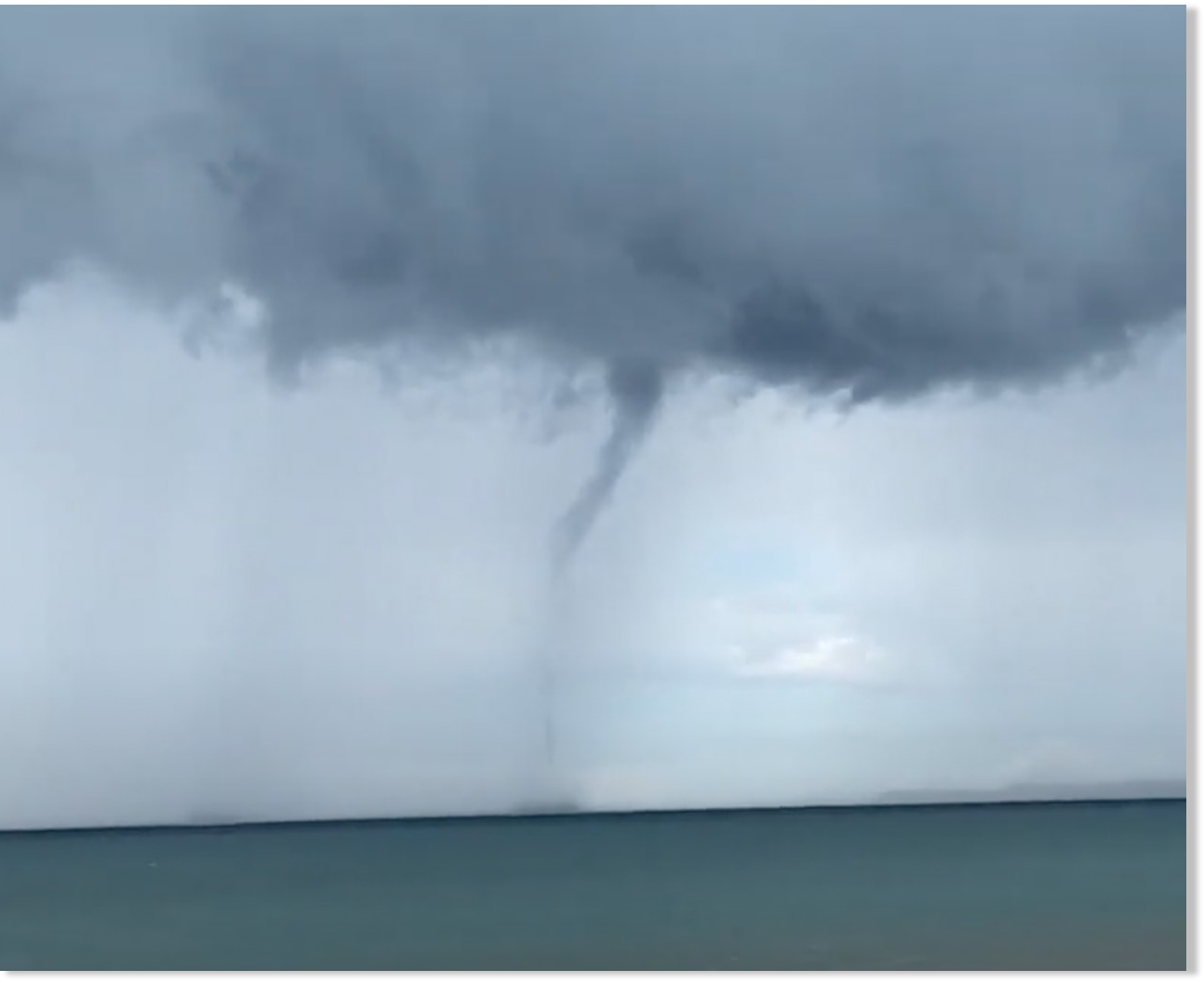
Multiple waterspouts start Michigan's summer with a swirling fall staple and graupel

waterspout
The start of summer in Michigan brought a typical fall weather character- a waterspout. In fact, after the waterspout, an even more winter-like precipitation form fell, called graupel.

To kick off astronomical summer this week, Michigan had some very cold air for this time of year. High temperatures were only in the 60s. When I looked at the upper-air temperatures, which are vitally important for waterspouts and graupel, the temperature over Leelanau County was 33 degrees at 5,000 feet and 19 degrees at 9,000 feet.

That's fall-like upper-air temperatures to start astronomical summer. The cold air flowing over the relatively warm water of Lake Michigan set off five waterspouts. The temperature difference between the air just over the water surface and the air aloft causes the waterspouts to form.

John Piombo, executive chef at The Homestead on Lake Michigan at the Sleeping Bear Dunes, caught the multiple waterspouts in the video below. The video was shot from the deck of Cafe Manitou, overlooking Lake Michigan.


Cloud Lightning

Lightning strike kills 2 in Kandal, Cambodia

lightning
Two Khmer Muslims were killed by a lightning strike while they were hunting by a lake. The incident happened at 2 p.m. on June 22 at the Sangke Som Dam in Po Tapang village, Svay Proteal commune, Saang district, Kandal province.

The Saang district police released the identity of the two victims. One of them is Mat Nansa, male, 28-years-old and the other is Sen Mael, male, 16-years-old. The two men are fishermen and are from Baren Krom village, Svay Proteal commune, Saang district, Kandal province.

On June 22, at 1 p.m. the father-in-law and father of the deceased, 53-year-old Man Sen, accompanied the two men to check traps that were laid out near the lake. Then it started to rain hard causing the three to seek shelter under two separate trees. Suddenly, lightning struck the tree that the two victims were under and the two men, killing them. Sen, the older man, was fortunately not harmed due to him being quite a distance away from the scene.

After examinations by the authorities, the bodies were returned to the family for funerary rites.

Cloud Lightning

Lightning strike kills 2 in Mandaue City, Philippines

lightning
TWO men were killed after they were struck by lightning while foraging shellfish in Sitio Pajara, Barangay Umapad in Mandaue City on Tuesday afternoon, June 22, 2021.

Police identified the victims as Rey Cuyam, 28, a resident of Barangay Umapad; and Erwin Hirasol, 33, a resident of Barangay Mantuyong, Mandaue City.

Glendo Demape, who works for Umapad's barangay hall, said they and local police responded in the area after they received reports of casualties from a lightning strike that occurred there.

When they got there, barangay personnel and local police found Cuyam and Hirasol already lying just a few meters from the shoreline and had numerous burns on their bodies.

Tornado2

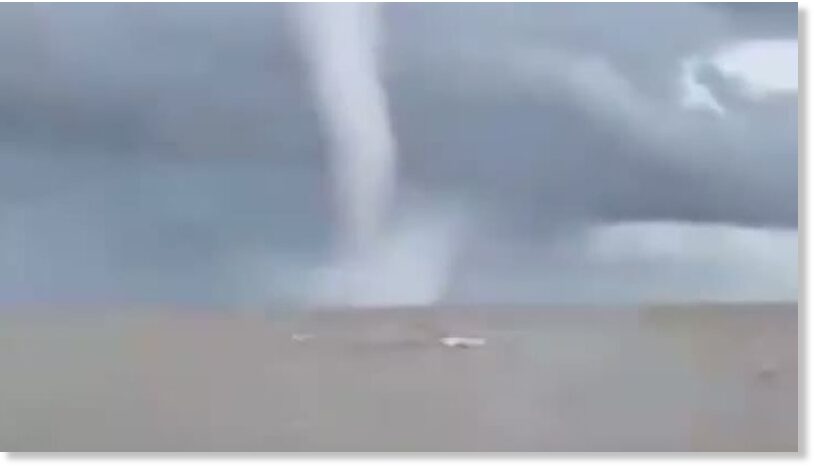
Massive waterspout off Louisiana coast

waterspout
A boat of fishermen captured a massive waterspout off the coast of Terrebonne Parish in Louisiana on Monday, June 21.


Cloud Precipitation

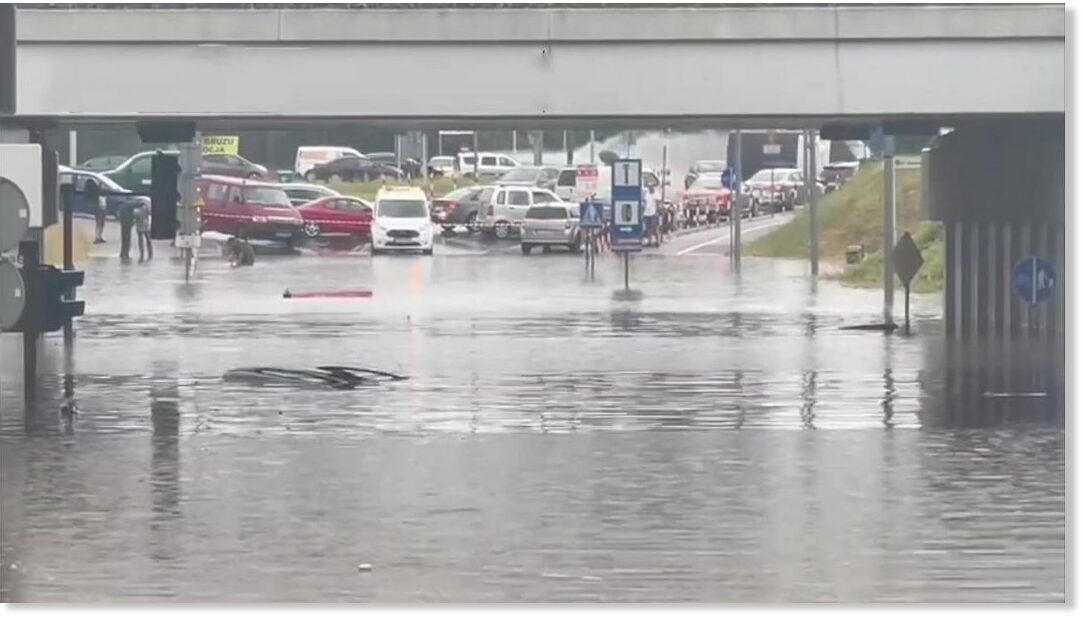
Storms trigger flash-floods in Poland, Czechia, Germany and Italy - 2.3 inches of rain in just an hour

flood
A series of storms brought flash flooding to parts of Poland, Czechia, Germany and Italy from 20 to 22 June 2021. The city of Poznan in western Poland was among the hardest hit areas, where buildings including a hospital were damaged.

Previously storms in northern and eastern France caused flash flooding in Marne, Somme and Oise departments, where one person was reported missing in the city of Beauvais.

Poland

On 22 June stormy weather affected several areas of Poland, including the cities of Warsaw, Krakow and Poznan.

The State Fire Service carried out 1,685 interventions in response to storm damage in Wielkopolska (545), Małopolska (366), Mazovia (291), Kuyavian-Pomeranian (150) and Lodzkie (115). No injuries or casualties were reported.

Government Security Center said storms left 23,134 people were without without electricity mostly in the following Mazowieckie.


Tornado2

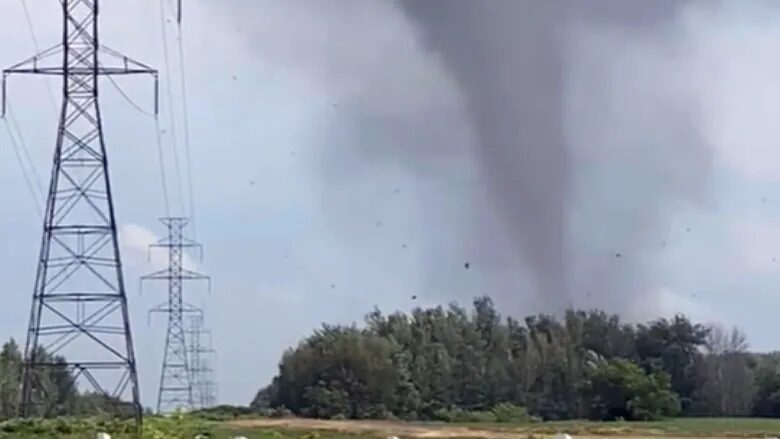
Deadly tornado touches down near Montreal, Canada

A tornado was observed late Monday afternoon in Mascouche, Quebec
© Dominic SansregretA tornado was observed late Monday afternoon in Mascouche, Que., in the Lanaudière region.
A man in his sixties is dead, after a tornado touched down in Mascouche, Que., late Monday afternoon.

The Canadian Red Cross is deploying teams to help 50 to 100 people displaced by the damage caused by the high winds.

Municipal officials have confirmed that the man, a father of three, died in storm just after 6 p.m. Between 75 and 100 homes were damaged by the tornado, according to local fire officials.

The mayor of Mascouche, Guillaume Tremblay, offered his condolences to the family of the victim, though he was unable to give more details on the cause of death. Tremblay said two others were lightly injured.

"We have houses that were blown off their foundations," he said.

"We have electric wires everywhere in the streets and a considerable amount of fallen trees."


Comment: Other tornadic activity in the past few days include: