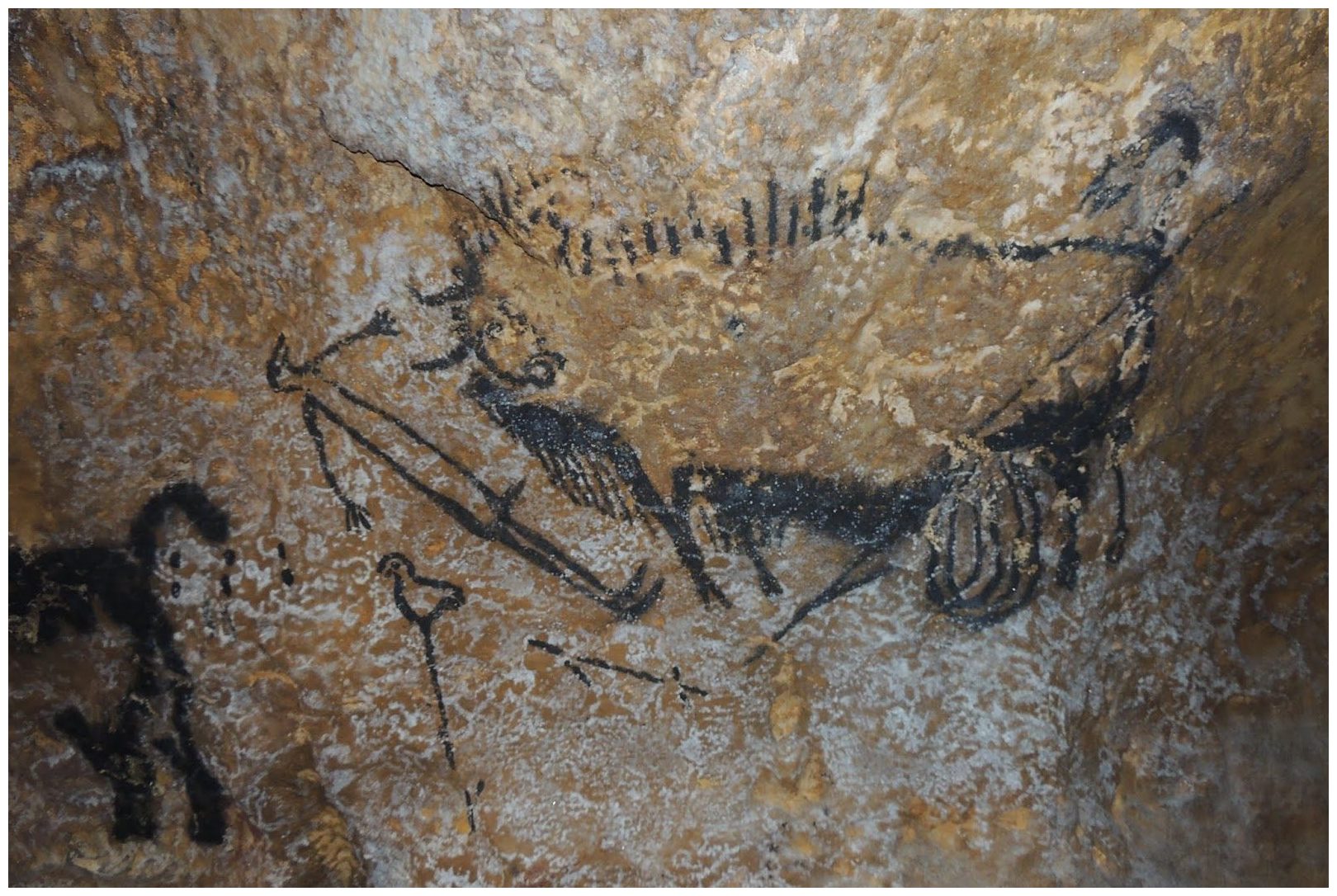
The Lascaux shaft scene is perhaps the most iconic of all European Palaeolithic cave artworks (see below). It shows a bison and human, apparently both dying and normally interpreted as a hunting scene. But we now know, beyond any reasonable doubt,
the animal symbols represent constellations, and the Shaft Scene in particular very likely represents a date using precession of the equinoxes.
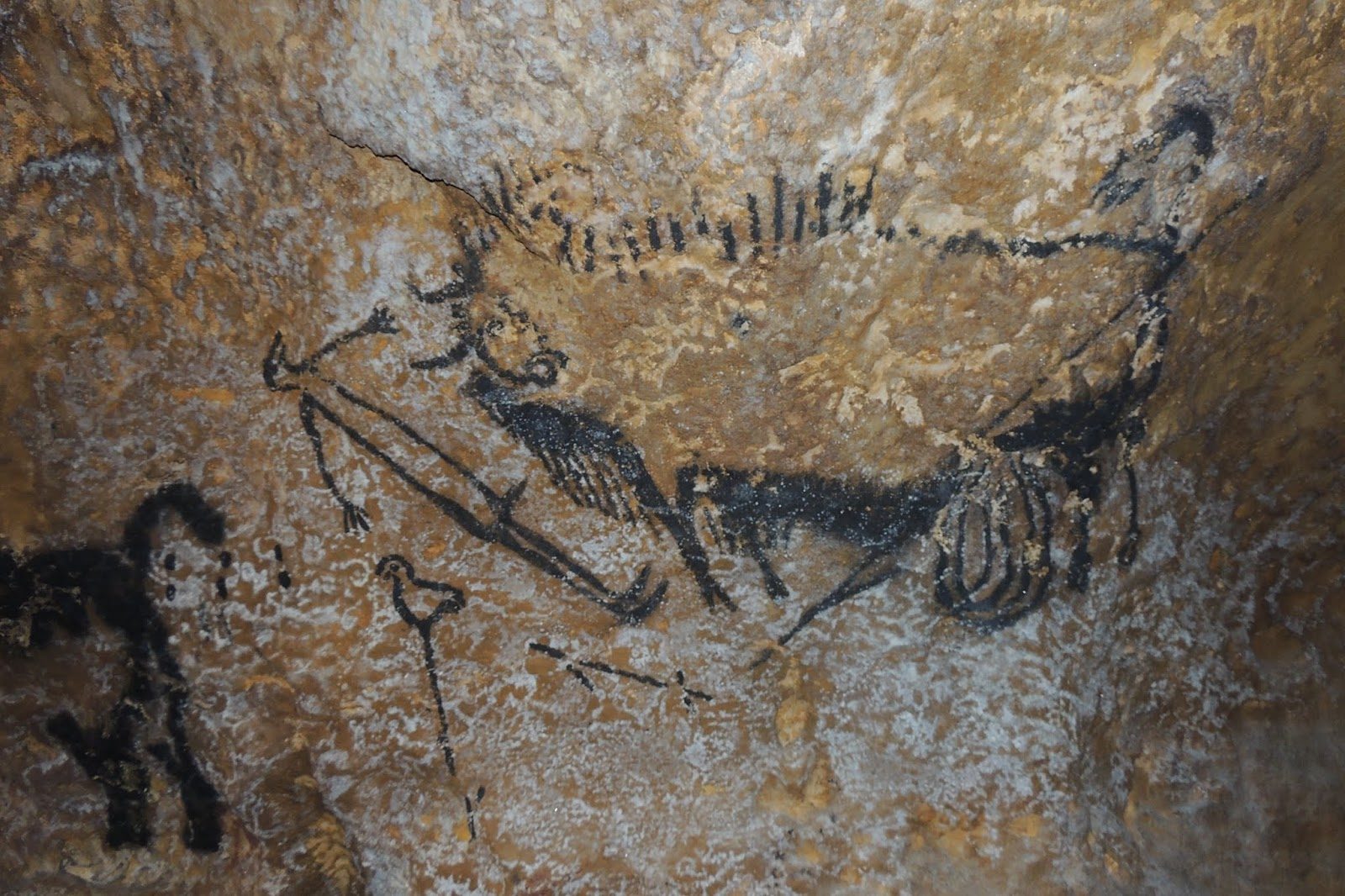
© Copy of the Lascaux Shaft Scene, courtesy of Alistair Coombs
Using the zodiacal method and our ancient zodiac, the date 'written' in the scene is between 15,300 and 15,000 BC (see
Prehistory Decoded). The similarity of this scene to Pillar 43 at Gobekli Tepe
suggests it documents another asteroid or comet strike, this time from the direction of Capricornus (represented by the aurochs). It so happens that the Taurid meteor stream would rave radiated from this direction at this time, suggesting this artwork memorialises another strike from the Taurid system. Given the presence of a giant comet in the inner solar system at this time, such frequent impacts are entirely expected.
Very interestingly, this time span also corresponds to a sudden temperature fluctuation in the North Atlantic region (see Prehistory Decoded), documented by a Greenland ice core, and to a major cultural transition: the Magdalenian to Azillian.

















Comment: Details of the other two events: Dozens of dead beached pilot whales found in West Iceland - 2nd recent mass stranding globally
50 pilot whales strand, 20 die in Iceland - 2 weeks after similar event locally
Elsewhere in recent days dead whales have appeared along the coasts of France and New Jersey.