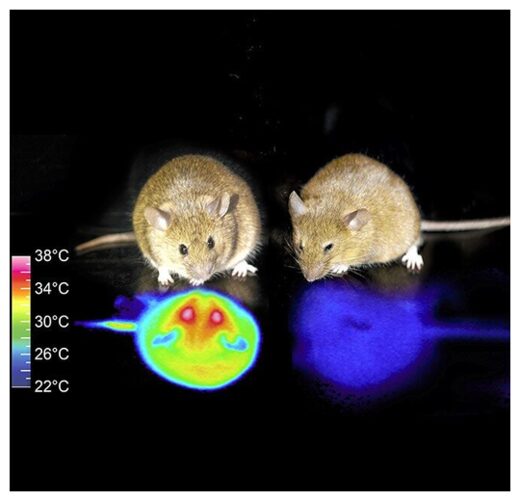
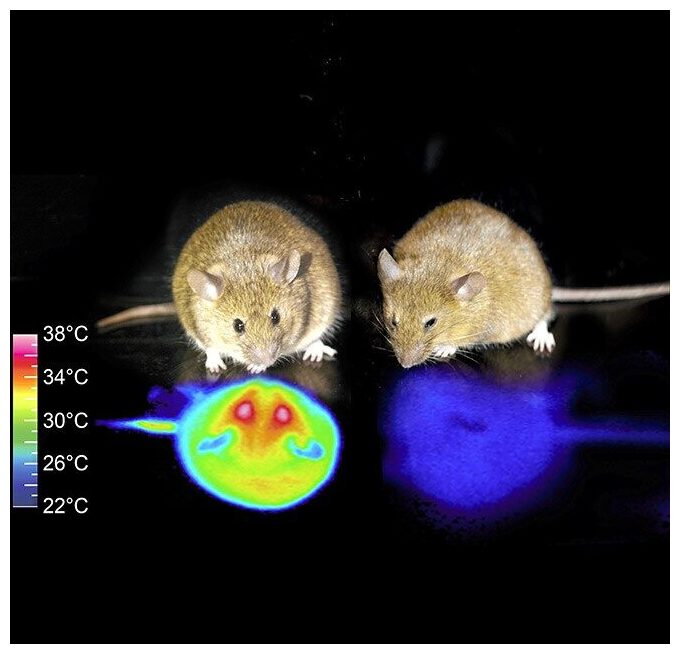
© University of TsukubaThe body temperature of a mouse, right, in a state of “hibernation” is indicated in blue in thermography, meaning it is lower than that of the other, left, in a normal state.
Researchers from the University of Tsukuba and the Riken research institute said their artificial hibernation discovery could be adopted in the future for human use. That might lead to advances in areas of medicine such as emergency care and organ preservation, or for use in long space flights where there is not enough food and oxygen--just like in science fiction.
"There are many diseases in which demand for oxygen and nutrition outstrips supply," said Takeshi Sakurai, a professor of pharmacology at the University of Tsukuba who was involved in the study.
"Tissue is further damaged by the time the patients with such diseases can receive treatment. But if they are induced into hibernation, they can be treated before further damage takes place."
Mammals normally maintain a constant body temperature. But some hibernate in cold seasons, or when they are starving due to food shortages, by slowing their metabolism and lowering body temperature to a level that would normally cause tissue damage.
Chipmunks and brown bears hibernate like this, but little is known about how they are able to do it.
The researchers studied a set of special neurons in the hypothalamus region of mice brains. They said those neurons regulate body temperature and metabolism.

















Comment: This is the latest in a spate of rare, deep-sea dwelling creatures turning up in coastal areas around the world recently (since June the 7th), see in addition: