Earthquakes
The British Geological Survey (BGS) recorded a series of tremors this morning at the controversial fracking site at Preston New Road, Little Plumpton.
Nine tremors were detected at the site within 90 minutes this morning, with the latest tremor measuring a magnitude of 1.5 - three times the legal limit.
According to the BGS database, the 1.5 magnitude tremor is the largest detected at the site since monitoring began. It has been claimed the tremor was felt in the Blackpool area.
The nine tremors recorded today are also the most recorded at the site in a single day.

The United States Geological Survey reports a preliminary magnitude 7.3 earthquake struck near Bristol Island, South Sandwich Islands on Tuesday.
The quake hit at 12:26 AM local time at a depth of 176 kilometers.
There was no initial word on damage or injury resulting from the quake. More information on this earthquake is available on the USGS event page.
See the latest USGS quake alerts, report feeling earthquake activity and tour interactive fault maps in the earthquake section.
Topics from the Interview:
- Energetic changes being felt across our planet and how this relates to a lower activity in the Sun
- Electric Universe
- Jet Stream meanderings
- Gulf Stream slow-down
- Hurricane intensity on century cycles
- Earthquakes
- Magnetic field changes on Earth as the Suns magnetic field changes
- Volcanic eruptions
- Meteor fireballs
- Tornadoes
- Deluges and Atmospheric Compression events
- Sinkholes
- Victor Clube and space debris intensifying
Comment: Review of 'Earth Changes and the Human-Cosmic Connection'. The book is available to purchase here.
To listen to part 2 of the interview, see: Adapt 2030 Ice Age Report: Interview with Laura Knight-Jadczyk and Pierre Lescaudron (Part 2)
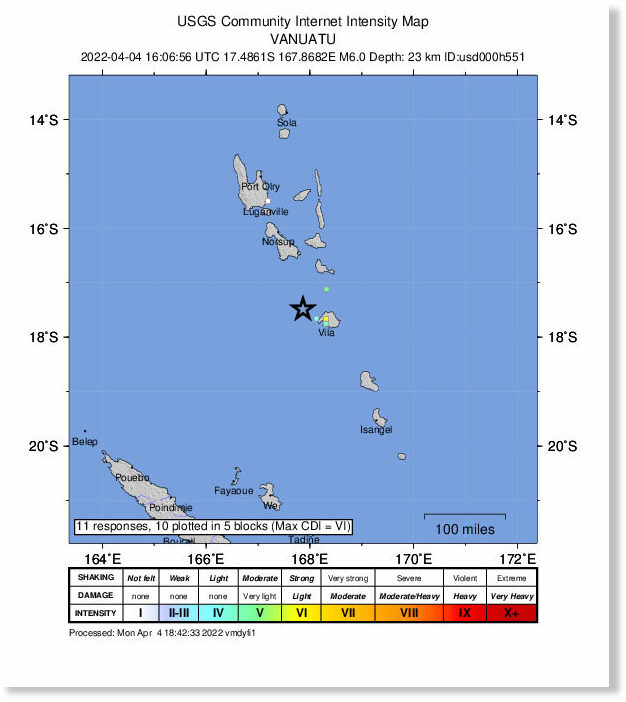
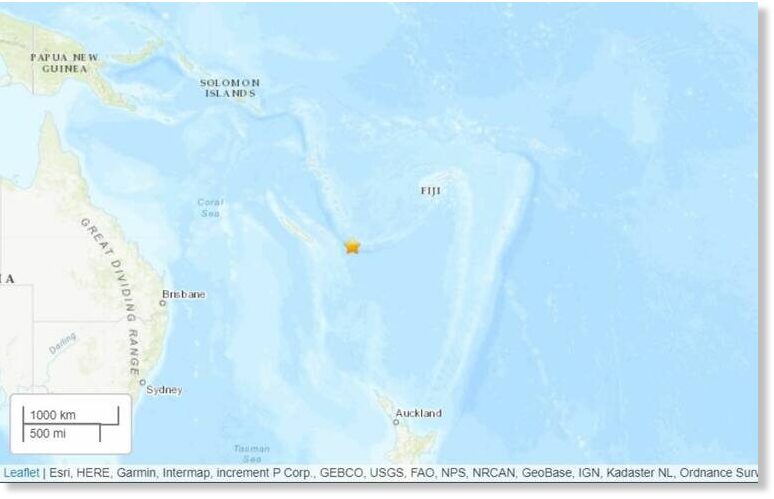
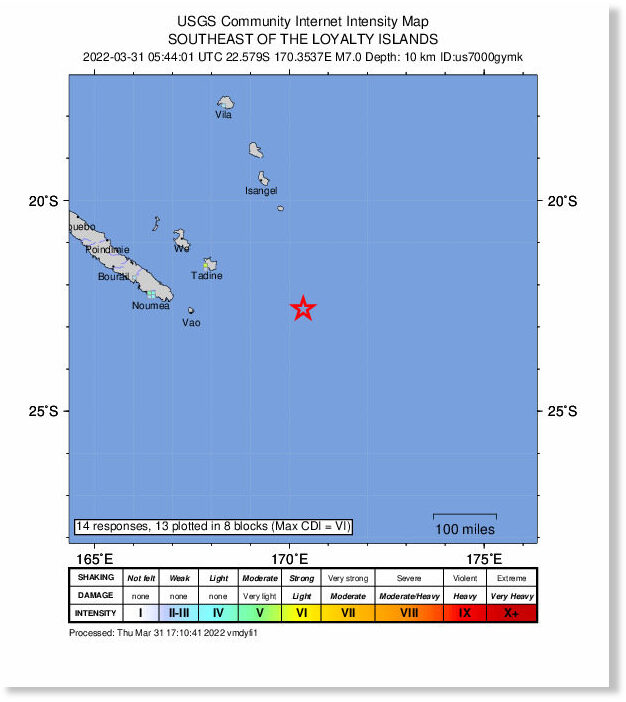
The quake hit at a depth of 26km (16 miles) about 189km (117 miles) east-southeast of Tadine in the Loyalty Islands, the USGS said.
There were no immediate warnings from the Pacific Tsunami Warning Centre.
It follows a powerful 7.6 quake that hit near New Caledonia on Wednesday.

New Caledonia earthquake evacuations: The country was hit by a 7.6 magnitude earthquake on Wednesday
Evacuations were ordered after hazardous waves up to three metres tall were expected to rise following the 7.6 magnitude quake on Wednesday.
People on the east coast have been told to retreat at least 300m from the shore and to get to ground at least 12m in altitude.
The quake struck about 104 miles east of Tadine at a shallow depth of six miles, according to the US Geological Survey.
"Tsunami waves reaching 1 to 3 metres above the tide level are possible along some coasts of New Caledonia and Vanuatu," the Pacific Tsunami Warning Centre said.
Earthquakes Canada said the quake had a preliminary magnitude of 4.5, with the epicentre about 16 kilometres southwest of Fort St. John.
It hit around 5 p.m. PT, followed by another tremor of similar magnitude, classified as an aftershock, less than an hour later.
Comment: This quake is reported to have occurred around 5pm, and earlier in the day, at around 8am, Alaska was hit with a strong M7. And so, when we considering the evidence linking fracking induced earthquake activity, along with the 2000% increase in major earthquakes since the 1900s, the rise in sinkholes, landslides and so on, it's clear society is suicidal in its pursuit of profit.
See also:
- 4 earthquakes strike days after fracking restarts in Blackpool, UK
- Fracking causes strongest quake yet at new site in UK
- Recent study reveals catastrophic impact of fracking on US drinking water sources
Tonight, large numbers of Anchorage residents are suddenly homeless, and that includes Alaska's most famous politician...
Light fixtures fell, glass shattered, roadways and supermarket aisles were awash from food spilled from broken jars. Video images showed some roadways had collapsed. One man tweeted a photo of his toppled chimney and a local television station showed its studio filled with debris.
Former Alaska governor and vice presidential candidate Sarah Palin tweeted, saying her family is intact but her "house is not."
Comment: See also:
- Cascadia fault line in North America: A now still and silent subduction zone where disaster awaits
- Researchers discover 900 new methane seeps off the Oregon coast near the Cascadia Subduction Zone
- Coast Guard preps for possible Cascadia Subduction Zone quake
- On June 7, FEMA will hold a massive drill to prepare for a 9.0 Cascadia Subduction Zone earthquake and tsunami

Seismic signals originating off the coast of the small French island of Mayott were detected at seismology station ranging from Chile to New Zealand.
A deep 6.3-magnitude earthquake struck in eastern Indonesia Saturday night, US seismologists said, but no tsunami warning was issued.
The quake hit in the sea in southwest Indonesia, about 130 kilometres (80 miles northeast of the city Tiakur at 10:27 pm (0127 GMT), at a depth of 140 kilometres, according to the US Geological Survey.
The national disaster agency said the quake was felt weakly in Tiakur for about three to five seconds.

Seismic signals originating off the coast of the small French island of Mayott were detected at seismology station ranging from Chile to New Zealand.
A low-rumbling that could not be felt above ground was detected on November 11 and narrowed down the origin to a region just off the coast of the island of Mayotte.
They were similar to those typically seen after large earthquakes, which are known to travel great distances - but, no such earthquake took place.
Theories as to what caused the cryptic rumble ranged from a slow earthquake to an undetected meteor strike.
Comment: This has created a buzz in the scientific community, because seismic signals from earthquakes and volcanic eruption are 'spikier' and don't look 'harmonious' like this.
Strange seismic waves rippled around the world and scientists don't know why
Here in New Zealand, GeoNet seismologist John Ristau said he saw his contemporaries discussing the unusual activity on Twitter when it first happened.
"It is a very strange signal and it can be seen pretty much everywhere around the world. The signal is clearly not like a regular earthquake, it's more like a burst of energy."
Strange waves rippled around the world, and nobody knows why
Helen Robinson, a Ph.D. candidate in applied volcanology at the University of Glasgow: "They're too nice; they're too perfect to be nature," she joked. "What baffles me is how evenly spaced out they were," she said. "I have no idea how to explain that."
Geologists Joke About 'Sea Monster' After Mysterious 30-Minute Rumble Emanates from Waters Near MadagascarIt's gotta be something cosmic. Did Earth just get 'pinged'?! (And no, not by 'aliens' - rather, by something "bigggggg" but as yet unseen...)
One segment of the signal also featured several high-frequency blips, each separated by roughly a minute of time, a bit like a regular, ticking clock. Stephen Hicks, a seismologist at the University of Southampton, highlighted the phenomenon in a November 12 tweet.
"Something biggggg, yet strangely slow, sent seismic rumblings around the surface of much of the planet yesterday," he wrote. [...]
"It's like a ringing bell. If you want to get a very low frequency, a very low tone, you need that bell to be huge," Ampuero explained.
By the way, one week later, this happened:
Despite unusually quiet Sun, solar wind recently produced 'musical waves' in Earth's magnetic field


Comment: The citizens of Lancashire voted against fracking but the vote was overturned by local and national government powers. It remains to be seen what calamity needs to occur before people make a stand or forces the establishment to halt the process.
- Fracking causes strongest quake yet at new site in UK (Oct 2018)
- 4 earthquakes strike days after fracking restarts in Blackpool, UK (Oct 2018)
- Fed study concludes fracking increases risk of damaging earthquakes, especially in Oklahoma, southern Kansas
Also check out SOTT radio's: NewsReal: California Wildfires, Climate Change, And The Impossible Brexit