Earthquakes
The quake struck at 3:35 p.m. Hawaii time at a depth of about 16 miles and about 632 miles southwest of Anchorage.
This is the third such incident reported this year the state which is very close to Chittagong in Bangladesh.
Earlier in mid-April, at two spots, namely Baishnavpur and Ghagrabasti of Sunroom, lava-like liquid erupted along with fire and gas.
In the recent incident from a few days ago, the local villagers of Jalifa were scared to find lava erupting from the lower portion of the electric pole on the roadside and reported the matter to the fire extinguishing team and local police. A team of firefighters rushed to the spot and tried to spray water and foam, but failed to stop the ongoing eruption that had already burned the spot.
Meanwhile, scientists from the Department of Science, Technology and Environment of the Government of Tripura also visited the spot. After examining the spot and analysing the samples collected from the spot they concluded that the fire, smoke and other materials running out of the ground is due to a fault line that passes through that area beside the displacement of the underground tectonic plates in that region and which is creating huge subsurface heat causing the incident.
No casualties or damage have been reported, and the Pacific Tsunami Warning Centre lifted its warning for a potential tsunami that could hit coastal areas of the southern Philippine and Indonesia.
The Philippine Institute of Volcanology and Seismology said that the quake was detected at a depth of 49 kilometres (30 miles) and a magnitude of 7.1 about 162 kilometres (100 miles) off Davao Oriental province.
It said that it could generate aftershocks but the agency did not expect any damage.
The US Geological Survey said the quake hit at a depth of 60 kilometres (37 miles) and measured 6.9.
Renato Solidum, who heads the quake-monitoring institute, said that a major tsunami was unlikely given the depth of the quake and other factors but advised villagers to avoid the beach in Davao Oriental province and outlying regions for about two hours after the quake struck around noon as a precaution.
The quake was felt in some coastal areas, he said.
Indonesia's Meteorology and Geophysics Agency said the quake doesn't have a potential to cause a tsunami affecting Indonesia.

People stand on the street after an earthquake was felt across northern Venezuela, in Caracas, Venezuela December 27, 2018.
"The whole house shook," said a witness in Club de Campo, 102 km from the epicenter, in a posting on the European-Mediterranean Seismological Centre (EMSC) website.
Another witness said the quake lasted five or six seconds.
There were no immediate reports of casualties or significant damage.
The tremor, which struck at 7:37 a.m. on Saturday, was centered near Espungabera in central Mozambique, about 54 kilometers (33 miles) southeast of Chipinge and 92 kilometers (57 miles) northwest of Massangena.
The U.S. Geological Survey (USGS) puts the magnitude at 5.5 with a depth of 7.6 kilometers (4.7 miles), making it a very shallow earthquake. The European-Mediterranean Seismological Centre puts the magnitude at 5.6.
There was no immediate word on damage or casualties, but the USGS estimates that up to 21 million people could have felt the earthquake, including 274,000 people who may have felt "strong" to "very strong" shaking.
"Overall, the population in this region resides in structures that are a mix of vulnerable and earthquake resistant construction," the USGS said in its assessment. "Some casualties and damage are possible and the impact should be relatively localized."
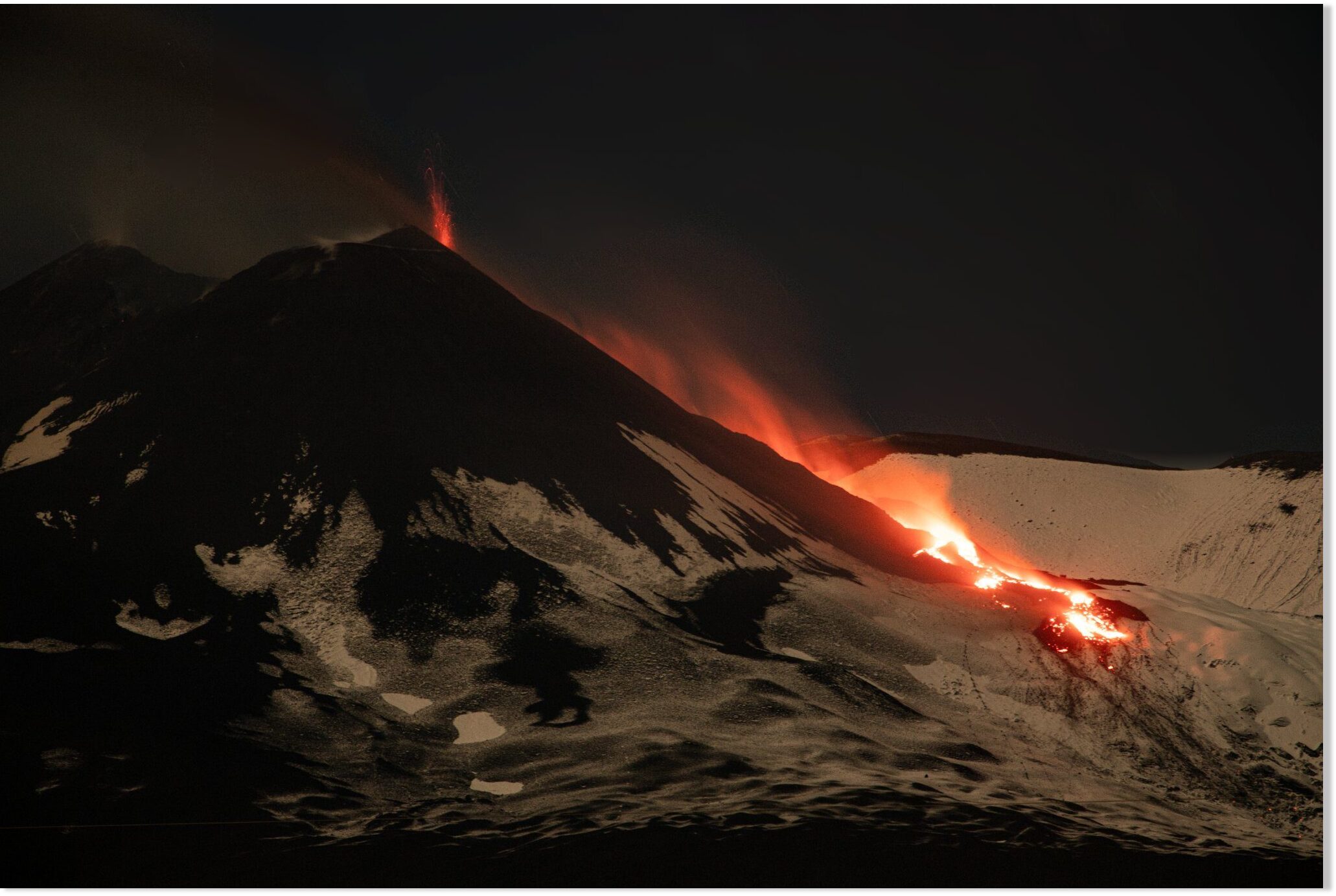
On Wednesday, residents near Mt Etna were told to flee after a larger earthquake measuring 4.8 magnitudes struck about two kilometres underground.
Its epicentre was between the towns of Viagrande and Trecastagni.
Two people have been reportedly injured.
Buildings have been damaged in the area, with tremors felt in Catania, where around 300,000 people live.
A chain of around 130 earth tremors have rocked the volcano since around 0800 GMT on Monday, Italy's National Institute for Geophysics and Volcanology said, with the strongest posting a magnitude of 4.0.
There were no reports of any injuries.
The 3,330 meter high volcano can burst into spectacular action several times a year, spewing lava and ash high over the Mediterranean island. The last major eruption was in 1992.

The quake struck at a moderate depth of 100 km with the epicentre some 85 km north of the Tongan capital Nuku'alofa.
The quake struck at a moderate depth of 100km with the epicentre some 85km north of the Tongan capital Nuku'alofa.
There were no immediate reports of damage.
The Pacific Tsunami Warning Centre said there was no tsunami threat.
Baea Filimoehala from the reception at the Emerald Hotel in Nuku'alofa told AFP there was no damage in the capital, describing the quake as a "small one".


Comment: A few months ago a mysterious burning hole with flames shooting out of it was discovered in Midway, Arkansas which baffled geologists. See also:
SOTT Exclusive: The growing threat of underground fires and explosions