Earthquakes
S


Bizarro Earth

Two powerful earthquakes strike off Ecuador's coast

Ecuador Quake
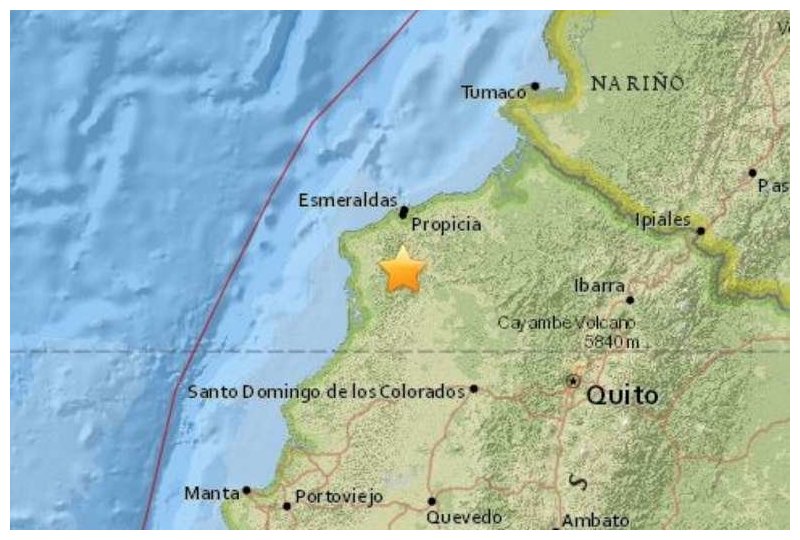
© USGSA shallow earthquake with a magnitude of 6.4 struck Ecuador's north-west coast on Sunday (July 10), said the US Geological Survey.
Two powerful quakes measuring 5.9 and 6.4 struck the coast of Ecuador ten minutes apart, USGS reported.

Both quakes hit an area about 32 kilometers northwest of Rosa Zarate, a town of some 60,000 residents in the Esmeraldas province.

The tremors from the two quakes were felt across a wide area and prompted many people to flee into the streets, according to BNO news. Residents reported power outages in some parts of the province. No reports as to the number of casualties were immediately available.

Attention

5.5 magnitude earthquake hits Goldfields, Australia - largest in 28 years

Goldfields, Australia
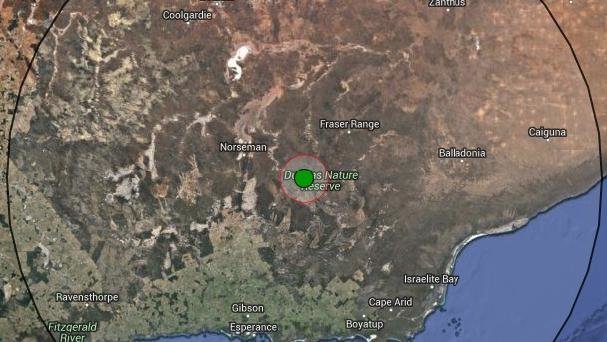
© Geoscience AustraliaA 5.6 magnitude earthquake has been recorded in the WA Goldfields town of Norseman.
Tremors were felt in Perth after WA's biggest earthquake in almost 30 years struck the Goldfields on Friday.

Geoscience Australia recorded a magnitude 5.6 earthquake south-east of Norseman at 5.40pm.
Tremors were felt in Perth and Esperance, but no reports of damage so far. Norseman Hotel worker Angie Hogan fled outside the 1930s pub when the "bar moved".

"The earth moved," she said. "The whole bar just moved. I had to run outside. There is no damage, but I'm still shaking. That's biggest earthquake we've had."

The earthquake's epicentre was 16km below the surface. Geoscience Australia senior seismologist Jonathan Bathgate said it was the biggest onshore earthquake recorded in WA since a magnitude 5.7 quake near Derby in 1988.

A seismogram of the earthquake which struck the Goldfields. The seismometer was recorded from Forrest on the Nullabor about 500km to the East of the epicentre. Supplied by Geoscience Australia

Blackbox

A strange outbreak of mass psychogenic illness in Massachusetts

boy drinking water
© unknown
During the fall of 2012, something odd began happening at two high schools in northeastern Massachusetts. At least two dozen students began to exhibit mysterious hiccuping sounds. By early 2013, the symptoms had died down at North Shore Technical School in Middleton, but at its sister school - Essex Aggie in nearby Danvers - 18 girls were suffering from the bizarre ailment. A survey of students' symptoms as collected by parents, includes such descriptions as: "Starts as a regular hiccup and then turns into a high pitched yelp," "Loud, piercing hiccups," and "Sounds like an exaggerated hiccup." The State Health Department conducted extensive tests of the school grounds and found air and water samples within normal limits, as were tests for toxic substances that could cause neurological problems, such as mercury.

So what caused this baffling outbreak? A study of nine of the students' medical records, considered and eliminated every possible cause but one: mass hysteria. Its more common scientific names are mass psychogenic illness or conversion disorder. The condition involves the converting of psychological distress into physical symptoms. A survey of mass hysteria outbreaks throughout history reveals that they most commonly occur in schools and involve adolescent girls. While no trigger was ever identified in Massachusetts, it was almost certainly some type of stress.

Comment: Further reading:


Attention

Swarm of 12 earthquakes strike Washington region near Lake Stevens and Granite Falls

Graph
© Dimas Ardian, Getty Images
Twelve earthquakes have struck the same area of Washington within hours of each other — two of which registered above 3.0.

The USGS reports that a magnitude-3.4 earthquake shook near Lake Stevens and Granite Falls around 11:36 a.m. Friday. Four people recorded feeling the quake as of 11:53 a.m. More than 10 people recorded feeling the quake by 11:55 a.m.

Initial reports pinpointed the first quake was about seven miles from Lake Stevens. That was soon changed to about 8.7 miles away from Lake Stevens and 6.2 miles from Granit Falls.

Attention

At least 35 tremors recorded in Kyrgyzstan for 3 days; including a 7 point earthquake

Graph
© Dimas Ardian, Getty Images
At least 35 aftershocks with the force from 3 to 7 points have been registered at the junction of the borders of Kyrgyzstan, Tajikistan and China from June 26 till June 29, 2016. Press service of the Ministry of Emergency Situations of Kyrgyzstan reported.

According to it, on June 29 at about 3.38 a.m. the Institute of Seismology of the National Academy of Sciences recorded a 7- point earthquake. The focus located in the Alai Range on the border with Tajikistan.

As reported, the strength of tremors reached 7 points in Bor-Dobo village, in the villages of Sary-Tash, Archa-Bulak, Kara Kindik - 6 points, the villages of Nura, Irkeshtam - 5-6 points. According to preliminary data, no victims and destruction was recorded.

The ministry noted that the residents of Osh region felt 4-5 point tremors.

Attention

Strong 5.7 magnitude earthquake hits near Pinotepa Nacional, Mexico

Map Mexico
© Google
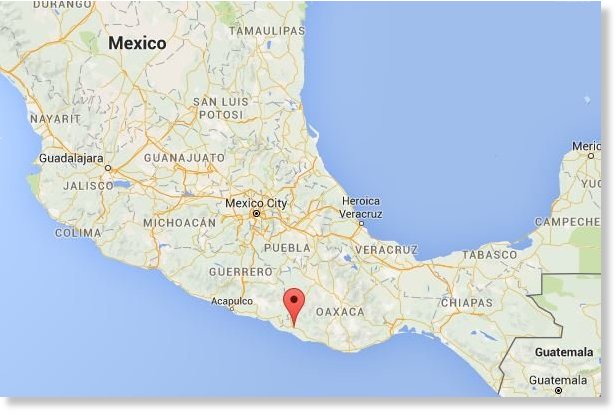
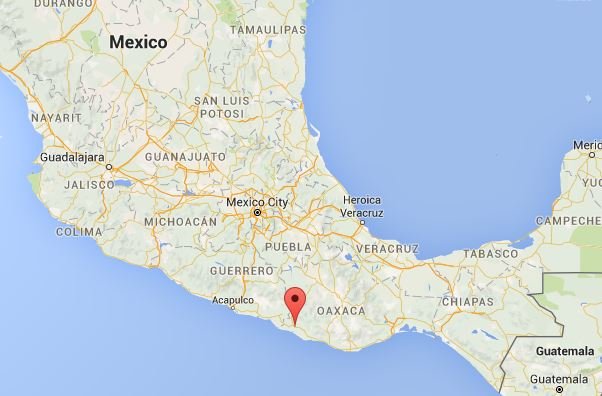
A strongly earthquake with a preliminary magnitude of 5.7 has struck near the city of Pinotepa Nacional in the southwestern state of Oaxaca, with shaking felt as far away as Mexico City, seismologists and residents say.

The earthquake, which struck at 3:50 p.m. local time on Monday, was centered about 20 kilometers southeast of Pinotepa Nacional, according to Mexico's seismological agency SSN. It said the earthquake struck at a shallow depth of 20 kilometers.

SSN initially measured Monday's earthquake at 6.0 before downgrading it to 5.4, but the U.S. Seismological Agency put the magnitude at 5.7.

Details about damage or casualties were not immediately available, but the tremors were felt as far away as Mexico City, where buildings shook and some were evacuated. Because the earthquake struck on land, there is no threat of a tsunami.

Mexico sits on the so-called 'Pacific Ring of Fire', an arc of fault lines circling the Pacific Basin which is prone to frequent and large earthquakes. In late March, a powerful 7.4-magnitude earthquake struck southwestern Mexico, killing at least two people and injuring 11 others.

Bizarro Earth

South Kyrgyzstan struck by strong 6.3-magnitude earthquake

Kyrgyzstan earthquake
© USGS
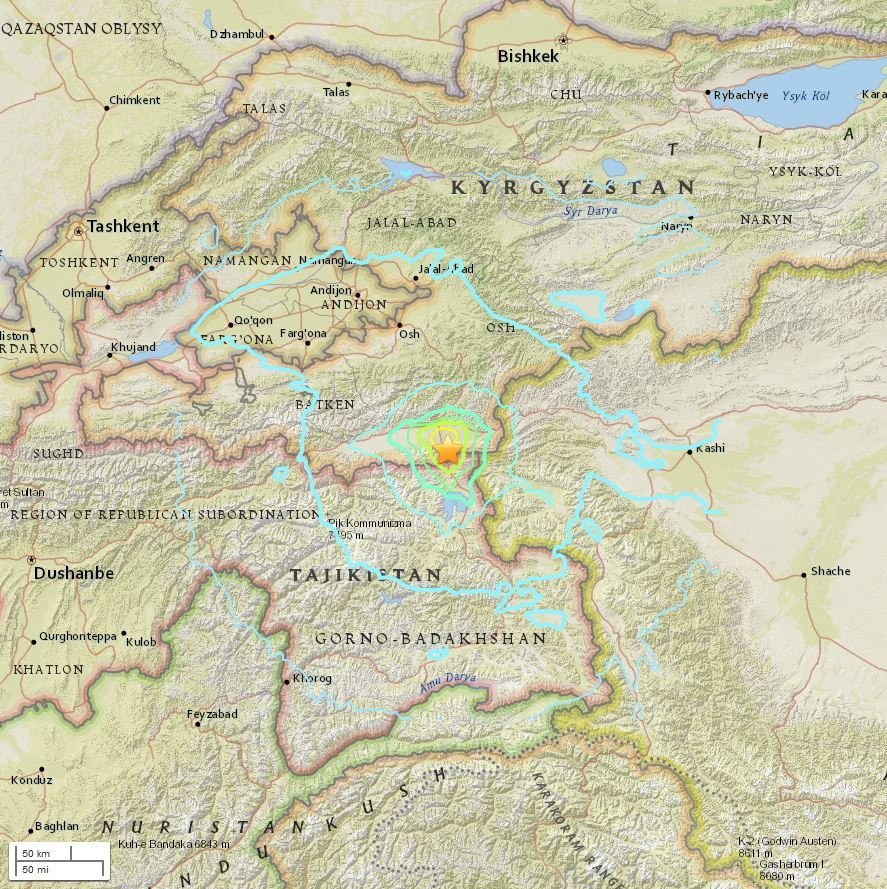
A strong 6.3-magnitude earthquake struck southern Kyrgyzstan on Sunday, the European Mediterranean Seismological Centre (EMSC) said.

The quake was registered at 11:17 GMT at the depth of 12 miles. It hit some 75 miles southeast from the Central Asian nation's second largest city of Osh, with a population of 200,000.

Tremors were felt wide across the region, with shocks reaching nearby Kazakhstan, a RIA Novosti correspondent in the Kazakh city Almaty said.

There were no immediate reports of casualties or damage from Kyrgyzstan's Emergencies Ministry.

Bizarro Earth

Earthquake magnitude 5.9 strikes off the coast of Japan

Earthquake in Japan
© Sputnik News
Moscow - A 5.9-magnitude earthquake has occurred off the coast of Japan, the US Geological Survey (USGS) reports. The earthquake struck at around 21:05 GMT on Thursday, about 102 kilometers (63 miles) southeast of Yonaguni, the westernmost inhabited island of Japan.

The epicenter was located at a depth of around 10 kilometers (6.2 miles), USGS said.

In April, a magnitude 6.5 earthquake struck to the east of Kumamoto city (the capital of Kumamoto Prefecture) on Japan's Kyushu Island.

It was followed by multiple aftershocks, including a 7.0-magnitude earthquake. Over 40 people were killed as a result of the natural disaster and more than 2,000 people were injured.

Japan is a seismically active region. In March 2011, a 9.0-magnitude offshore earthquake triggered a 46-foot tsunami that hit Japan's Fukushima nuclear power, leading to the leakage of radioactive materials and the shutdown of the plant. The accident is considered to be the world's worst nuclear disaster since Chernobyl.

Attention

Silent 'slow slip' earthquake detected off Gisborne, New Zealand

silent earthquake plotted
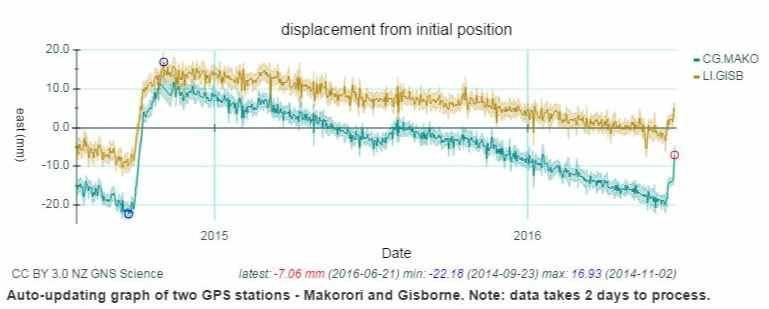
© GeoNetA silent earthquake's movement is plotted
A 'silent' earthquake that's been happening for a week, and could continue for months, has been detected off the coast of Gisborne.

GeoNet said today that the event, which could move faults at the equivalent of magnitude 5 or higher regular earthquakes, had just been detected and was being monitored.

The slow-motion earthquakes, also known as "slow slips", are undetectable by humans or seismographs, and are instead measured using changes in distance between global positioning system stations across the North Island.

They have been shown to be able to trigger - or alleviate - large, tsunami-generating earthquakes.


Follow slow-slip motion on GeoNet

The agency said a magnitude 4 earthquake off the coast of Gisborne last week was likely related.

The phenomenon is fairly new to science and, after being discovered in the United States, was first located in New Zealand in the early 2000s.

Bizarro Earth

Study predicts probability of magnitude 9+ earthquake in Aleutian Islands which could send mega-tsunami toward Hawaii

aleutian islands
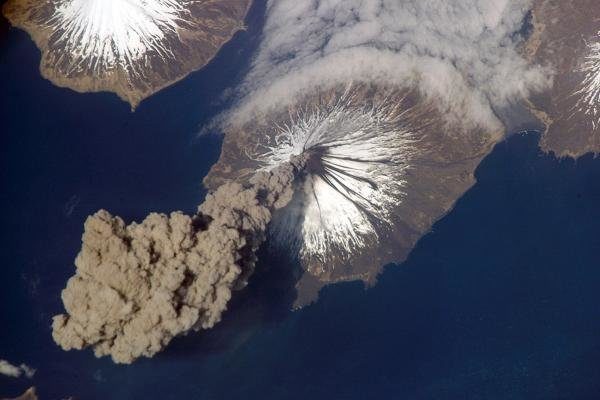
© UPI Photo/Jeff Williams/NASA The Aleutian Islands sit atop a hotspot of volcanic and tectonic activity, and scientists predict a nine percent chance of a mega-earthquake in the next 50 years.
There's a nine percent chance a magnitude 9 or larger earthquake will strike the Aleutian Islands in the next 50 years. That is the prediction offered by scientists from the University of Hawai'i at Mānoa -- made with the help of a newly designed computer model.

Researchers say an earthquake of that size could send a mega-tsunami in the direction of the Hawaiian Islands.

The Aleutian Islands, which stretch toward Russia from the coast of Alaska, sit along a subduction zone at the convergence of the Pacific and North American tectonic plates. Scientists say the chance of a dramatic slip along the fault lines that make up the subduction zone is significant.

They detailed the threat of a mega-earthquake in a new paper, published this week in the Journal of Geophysical Research - Solid Earth.

"Necessity is the mother of invention," lead study author Rhett Butler, a geophysicist at the UHM School of Ocean and Earth Science and Technology, explained in a news release. "Having no recorded history of mega tsunamis in Hawai'i, and given the tsunami threat to Hawai'i, we devised a model for Magnitude 9 earthquake rates following upon the insightful work of David Burbidge and others."

Comment: Further reading: Multiple recent powerful earthquakes reflect a planet in deep transition