Earthquakes
S


Boat

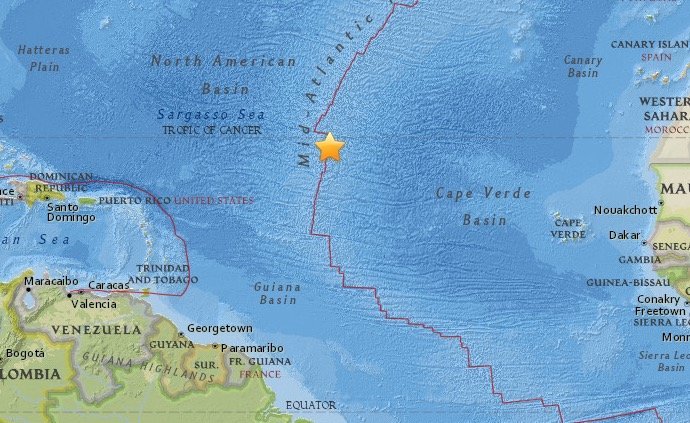
USGS: Magnitude 6.1 earthquake hits Northern Mid-Atlantic Ridge

Location
Earthquake Mid-Atlantic Ridge
© USGS22.661°N 45.133°W depth=10.0 km (6.2 mi)
Time
  1. 2016-06-21 16:26:34 (UTC)
  2. 2016-06-21 12:26:34 (UTC-04:00) in your timezone
  3. Times in other timezones
Nearby Places
  • 1813.0 km (1126.5 mi) ENE of Grande Anse, Guadeloupe
  • 1835.0 km (1140.2 mi) ENE of Saint-Francois, Guadeloupe
  • 1838.0 km (1142.1 mi) ENE of Le Moule, Guadeloupe
  • 1847.0 km (1147.7 mi) ENE of Sainte-Anne, Guadeloupe
  • 1853.0 km (1151.4 mi) ENE of Saint John's, Antigua and Barbuda

Attention

Magnitude 6.1 earthquake recorded near Namatanai, Papua New Guinea

Graph
© Dimas Ardian, Getty Images
An earthquake with preliminary magnitude of 6.1 has been recorded near Namatanai, Papua New Guinea on 21 June 2016 12:12:09.

The earthquake epicenter was located at precisely 67km WNW of Namatanai, Papua New Guinea and at a depth of approximately 366.37 km.

A provisional tsunami alert have been issued for the region following this earthquake.

Other details about the earthquake were not immediately available, and there were no immediate reports of damage or casualties.

Attention

New areas of motion detected near California's San Andreas Fault System

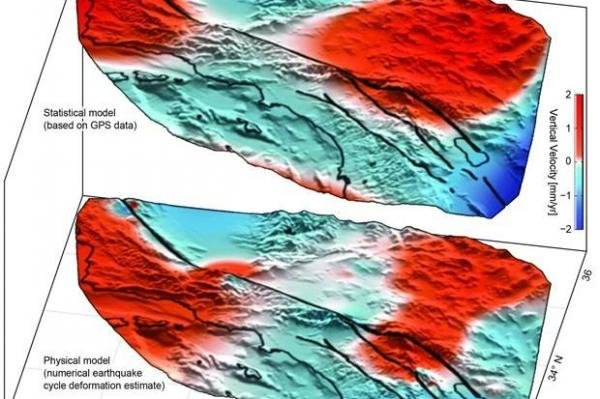
Statistical model
© University of Hawaii, ManoaThe top diagram shows the lobes of movement, uplift in red and subsidence in blue, found using GPS data, while the bottom diagram shows the lobes predicted by an earthquake simulation model.
Analysis of GPS data has revealed new areas of motion around the San Andreas Fault System.

Using data collected by the EarthScope Plate Boundary Observatory's GPS array, researchers identified 125-mile-wide "lobes" of uplift and subsidence. Over the last several years, the lobes, which straddle the fault line, have hosted a few millimeters of annual movement.

Computer models simulating the San Andreas Fault System have predicted such crustal movement, but the areas of motion hadn't been physically identified until now. Researchers used advanced statistical modeling to identify the movement among the inevitable statistical noise that comes with monitoring minute movements in the Earth's crust.

"While the San Andreas GPS data has been publicly available for more than a decade, the vertical component of the measurements had largely been ignored in tectonic investigations because of difficulties in interpreting the noisy data," lead author Samuel Howell, a researcher at the University of Hawaii at Manoa, explained in a news release. "Using this technique, we were able to break down the noisy signals to isolate a simple vertical motion pattern that curiously straddled the San Andreas fault."

Comment: California: San Andreas fault 'locked, loaded and ready to roll' with big earthquake, expert says


Bizarro Earth

Earthquake hotspot: 'Large scale motion' detected along San Andreas fault

Los Angeles
© Lucy Nicholson / Reuters
Large scale motion has been detected along the San Andreas Fault line, thanks to new analysis of existing data that could help predict 'The Big One' in the future.

Previously uninterpreted data showing vertical movement of the fault's crust detected several millimeters of uplift and subsidence in surface areas as large as 125 miles.

While these hotspots were predicted in models before, this is the first time scientists were able to block out white noise and other diluting factors such as precipitation and local surface geology.

Bizarro Earth

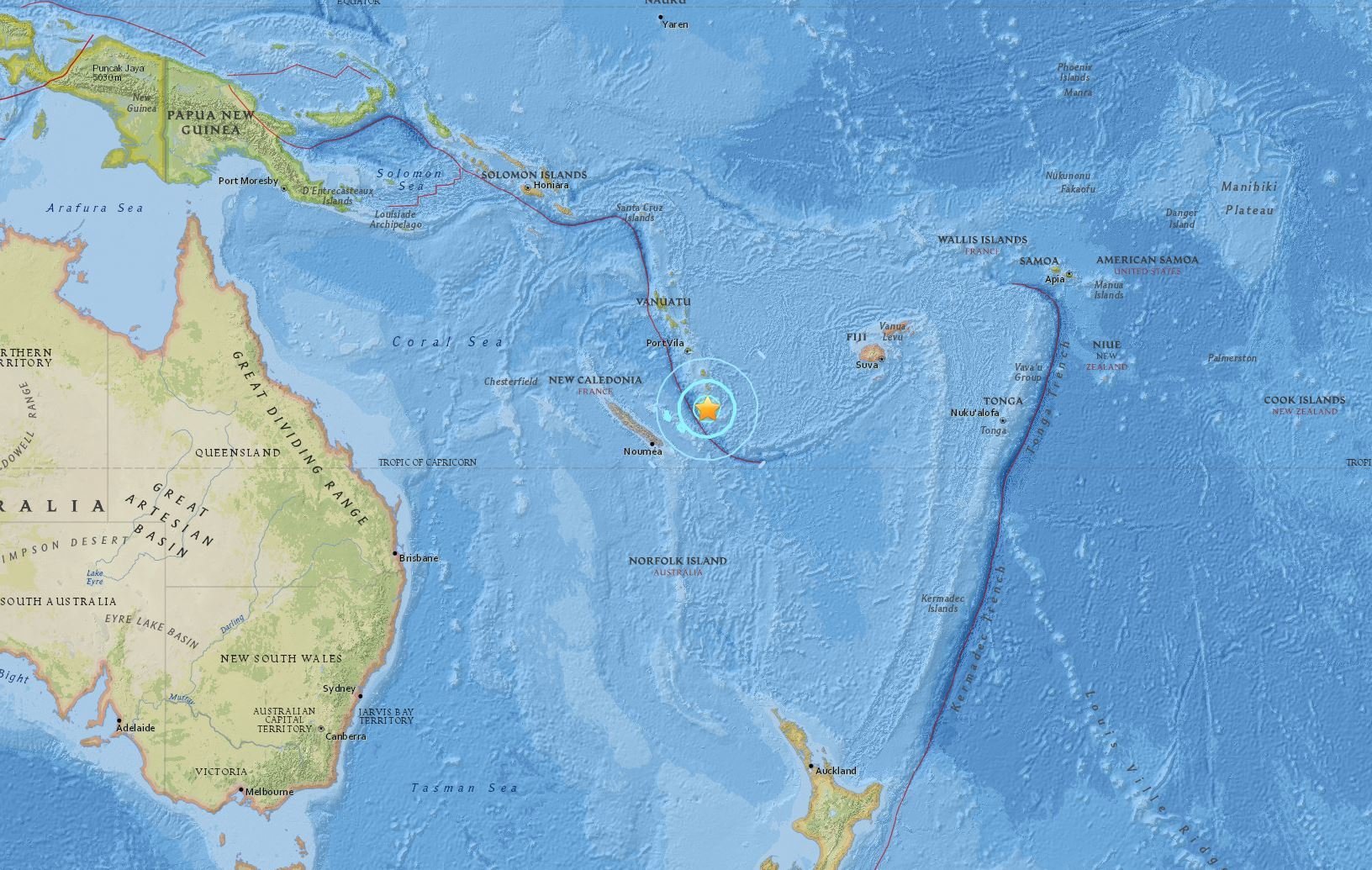
M6.3 earthquake 112km south of Isangel, Vanuatu

Earthquake map
© USGS
Large earthquake strikes south of Vanuatu. No tsunami alert has been issued.

Time: 2016-06-19 05:47:22 UTC-04:00
Location: 20.564°S 169.321°E
Depth: 13.6 km

Map

'Scars' from ancient geologic events may be linked to earthquakes says study

Earthquake image
© Deccan Chronicle Ancient geologic events may have left deep 'scars' that can come to life and play a role in earthquakes. (Representational image)
Ancient geologic events may have left deep 'scars' that can come to life and play a role in earthquakes, mountain formation and other ongoing processes on our planet, a new study which involved super-computer modelling of Earth's crust and upper-mantle has found. This changes the widespread view that only interactions at the boundaries between continent-sized tectonic plates could be responsible for such events, researchers said.

Scientists from University of Toronto (U of T) in Canada and the University of Aberdeen in the UK have created models indicating that former plate boundaries may stay hidden deep beneath the Earth's surface. These multi-million-year-old structures, situated at sites away from existing plate boundaries, may trigger changes in the structure and properties at the surface in the interior regions of continents, researchers said.

"This is a potentially major revision to the fundamental idea of plate tectonics," said Philip Heron from U of T. Researchers have proposed a 'perennial plate tectonic map' of the Earth to help illustrate how ancient processes may have present-day implications.

"It is based on the familiar global tectonic map that is taught starting in elementary school. What our models redefine and show on the map are dormant, hidden, ancient plate boundaries that could also be enduring or "perennial" sites of past and active plate tectonic activity," said Russell Pysklywec from U of T.

Comment: See also: Researchers believe earthquakes in SE US caused by chunks of Earth's mantle breaking off and sinking into the Earth


Better Earth

Unusual seismic activity continues around Yellowstone and California

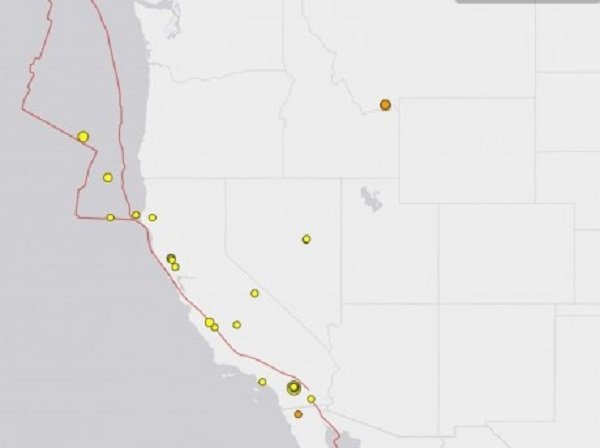
earthquake map
Over the past few days the mainstream media has been fixated on the largest mass shooting in U.S. history, but meanwhile there has been highly unusual seismic activity along major fault lines in California and near the Yellowstone supervolcano. Let's talk about Yellowstone first. In recent months, the big geysers have been behaving very strangely and this is something that my wife and I covered on our television show. And now, just over the past week there have been three very significant earthquakes in the region. On June 9th, there was a magnitude 3.7 earthquake, on June 13th there was a magnitude 4.3 earthquake and earlier today there was a magnitude 4.0 earthquake. Yes, the area around Yellowstone is hit by earthquakes all the time, but most of them are extremely small. For earthquakes of this size to be striking right around Yellowstone is highly unusual and more than just a little bit alarming.

The map below comes directly from the USGS, and it shows all of the earthquakes of magnitude 2.5 or greater that have hit the western portion of the United States over the last week. The three big earthquakes that struck southwestern Montana are visible on the map, although they are hard to see because the dots all overlap. But the main reason why I am showing you this map is because I want you to see all of the earthquakes that have been happening along the major fault lines in southern California in recent days...

Map

Magnitude 3.6 earthquake strikes near Brawley, California

Brawley California
© Bing MapsA map showing the epicenter of Tuesday afternoon's quake near Brawley.
A shallow magnitude 3.6 earthquake was reported Tuesday afternoon 1 mile from Brawley, according to the U.S. Geological Survey. The temblor occurred at 2:23 p.m. PDT at a depth of 6.8 miles.

According to the USGS, the epicenter was 8 miles from Imperial, 12 miles from El Centro and 20 miles from Calexico.

In the last 10 days, there have been 10 earthquakes of magnitude 3.0 or greater centered nearby.

Moon

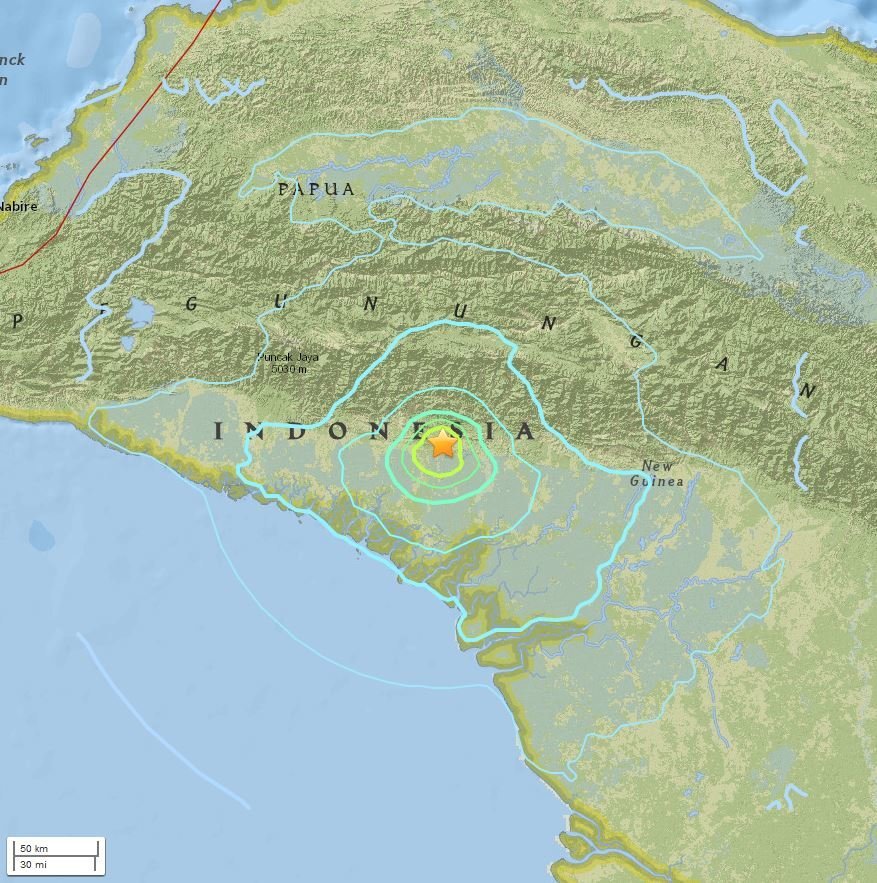
Magnitude 5.6 earthquake strikes off Indonesia coast

Indonesia earthquake
© USGS
A 5.6-magnitude earthquake occurred off the coast of Indonesia, the US Geological Survey (USGS) said on Wednesday.

The epicenter of the quake was located 194 kilometers (120.5 miles) southeast of the city Enarotali, Papua province, on the island of New Guinea, at a depth of 10 kilometers (6.2 miles), according to the agency.

There have been neither immediate reports of damages or casualties, nor a tsunami threat.

Arrow Up

USGS: 6.2 magnitude earthquake hits Pacific island of Vanuatu

Vanuatu quake map
There are no immediate reports of damage.

A 6.2-magnitude earthquake hit the Pacific island nation of Vanuatu on Tuesday (Jun 14), the United States Geological Survey (USGS) said.

There were no immediate reports of damage or casualties, and no tsunami warning was issued.

Vanuatu is part of the "Ring of Fire", a zone of tectonic activity around the Pacific that is subject to frequent earthquakes and volcanic eruptions.

The quake struck at a depth of 131 kilometres (81 miles), 92 kilometres northwest of the town of Isangel on Tanna island, USGS said.

Vanuatu has been rocked by a series of quakes this year, including some that prompted tsunami warnings.

Source: AFP/hs