Earthquakes
S


Attention

Sizable 4.3 magnitude earthquake hits west of Yellowstone

Graph
© Dimas Ardian, Getty Images
A sizable quake rattled the mountains west of Yellowstone Park Monday morning, registering a 4.3 magnitude.

The U.S. Geological Survey says the quake hit at 6:14 a.m. Monday with the epicenter about 32 miles west of West Yellowstone.

That would put the quake's location north of the Continental Divide, in the Centennial Valley.

The area is sparsely populated, and even an hour after the quake only a couple of people had reported feeling the quake to U.S.G.S.

The region on the west side of Yellowstone frequently has several small quakes per month, but Monday's quake was larger than usual.

Attention

Shallow magnitude 3.3 earthquake strikes near King City, California

 quake
© El Comercio/AP
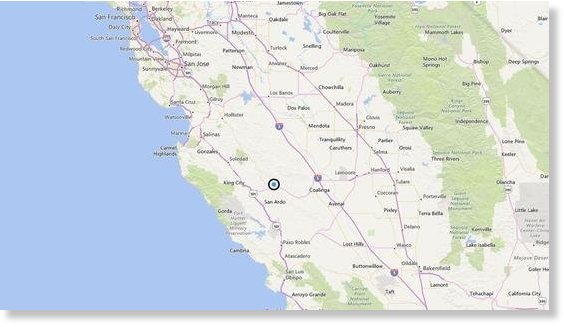
A shallow magnitude 3.3 earthquake was reported Saturday afternoon 18 miles from King City, Calif., according to the U.S. Geological Survey. The temblor occurred at 1:32 p.m. Pacific time at a depth of 3.1 miles.

According to the USGS, the epicenter was 24 miles from Coalinga, 26 miles from Greenfield and 32 miles from Soledad.

In the last 10 days, there have been no earthquakes of magnitude 3.0 or greater centered nearby.

This information comes from the USGS Earthquake Notification Service and this post was created by an algorithm written by the author.

A map showing the location of the epicenter of Saturday afternoon's quake near King City
© Bing MapsA map showing the location of the epicenter of Saturday afternoon's quake near King City, California

Attention

Hundreds of aftershocks following magnitude 5.2 earthquake in Borrego Springs, California

 quake
© El Comercio/AP
There have been hundreds of aftershocks from the magnitude 5.2 earthquake that rattled Southern California on Friday.

Aftershocks are common after significant quakes, and Friday's temblor - which was felt from San Diego to Los Angeles and beyond - produced a few larger than 3.0. Most were much smaller.

The quake occurred in a sparsely populated area near Borrego Springs in San Diego County but the 1:04 a.m. quake was felt across a wide area.

"It's the biggest one for a while," said Egill Hauksson, a research professor of geophysics at Caltech.

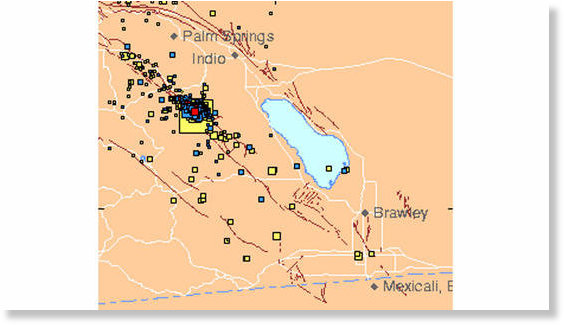
Friday's temblor occurred on the San Jacinto fault, the most active in the region, Hauksson said. As of Saturday, the U.S. Geological Service listed more than 200 aftershocks in the Borrego Springs area, and there were others nearby.

Small boxes on a U.S. Geological Survey map represent the epicenters of aftershocks from Friday's magnitude 5.2 earthquake, signified by the larger yellow box.
© U.S. Geological SurveySmall boxes on a U.S. Geological Survey map represent the epicenters of aftershocks from Friday's magnitude 5.2 earthquake, signified by the larger yellow box.

Comment: See also: Southern California shaken by 5.2 earthquake


Attention

4.9 magnitude earthquake strikes central Japan, tremors felt in Tokyo

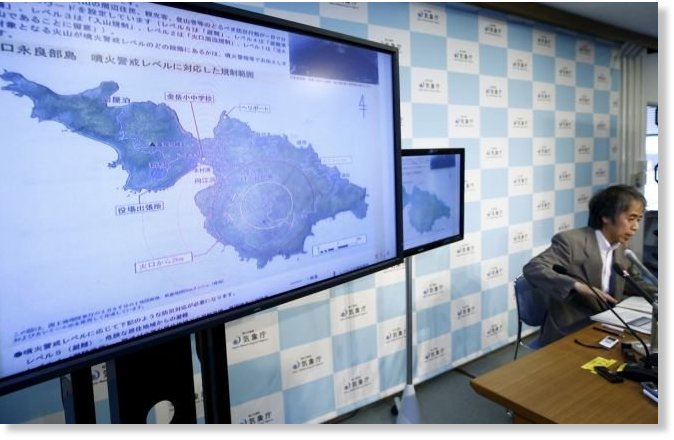
Senior member of Japan Meteorological Agency in a meeting
© ReutersSenior member of Japan Meteorological Agency in a meeting
A 4.9-magnitude earthquake hit central Japan on Sunday morning, according to the US Geological Survey (USGS).

The epicenter of the tremor was 6km east of Noda and at a depth of 45km. The local media reported that the quake struck at 7.54am (local time) in the southern part of Ibaraki Prefecture at a depth of 40km.

The Japan Meteorological Agency said the earthquake struck the Kanto region, but there was no tsunami alert. Tremors were felt in Tokyo, the capital of Japan.

However, there were no immediate reports of damage or injuries.

Info

Ancient plate tectonic boundaries may reactivate

Ancient Fault Lines
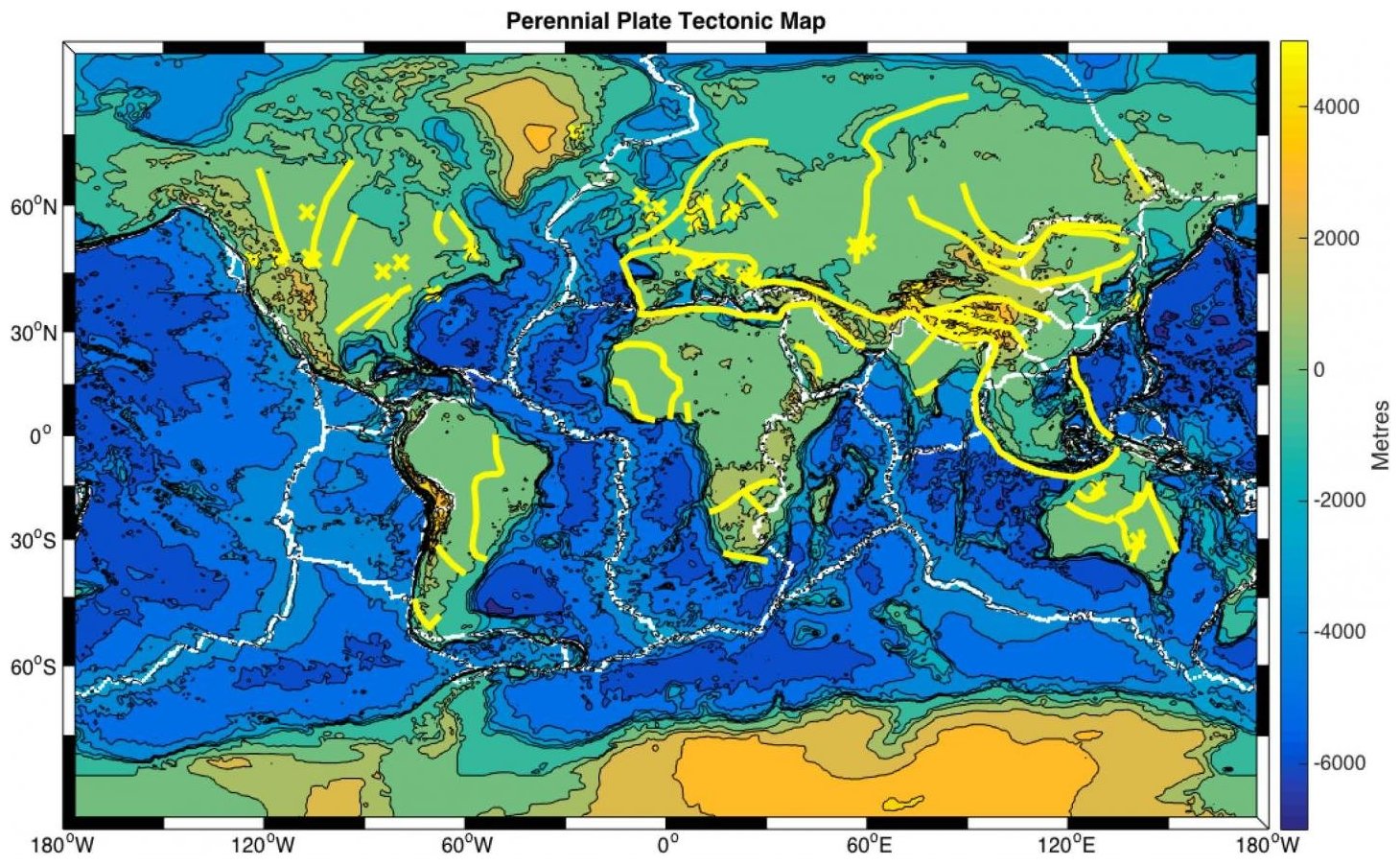
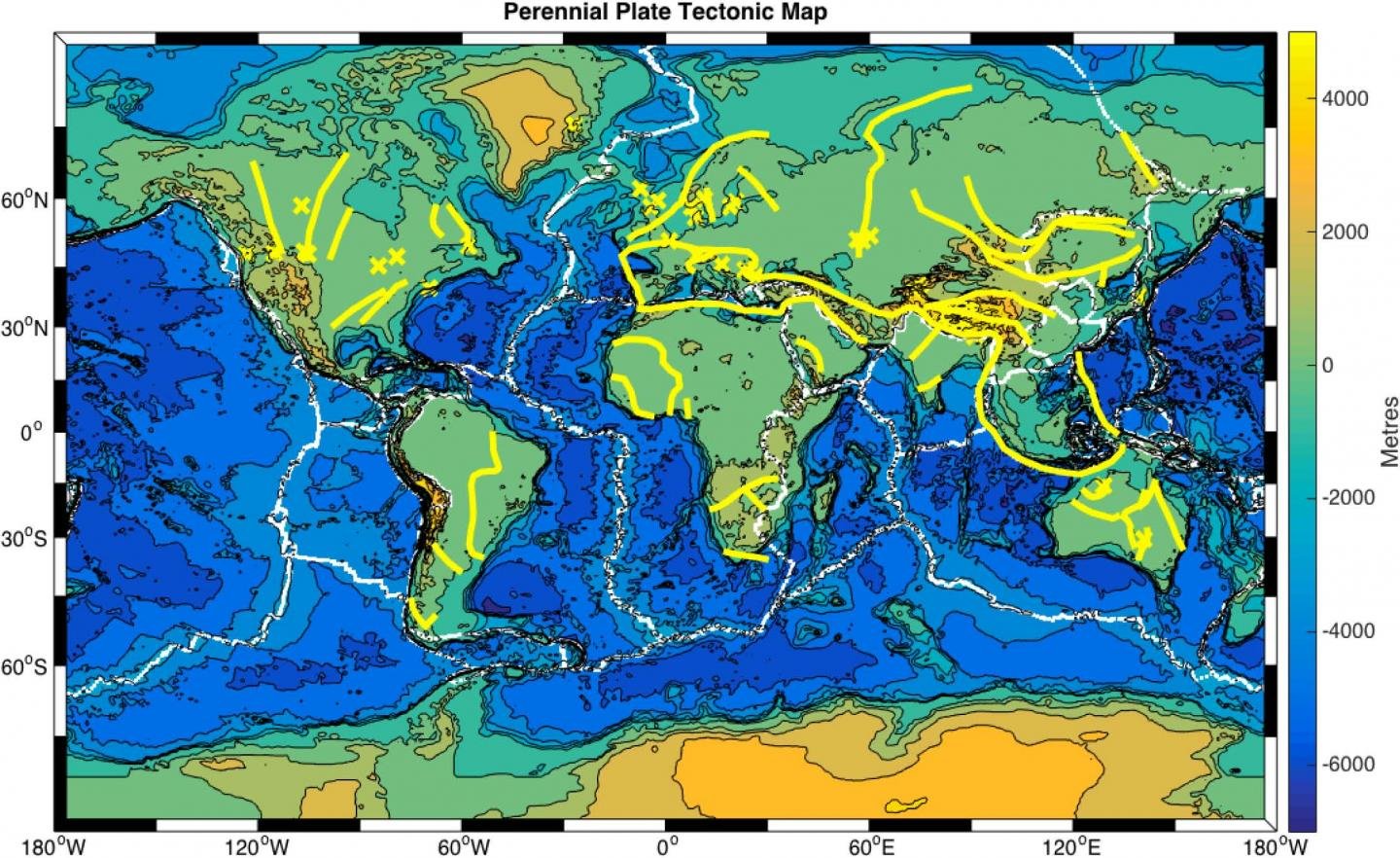
© Russell Pysklywec, Philip Heron, Randell StephensonA proposed perennial plate tectonic map. Present-day plate boundaries (white lines), with hidden ancient plate boundaries that may reactivate to control plate tectonics (yellow lines). Regions where mantle lithosphere heterogeneities have been located are given by yellow crosses.
Super-computer modelling of Earth's crust and upper-mantle suggests that ancient geologic events may have left deep 'scars' that can come to life to play a role in earthquakes, mountain formation, and other ongoing processes on our planet. This changes the widespread view that only interactions at the boundaries between continent-sized tectonic plates could be responsible for such events.

A team of researchers from the University of Toronto and the University of Aberdeen have created models indicating that former plate boundaries may stay hidden deep beneath the Earth's surface. These multi-million-year-old structures, situated at sites away from existing plate boundaries, may trigger changes in the structure and properties at the surface in the interior regions of continents.

"This is a potentially major revision to the fundamental idea of plate tectonics," says lead author Philip Heron, a postdoctoral fellow in Russell Pysklywec's research group in U of T's Department of Earth Sciences. Their paper, "Lasting mantle scars lead to perennial plate tectonics," appears in the June 10, 2016 edition of Nature Communications.

Heron and Pysklywec, together with University of Aberdeen geologist Randell Stephenson have even proposed a 'perennial plate tectonic map' of the Earth to help illustrate how ancient processes may have present-day implications.

"It's based on the familiar global tectonic map that is taught starting in elementary school," says Pysklywec, who is also chair of U of T's Department of Earth Sciences. "What our models redefine and show on the map are dormant, hidden, ancient plate boundaries that could also be enduring or "perennial" sites of past and active plate tectonic activity."

Attention

Southern California shaken by 5.2 earthquake

 quake
© El Comercio/AP
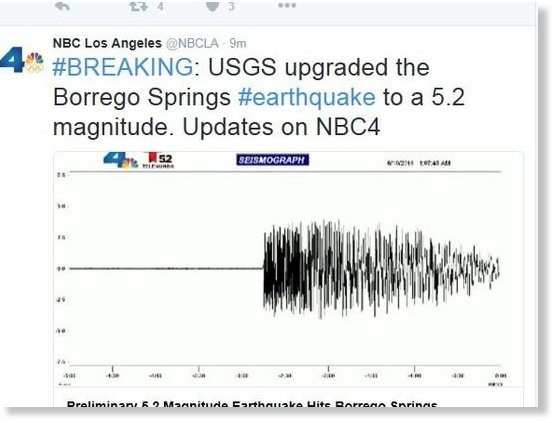
An earthquake with a preliminary magnitude of 5.2 rocked Southern California, rousing residents out of bed at about 1:05 a.m. PT on Friday.

The quake was centered about 13 miles north-northwest near Borrego Springs in the desert east of Los Angeles, the U.S. Geological Service reported. It was initially rated at 5.1, but was upgraded to 5.2 within an hour afterward.

On the west side of Los Angeles, about 100 miles from the epicenter, the quake produced a long shaking motion lasting about 30 seconds. There was no hard jolt.

In USA TODAY's news bureau on the ninth floor of an office tower near Los Angeles International Airport, window blinds shook and the building structure rolled in steady waves.

The quake was also felt in San Diego.


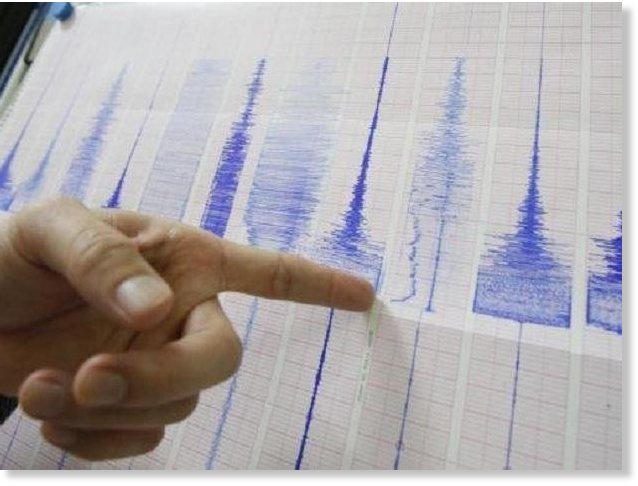
A tweet from Los Angeles television station KNBC shows how the quake looked on a seismograph

Arrow Up

Shallow magnitude 6.2 earthquake strikes near Solomon Islands, South Pacific

Solomon Island earthquake
© US Geological SurveyThe epicentre of Friday's 6.2 earthquake was 20km west-northwest of Auki, capital of Malaita province.
A shallow magnitude 6.2 earthquake has struck in Solomon Islands.

The United States Geological Survey says the quake was at a depth of 10 kilometres at 4:17pm, local time.

Its epicentre was 20 kilometres west-northwest of Auki, the capital of Malaita province.

There have been no initial reports of damage and no tsunami warning has been issued.

Alarm Clock

6.1 magnitude shallow earthquake & powerful aftershocks strike Nicaragua

Nicaragua quake map
© earthquake.usgs.gov
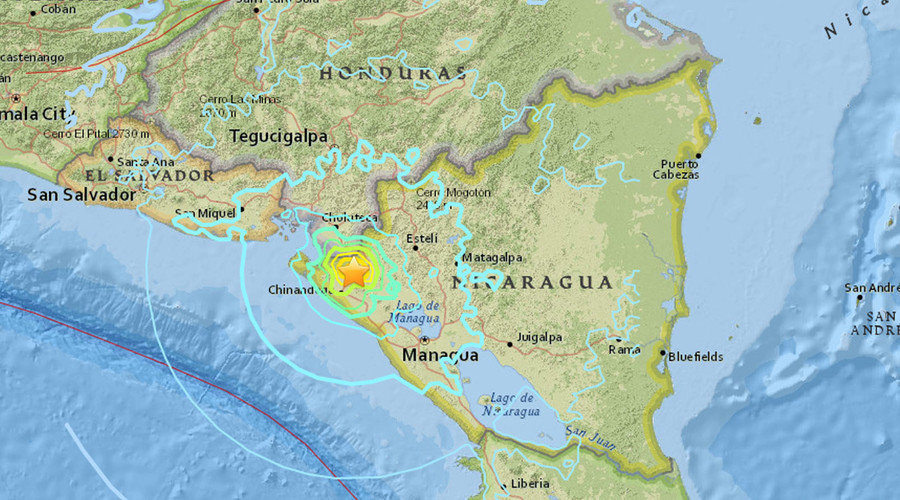
A 6.1 magnitude earthquake followed by a series of aftershock has struck Nicaragua, according to USGS. Tremors were reportedly felt in neighboring Honduras, El Salvador and Costa Rica.

The earthquake, with an estimated magnitude of 6.1, struck some 25 kilometers from the cities of Chinandega and El Viejo at a depth of 10 kilometers, according to the US Geological Survey.

Within 20 minutes of the initial jolt, the same area was hit by 5.1, 4.8 and 4.6 aftershocks.

Locals said they felt the ground shaking for an extended period with tremors reaching El Salvador, Honduras and Costa Rica.

"Very very strong. And it continues to shake," a resident of Chinandega told BNO News.

No casualties or damage have been reported so far.

Arrow Up

6.2 magnitude earthquake strikes Indonesia off Lombok coast

Lombok earthquake map
© earthquake.usgs.gov
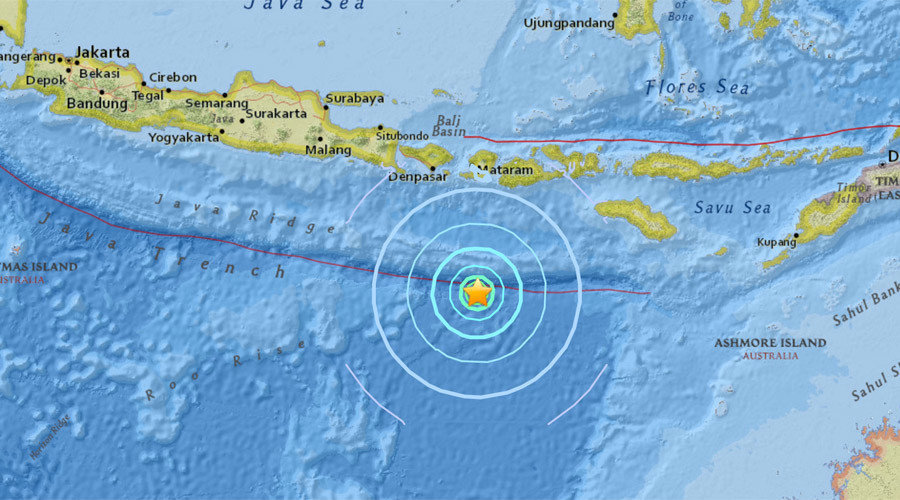
A powerful 6.2 magnitude earthquake has struck some 190 miles south of the Indonesian island of Lombok, according to preliminary data from the US Geological Survey.

The quake happened at a depth of 29 km some 300 kilometers south of Praya, the main town of Central Lombok Regency on Lombok Island.

There were no immediate reports of casualties or damage.

The quake happened along the 5,600 km of the tectonically active Sunda convergent margin, where India and Australia plates are converging with and subducting beneath the Sunda plate at a rate of approximately 50 to 70 mm/yr, according to the USGS.

Comment: Only two days ago a 6.3 magnitude earthquake struck off Indonesia's eastern coast.


Bizarro Earth

Magnitude 6.3 undersea earthquake strikes off Indonesian coast

Earthquake off Indonesian Coast
© USGS
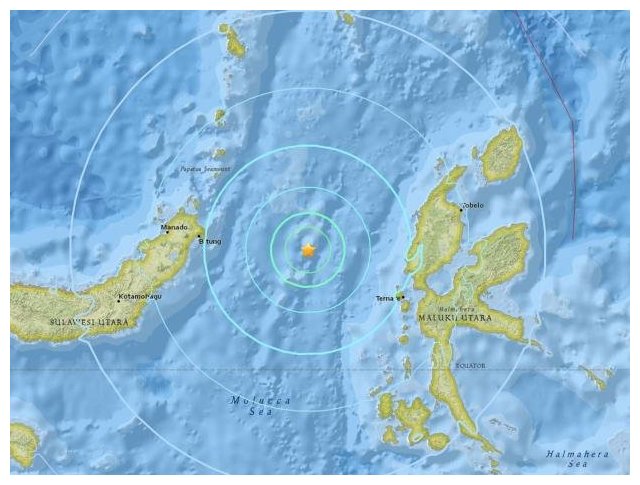
The U.S. Geological Survey says a 6.3 magnitude undersea earthquake has struck off Indonesia's eastern coast.

The quake struck at 19:15 GMT Tuesday, 126 kilometers (80 miles) west northwest of Kota Ternate, Indonesia at a depth of 38.3 kilometers (24 miles), the USGS said.

There were no immediate reports of casualties or damage from the quake and no tsunami warning was issued.

Indonesia is prone to earthquakes due to its location on the Pacific "Ring of Fire," an arc of volcanoes and fault lines in the Pacific Basin. In December 2004, a massive earthquake off Sumatra island triggered a tsunami that killed 230,000 people in a dozen countries.

Source: Associated Press