Earthquakes
S


Attention

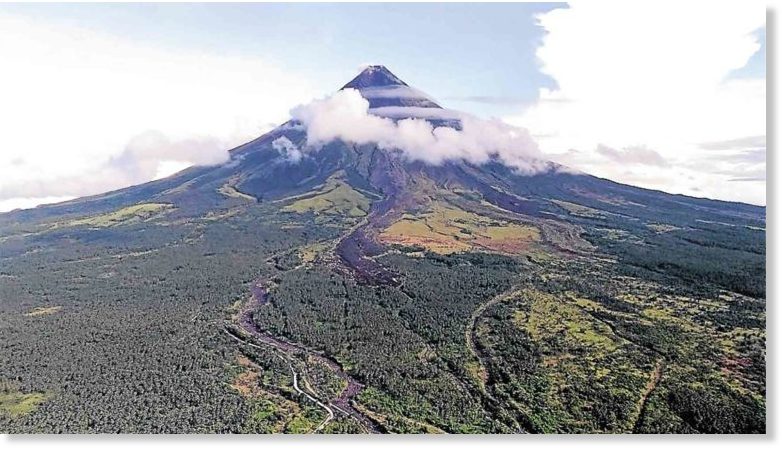
Mayon Volcano in the Philippines remains on alert level 1 after 57 volcanic quakes

Mayon Volcano in Albay province is Bicol region’s top attraction.
© Michael B. JaucianMayon Volcano in Albay province is Bicol region’s top attraction.
The Philippine Institute of Volcanology and Seismology (Phivolcs) said Monday, October 30, that Mayon Volcano remains on alert level 1 following the occurrence of at least 57 volcanic quakes since Saturday, indicating its sustained abnormal state.

Alert Level 1 means Mount Mayon is having an "abnormal condition."

"Although this means that presently no magmatic eruption is imminent, it is strongly advised that the public refrain from entering the 6-kilometer radius Permanent Danger Zone due to the perennial life-threatening dangers of rockfalls, landslides/avalanches at the middle to upper slope, sudden ash puffs and steam-driven or phreatic eruptions from the summit," the Phivolcs 8 a.m. bulletin stated.

Phivolcs resident volcanologist Ed Laguerta said the agency is closely monitoring the surge of volcanic earthquakes currently taking place for the past three days, specifically the parameters that could trigger the volcanic tremors.

Seismograph

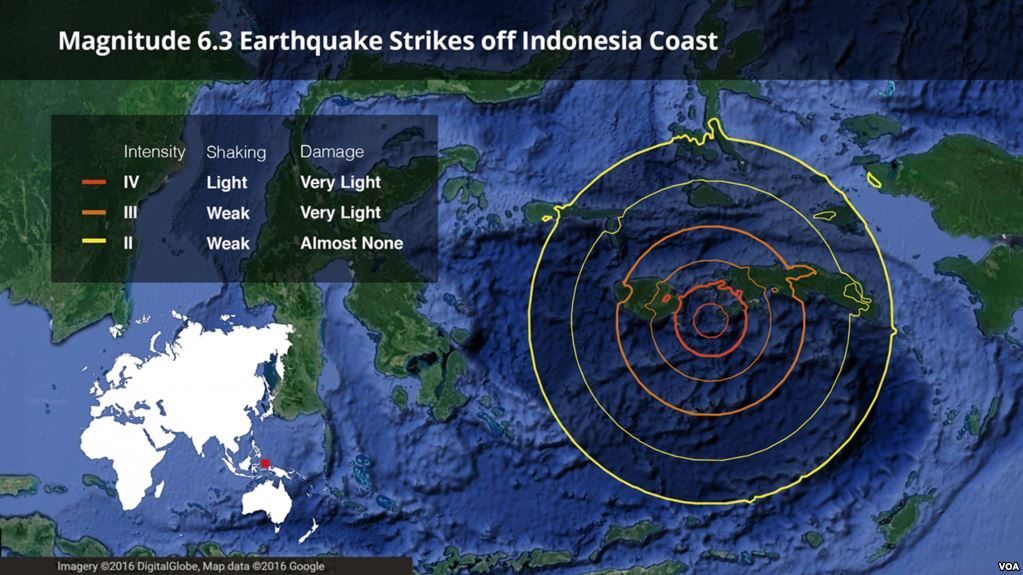
Strong shallow 6.3 magnitude earthquake hits eastern Indonesia

Indonesia earthquake map
© VOA
A strong earthquake with a 6.3 magnitude struck eastern Indonesia on Tuesday, causing some damage to buildings and sending people running from their homes.

The quake struck at a depth of 32.4 kilometres (20 miles) and was centred 32 kilometres west of Hila on the island of Ambon, the US Geological Survey (USGS) reported.

There were no immediate reports of injuries and no tsunami warning was issued. The USGS website assessed the likelihood of deaths or major damage as low.

"There was damage and it is still being monitored," Mochammad Riyadi, an official at Indonesia's meteorology and geophysics agency, told AFP.

The earthquake was one of five tremors that rattled Maluku province within 30 minutes, according to the agency. The others were all under magnitude six.

"People panicked and scattered out of houses and buildings," said national disaster mitigation agency spokesman Sutopo Purwo Nugroho.

Comment: Earlier today a shallow magnitude 7.0 earthquake struck off New Caledonia in the South Pacific.


Seismograph

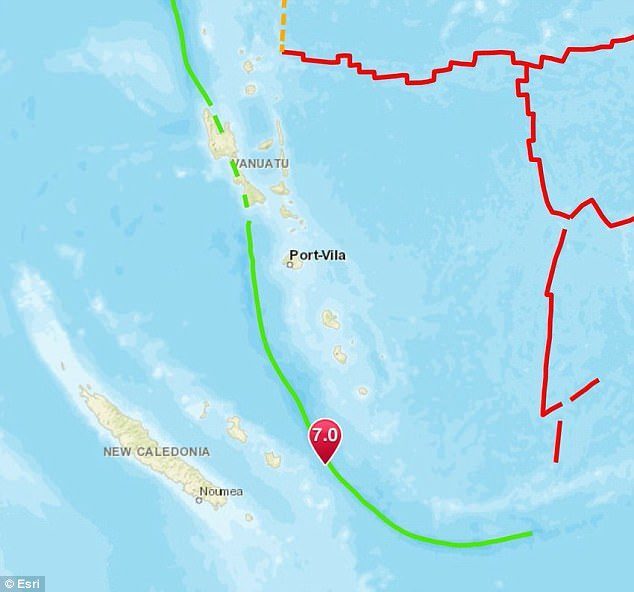
Shallow magnitude 7.0 earthquake hits off New Caledonia, South Pacific

New Caledonia earthquake
© Esri7.0 magnitude earthquake, with a depth of 15km, struck south of Vanuatu just after 11.30am on Tuesday
A major undersea earthquake of magnitude 7.0 has struck close to New Caledonia in the South Pacific, the US Geological Survey says.

The quake, which was at a shallow depth of 15 km below the seabed, did not trigger a tsunami, according to the Pacific Tsunami Warning Centre in Hawaii and the Joint Australian Tsunami Warning Centre.

The epicentre was located 117.48 km east of the town of Tadine, on the Loyalty Islands, part of France's New Caledonia territory.

There were no immediate reports of injuries or damage.

A spokesman for the government in Noumea, the New Caledonia capital, and staff of two hotels contacted by Reuters said they did not feel the quake.

Source: AAP - SBS Wires

Seismograph

Shallow 6.0-magnitude earthquake hits north of Franz Josef Land, Russia

chart
An earthquake measuring 6.0 on the Richter scale jolted North of Franz Josef Land at 19:11:01 GMT on Saturday, the U.S. Geological Survey said.

The epicenter, with a depth of 10.0 km, was initially determined to be at 86.89 degrees north latitude and 55.13 degrees east longitude.

Comment: 2 other shallow earthquakes (of 5.7 magnitude) also struck the same area about 3 hour prior to the above event.


Seismograph

Four large earthquakes recorded in Iceland's most powerful volcano

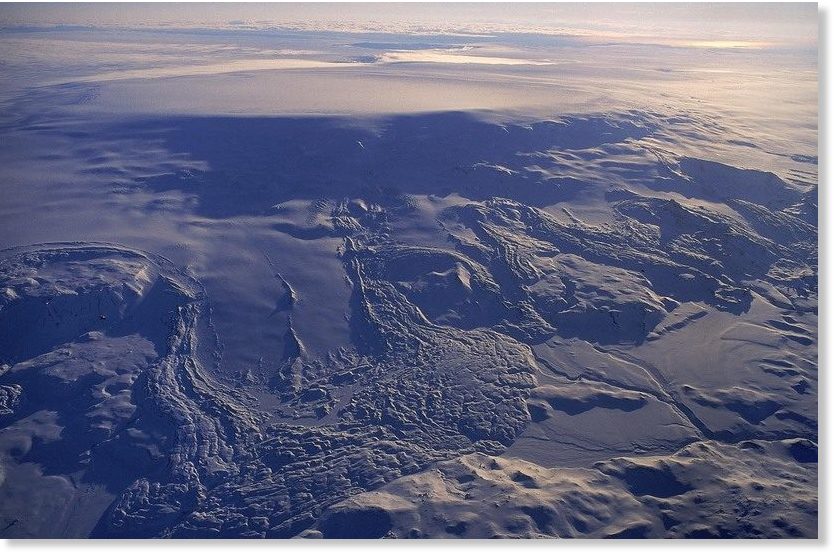
The Bárðarbunga caldera is located under Vatnajökull glacier, Europe's largest glacier.
© Oddur SigurðssonThe Bárðarbunga caldera is located under Vatnajökull glacier, Europe's largest glacier.
Four large earthquakes occurred in the Bárðarbunga volcanic system last night, the largest earthquakes since the 2014-2015 volcanic eruption.

The first earthquake of magnitude 3.9 on the richter scale occured at 23:02 last night, followed by a 3.2 earthquake at 23:03. The third quake hit the volcano at 23:26 and measured 4.7. The fourth earthquake of magnitude 4.7 occured 16 minutes past midnight.

An earthquake measuring 4.1 took place in the volano earlier this week and several earthquakes hit the volcano in September.

Bárðarbunga is the largest and most powerful volcano in Iceland. It is located under the northern part of the Vatnajökull glacier in South Iceland, Europe's largest glacier. The Bárðarbunga volcanic system is approximately 200 km (120 miles) long.

Bizarro Earth

Strong 6.7 magnitude earthquake strikes Indonesia

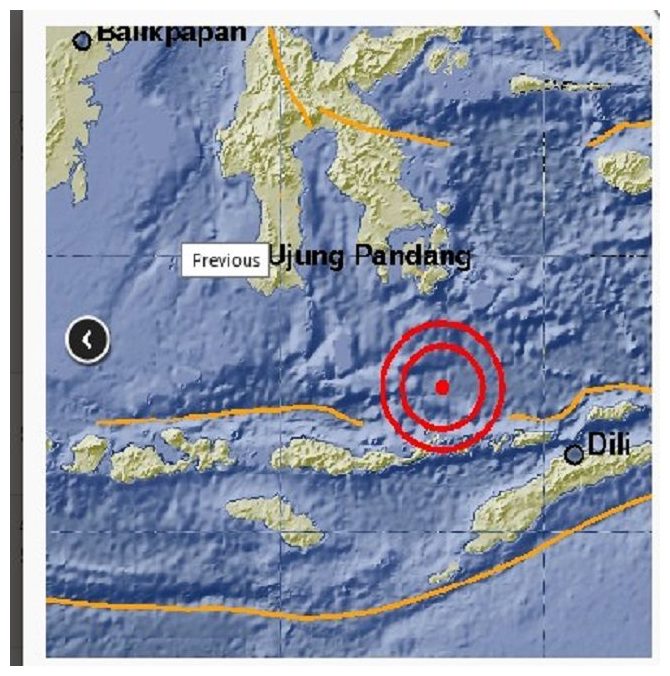
Indonesian Earthquake
© The Jakarta PostA map provided by the Meteorology, Climatology and Geophysics Agency (BMKG) shows the epicenter of a strong quake that jolt waters off the coast of East Nusa Tenggara on Oct. 24, 2017.
A strong 6.7-magnitude earthquake struck off the coast of East Nusa Tenggara on Tuesday, US seismologists said, but no tsunami warning was issued and there were no immediate reports of casualties or damage.

The quake hit East Nusa Tenggara about 318 kilometres kilometres northwest of the provincial capital Kupang at a depth of 549 kilometres, according to the US Geological Survey.

Seismograph

Strong shallow earthquake of magnitude 5.9 southwest of Africa

chart
Most important Earthquake Data:

Magnitude : 5.9

Local Time (conversion only below land) : Unknown

GMT/UTC Time : 2017-10-23 08:32:34

Depth (Hypocenter) : 10 km

Bizarro Earth

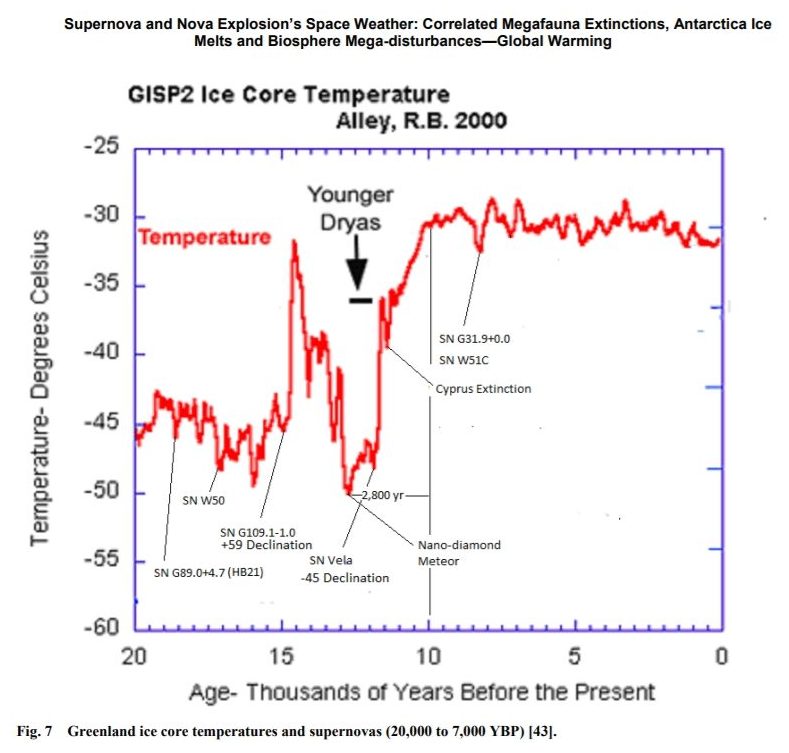
Supernova theory explains global warming, extinction events, ice ages says engineer

Do Supernova Events Cause Extreme Climate Changes?
"Global warming will not be reduced by reducing man made CO2 emissions" - Dr. William Sokeland
Ice Core Temps
© No Tricks Zone
In recent years, mass die-offs of large animals - like the sudden deaths of 211,000 endangered antelopes within a matter of weeks - have been described as "mysterious" and remain largely unexplained.

Determining the cause of the retreat to ice ages and the abrupt warmings that spawned the interglacial periods has remained controversial for many decades.

Dr. William Sokeland, a heat transfer expert and thermal engineer from the University of Florida, has published a paper in the Journal of Earth Science and Engineering that proposes rapid ice melt events and ice age terminations, extreme weather events leading to mass die-offs, and even modern global warming can be traced to (or at least correlate well with) supernova impact events.

The perspectives and conclusions of researchers who claim to have found strong correlations that could explain such wide-ranging geological phenomena as the causes of glacials/interglacials, modern temperatures, and mysterious large animal die-offs should at least be considered...while maintaining a healthy level of skepticism, of course.

Discovery - if that is potentially what is occurring here - is worth a look.

Seismograph

North Alabama records strongest earthquake this year

Alabama earthquake
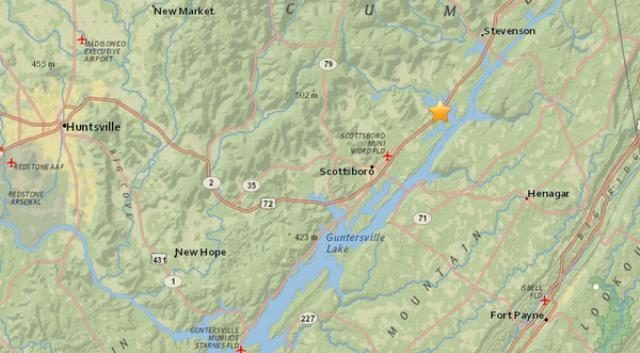
© USGSThe star marks the epicenter of the earthquake detected Friday morning near Scottsboro.
What's believed to be the strongest earthquake to be detected in north Alabama this year occurred Friday morning near Scottsboro.

According to the U.S. Geological Survey, a magnitude 2.9 earthquake was detected about 10:38 a.m.

While that's a minor earthquake likely not to be noticed, it's the strongest one of the year so far. The previous strongest quake was magnitude 2.7 near Decatur.

It's also the fourth quake this year detected in northeast Alabama. Two were near Fort Payne in DeKalb County and another near Scottsboro in Jackson County.

It's at least the eighth earthquake in 2017 detected in the northern half of the state.

Friday's quake was detected nine miles northeast of Scottsboro and 24 miles north northwest of Fort Payne, according to the USGS. It occurred more than 5.6 miles below the earth's surface, the USGS said.

Seismograph

Shallow earthquake at 6.1 magnitude hits off the coast of Japan

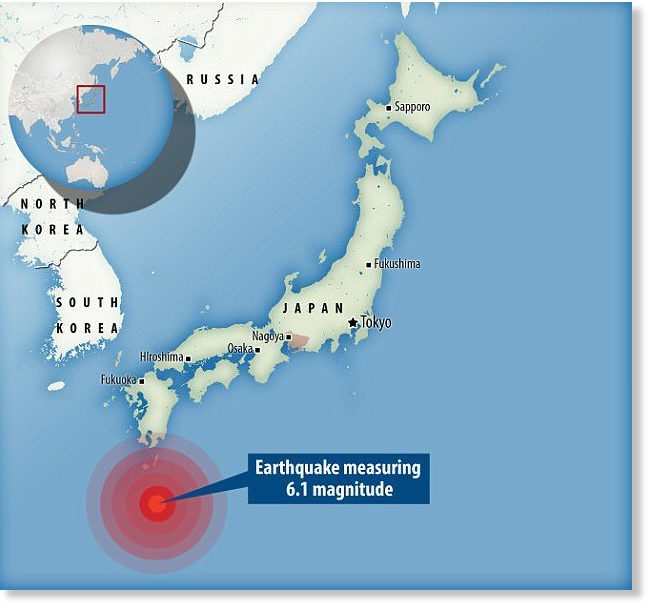
Shaken: The 6.1 magnitude earthquake struck 424 miles off Japan's island of Kyushu
An earthquake of magnitude 6.1 struck off southern Japan on Thursday, the United States Geological Survey said.

The quake struck 424 miles off Japan's island of Kyushu at a depth of 6.2 miles, the agency said.

There are no immediate reports of damage or casualties.

This comes two weeks after a similar earthquake, at 6.3 on the Richter scale, hit 180 miles east of Iwaki, south of Fukushima, Japan.

It occurred 50 miles deep on the Japan trench, which is part of the area of seismic activity known as the Pacific Ring Of Fire.