Earthquakes
S


Seismograph

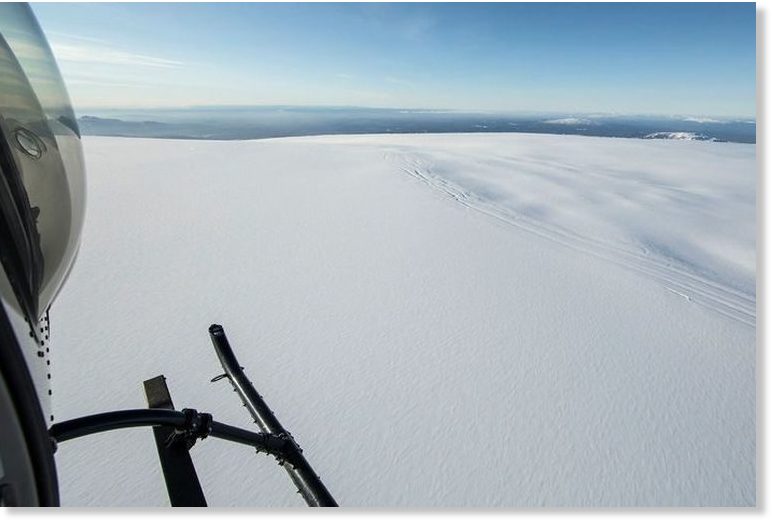
Two earthquakes measuring 3.9 hit Bárðarbunga volcano in Iceland

Bárðarbunga is located in the Vatnajökull ice cap
© mbl.is/Árni SæbergBárðarbunga is located in the Vatnajökull ice cap
Two earthquakes of the magnitude of 3.9 occurred in Bárðarbunga in Vatnajökull glacier this afternoon.

Further smaller quakes have been detected following these ones.

There are no signs of volcanic unrest reports the Iceland Met Office.

Comment: This latest seismic activity continues the increasing trend set in September and through October, see the following report for further details: Four large earthquakes recorded in Iceland's most powerful volcano.


Seismograph

Another 134 earthquakes hit Monterey County, California

chart
A 4.6 magnitude earthquake shook Monterey County last Monday, and the area hasn't stopped shaking since.

Last week's widely-felt quake was centered 13 miles northeast of Gonzales, along the San Andreas Fault.

Since then, there have been 134 earthquakes within 5 kilometers (or about 3 miles) of the epicenter, according to the U.S. Geological Survey.

However, most of those aftershocks weren't felt by the Central Coast. Only 17 were stronger than a 2.5 magnitude and six were greater than 3.0, said Ole Kaven, a seismologist with the USGS.

Comment: This happened there just last week:

Monterey County in California struck with a series of 3 earthquakes after more than a dozen quakes last week


Seismograph

Shallow magnitude 6 earthquake hits off Samoa

chart
The U.S. Geological Survey says a magnitude 6 earthquake struck waters west of Samoa and American Samoa. There were no immediate reports of damage or injuries.

The agency said Monday the earthquake was centered 220 miles west of Apia, Samoa, and 290 miles west of Pago Pago, American Samoa.

The quake struck at a depth of 6 miles (10 kilometers) shortly before 8 a.m. in American Samoa.

The Pacific Tsunami Warning Center in Honolulu said there was no chance of tsunami from the temblor.

Nua Leilosi of American Samoa's Department of Public Safety says she didn't feel any shaking.

Source: AP

Seismograph

Strong shallow earthquake of magnitude 6.2 hits off Wallis and Futuna in the south Pacific

chart
Most important Earthquake Data:

Magnitude : 6.2

Local Time (conversion only below land) : Unknown

GMT/UTC Time : 2017-11-20 18:51:04

Depth (Hypocenter) : 10 km

Dominoes

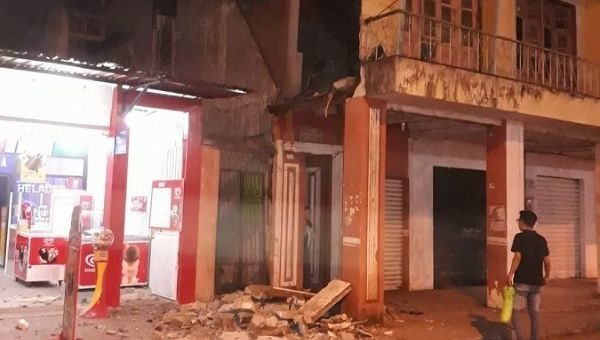
Minor damages after earthquakes 6.2 and 5.8 hit Ecuador coast

earthquake Ecuador
© Ecu911Authorities reported that several houses suffered damages in the province of El Oro.
Emergency service cameras caught the moment when the earthquakes hit the Ecuadorean coastal towns.

Two earthquakes shook the coastal area of Ecuador on Friday, leaving several structures damaged.

A first 6.2 magnitude earthquake hit the city of Guayaquil at 8:40 a.m. local time and was felt strongly in other provinces. It was recorded to have a depth of 47.11 kilometers.

The earthquake occurred 20 minutes before a simulation exercise was planned in that city to prepare citizens on how to deal with these types of emergencies.

On the same day, at 11:23 p.m. local time, a 5.8 magnitude earthquake hit the city of Balao in the same province, Guayas. The quake was closer to the surface, with 8.4 km of depth. No deaths have been reported.

Seismograph

Fracking Earthquakes: Government sponsored scientist reveals link and cover up

Fracking Earthquakes: Government sponsored scientist reveals link and cover up
Hydraulic fracturing is a natural gas extraction method that has become extremely controversial for its environmental impacts. Fracking is the process of drilling down into the earth before a high-pressure water mixture is directed at the rock to release the gas inside. Water, sand, and chemicals are injected into the rock at high pressure, which allows the gas to flow out to the head of the well. Wastewater produced from this process is highly toxic and filled with a variety of chemicals.

In many cases, people who live near fracking sites have been able to set fire to the water and air that comes through their pipes. It has also been found to contaminate drinking water. Unfortunately, fracking is still somewhat popular publicly because people know very little about it and it is also popular politically because all of the politicians have a hand in it.

Due to an increased prevalence of seismic activity in the vicinity of fracking areas, many activists have pointed that this process may cause earthquakes as well. While environmentalists have been hoping to raise awareness about this problem for years, new testimony from one of the country's top seismologists gives us a glimpse into why the scientific community has been largely silent about this issue.

Seismograph

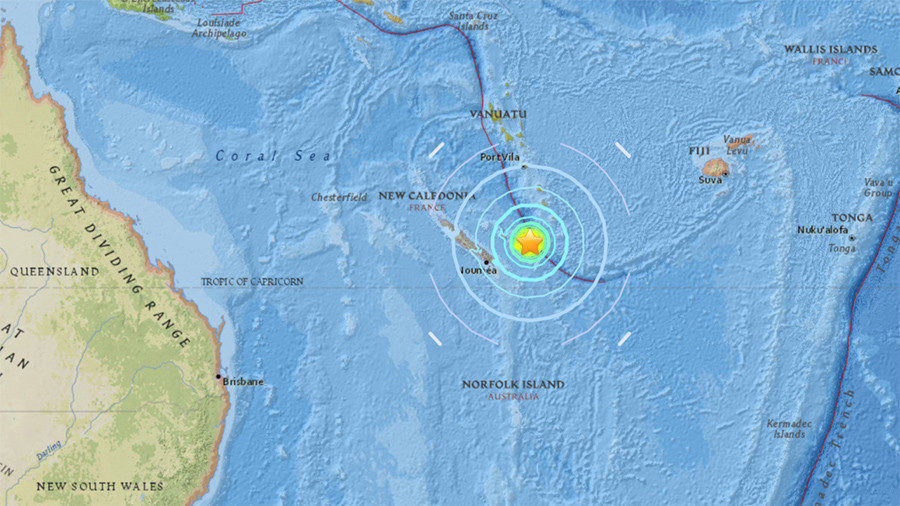
Tsunami waves observed after 7.0 earthquake hits near France's New Caledonia

earthquake new caledonia
© USGS
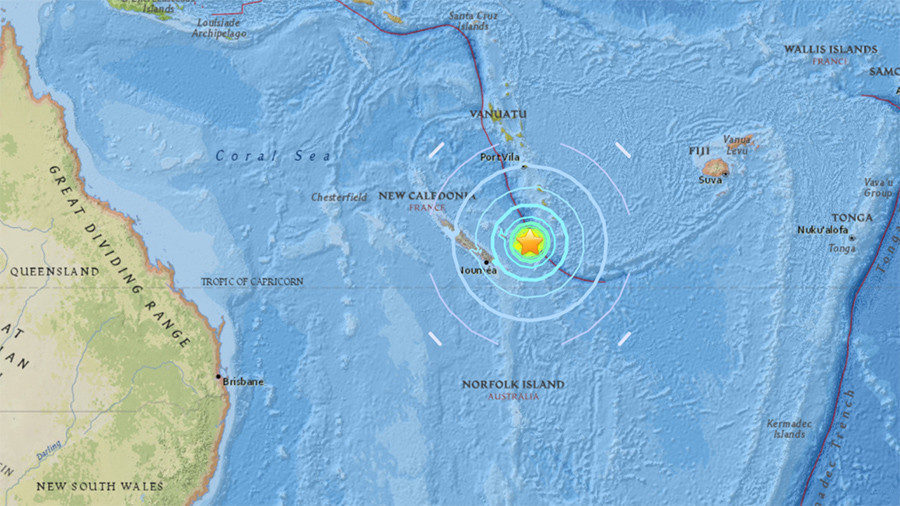
A magnitude 7.0 earthquake has struck in the Pacific near the overseas French territory of New Caledonia, the US Geological Survey (USGS) reports. Tsunami waves have been observed after the quake, the Pacific Tsunami Warning Center (PTWC) reports.

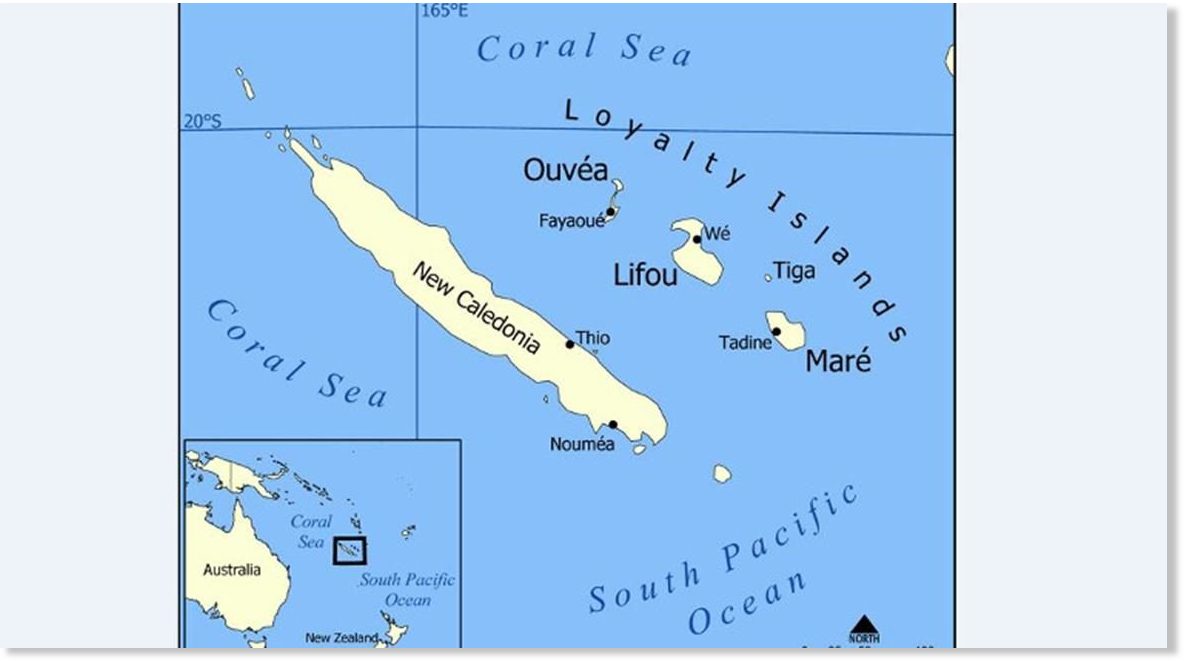
The quake was centered 82 km (51 miles) east-northeast of Tadine, on Mare Island, which has a population of over 5,600. The epicenter was 10 km (6 miles) deep. The numbers have been revised by USGS from earlier reports, which placed the epicenter 68 km from Tadine and 25 km deep, and reported its magnitude as 7.3.

The PTWC has warned of "hazardous tsunami waves" possible for coasts within 300 km of the epicenter, which puts the Loyalty Islands archipelago, with a population of over 17,000, within range. It later issued a message saying tsunami waves "have been observed."

Comment: Scientists predict upsurge in big earthquakes for 2018 as Earth's rotation slows


Seismograph

Shallow 6.4 magnitude earthquake strikes near New Caledonia

An earthquake of magnitude 6.4 struck in the Pacific Ocean, 74 kilometers (46 miles) east of the Loyalty Islands, New Caledonia on Sunday.
An earthquake of magnitude 6.4 struck in the Pacific Ocean, 74 kilometers (46 miles) east of the Loyalty Islands, New Caledonia on Sunday
The quake struck this morning about 45 miles east of the Tadine, in the Loyalty Islands.

The United States Geological Survey (USGS) reported the tremor at 8:25 pm in the evening, or 9.25am 25 GMT, at a shallow depth of 13km (8 miles).

The Pacific Tsunami Warning Centre said in a statement that a destructive Pacific-wide tsunami was not expected and there was no tsunami threat to Hawaii.

The quake was initially recorded as 6.6 magnitude, but is now being reported as 6.4.

Arrow Up

Scientists predict upsurge in major earthquakes for 2018 due to slowdown in Earth's rotation

Iran earthquake
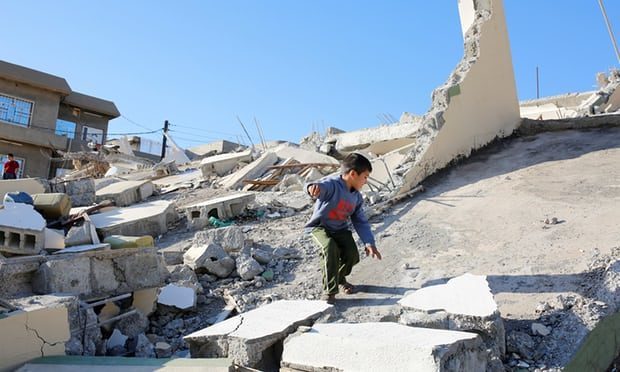
© Anadolu Agency/Getty ImagesA child on a collapsed building at Darbandikhan, Sulaymaniyah, Iraq on Monday after the north of the country and northern Iran were hit by a 7.3 magnitude earthquake.
Scientists say number of severe quakes is likely to rise strongly next year because of a periodic slowing of the Earth's rotation

Scientists have warned there could be a big increase in numbers of devastating earthquakes around the world next year. They believe variations in the speed of Earth's rotation could trigger intense seismic activity, particularly in heavily populated tropical regions.

Although such fluctuations in rotation are small - changing the length of the day by a millisecond - they could still be implicated in the release of vast amounts of underground energy, it is argued.

The link between Earth's rotation and seismic activity was highlighted last month in a paper by Roger Bilham of the University of Colorado in Boulder and Rebecca Bendick of the University of Montana in Missoula presented at the annual meeting of the Geological Society of America.

Comment: This is what we've been saying for years, though in a different form: our idea was that the current slowdown in rotation is more 'unique' than a multi-decade event - more like a multi-millennium event.

See also:


Seismograph

Monterey County in California struck with a series of 3 earthquakes after more than a dozen quakes last week

earthquake location
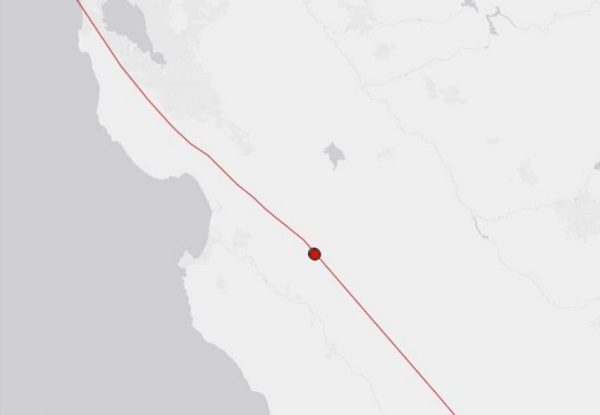
© USGSThe first quake hit near Soledad, Calif., at 5:17 p.m. with a magnitude of 2.9 and a depth of 5 kilometers. About two hours later, a second quake, with a 3.2 magnitude and a depth of 5 kilometers, shook Soledad once more. At 8:09 p.m., a 3.8 quake of the same depth followed.
Three small earthquakes struck Monterey County on Thursday evening, officials said.

The first quake hit near Soledad, Calif., at 5:17 p.m. with a magnitude of 2.9 and a depth of 5 kilometers. About two hours later, a second quake, with a 3.2 magnitude and a depth of 5 kilometers, shook Soledad once more. At 8:09 p.m., a 3.8 quake of the same depth followed.

No injuries or damages were reported.