Earthquakes
S


Seismograph

M3.3 earthquake hits Rome as city emerges from lockdown

Fonte Nuova
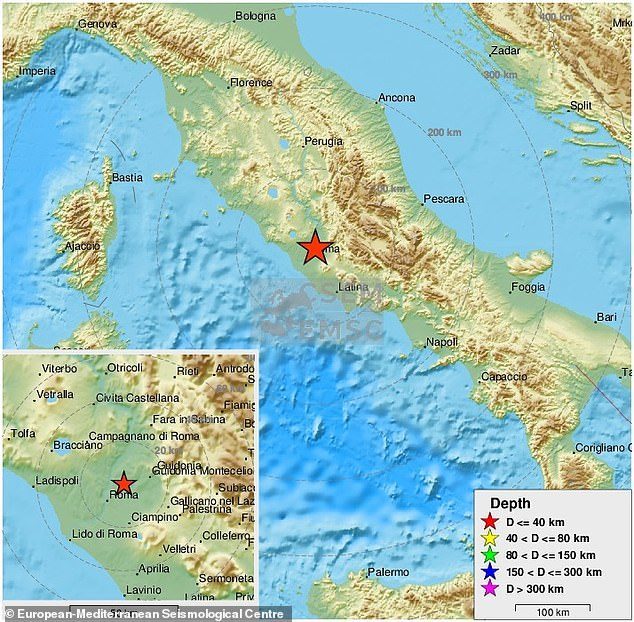
An earthquake of magnitude 3.3 struck Fonte Nuova, 10 miles north of the Italian capital, at 5.03am on Monday - prompting calls to fire services but no reports of injuries or damage
A mild earthquake shook Rome on Monday morning as the city tries to adjust to life following coronavirus lockdown.

The quake had a magnitude of 3.3 and struck at 5.03am with an epicentre in Fonte Nuova, a small town around 10 miles outside the capital.

Firefighters said they had received numerous inquiries from people who had been shaken awake, but no reports of damage or injuries.

Residents reported hearing a loud roaring noise for around 30 seconds just before the shaking started, sending people scrambling into the streets.

'People woke up, screams of fright were heard from our building,' a man identified only as Fayruj told Italian news site AGI.
Comment: Just two weeks ago in Rome: Sinkhole opens up at Pantheon


Seismograph

Iranians spill into the streets after 5.1 earthquake centering on sleeping volcano hits Tehran

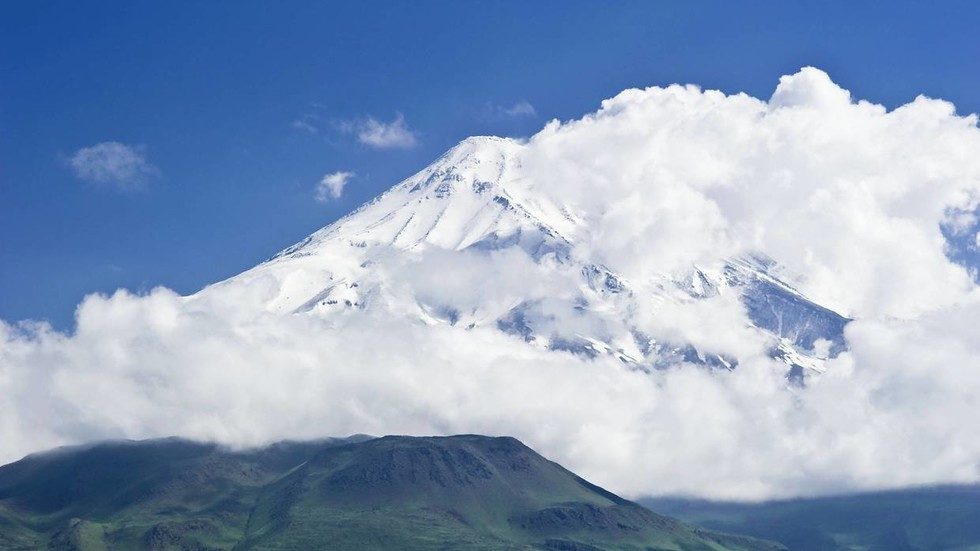
Mount Damavand, Iran
© Global Look Press / imago stockMount Damavand, Iran
A 5.1 magnitude earthquake has jolted an area in northern Iran, home to a sleeping volcano, forcing panicked residents in and around Tehran to rush onto the streets despite the Covid-19 lockdown.

The quake sent ripples across Iran's north shortly after midnight local time on Friday, striking at a shallow depth of just 7 km, less than 10 km (6.2 mi) north of the city of Damavand. The city is located close to Mount Damavand, the second-highest volcano in Asia.

The dormant volcano sits some 70 km (43 mi) north-east of the Iranian capital Tehran, where locals reported moderate to severe shaking from the Friday morning tremor.

Photos and videos have emerged on social media showing residents flooding the streets in the aftermath of the quake.

Iranian emergency services said that at least two people died and 13 were injured in the ensuing chaos.

Seismograph

6.1-magnitude earthquake hits east of Papua New Guinea

earthquake graph
© Phil McCarten / Reuters
An earthquake of 6.1 magnitude jolted 186 km east of Taron, Papua New Guinea at 11:21:19 GMT on Thursday, the U.S. Geological Survey (USGS) said.

The epicenter, with a depth of 466.17 km, was initially determined to be at 4.4543 degrees south latitude and 154.7127 degrees east longitude.

Seismograph

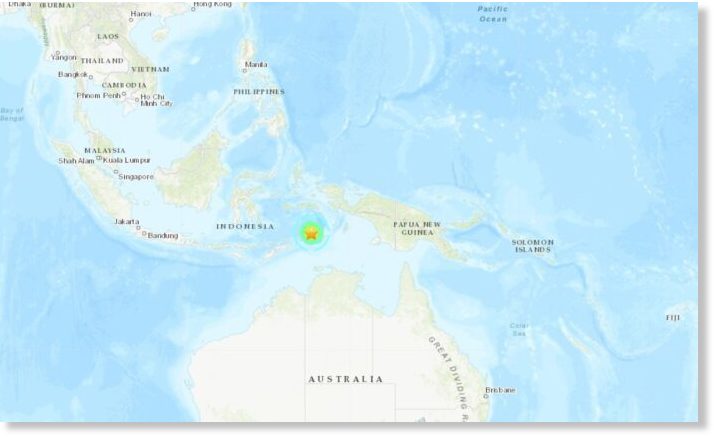
Powerful magnitude 6.8 earthquake shakes Indonesia

quake
A powerful earthquake shook islands in eastern Indonesia on Wednesday evening, but no damage or injuries were expected.

The quake measured a preliminary magnitude 6.8 and was centered below the sea at a depth of 107 kilometers (67 miles), the U.S. Geological Survey said. It was located 205 kilometers (128 miles) northwest of the nearest city, Saumlaki, it said.

The earthquake triggered moderate shaking and was unlikely to cause injuries or economic losses, USGS said.

Indonesia, a vast archipelago of 260 million people, is frequently struck by earthquakes, volcanic eruptions and tsunamis because of its location on the "Ring of Fire," an arc of volcanoes and fault lines in the Pacific Basin.

Source: AP

Seismograph

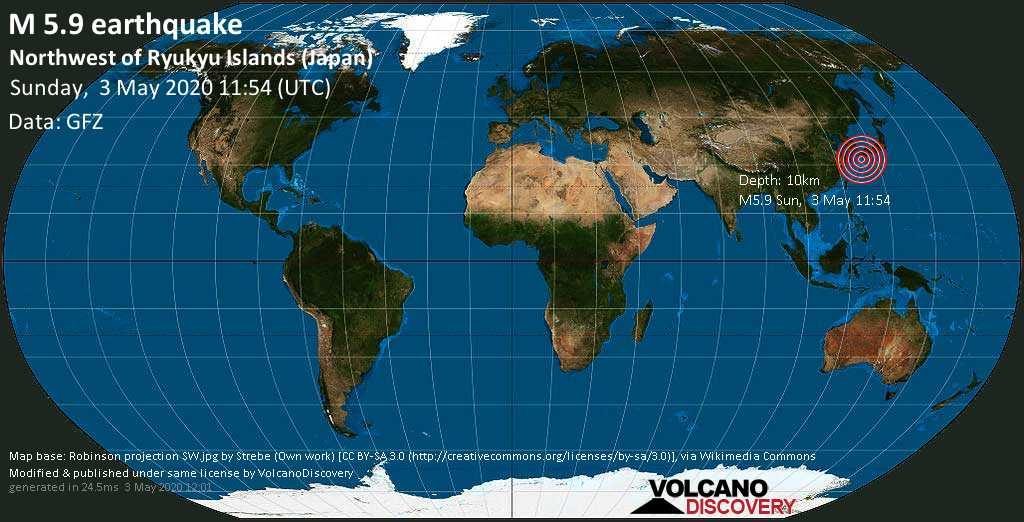
Strong mag. 6.0 earthquake - Northwest of Ryukyu Islands, Japan

Strong mag. 6.0 earthquake - Northwest of Ryukyu Islands, Japan
Date & time: Sunday, 3 May 2020 11:54 UTC
Magnitude: 6.0
Depth: 10.0 km
Epicenter latitude / longitude: 31.33°N / 128.77°E (Japan)
Nearest volcano: Kuroshima (128 km)
Primary data source: GFZ
Estimated released energy: 6.3*10^13 J (17.5 GWh / 15080 tons of TNT / 0.9 atomic bombs equivalent) [learn more]

Seismograph

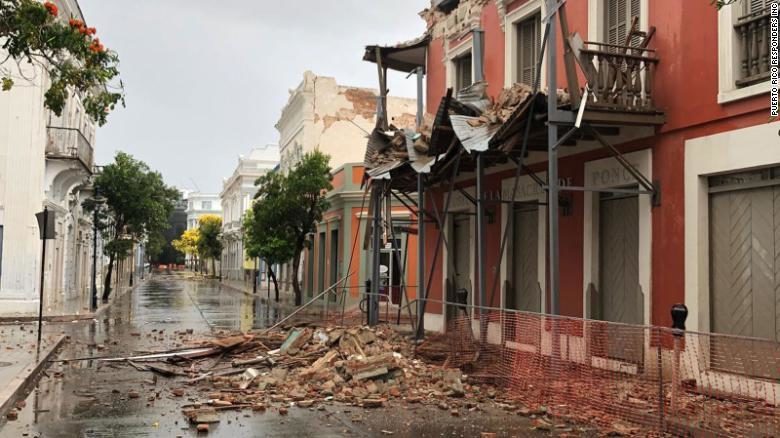
Earthquake of 5.5 magnitude rattles Puerto Rico, damages buildings

Rubble litters a street in Puerto Rico after Saturday's temblor.

A 5.5-magnitude earthquake was recorded off the waters of southern Puerto Rico early Saturday, rattling the city of Ponce, according to the US Geological Survey.

Other earthquakes ranging from 3.4 to 4.9 on the Richter scale have hit the same area.

No tsunami advisory has been issued.

Ponce Mayor Maria "Mayita" Melendez said several buildings were damaged.

Officials are assessing the quake's effects and checking on citizens, she said.

The Electric Energy Authority tweeted that its EcoElectrica power plant was offline, but crews were working to restore service. It was not clear how many residents had lost power.


Seismograph

6.5 magnitude earthquake shakes the island of Crete

quake
An earthquake measuring 6 on the Richter scale, jolted the Greek island of Crete this afternoon.

Its epicentre was 118 kilometres south of Ierapetra at the depth of 10 km.

Ierapetra is a town on the south coast of Crete.

According to reports, the quake was felt in Heraklion and Lassithi.

It is not yet known the level of damage or injuries on the island.

Seismograph

Reflected tsunamis and space weather

Ionospheric disturbances over Japan on March 11, 2011.
When the Earth trembles, even the edge of space moves. Researchers have known for decades that earthquakes and tsunamis send waves of air pressure to the very top of Earth's atmosphere. Up there, in the ionosphere, the waves scramble GPS signals and interfere with radio communications much like solar flares do. Earthquakes, it turns out, can mimic space weather.

A new paper published in the research journal Space Weather shows that earthquakes and tsunamis may, in fact, affect the ionosphere much more than previously thought.

"On 11 March 2011, a magnitude 9.0 earthquake occurred near the east coast of Honshu, Japan, unleashing a savage tsunami as well as unprecedented ripples at the space‐atmosphere interaction region," report the authors, led by Min-Yang Chou of the University Corporation for Atmospheric Research (UCAR) in Boulder, CO.

Using satellites and ground-based GPS receivers, Chou and colleagues took a close look at what happened to the ionosphere over Japan in the aftermath of the earthquake. As expected, it was disturbed. Surprisingly, though, the ionospheric disturbances didn't peter out after the initial quake and tsunami; they kept going for many more hours.

The reason: Reflected tsunamis.

Comment: Massive Japan Earthquake Altered Earth's Gravity


Seismograph

Shallow 6.3-magnitude earthquake jolts off Papua New Guinea coast

quake
An earthquake measuring 6.3 magnitude struck 132 km from the coast of Papua New Guinea (PNG) on Saturday, according to the U.S. Geological Survey (USGS).

The tremor occurred at 12:53 p.m. local time west of Panguna town on Bougainville Island.

According to the USGS, the earthquake was recorded at 6.511 degrees south latitude and 154.301 degrees east longitude at a depth of 16.9 km.

So far there have been no reports or updates from any media agencies or government bodies regarding damage and no Tsunami warning had been issued at this time.

Source: Xinhua

Seismograph

Magnitude 6.1 earthquake jolts Miyagi Prefecture, Japan

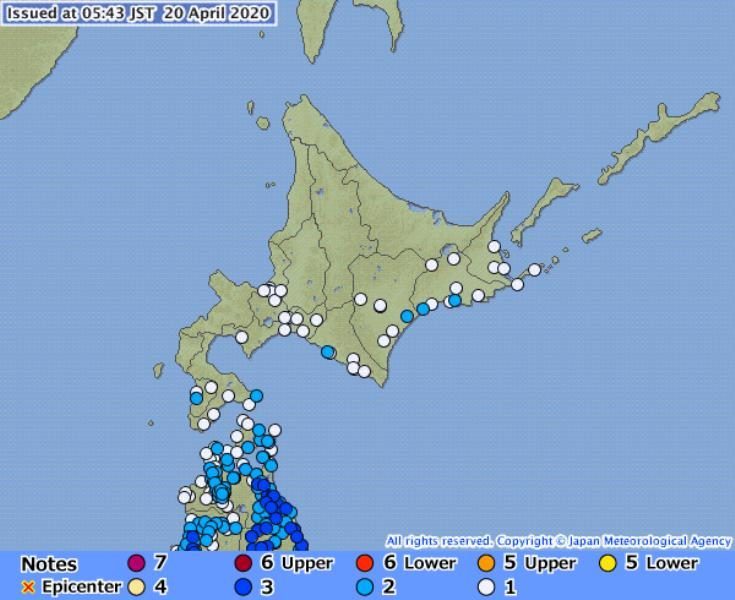
The epicenter of the earthquake that occurred on April 20 at 5:39 a.m. is located in Miyagi Prefecture
© JAPAN METEOROLOGICAL AGENCYThe epicenter of the earthquake that occurred on April 20 at 5:39 a.m. is located in Miyagi Prefecture
A 6.1 magnitude earthquake, registering a 4 on the Japanese intensity scale, struck off Miyagi Prefecture early Monday, according to the Meteorological Agency, but no tsunami warning was issued.

The quake, which occurred just after 5:30 a.m., came at a depth of 50 km, the agency added.

The U.S. Geological Survey said the epicenter of the earthquake was 41.7 kilometers (26 miles) beneath the Pacific seabed, rating the risk of casualties and damage as low.

Comment: Two days ago a 6.6 magnitude earthquake struck off Japan's Ogasawara island.