Health & WellnessS


Microscope 2

Necrotizer: A deadly flesh-eating bacteria infects 525 in Japan

Necrotizing bacteria
© International Business TimesNecrotizing bacteria culture
More than 500 people in Japan infected by a potentially fatal "flesh-eating bacterium" could die within hours if part of it develops into a particularly severe and even deadly strain, Japanese media reported.

A total of 525 patients with streptococcal toxic shock syndrome (STSS), a deadly condition popularly known as the "flesh-eating disease," were reported in December - a notable spike from just 203 cases registered in 2013, Asahi Shimbun wrote, quoting a statement by the National Institute of Infectious Diseases. The infection, which is fatal in almost one in three cases, destroys tissue and can result in death in a matter of just a few days.

When infected a person will normally develop only minor symptoms such as a sore throat or skin infection as the bacteria commonly exists in the body but does not usually spread to certain organs. When it does, however, the muscle-necrotizing bacteria spread throughout the body causing sudden shock and multiple organ failure. It can also target one's blood and lungs.

Patients are usually treated with antibiotics and, in severe cases, removal of the dying tissue or amputation. Even though medics believe that people normally contract STSS from contact with the wounds of infected people, in many cases the path of the infection remains unknown.

The Tokyo Metropolitan Infectious Disease Surveillance Center urges people with swelling wounds and pain, as well as fever, to immediately seek medical attention.


Pills

Ghost in the machine: Pharma's influence over mainstream media controls the narrative of drug safety and effectiveness

bigpharma, prescription drug prices
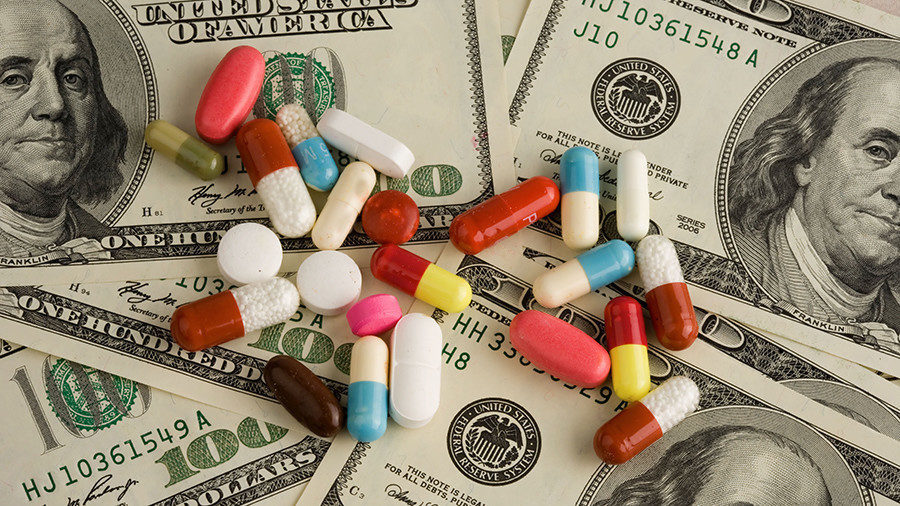
If you have noticed that prescription drugs are becoming more dangerous - and more expensive - you are right. As the drug industry's influence over the U.S. Food and Drug Administration (FDA) increases, dangerous drugs are approved and marketed despite their clear risks to patients.

Recent examples include the aggressively promoted blood thinners Xarelto and Pradaxa which cause uncontrollable bleeding, the testosterone drug Androgel, for "Low T" linked to noncalcified plaque buildup in coronary arteries, and fluoroquinolone antibiotics. When warnings are added to these dangerous drugs or they are withdrawn, like 28 popular drugs have been, many wonder why media failed to report the safety risks while they were occurring.1

Of course, the reason is obvious. Mainstream media is essentially owned by the drug industry, so positive messages about new drugs are unfiltered Pharma messages.2 The New York Times has had on its board Schering-Plough and Eli Lilly affiliates and The Washington Post, Johnson & Johnson affiliates.3

Even so-called "public" media like PBS and NPR have accepted money from GlaxoSmithKline and UnitedHealthcare.4 No wonder the dangers of the bone drugs bisphosphonates, hormone replacement therapy, statins, SSRI antidepressants (especially Paxil), heartburn drugs (PPIs), antibiotics such as Levaquin and arthritis drugs like Humira seldom reach the public.

Comment: See also: America's medical propaganda machine: Medical communications companies


Snakes in Suits

Pharma price-gouging: Drug-maker hikes price of 42 yo cancer medication by 1500% making it unaffordable for most patients

BigPharma, money and drugs
© Global Look Press
A long-standing medication for cancer has become almost unaffordable for most of patients, as its price has skyrocketed 1,500 percent over four years. The company behind the drug is under fire.

The remedy for brain tumors and Hodgkin lymphoma was introduced 42 years ago, and the highest dose was sold for $50 per capsule. The drug, called lomustine had no generic alternative and was branded as CeeNU.

In 2013, the brand's owner Bristol Myers Squibb sold lomustine to a Miami startup called NextSource. The new owner rebranded the drug, giving it a new name - Gleostine, and multiplied the price by almost sixteen times. Now, the same treatment costs $768 for a single capsule.

Comment: Following a despicable trend:


Fish

Study: Eating fish at least once a week linked to improved intelligence and sleep!

fish
Eating fish once a week is linked to higher IQs and better sleep, new research finds.

This study is one of the first to provide more concrete links between omega-3 fatty acids and improved intelligence and sleep.

Dr Jianghong Liu, the study's first author, said:
"This area of research is not well-developed.

It's emerging.

Here we look at omega-3s coming from our food instead of from supplements."

Comment: For more details on the study, see: Omega-3s and the Brain: Fish Intake Linked to Higher IQ and Better Sleep


Health

Destroying your mind and making you fat: There is nothing healthy about Canola oil

poisonous canola oil
According to a study by AARP,1 93 percent of Americans are concerned with their brain health, but very few understood some of the natural strategies they could use to improve it. Contrary to popular belief, your brain function and cognitive performance do not have to decline with age. There are steps you can take that influence your memory, processing, executive functions and more.

Even if you are already in your "golden years," simple changes may prompt brain health for the better. For instance, where once it was believed that neurons were only generated early in life, scientists now know that neurogenesis (generation of new neurons) continues into adulthood.2 Exactly what influences the rate of new neuron growth is still being explored, as are other factors that play a role in brain health.

Recent research, for instance, has uncovered damage canola oil consumption triggers in your brain and the effect this may have on your memory and learning ability.3 The study, published in the journal Nature, also found the consumption of canola oil increased weight gain.

Comment: See also:


Syringe

Flashback Insurance companies pay-off doctors with massive bonuses for vaccinating babies

vaccine
Here is a perfect example of the tactics that Big Pharma uses to incentivize doctors to push vaccines on the public. Insurance company Blue Cross Blue Shield (BCBS) pays pediatricians $400 for EACH fully vaccinated child under the age of 2. This means that for every 100 vaccinated patients, the doctor gets a $40,000 bonus!

Moreover, it is now very difficult to find a pediatrician who will accept a family who doesn't vaccinate. Even parents who partially vaccinate or follow a different schedule have a hard time finding a doctor. Here's why: doctors have to vaccinate a certain percentage of their patients or they don't get their bonus. BCBS says doctors need to vaccinate 63% of their patients to get the payout.

BCBS outlines the incentive program for vaccinating babies in the BCBS doctor incentives booklet. Below is an image of the childhood immunization incentives page.

Comment: Bribing doctors to vaccinate their patients is just one of the ways insurance companies and Big Pharma ensure compliance with their 'vaccinate the planet' agenda. Corruption in the medical industry is rife. See also:


Bacon n Eggs

Study tells us what we always knew: Family meals may boost kids' physical, mental health

It's lovely, isn't it? Gathering around the table at Christmas time and enjoying the company of our loved ones. But family dining shouldn't be limited to the festive season; a new study suggests that eating with family on a regular basis could benefit children's health and well-being.

family meals
Regular family mealtimes may benefit children's physical and mental health.
Researchers have found that children who often ate meals with their family at the age of 6 years old had better social skills and general fitness by the age of 10, compared with those who rarely spent mealtimes with their family.

Study co-author Linda Pagani, of the Université de Montréal in Canada, and colleagues recently reported their new findings in the Journal of Developmental & Behavioral Pediatrics.

Comment:


Arrow Down

Animal abuse: California shelter proposing to put all dogs on vegan diet

vegetarian diet shelter dogs
Life is difficult enough for shelter dogs, and now they might not even get to eat the meat their bodies were designed to consume? What’s next – will liberals insist that lions, tigers and bears in the wild become vegan somehow?
For many people, dogs are one of the first animals that come to mind when someone mentions carnivores, so why is one California animal shelter hoping to put all its dogs on a vegan diet?

That's right - the Los Angeles City Board of Animal Services Commissioners are currently mulling a proposal that would turn the L.A. shelter system into the first one in our country to give its dogs a strictly vegan diet. Of course, there are several good reasons that no other shelter systems have made this type of move before, but that isn't stopping liberals in California from pushing their unnatural ideas onto man's best friend.

The idea was first proposed by Commissioner Roger Wolfson, who is also a Hollywood screenwriter. He claims that vegan diets can eliminate health problems in dogs. However, for him, the real issue here is the meat industry's effects on the environment. In addition, he cites the ethics of giving animals to other animals to eat. Apparently, no one has told him that animals regularly eat other animals in the wild and have done so since the beginning of time. Isn't that what all those sharp teeth in their mouths are there for?

Comment: Surviving versus thriving - while dogs can get by consuming plant material, they will never live as long as they should. According to Dr. Karen Becker, dogs and cats did not evolve to eat a 100% carbohydrate based diet and feeding them this way is biologically stressful. Feeding dogs and cats a vegetarian or vegan diet can result in nutritional deficiencies that lead to serious and sometimes irreversible medical conditions. More from Dr. Becker:


Syringe

The pharmaceutical industry has a 'trillion' reasons: American Academy of Pediatrics attacks Robert F. Kennedy Jr. on Vaccine Safety

How to Suppress Vaccine Safety Concerns and Protect Financial Interests — Part One
World Mercury Project Targeted by the AAP and IAC


Vaccine Safety?
American consumers, particularly parents, should be asking some hard questions about why the American Academy of Pediatrics (AAP) and Immunization Action Coalition (IAC) apparently have no interest in improving vaccine safety.

In the face of snowballing vaccine scandals—from fudged safety trials that use other vaccines as placebos, to persistent use of neurotoxic aluminum adjuvants, to the accelerated rollout of unproven vaccines that may be causing more problems than they solve—these and other vaccine advocacy organizations are not only turning a blind eye but are actively circling the wagons while beefing up public relations (PR) intended to stifle discussion.

These PR efforts are on revealing display in an April 2017 IAC webinar on "Vaccines and the New Administration" that unsurprisingly singles out the activities of the World Mercury Project and its Chairman, Robert F. Kennedy, Jr. Expressing equal parts alarm and disdain, the AAP rhetorically asks, "Vaccine safety: here we go again...?"

Due to the well-funded medical-pharmaceutical-media apparatus that endlessly repeats the mantra that all vaccines are safe for all people all the time, it is nearly impossible to get a fair hearing for common-sense questions about vaccine safety, no matter how urgent such questions may be.

The biases apparent in mainstream discussions about vaccine safety have come into even sharper focus since the changeover from one political administration to the next.

In February 2017, shortly after the inauguration, several hundred national and state-based organizations rushed to sign a letter lobbying President Trump to "redouble" efforts to drive up the vaccination rate. The IAC and the AAP were two signatories of that letter, which summarily dismissed concerns about vaccine risks as "disproven."

Comment: Dr. Paul Offit was brought up - here is another look at him:


Attention

Australian Federal law acknowledges lag time of up to two months between vaccination and onset of autoimmune disease

vaccination
There is no doubt that so-called autoimmune disease is the sleeping giant of the vaccine safety debate. A damning 2013 report by the Australasian Society of Clinical Immunology and Allergy states that at least 5% of the population suffers with an autoimmune disease, making it more common than both cancer and heart disease. Notably, this figure does not include the large number of Autism and other developmental disorder cases known to be of autoimmune origin.

Despite a large and growing body of evidence connecting vaccination with autoimmune diseases of every kind, promoters of vaccination continue to deny the connection except in rare instances. A selection of case reports and studies documenting autoimmune diseases which have been connected with vaccination is provided at Appendix A.

Guillain-Barré Syndrome is one such autoimmune disease which authorities have accepted can be caused by certain vaccines. The only debate which arises is the frequency with which vaccination causes this disease.

Comment: Vaccines, adjuvants and autoimmunity
Add one more item to the growing stack of published medical literature linking vaccines to the current explosion of autoimmune diseases from skin afflictions to neurological disorders. A paper published online this month in the journal Pharmacological Research is an international team of immunologists' roundup of current findings on vaccine-induced disease - and their conclusions are in sharp contrast to public health's "safe and effective" mantra that denies any such connection.