Health & WellnessS


Syringe

French woman gets $228k compensation after mandatory Hep B vaccine gives her macrophagic myofasciitis

vaccine needle
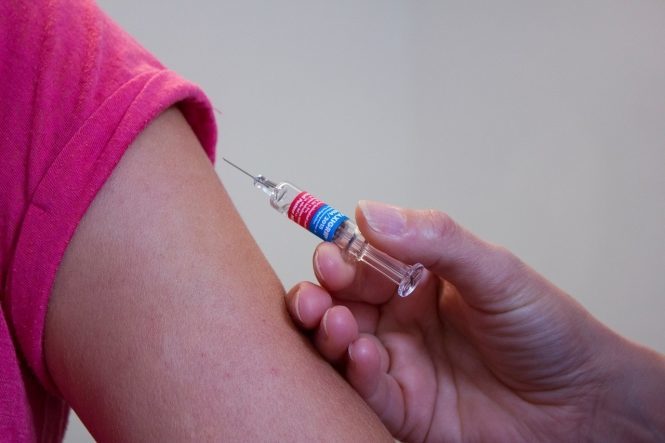
A French state medical agency has been ordered to pay over €190,000 in compensation to a medical secretary after the woman developed complications following a vaccination for Hepatitis B.

A court of appeal in Nantes (Loire-Atlantique) found this week that the now-64-year-old - known only as Mme. L - had been given a mandatory vaccination in May 1994 (due to her occupation working in the medical care sector), reported French news source 20 Minutes.

From July 1994 onwards - just two months later - she then suffered from muscular pain and generalised tiredness, later identified as the rare muscle-damaging and fatigue-causing disease macrophagic myofasciitis.

At a previous hearing about the case in May 2016, the State Council had already established that the woman's Hepatitis B vaccination and the subsequent medical issues were linked.

This allowed the court to rule on Tuesday December 26 that the woman was "entitled to compensation in the name of national solidarity".

The administrative court then imposed a fine of €190,751.19 on the French public medical accident agency Oniam (l'Office national d'indemnisation des accidents médicaux, des affections iatrogènes et des infections nosocomiales), plus €1,500 in legal fees, also paid by Oniam.


Comment: In other French news... Vaccine tyranny: France to instigate mandatory vaccines in 2018. Maybe the French government just enjoys destroying citizens' lives, then shelling out massive settlements to make up for it.


Info

Debate continues over 'natures opioid' Kratom

Kratom
© MIA Studios/Shutterstock.comThe leaves of the plant kratom.
Given the opioid addiction crisis, it would seem preposterous that an opioid is legal for use in the United States and can be purchased at tea stores, convenience stores, over the internet and, yes, even from vending machines.

However, kratom is not your average opioid. The Drug Enforcement Agency found this out when it tried to ban the herb in 2016.

Public outcry from users and 51 congressmen around the country from both political parties was loud. The DEA has since dropped its attempt to ban kratom, although its use is banned in Alabama, Arkansas, Indiana, Tennessee, Vermont, Wisconsin and Louisiana.

More recently, on Nov. 14, 2017, the FDA issued a public warning about kratom, citing 36 deaths that the agency has attributed to kratom use.

Comment: The eradication of natural alternatives - Big Pharma wants to eliminate the competition
To think that this or any other company would not attempt to stomp out competition that threatened to rival their products is just naïve. This is seen in business every day. Yet people seem to cast Big Pharma in a light of righteousness, as if they are some benevolent caregiver providing the country with loving healthcare; as if they are somehow exempt from the cutthroat nature of American big business simply because their efforts are incorrectly seen as a public service, even though Big Pharma is not concerned with anything above and beyond its own profits. What is being witnessed is an all-out assault on any possible natural alternative to Big Pharma medications; and currently in their crosshairs, being heralded as a miracle drug, is the natural root extract kratom.


Alarm Clock

PLOS journal sounds alarm over global mass poisoning

pollution
© HUGH ROONEY / EYE UBIQUITOUSA piece of street art in Warsaw, Poland, expressing widespread concern about untested chemical use.
Multiple papers flag serious issues with chemical regulation and public health failures. Julian Cribb reports.

Almost every human being is now contaminated in a worldwide flood of industrial chemicals and pollutants - most of which have never been tested for safety - a leading scientific journal has warned.

Regulation and legal protection for today's citizens from chemical poisons can no longer assure our health and safety, according to a hard-hitting report in the journal PLOS Biology, titled "Challenges in Environmental Health: Closing the Gap between Evidence and Regulations".

Comment: More of the same...business as usual! The U.S. Congress has neglected the problem of dangerous chemicals in consumer products for decades, to the great benefit of chemical industry profits. More than 80,000 synthetic chemicals are used in the U.S. - only 200 have been tested under the Toxic Substances Control Act of 1976. We are all guinea pigs in a vast experiment of the chemical alteration of our environment. Hope you are enjoying your daily chemical cocktails because Congress won't do a thing about it!


Microscope 1

Food is information: Plant-derived exosomes as cross-species messengers and beacons of epigenetics

plants
Cross-talk between plant and animal cells may be accomplished via microRNA-carrying exosomes, gene-regulating elements contained in plants which reinforce that food is information and suggests an inextricable co-evolutionary relationship between these two disparate kingdoms

Science has recently recognized that multicellular organisms use exosomes as a form of communication. Released from many different types of cells, exosomes are specialized membrane-enclosed nanoparticle-sized vesicles which are produced when budding occurs from the membrane of cellular sorting compartments (Zomer et al., 2010). Exosomes contain a host of proteins, bioactive lipids, and non-coding RNA, a type of nucleotide that that is transcribed from DNA but not translated into proteins, interrupting the central dogma of biology. Non-coding RNA consists of both microRNA (miRNA) and small RNA, both of which are intimately involved in gene expression (Zomer et al, 2010).

Comment: The future of healing with food? MicroRNAs from plants
MicroRNAs are used by cells to modify many processes, including how cells grow and die, as well as restore balance in cell function. Many researchers feel that delivering the right microRNAs offer tremendous potential in the treatment of virtually every human disease.

Until recently scientists thought microRNAs were only made by our own cells, but new research shows that microRNAs from plants are absorbed from the diet and affect cell function just like the microRNAs transcribed from our own DNA. In other words, the microRNAs that we ingest from plants can influence the expression of our genetic code and cell function. Since microRNAs affect the expression of up to 30% of our genes, these results are extremely thought-provoking and provide another avenue that plant foods may be influencing our health and reducing our risk for certain diseases.


Syringe

US Centers for Disease Control and Prevention report flu widespread in 36 states

Flu United States Decmber 2017
© Centers for Disease Control and Prevention
Outbreaks of influenza are getting an early start this year in part because of cold weather gripping much of the USA and low efficacy associated with this year's flu vaccine.

It's still too early to say whether this winter will be a bad season for the flu, but epidemiologists in 36 states already have reported widespread influenza activity to the federal Centers for Disease Control and Prevention in data released Friday. Twenty-one of those states show a high number of cases.

"It's just one of those years where the CDC is seeing that this strain of flu is only somewhat covered by the vaccine that was given this year," said Jennifer Radtke, manager for infection prevention at the University of Tennessee Medical Center in Knoxville. "They're seeing that it's anywhere from 10% to 33% effective, so any time there's a mismatch between the vaccine and the circulating strain of the flu, you're going to see more cases."

Comment: Better get informed and think twice before taking the flu shot:


Arrow Up

Higher omega-3 fatty acid intake for lower glaucoma risk

woman patch eye
© Pinterest
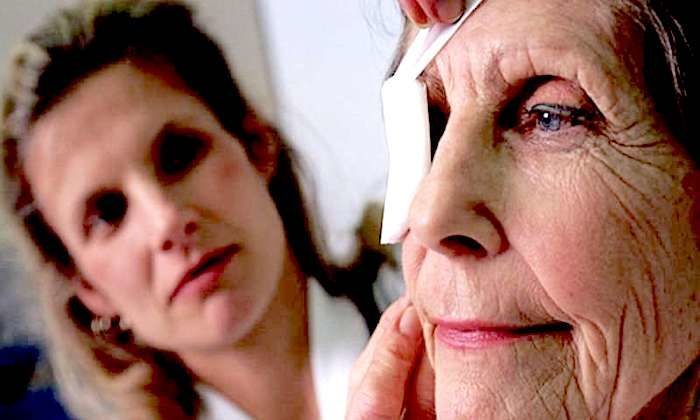
Increased daily intake of ω-3 fatty acids is associated with lower odds of glaucoma, but higher levels of total polyunsaturated fatty acid (PUFA) intake are associated with higher odds of developing glaucoma, according to a study published online Dec. 21 in JAMA Ophthalmology.

Ye Elaine Wang, M.D., from the University of California, Los Angeles, and colleagues used data from 3,865 participants (aged 40 and older) in the National Health and Nutrition Examination Survey (2005 to 2008) to assess the association between glaucoma and daily dietary intake of PUFAs, including ω-3 fatty acids, among the U.S. population. Of the 83,643,392 weighted survey participants included in the cross-sectional study, 3.7 percent met criteria for glaucoma.

The researchers found that increased levels of daily dietary intake of eicosapentaenoic acid (odds ratio [OR], 0.06) and docosahexaenoic acid (OR, 0.06) were associated with significantly lower odds of having glaucoma. However, there were significantly increased odds of meeting diagnostic criteria for glaucoma among participants with daily total dietary PUFA intake levels in the second (OR, 2.84) and third (OR, 2.97) quartiles.

Comment: See also:


Shoe

New guideline: Exercise 2x/week to sharpen memory, prevent dementia

Brain exercise
© BETA Blog
Worried your shoddy memory could lead to dementia? Breaking a sweat a few times a week might just be the easiest way to sharpen your mind and prevent the condition.

A new guideline released by the American Academy of Neurology and authored by a top Alzheimer's researcher from the Mayo Clinic says people diagnosed with Mild Cognitive Impairment (MCI) can improve their memory and thinking ability by exercising twice a week. Doctors should incorporate an exercise regimen into the treatment program in place for managing symptoms.

MCI, a common ailment that occurs with aging, causes people to have noticeable trouble with executive functions like memory, reading comprehension, and judgment, but is not nearly as serious as dementia, in which patients often struggle with simple everyday tasks.

Still, MCI is considered an "intermediate stage" between normal cognitive decline and dementia, and may very well eventually lead to the more debilitating condition. That's why researchers say the new guideline is especially crucial for people with MCI.

Comment: See also:


Bulb

Finns reinvent dogs as 'analgesics'

Labrador retriever or black lab
© CCO
Finland is taking a fresh look into the dog's image as "man's best friend" by researching pets' capacity to predict bouts of pain in their owners and other humans.

The first test results with so-called "pain dogs" have been promising, providing a relief to long-time sufferers. However, further scientific evidence is, so far, largely missing.

Comment:


Bacon n Eggs

SOTT Focus: New Study Finds Same Thing Past Studies Have Found: Dietary Guidelines on Fat Consumption NOT Supported by Science

church of bacon
© Las Vegas WeeklyIt's divine. And you know it is.
This Christmas I got one of the best gifts I could ask for - a study that rips to shreds government Dietary Guidelines. Santa, you know me so well.

The study is reported on here, or if you have a Medscape account (which is free) you can find the original study here. Interestingly, one of the researchers in the study was Dr. Zoë Harcombe, author of The Harcombe Diet and big name in the low-fat, high-carb scene. Her Twitter feed is generally very informative.

The study is actually the fourth in a series that have each shown the complete lack of evidence for government dietary guidelines (specifically the US and the UK) in regards to association between coronary heart disease (CHD) deaths and total fat consumption. This series of studies are great for many reasons, but the one that tops the list for me is the fact that it shows that there never was any scientific basis for the dietary guidelines to recommend restriction of total fat consumption, or specifically, saturated fat consumption, based on the stated purpose of those guidelines: to stem the tide of increasing CHD.

Life Preserver

10 alternative therapies for ADD & ADHD

ADHD kids, movement, learning
A few months back, I put together an article on alternative therapies for depression. Many readers showed a lot of interest in some of the emerging non-drug treatments in that field, and, more importantly, many began to relay their own stories about how they overcame or successfully managed their depression through various strategies. That's what I love the most about this community-sharing experience and expertise in the interest of broadening available solutions beyond what conventional thought tells us.

I've received frequent requests over the years to do the same for the convoluted world of ADD and ADHD treatment. There's a lot to this picture and (if there's interest) probably fodder for a follow-up post. For today I'll delve into some of the lifestyle strategies and alternative therapies that offer the most promise.

I understand that ADD and ADHD treatment-and even diagnoses-are sensitive topics. Debates continue to rage within the medical, caregiver, and even Primal communities as to what actually constitutes the conditions, whether they're simply modern constructs, and what the best forms of treatment are. Despite the increasing numbers of diagnoses, there's still a lot we don't know about the issue and even less people can agree on.

Comment: See also: