Health & WellnessS


Shopping Bag

Another day, another diet: The long, strange history of dieting fads

diets
© The Conversation
"Of all the parasites that affect humanity I do not know of, nor can I imagine, any more distressing than that of Obesity."

So started William Banting's Letter on Corpulence, likely the first diet book ever published. Banting, an overweight undertaker, published the book in 1864 to espouse his success after replacing an excessive intake of bread, sugar and potatoes with mostly meat, fish and vegetables.

Since then, fad diets have appeared in many forms. To what length will people go to achieve their desired figure? As a professor of nutrition and eating behaviors, my sense is the history of dieting shows vanity outweighs common sense.

Comment: Eat like a caveman! 10 celebrities touting the benefits of Paleo diet
The theory behind the Paleolithic Diet, short-named the Paleo Diet, is that mimicking the diet of our ancestors some 10,000 years ago - prior to the European construction of the agriculture and grain-based diet - is the healthiest way to live.

Also referred to as the caveman diet, Stone Age diet and hunter-gatherer diet, the Paleo Diet is focused on avoiding refined foods, trans fat, dairy and sugar, and consuming lean proteins; fresh vegetables and fruits; and healthy fats through nuts, seeds, avocados, fish oil and grass-fed meat. Among the touted health benefits are improved blood lipids, weight loss, and reduced pain from autoimmunity...

In a 2007 study comparing the Mediterranean and Paleo diets, the Paleo Diet group reversed the signs and symptoms of insulin resistant, Type 2 diabetes. Meanwhile the group practicing a Mediterranean Diet experienced little to no improvements.

While a number of gastroenteroligists and other doctors have reintroduced the Paleo Diet over the past several decades, Robb Wolf, author of The New York Times best-selling bookThe Paleo Solution: The Original Human Diet, has the been one of the strongest forces in popularizing the ancient diet that humans subsisted on for some 2.5 million years.


Cow Skull

Rabid vampire bats in Peru killing more cows than previously thought - study

Bats in Peru
© AFPAn image of a vampire bat.
Vampire bats are making farmers' lives in Peru a nightmare by preying on their cattle, a new study on the rabies ridden species suggests. However, locals living among the bats may not be aware of the cause of the bovine deaths.

Native to the Americas, the common vampire bat is depicted in Bram Stoker's novel Dracula as the winged form of a castle-dwelling demon. Like the book's monstrous villain, the real vampire bat subsists on a diet of blood.

But the hairy species is also known to be riddled with rabies. Now a new study claims that vampire bats are responsible for multiple cattle deaths in Peru each year, by passing on the deadly virus through its blood-sucking exploits.

In Peru, where the rodent is described as abundant, vampire bats may be flying under the radar in terms of their farm animal killing abilities.

Comment: See also: Rare and highly fatal virus similar to Ebola has broken out in eastern Uganda


Brain

Senior moments: Poor memory tied to faulty brain rhythms during sleep

sleeping woman
© PhotoAlto/Frederic Cirou/Getty ImagesAs people age they may forget more because their brain waves get out of sync, new research finds.
Older brains may forget more because they lose their rhythm at night.

During deep sleep, older people have less coordination between two brain waves that are important to saving new memories, a team reports in the journal Neuron.

"It's like a drummer that's perhaps just one beat off the rhythm," says Matt Walker, one of the paper's authors and a professor of neuroscience and psychology at the University of California, Berkeley. "The aging brain just doesn't seem to be able to synchronize its brain waves effectively."

The finding appears to answer a long-standing question about how aging can affect memory even in people who do not have Alzheimer's or some other brain disease.

Comment: See also:


Health

The gut reacts: Repeated low-grade bacterial infections can trigger severe inflammatory disease

food poisoning gut bacteria
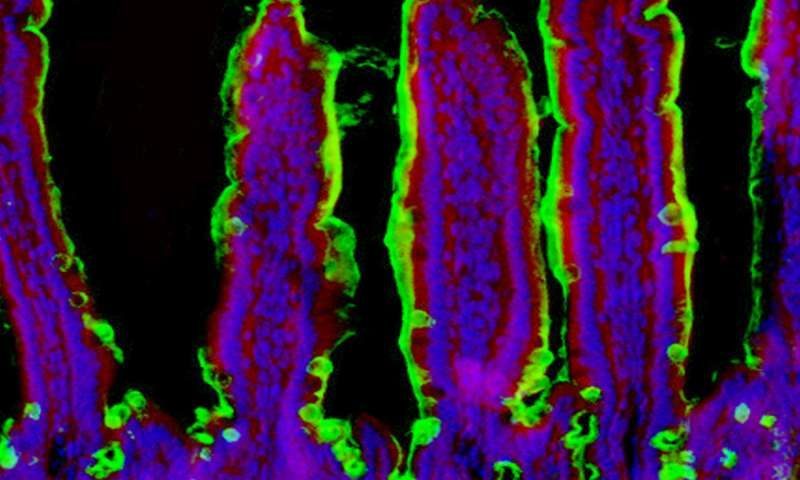
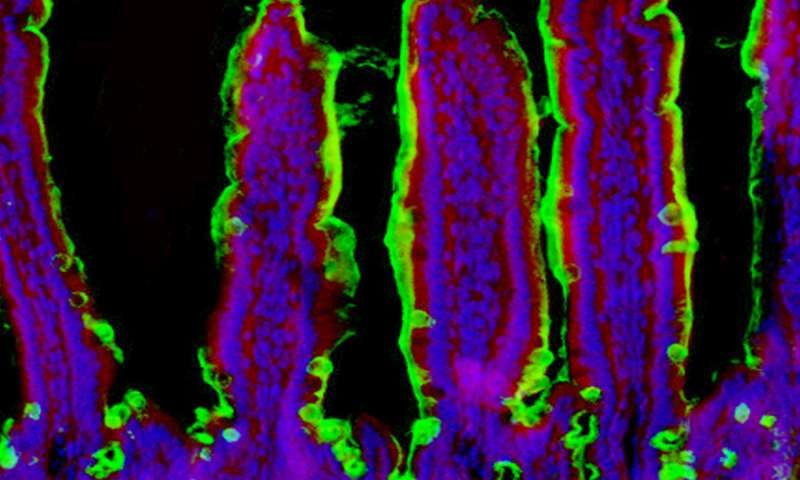
© Jamey MarthRecurrent food poisoning induces a pro-inflammatory enzyme (green) that disrupts the body's ability to detoxify resident normal gut bacteria.
A startling discovery published today in the journal Science reveals how your past history of minor bacterial infections can add up with age to cause a severe inflammatory disease.

Small bacterial infections that may go unnoticed and which the body easily clears without treatment, such as occurs during mild food poisoning, nevertheless can start a chain of events that leads to chronic inflammation and potentially life-threatening colitis. These new findings may also help identify the long-mysterious origins of inflammatory bowel disease (IBD).

Researchers worked for eight years to make this breakthrough. The project was led by Jamey Marth, Ph.D., and included lead author Won Ho Yang, Ph.D.; Michael Mahan, Ph.D.; Douglas Heithoff, Ph.D.; and Peter Aziz, M.Sc., who hold joint appointments at Sanford Burnham Prebys Medical Discovery Institute (SBP) and UC Santa Barbara's Center for Nanomedicine (CNM), in collaboration with Victor Nizet, M.D., at UC San Diego and Markus Sperandio, M.D., at the Ludwig-Maximilian University in Munich. Together they began this long-term study with a radically different hypothesis to investigate the origin of chronic inflammatory diseases spanning colitis and IBD.

Their hypothesis reflected multiple clues. First, it has become increasingly evident that the genetic makeup of an individual plays a limited role in the onset of common inflammatory diseases, including colitis and IBD. Twins show relatively small concordance for both individuals developing IBDs, for example. Such findings implicate unknown environmental factors in disease origins.


Comment: See also:


Brain

Fasting can boost brainpower and give more energy to neurons

Plato quote
Could regular fasting make you smarter? People following regimes like the 5:2 diet usually do so for weight loss, but some who try it say it makes them mentally sharper too.

If this is true, experiments in mice may offer an explanation. In these animals, enforced fasting has been found to cause changes in the brain that are likely to give neurons more energy, and enable them to grow more connections.

Mark Mattson of the National Institute on Aging in Maryland and his team looked at 40 mice that consumed the same total calories, but either ate normally every day or ate nothing every other day.

Comment: More on the benefits of fasting:


Syringe

Going after "vaccine hesitancy": How the medical-pharmaceutical-media apparatus suppresses vaccine safety concerns and protects financial interests

vaccine

World Mercury Project Targeted by the AAP and IAC


American consumers, particularly parents, should be asking some hard questions about why the American Academy of Pediatrics (AAP) and Immunization Action Coalition (IAC) apparently have no interest in improving vaccine safety. In the face of snowballing vaccine scandals-from fudged safety trials that use other vaccines as placebos, to persistent use of neurotoxic aluminum adjuvants, to the accelerated rollout of unproven vaccines that may be causing more problems than they solve-these and other vaccine advocacy organizations are not only turning a blind eye but are actively circling the wagons while beefing up public relations (PR) intended to stifle discussion. These PR efforts are on revealing display in an April 2017 IAC webinar on "Vaccines and the New Administration" that unsurprisingly singles out the activities of the World Mercury Project and its Chairman, Robert F. Kennedy, Jr. Expressing equal parts alarm and disdain, the AAP rhetorically asks, "Vaccine safety: here we go again...?"

Gift

EPA gives Monsanto an early holiday present - produces a revised cancer assessment that favors the pesticide industry's bottom line over public health

Monsanto
Remember weedkiller and environmental nightmare, Roundup? EPA continues to argue that it does not cause cancer - dismissing concerns from independent scientists and mounting evidence suggesting otherwise.

EPA's release of its revised assessment of the cancer-causing potential of glyphosate (the main ingredient in the weedkiller Roundup), is just what we'd imagine Monsanto, and the rest of the agribusiness giants, would've asked for this holiday season.

To the surprise of no one, this year's assessment remains relatively unchanged from last year's, finding that glyphosate is "not likely to be carcinogenic to humans."

Comment: It is unlikely the EPA will listen to it's Scientific Advisory Panel or the public for that matter! Listed below are just a few examples of how the EPA and Monsanto lie, distort and conceal damming evidence about the most widely used pesticide in the world:


Cloud Precipitation

Loneliness found to have a surprising link to Type 2 diabetes

old man lonely
© Soragrit Wongsa/Unsplash
Weird.

A recent study discovered an intriguing relationship between social isolation and the development of type 2 diabetes, suggesting that having a smaller network of friends could possibly make us prone to the illness.

As with any such research, the precise nature of this link isn't clear. But it's as good a reason as any to reach out and make sure those isolated and alone this Christmas know they have friends to share the holiday with.

While type 1 diabetes is a lifelong auto-immune disease that typically develops in childhood, type 2 diabetes refers to the body's increasing resistance to insulin, which can develop at any age and slowly progress.

Comment: Humans are social creatures. We thrive best in a supportive network of family and friends. The lack of social connection has many ramifications on health. One effective meditation technique is Eiriu Eolas, which simultaneously addresses the health of mind, body and spirit. It can be found streaming online here


Health

The safe first line of defense for clinical depression: Magnesium

Ancient Lakes Magnesium
© Ancient Lakes Magnesium
The science supporting the efficacy of magnesium for major depression and other psychiatric disorders, testing for magnesium deficiency, and which forms and dosages are most effective.

Depression, a life-threatening psychiatric disorder, lies at the confluence of biochemical, hormonal, immunological, and neurodegenerative variables, which intersect to generate the pro-inflammatory state with which depression is associated. A major public health issue, depression is estimated to become one of the top three contributors to the global burden of diseases within a few years. Not only does depression consume a sizable portion of health care expenditures, but it is considered to be an independent risk factor for metabolic, cardiovascular, and neuropsychiatric disorders (1).

Comment: Read more fascinating Magnesium facts:


Red Flag

The most vaccinated & most unhealthy state in the United States: Mississippi

mississippi
“Mississippi was a surprise leader in vaccinations. Between 2012 and 2014, the state ranked dead last in overall health rankings. Mississippi’s efficiency at immunizing its children is therefore puzzling.” — Paul Offit, MD
I came across a very odd opinion piece last week in the Daily Beast by pediatrician Paul Offit, MD of Children's Hospital of Philadelphia, PA. The article is titled "The Unhealthiest State in America Has the Best Vaccination Rate," and it opened by referencing a recent report by the Centers for Disease Control and Prevention (CDC) providing a state-by-state comparison of vaccination rates children in kindergarten during the 2016-17 school year.1,2

Dr. Offit is a well-known vaccine developer, mandatory vaccination proponent and spokesperson for the vaccine industry, so the title of his piece would seem to pose a conundrum for him. I was curious to see just how he would explain how the unhealthiest population in the nation is also the most highly vaccinated with a 99.4 percent vaccination rate among kindergarten children. I assumed that he would simply disassociate the two and proceed to give a long list of reasons (other than vaccination) why Mississippians are so unhealthy, such a high incidence of poverty, poor nutrition, polluted natural resources, etc.

Comment: Paul Offit is an stunning example of a 'scoundrel of medicine' and yet he still influences the vaccination debate with his convoluted thinking! Thankfully Dr. Suzanne Humphries deconstructs his lies with the following interview and article: Paul Offit's vaccine lies deconstructed
Paul Offit believes that exempting your child from vaccination is morally reprehensible. He considers himself an authority on autism, all infectious diseases, morality, history, every religious system, and infant immunology. You may also recognize Dr. Offit as the one who says that all vaccines are perfectly safe and infants can tolerate theoretically 10,000 of them at once:
    " A more practical way to determine the diversity of the immune response would be to estimate the number of vaccines to which a child could respond at one time.... each infant would have the theoretical capacity to respond to about 10, 000 vaccines at any one time." [1]
The status accorded to him by the pharmaceutical and medical fields permits him to influence the opinions and practice of lower rung physicians regarding vaccine exemptions. Unfortunately, even doctors will simply believe the "expert"[2] without bothering to go and check their own medical literature, to see if the self-proclaimed expertise has a solid scientific foundation. Research shows that when people listen to the expert, the part of their brains that is capable of independent thought goes to sleep.[3]