Health & WellnessS


Network

Distinct daily cycles in our thinking patterns revealed in study of 800 million tweets

twitter
© AP Photo / Matt Rourke, File
Our mode of thinking changes at different times of the day and follows a 24-hour pattern, according to new findings published in PLOS ONE. University of Bristol researchers were able to study our thinking behaviour by analysing seven-billion words used in 800-million tweets.

Researchers in artificial intelligence (AI) and in medicine used AImethods to analyse aggregated and anonymised UK twitter content sampled every hour over the course of four years across 54 of the UK's largest cities to determine if our thinking modes change collectively.

The researchers revealed different emotional and cognitive modalities in our thoughts by identifying variations in language through tracking the use of specific words across the twitter sample which are associated with 73 psychometric indicators, and are used to help interpret information about our thinking style.

Comment: This would make sense because, from an evolutionary perspective, in the first part of the day we are conerned with obtaining our daily bread whereas evenings have often been a time of contemplation and imagination: Also check out SOTT radio's: The Health & Wellness Show: Sleep, Light and Circadian Rhythms


Brain

Study: Childhood stress matures brain faster, adolescent stress delays it

child
Stress in early childhood leads to faster maturation of certain brain regions during adolescence. In contrast, stress experienced later in life leads to slower maturation of the adolescent brain. This is the outcome of a long-term study conducted by researchers of Radboud University in which 37 subjects have been monitored for almost 20 years. The findings will be published in Scientific Reports on 15 June.

In 1998, the group-which then comprised 129 one-year-olds and their parents-was tested for the first time. Over the past 20 years, researchers studied, inter alia, their play sessions and interactions with parents, friends and classmates. The children were also subjected to MRI scans. This wealth of data has enabled Karin Roelofs, Professor of Experimental Psychopathology, her Ph.D. student Anna Tyborowska and other colleagues of Radboud University to investigate how stress in various life stages affected the adolescent brain of these children.

More specifically, they looked at the effects on cerebral maturation. During adolescence, our brain experiences a natural pruning process in which previously made connections between brain cells are refined, allowing the creation of more useful and efficient networks.

Comment: The results of this seems to corroborate other findings that severe trauma in childhood can force a child to grow up too quickly, thus skipping formative years which can to lead to a variety of behavioral disorders later in life, and too little stress, encouraged through the phenomena of helicopter parenting, for example, prevents the maturation of the child making it incapable of handling stressors later in life:


Wine n Glass

Scientists reveal those who drink alcohol occasionally have lower risk of dying early than those who abstain

Alchohol 1
Mortality rates are lowest in light drinkers, who have an average up to three pints of beer or glass of wine a week across their lifetime
People who enjoy the occasional tipple are less likely to suffer a premature death than abstainers, research suggests.

Mortality rates are lowest in light drinkers, who have an average up to three pints of beer or glass of wine a week across their lifetime.

The risk soars 20 per cent for very heavy drinkers who indulge in the same amount of booze - but on a daily basis, scientists at Queen's University Belfast found.

And there is a seven per cent higher chance of an early death or being diagnosed with cancer for those who have never even touched alcohol.

The scientists have now revealed the exact risk of dying early or developing cancer for men and women in eight different brackets of drinkers.

Current UK guidelines advise a maximum of 14 units of alcohol a week - six pints of average strength beer or seven medium sized glasses of wine.


Comment: See also: Largest observational study to date finds alcohol use biggest risk factor for dementia


Microscope 2

CRISPR: Gene editing embryonic stem cells might increase risk of cancer

Embryonic stem cells
© BSIP SA/Alamy Stock PhotoEmbryonic stem cells can become any type of cell in the body.
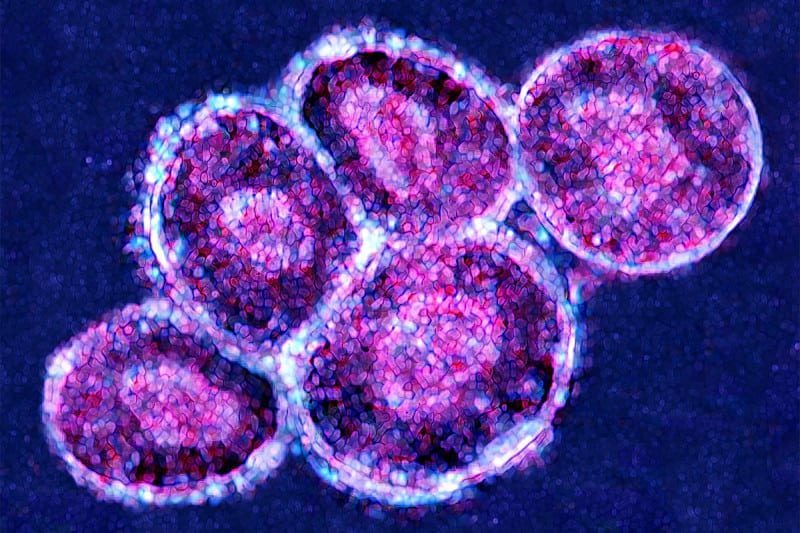
Emryonic stem cells could help treat all kinds of disorders, and editing the genomes of these stem cells could make the treatments far more potent. But there might be a catch.

A team at Novartis has found that genome editing kills most human embryonic stem cells - and the ones that survive are more likely to have mutations in a key anticancer gene. Cells with such mutations are, in theory, far more likely to turn cancerous.

"This is something we need to be aware of and test for," says Florian Merkle at the Wellcome-MRC Cambridge Stem Cell Institute in the UK, who wasn't involved in the work.

Comment: Given the risks outlined above in editing embryonic stem cells, and considering the remarkable strides forward we're seeing in unedited stem cell therapies, the question has to be asked: Why bother editing them at all? Maybe because the scientists are trying to find ways of using their new toy CRISPR and make some serious bank in the process?

See:


Health

Health or Hype? Mediterranean diet only good for rich people

Mediterranean diet
© MarianVejcik/GettyA Mediterranean diet might keep you healthy – if you’re wealthy.
It's supposed to be good for you. The effects of the Mediterranean diet were tracked over five years in a study published in 2013, but its results have now been called into question.

The original research found that the diet - featuring fresh fruits and vegetables, seafood, nuts, olive oil and red wine, but very little red meat or sugar - reduced the risk of cardiovascular disease, contributed to slight reductions in rates of heart attack and death, and more significantly lowered the risk of stroke.

Since then, study after study has found that eating a Mediterranean diet can stave off ageing in the brain, delay the onset of Alzheimer's disease or even improve the chances of successful IVF treatments.

Comment: The Mediterranean Diet is mostly hype - a slight reworking of the standard food pyramid. It also bares little resemblance to the diet actually eaten by Mediterranean peoples in the 1950s when it was "discovered" (invented) by nutritional arch-villain Ancel Keyes. It's no surprise that the quality of food consumed has a significant effect on the effectiveness of the diet; more significant than the diet itself. If one cleans up their diet, eats organic and avoids processed foods, they're already halfway there to seeing health benefits, regardless of what the diet is labelled.

See also:


Health

The mainstream media's war on turmeric continues

turmeric latte
© Westend61/Getty


Spices are causing a stir as cheap and easy cure-alls for everything from diabetes to dementia, but not all the claims live up to the hype


Turmeric and bread makes for an unusual breakfast. But when Mark Wahlqvist served it to a group of older people in Taiwan, he had high hopes. They had been diagnosed as heading for diabetes, which can affect mental abilities. Having heard that the spice could have cognitive benefits, he wanted to put it to the test. "The idea that turmeric might be brain-protective is novel," says Wahlqvist, currently at the National Health Research Institutes in Taipei, Taiwan.

To those following the latest food trends, however, the spice's brain-boosting potential is unlikely to raise an eyebrow. It is just one in a long list of turmeric's supposed benefits that have seen it proclaimed as a cheap and effective super food. As a result, what once may have been gathering dust in your spice rack is now the star attraction at trendy coffee shops selling "golden lattes".

Comment: The above article really provides little evidence that turmeric is over-hyped - just the assurance of a couple of "experts". It really boggles the mind when one sees the all-out assault in the mainstream media against herbal medicines in general, but turmeric in particular, when one looks at the sheer number of studies that have found benefit. Why try so strongly to dissuade people from trying a cheap method of dealing with disease? Could turmeric actually be a threat to Big Pharma?


Coffee

Human engineered kidney cells made to release insulin in presence of caffeine

latte coffee
© Chevanon Wonganuchitmetha/EyeEm/GettyCaffeine can trigger engineered cells to release insulin.
A cup of coffee after a meal might be enough to keep diabetes under control, thanks to cells that have been engineered to release insulin when they detect caffeine.

Diabetes develops when the body loses its ability to regulate glucose levels in the blood. Some people manage this by taking frequent pin prick samples to measure their blood sugar levels, and using this information to adjust the supply of insulin from a pump worn against the skin.

Meal times are an especially taxing event, as the amount of sugar consumed must be estimated, and an appropriate dose of insulin scheduled. To get around this, Martin Fussenegger, a biotechnologist at ETH Zurich, Switzerland, and his colleagues have developed an alternative that's powered by coffee.

Comment: It seems like the bold new horizon of implanting genetically engineered cells into humans is upon us. It's not enough, apparently, that we're altering our food chain beyond recognition, the frontier of genetically engineered humans is simply too tantalizing. And if GMOs are anything to go by, we can expect this stuff to be out of the lab and into the world with little to no thoughts on the possible repercussions.

See also:


Health

Bacterial deficiency: The bacteria babies need is disappearing from the Western world

mouthful pills
© Ariel Davis
We may be missing the key to one of the biggest boons to public health since the introduction of iodine into the food supply in 1924.

Scientists at the University of California, Davis, have found that a strain of bacteria called B. infantis that is thought to have been the dominant bacterium in the infant gut for all of human history is disappearing from the Western world. According to their research, this was probably caused by the rise in cesarean births, the overuse of antibiotics and the use of infant formula in place of breast milk.

Indeed, nine out of 10 American babies don't harbor this bacterium in their gut, while researchers suspect that the majority of infants in less industrialized countries do.

Comment: The burgeoning science of the gut microbiome continues to find how absolutely vital these bacteria are to our state of health and how foolish we've been in failing to consider them.

For more about B. Infantis, see:


Microscope 1

International scientists have found autism's cause while American media and public health officials remain silent

In early December 2017, Dr. Chris Exley of Keele University in England and his colleagues published a paper that for the first time looked at the brain tissue of subjects with autism to determine the level of aluminum (note: they spell "aluminum" as "aluminium" in the United Kingdom) found within their brain tissue. For anyone trying to convince the world that "the science is settled and vaccines don't cause autism," the study's findings are deeply contradictory to that statement. In a blog post written by Professor Exley on the day his study was published, he explained the groundbreaking results:
"...while the aluminium content of each of the 5 brains [of people with autism] was shockingly high it was the location of the aluminium in the brain tissue which served as the standout observation...The new evidence strongly suggests that aluminium is entering the brain in ASD [autism spectrum disorders] via pro-inflammatory cells which have become loaded up with aluminium in the blood and/or lymph, much as has been demonstrated for monocytes at injection sites for vaccines including aluminium adjuvants."
Dr. Chris Exley
Dr. Chris Exley of Keele University
Dr. Exley's quote includes a reference to "monocytes at injection sites" and the fact that the interaction between these monocytes and aluminum has been demonstrated in previous published science. I know, that sounds pretty technical, but bear with me. A "monocyte" is a type of white blood cell, of which one form of monocyte is a "macrophage." A macrophage can be thought of as the garbage man of the immune system, eating up foreign substances, cell debris, etc. As you will see in a moment, macrophages appear to be playing a critical and devastating role in triggering autism, serving to escort aluminum injected from a vaccine directly into the brain, where it can disrupt brain development and trigger autism.

Health

Neurofeedback may help improve symptoms of Parkinson's Disease

Parkinson's Disease
April was Parkinson's Awareness Month, which prompted me to share this story and an effective, yet little-known treatment for Parkinson's disease (PD).

Parkinson's disease is a form of brain disorder, with a wide variety of symptoms, ranging from hand tremors (trembling/shaky hands), to mask-like face (an expressionless face with little or no sense of animation). Neurofeedback is a technology-based learning technique that uses a computer to give information to a person about his or her own brainwave pattern in the form of EEG activity, in order to train the person to modify his or her own brainwaves. It is not widely known or used, but I have seen first-hand how neurofeedback can help manage the symptoms of PD.

In 2009, I met a couple from the UK at an English tea house in Vancouver, B.C. They asked what brought me to Canada, and I explained that I was there for the 2nd International Conference on Mild Traumatic Brain Injury to deliver a speech on "grieving the loss of self". Upon hearing this, the woman explained that this was how she felt as a result of living with Parkinson's disease, especially because she had not yet found a treatment that had helped her symptoms. I asked her if she had tried neurofeedback. As a neurofeedback practitioner myself, I have seen results using this type of treatment with a wide range of brain disorders. She was somewhat skeptical, but very interested, and asked if it was possible to help her remotely. I was able to work with her remotely using neurofeedback and saw great results in the management of her PD symptoms.


Comment: For more on this fascinating modality, see: