Health & WellnessS


Megaphone

U.S. Payouts for vaccine injuries and deaths keep climbing: $4 billion and growing

vaccines
The Health Resources & Services Administration just released new dollar figures reflecting payouts from the National Vaccine Injury Compensation Program. The payouts for vaccine injuries just went past the whopping $4 billion mark. Using the government's own conclusion that only 1% of all vaccine injuries are reported, the $4 billion is just the tip of the iceberg. Despite assurances from CDC and our Federal agencies that all vaccines are safe, the payouts say otherwise. Vaccine injuries can and do happen-to previously healthy children and adults. Consumers deserve to know the facts about the full range of vaccine risks.

In most public health communications about vaccination, officials gloss over vaccine risks, dismissing any possible "side effects" as mild. However, vaccination programs have always resulted in more serious vaccine injuries for some. In the 1970s and early 1980s, for example, the diphtheria-pertussis-tetanus (DPT) vaccine and its whole-cell pertussis component had chalked up so much vaccine damage that a television documentary likened receiving a DPT shot to playing "vaccine roulette."

After the DPT debacle began attracting widespread attention, vaccine manufacturers started pressuring Congress for protection from vaccine injury lawsuits. Congress obliged. In 1986, President Reagan signed into existence a radical piece of legislation-the National Childhood Vaccine Injury Act (NCVIA)-which launched what the Act described as an "alternative remedy to judicial action for specified vaccine-related injuries." A key component of the legislation involved creating the National Vaccine Injury Compensation Program (NVICP), which was given responsibility for deciding (through the workings of a special "vaccine court") whether specific injuries and individuals would be eligible for financial compensation.


Sun

The nutritional value of light

light
Light has a profound affect on our mood and our physiology, it also nourishes many of the plants that give us sustenance. Yet, how often do we consciously consider light as part of a healthy diet? Here is a mindful approach to using light to nourish your body, mind, and spirit.

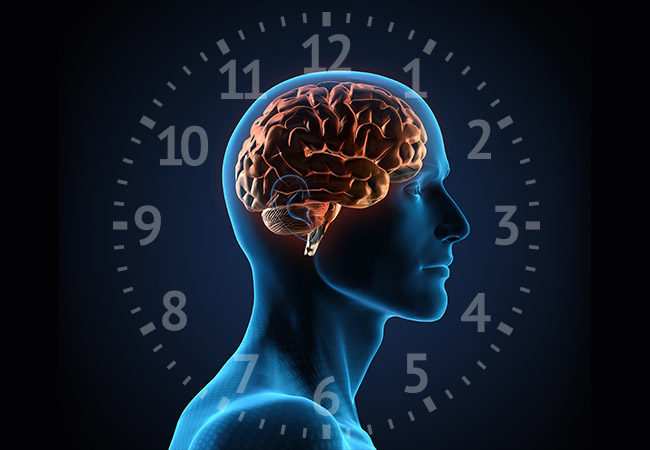
Humans did not evolve indoors under artificial light, our biology developed in harmony with the cycles of the sun, moon and seasons. For this reason, we have a built-in clock for physical, mental, and behavioral changes that follow a roughly 24-hour cycle. Plants, animals, microbes, and most other living organisms, also have a circadian rhythm which is primarily influenced by a relationship with light.

Comment: The Health & Wellness Show: Seeing the Light with Dr. Alexander Wunsch
How important is sunlight for the human body? Can it act as an energy source? And what are the biological consequences of living under artificial lights? Tune in to this week's show as Dr Alexander Wunsch, a world leading expert in light medicine and photobiology, shares with us his extensive knowledge of light's effects on biological systems. Aside from conducting research, Dr Wunsch utilizes a wide range of therapeutic treatments including chromotherapy, vibrational medicine and Cranio-Sacral body work at his private clinical practice in Heidelberg, Germany.


SOTT Logo Radio

SOTT Focus: The Health & Wellness Show: Chronic pain: Is it all in your head?

pain
© Mikhail_Kayl / Shutterstock.comSome people feel more pain than others.
Do you have low back pain? Do your joints ache? Do you experience the persistent pins and needles feeling of neuropathy? Or maybe you have fibromyalgia and hurt all over? If you do, you're one of the 39 million Americans who suffer from persistent pain. Being on the pain train is bad enough without the added insult of being told that it's 'all in your head'. But what if it is -- at least partly? There are some types of pain that are obviously linked to an actual physical insult and other types that cannot be traced to an easily identifiable medical condition. Research is now showing us that some pain really is in the brain.

Join us for this episode of The Health and Wellness Show where we'll discuss different types of pain and their co-factors, treatment modalities, the placebo effect and the brain's role in stopping or perpetuating this mental and physical misery.

And tune in for the Pet Health Segment at the end of the show where the topic will be signs of pain in cats.

Running Time: 01:16:29

Download: MP3


Bug

CDC warns vicious tick species capable of spreading diseases to humans & other animals has invaded US

asian longhorned tick
“We really don’t know if diseases will be spread by this tick in the United States and, if so, to what extent."
The Centers for Disease Control and Prevention (CDC) is warning about a new tick species in the U.S. that it says is capable of spreading diseases dangerous to humans and other animals.

A CDC weekly report released Thursday states that the Asian longhorned tick, an arachnid native to Korea and other parts of east Asia, has been found in several states in the eastern and southeastern parts of the United States.

The first incidence of the tick's appearance outside of labs in the U.S. was in New Jersey last year, according to the report. Since then, the arachnid has been found on animals in eight other states, including on humans.

The report stressed, however, that no humans or animals in the U.S. are believed to have yet caught pathogens transmitted by the ticks.

"We really don't know if diseases will be spread by this tick in the United States and, if so, to what extent. But it's very important that we figure this out quickly," Lyle Petersen, of the CDC's division of vector-borne diseases, told The Washington Post.

Comment: More on the vicious Asian longhorned tick:


Cow

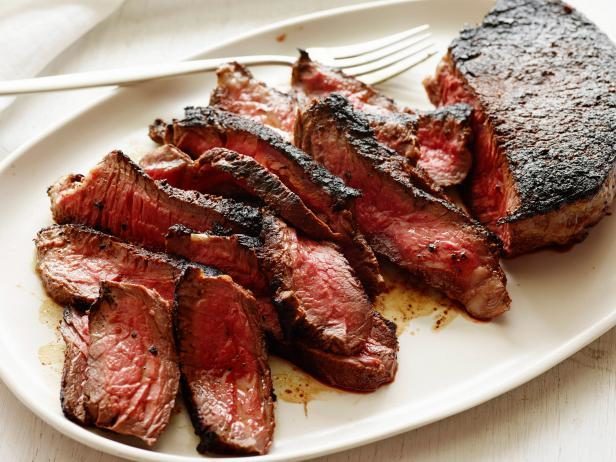
Can you really live on meat alone?

steak carnivore diet


Strict followers of the diet, like Jordan Peterson and his daughter Mikhaila, swear that eating beef and water fixed their health problems. But could it kill you?


Mikhaila Peterson eats just under one kilogram of beef per day, mostly chuck roasts fried in beef tallow.

The daughter of celebrity academic Jordan Peterson doesn't use salt much anymore, she recently told Geoffrey Woo, CEO and co-founder of HVMN (pronounced "human"), a Silicon Valley company that sells supplements. The pink Himalayan rock salt made her excessively thirsty, therefore she lives on just beef and water now, and sometimes bourbon - a hyper-extreme diet she credits for putting her arthritis, chronic fatigue and occasional hypomania into remission. The carnivore cleanse has also "fixed" her father's depression, fatigue and weight gain, Mikhaila Peterson reported on her blog, Don't Eat That.

She's now offering $120 per hour consultations, and has more than 6,500 subscribers. Meanwhile, a Facebook group called World Carnivore Tribe has reached more than 22,000 members since debuting last December. On Instagram, there are more than 41,000 posts with the #meatheals hashtag. And, in Silicon Valley, some tech workers are stocking the office communal fridge with rib eyes and steak tartare, the San Francisco Chronicle reports, in the belief going "carnivory" will give them a competitive edge.

Comment: While this article is better than most mainstream takes on the carnivore diet it still relies on "experts" who don't know what they're talking about and uses the dismissive label of "fad diet". It would be nice if an 'expert' would actually weigh in on this diet by saying what is obvious to anyone who has looked even peripherally at people who are actually adopting the lifestyle: It's clearly working for many people; we don't really know why, although there are some theories. To actually do this requires being able to let go of some nutritional sacred cows, drop the ego, and admit that we clearly don't know as much about nutrition as we think we do. We're not holding our collective breaths.

See also:


Bacon n Eggs

How does our diet affect circadian rhythms?

circadian rhythm
Over the past hundreds-to-thousands of years, peoples around the world have thrived on a wide variety of diets. Food has changed a lot seasonally, geographically, etc.

What hasn't changed? The 24-hour light/dark cycle to which our circadian rhythms are constantly entrained.

Circadian "Phase" Shifts

In general, your circadian phase is based on the 24 hour day, roughly 12 hours in the light, 12 hours in the dark (varies seasonally and geographically). Many hormonal and biochemical effects are influenced by this. Light, darkness, and food are what, in part, determines your circadian phase.

Comment: See also:


Sun

Immune system-boosting nutrients we're in more need of during fall and winter

winter immune system
During the darker and colder months of fall and winter, it is tempting to hunker down in our warm homes with big blankets and comfort food. Who doesn't want to cozy up with a big cup of hot tea, comfy slippers, and a good book?

Hibernating works for bears, bees, and bats, but unfortunately, is not ideal for humans. We require sunlight, year-round physical activity, and a steady supply of seasonal nutrients.

Fall and winter bring with them many joys (no more mosquitoes! the holidays are coming!), but they also bring with them conditions that make staying healthy a bit trickier.

For many of us, the shorter, colder days of fall and winter mean less sunlight exposure, less exercise, and less access to fresh produce.

We tend to get sick more often during fall and winter, but there are things we can do to reduce the risk.

Comment: Even better than overloading on seasonal vegetables would be adding more nutrient-dense meat to one's diet:

A comprehensive list of reasons why vegan and vegetarian diets easily ruin your body

. ..and more on boosting your immune system:


Pills

Are the side effects of antidepressants worse than the symptoms of depression?

antidepressants
© artemfurman / 123RF Stock Photo
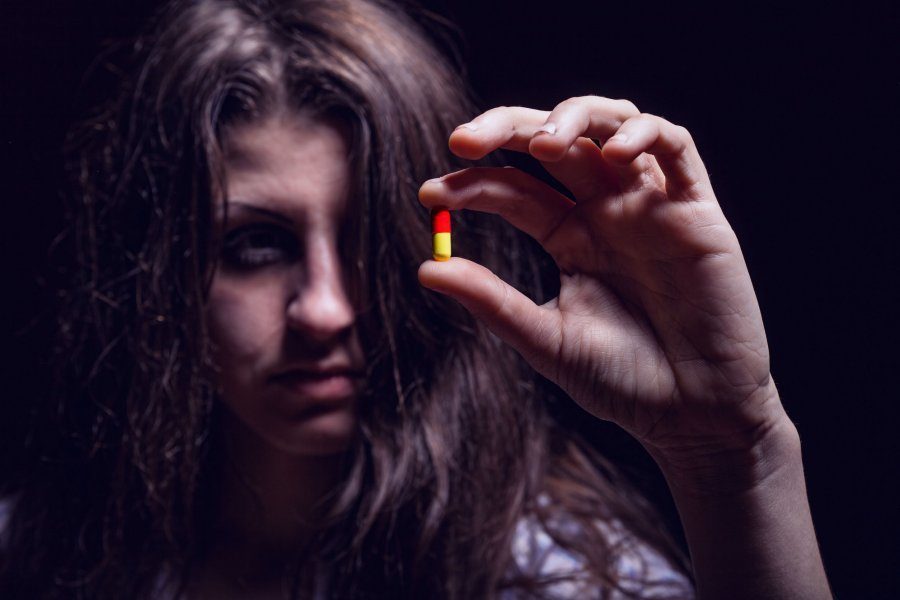
Whilst many patients have been prescribed pills to help their condition, those who suffer from depression have claimed that the side-effects to antidepressants are sometimes considered worse than the depression itself, according to reports. Some users have said that taking the commonly prescribed pills has ruined their lives, whilst others claim that the tablets have made them suicidal.

Claire Hanley told the BBC's Victoria Derbyshire programme about the effects that antidepressants had on her body, claiming, "I was getting seizure-like symptoms, where my muscles were jolting around of their own accord." Hanley started taking the pills whilst caring for her ill mother alongside studying for her final exams at Cambridge University. However, she suffered severe side-effects after her GP prescribed a stronger dose of tablet. She said, "Within two weeks I'd tried to take my own life twice. I felt disorientated and sick and had digestive problems and infections, it was really extreme. I don't even know how to begin. All I can remember is being on the bedroom floor in a kind of semi-conscious state having seizure after massive seizure."

Comment: See also:


Apple Red

The Big Squeeze: Beverage industry fights to keep juice in Canada's Food Guide

fruit juice


Appearing to dim the 'health halo' that surrounds fruit juice, several proposals from the government's new Food Guide have received backlash from members of the beverage industry


At the Canadian Nutrition Society's annual conference in Halifax in May, a bright orange booth seemed out of place to nutritional biochemist Dylan MacKay. It was for a group calling itself the Canadian Juice Council. "I'd never seen or heard of them before," Dr. MacKay said. "And I've been going to CNS conferences for years."

A few months later, in Southwestern Ontario, a letter to the editor in the Waterloo Region Record responded to an opinion column about proposed changes to Canada's Food Guide, and in particular, signs that the guide would remove fruit juice as a substitute for whole fruits. The letter, signed by the Canadian Juice Council, defended juice as part of "a healthy, balanced diet." A similar letter also began arriving in the inboxes of Canadian senators.

Comment: What's surprising is not so much that lobbyists are actually taken seriously, and often get their way in what ends up in food guidelines, but that anyone still takes these guidelines seriously. As Dr. Freedhoff states above, these decisions, at the end of the day, are political - not scientific, not health-related. Would you trust a politician to tell you what a healthy diet looks like? Should we be asking our doctors about foreign policy?

See also:


Die

The game-changing science of Epigenetics

Epigenetics
Think diseases run in the family? Think again.

Have you ever worried about "getting" breast cancer because your mom and aunt both had it? What about Bipolar Disorder (yes, psychiatry capitalizes it's diagnoses for extra emphasis!) or Lupus? It has probably felt like you have a ticking time bomb inside you and you just want to know when it's going to go off. When that diagnosis is going to be delivered. Women like Angelina Jolie have engaged willful mutilation in the name of the persistent belief that genes are destiny.

This is simply not true.

"It runs in my family" no longer means what we once believed it to.

You may not know this yet, but the whole game has changed and we are several decades into the most powerful shift in scientific thinking in the past 300 years. Science, when handled with care, is a process, not a destination.

Science fundamentally reflects our native curiosity, our creative impulse, and our sense of wonder. Along the line, however, it began to take on a different flavor. With men like Newton, Darwin, and Descarte at the microphone, a culture of reductionism, force-based perceptions around the nature of reality, and separation of spirit and matter all predicated the culture of ruthless medicine we are steeped in today. We war against nature, our bodies, and each other. There's good and bad. There's the illusion of the objective. We pray at the altar of facts and data.