Health & WellnessS


Health

Terminally-ill British mother shocks medics after tumour shrinks by 75% following alternative treatment in Mexico

Kate Malvenan
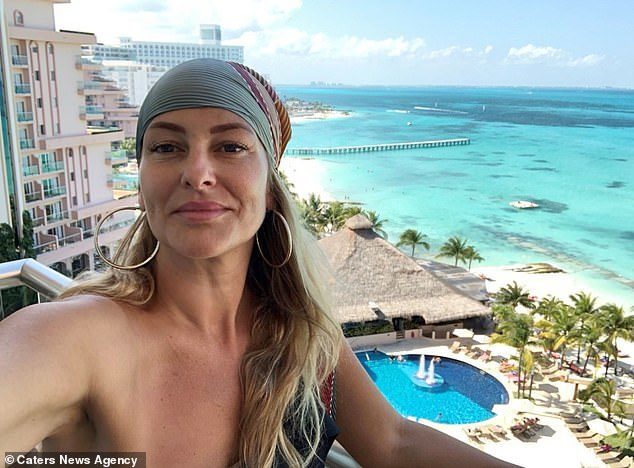
Kate Malvenan, 40, was told she just had months left to live after she was given a shock lung cancer diagnosis last October
A terminally ill mother - who kept her cancer diagnosis a secret from her toddler - has shocked doctors after her tumour was reduced by 75 per cent following alternative treatment in Mexico.

Back in October 2018, Kate Malvenan's world came crashing down after doctors broke the horrific news that the non-smoker had just six to 24 months to live following a shock lung cancer diagnosis.

The 40-year-old, who is originally from Kessingland, Suffolk, but now resides on the Gold Coast in Queensland, Australia, said she has always taken great pride in maintaining her good health by eating nutritious foods and regularly working out at the gym - while also being a strict non-smoker.


Comment: A very interesting story, and certainly not unique. There are many instances of people overcoming cancer using alternative therapies, particularly Intravenous Vitamin C therapy.

See also:


Attention

Genetic risk scores alone aren't that good at predicting health

genetic risk score
© Andrew Brookes/GettyPolygenic risk scores estimate your likelihood of developing some health conditions
The UK's health secretary said last week that he had booked a blood test because genetic testing revealed he had a high risk of getting prostate cancer. But a new study suggests that this type of genetic technique may not yet be accurate enough to inform healthcare decisions.

Genetic tests for conditions caused by a single gene, such as cystic fibrosis, are already used in healthcare. But many health problems involve multiple genes that each have a small effect, making it more difficult to screen for a person's genetic risk for heart disease or diabetes, for example.

A new type of genetic screening, however, can estimate a person's risk of developing common conditions like these. "Polygenic risk scores" are calculated by looking at genetic variants in a person's genome and comparing these with analyses of large data sets of genetic data to produce an illustrative picture of how likely an individual is to develop a particular condition.

One US study last year said that such polygenic risk scores could help identify people with four times the usual risk of heart disease. The scores could be used to help prevent high-risk individuals from developing the disease by treating them or supporting lifestyle changes, the team behind the work said.

But new work by David Curtis of University College London disputes the accuracy of this study, suggesting that polygenic risk scores may in fact be of little use in healthcare.

Comment: See also:


Info

Data from medical research: The right to know, or not know

testing
A familiar scenario: as part of having your cholesterol checked, your clinician also orders a standard blood panel - a red blood-cell count, and then a breakdown showing the proportions of five types of white blood cells. Less familiar: your cholesterol is fine (congratulations), but the white blood-cell counts are off, with values that could mean something fairly mild, such as a viral infection, or point to a serious, potentially fatal problem, such as cancer.

Would you want your clinician to tell you about this abnormal finding?

If you said 'yes', then you are expressing your right to know about the result. If you said 'no', then you are expressing the opposite: the right not to know.

In most cases, the clinician would tell the patient about such an abnormal finding and discuss it. But what if the finding turned up in samples donated for medical research instead of taken for medical testing?

Health

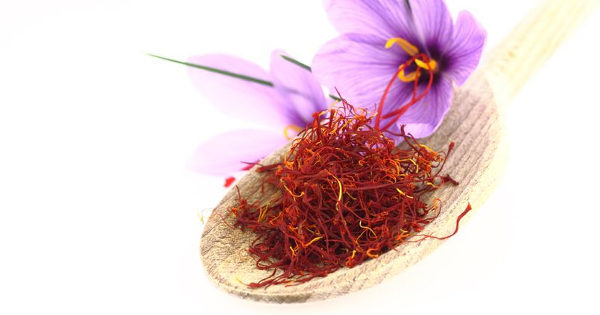
Saffron: A safe and effective treatment for postpartum depression

Saffron

Depression is a common health condition, with few conventional treatment options. Forced to choose between talk therapy and medication, many people choose to be treated with drugs. But what about new mothers, whose desire to breastfeed means they are not candidates for psychiatric meds? Nature is providing hope in the form of a delicate flower: saffron


Postpartum depression is a mood disorder that affects as many as 1 in 7 new mothers. Characterized by deep mood swings, low energy, and a loss of interest in daily activities, postpartum depression may be caused by the sudden drops in estrogen and progesterone that occur in a woman's body immediately after giving birth.[1] Currently, the only approved medical treatments for postpartum depression are talk therapy and psychiatric medications. If a mother wishes to breastfeed, the pharmaceutical path is contraindicated due to contaminating breast milk with medication metabolites. Now, thanks to an exotic spice, there is another choice that demonstrates the power of nature to heal from within.

Comment: Saffron: Very expensive but highly therapeutic
So, what is the evidence to support the notion that flowers, and saffron, elevates the human spirit, contributes to happiness and well-being?

There is a rather extensive body of human clinical literature on its role in treating depression, with a recent meta-analysis of the literature concluding: Findings from clinical trials conducted to date indicate that saffron supplementation can improve symptoms of depression in adults with MDD [Major Depressive Disorder][1]

Also, a study reported about on Life Extension reveals that saffron is as at least as effective as the blockbuster pharmaceutical drug Prozac for treating mild to moderate depression:
At the close of the 6-week, double-blind, randomized trial, saffron was found to be as effective as Prozac® in the treatment of mild to moderate depression. There were no significant differences in unwanted reactions.


Question

Will more genetically engineered foods be approved under the FDA's new leadership?

GMO image
© Lightspring/Shutterstock.comBoth the U.S. FDA and the World Health Organization have declared genetically modified crops and engineered food safe.
The world of food and drug regulation was rocked earlier this month by the news of a change in leadership at the Food and Drug Administration. Commissioner Scott Gottlieb resigned and will step down in early April. His temporary replacement is Dr. Ned Sharpless, director of the National Cancer Institute.

As the news filtered out, stocks went up and down, consumer advocacy groups looked back on Gottlieb's legacy and commentators worried about the future of the agency.

Most of the attention surrounding Gottlieb's departure has focused on the consequences of the resignation for the vaping and tobacco industries. But the impact of changes in FDA leadership extends well beyond that. FDA-regulated products make up 20 percent of consumer spending in the U.S. In the realm of food alone, FDA regulates 75 percent of our food supply.

Megaphone

Barbara Loe Fisher: Taking no prisoners in the vaccine culture war

vaccines
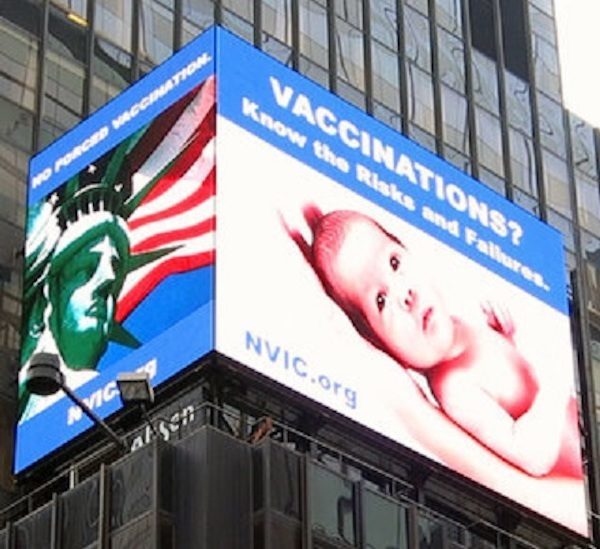
© The Vaccine ReactionNVIC's “No Forced Vaccination” Message Back Up in Times Square
On a cold winter morning in November 2007, I watched hundreds of parents line up with their children in front of a Maryland county courthouse. The children had been kicked out of school by state officials and were truant. The mothers and fathers were holding letters threatening them with imprisonment or fines of $50 a day for failing to show proof their children had gotten a chickenpox or hepatitis B shot. 1

Confused, angry and frightened, but mostly resigned, they were working Moms and Dads trudging toward the courthouse on a Saturday morning to face a judge ordering them to vaccinate their children or go to jail.

Patrolling the scene was an armed SWAT team of policemen with dogs.

Marijuana

CVS Pharmacy to sell CBD products in 800 stores in 8 states

CBD-infused sprays, roll-ons, creams and salves will be offered as an 'alternative source of relief'.
CBD Έλαιο Κανναβιδιόλης
CVS Pharmacy announced Wednesday that it will begin selling hemp-derived CBD products in eight states. The national drug store chain will be marketing the topical cannabidiol products, such as creams, sprays and roll-ons, as "an alternative source of relief," CVS said in a statement to NBC News. CVS will also be partnering with a company to test and verify the quality of the CBD topicals sold in its drug stores.

"We are carrying hemp-derived CBD products in select states to help meet consumer demand for alternative care options," said CVS Health Spokesperson, Mike DeAngelis.

The items will be sold in Alabama, California, Colorado, Illinois, Indiana, Kentucky, Maryland and Tennessee.

Comment: Big Pharma making moves to monopolize CBD oil market


Question

Vitamin A: Vitamin or villain?

vitamin A
180DegreeHealth, from the beginning, has been about two primary things:
  1. Slaying widely-held nutritional myths
  2. Figuring out what the hell is causing an accelerated increase in nearly all health problems worldwide over the past century, the last 40 years in particular, and determine how best to turn those trends "180 degrees."
Admittedly, 180D has done a lot more of #1 than #2. In fact, because the pursuit of #2 attracted so many extreme health fanatics and disordered eaters, I felt obligated to mostly drop the latter and shout "EAT AN EFFING SLICE OF PIZZA AND RELAX" from the rooftops.

Comment: Interesting theory, but it obviously needs to be teased out more. It may be a conditional situation that makes vitamin A more of a burden than a nutrient (an imbalance of other fat-soluble vitamins, for instance). However, vitamin A has been somewhat controversial for some time now, with some studies pointing to a possible connection with cancer. Clearly, more research needs to be done.

See also:


Cow

From a desert to a paradise: Regenerative agriculture finds solid backing as decades of success show renewal

biodiversity
© ABC RuralA study of regenerative agriculture has found the method can improve biodiversity and farmer well being.
Boorowa farmer Charlie Arnott has experienced the immense toll of drought on his cattle, his business and his wellbeing, but he has found a way through it all.

Fifteen years ago, reeling from the effects of the Millennium drought, he attended a workshop on regenerative agriculture that radically changed the way he farmed and, he believes, saved his life.

"I was doing a really good job of killing a lot of stuff to try and grow food, which is kind of crazy," Mr Arnott said.

Comment: Regenerative Agriculture: This Farm Is Medicine


Brain

Scientists discover mounting evidence that Parkinson's starts in the gut - not the brain

brain
© flickr
Scientists have found mounting evidence that Parkinson's could start in the gut before spreading to the brain, with one study in 2017 observing lower rates of the disease in patients who had undergone a procedure called a truncal vagotomy.

The operation removes sections of the vagus nerve - which links the digestive tract with the brain - and over the course of a five-year study, patients who had this link completely removed were 40 percent less likely to develop Parkinson's than those who hadn't.

According to the team led by Bojing Liu from the Karolinska Instituet in Sweden, that's a significant difference, and it backs up earlier work linking the development of the brain disease to something happening inside our bellies.

Comment: A proven link between Parkinson's Disease and gut bacteria